
How to Prevent Car Sickness in Dogs:
Training, Remedies & Medication
Does your dog get sick on car rides? Learn how to prevent car sickness in dogs with training tips, natural remedies, and vet-approved medications—so every trip is a happy one.
Let me start with something that might feel familiar.
Your dog is drooling before you’ve even left the driveway. By the time you reach the end of the street, they’re whining. Two miles in, you’re pulling over to clean up vomit. Again.
If this sounds like your life, you’re not alone. Car sickness in dogs is incredibly common, especially in puppies. In fact, one study found that while 69 of 105 dogs treated with a placebo vomited during car journeys, that number dropped dramatically with proper treatment.
The good news? You can learn how to prevent car sickness in dogs—and it doesn’t have to be complicated. Whether your dog suffers from true motion sickness, travel anxiety, or both, there are practical steps you can take to make car rides enjoyable again.
In this guide, we’ll cover everything you need to know about how to prevent car sickness in dogs: the causes, the symptoms, training techniques, natural remedies, and medications that actually work. It’s one of the most practical skills in dog travel safety—and a key part of outdoor dog safety.
What's in This Guide
In this guide, I’ll walk you through:
-
Part 1: Understanding car sickness in dogs — motion sickness vs. anxiety
-
Part 2: Recognizing the symptoms of car sickness
-
Part 3: Training techniques to prevent car sickness
-
Part 4: Environmental changes that make car rides more comfortable
-
Part 5: Natural remedies and calming aids
-
Part 6: Medications for car sickness — what works and when to use them
-
Part 7: When to see a vet
-
Checklist: Car sickness prevention checklist
-
FAQ: Frequently asked questions
-
A Final Thought: A heartfelt wrap-up
The bottom line: Learning how to prevent car sickness in dogs isn’t about one trick—it’s about understanding the cause and building a plan. Motion sickness and anxiety are different problems, and they need different solutions.
Let’s get started.
Part 1
Understanding Car Sickness in Dogs
Before you can learn how to prevent car sickness in dogs, you need to understand what's causing it. Two different problems can produce the same symptoms: motion sickness and travel anxiety. Knowing which one your dog has is key to finding the right solution.
What Causes Motion Sickness in Dogs
Motion sickness happens when the movement of the vehicle affects the balance center of the brain, causing feelings of discomfort and nausea. This is caused by conflicting input from three systems: the inner ear (vestibular system), the eyes, and the body’s muscles and joints.
Puppies are especially prone to motion sickness because the structures inside their ears responsible for balance aren’t fully formed yet. This is why most puppies grow out of car sickness by the time they’re a year old, but some dogs carry it into adulthood.
Breed can also play a role. Boxers, Border Collies, and Dachshunds are among the breeds more likely to experience motion sickness.
What Causes Travel Anxiety
Travel anxiety is different from motion sickness—but it can make car sickness much worse. Some dogs associate car rides with stressful events, like vet visits or being separated from their mother and littermates.
Here’s the catch: A dog who has experienced motion sickness in the past can develop anxiety about the car itself. They learn to associate the car with feeling sick, and that anxiety can actually trigger more nausea. It becomes a vicious cycle.
A survey of 907 dog owners found that dogs transported only to veterinary clinics were far more prone to negative responses during car travel than dogs who traveled to other places regularly.
Motion Sickness vs. Travel Anxiety: How to Tell the Difference
Points Toward Motion Sickness | Points Toward Travel Anxiety |
|---|---|
Calm at the parked car | Balks or drools in the driveway |
Signs build once you're moving | Signs start before the engine does |
Settles minutes after a stop | Stays wound up after you arrive |
Many dogs have both. If a dog is anxious about the car, their stress can actually make motion sickness worse. That’s why learning how to prevent car sickness in dogs often involves addressing both the physical and emotional sides of the problem. That dual approach is the foundation of dog travel safety.
Quick answer: Car sickness in dogs usually comes from one of two sources: motion sickness (a physical balance issue) or travel anxiety (an emotional response). Motion sickness is common in puppies because their inner ear structures aren’t fully developed. Travel anxiety often comes from associating car rides with stressful events (like vet visits). Many dogs have both—and anxiety can make motion sickness worse, creating a vicious cycle. Knowing how to prevent car sickness in dogs starts with identifying which problem your dog has.
Part 2
Recognizing the Symptoms of Car Sickness
Before you can prevent car sickness, you need to know what to look for. Dogs can't tell you they feel nauseous — but their body language speaks volumes.
What It Is
A rigid, reinforced crate designed specifically for vehicle travel. It’s secured to the vehicle using anchor straps attached to cargo tie-down points or, for smaller crates, seatbelt or ISOFIX/LATCH anchors in the back seat. The crate protects the dog from all sides and contains them completely in a crash, preventing them from becoming a projectile.
Early Signs (Before Vomiting)
These are the signs that motion sickness is starting. If you catch them early, you can pull over and give your dog a break before things get worse.
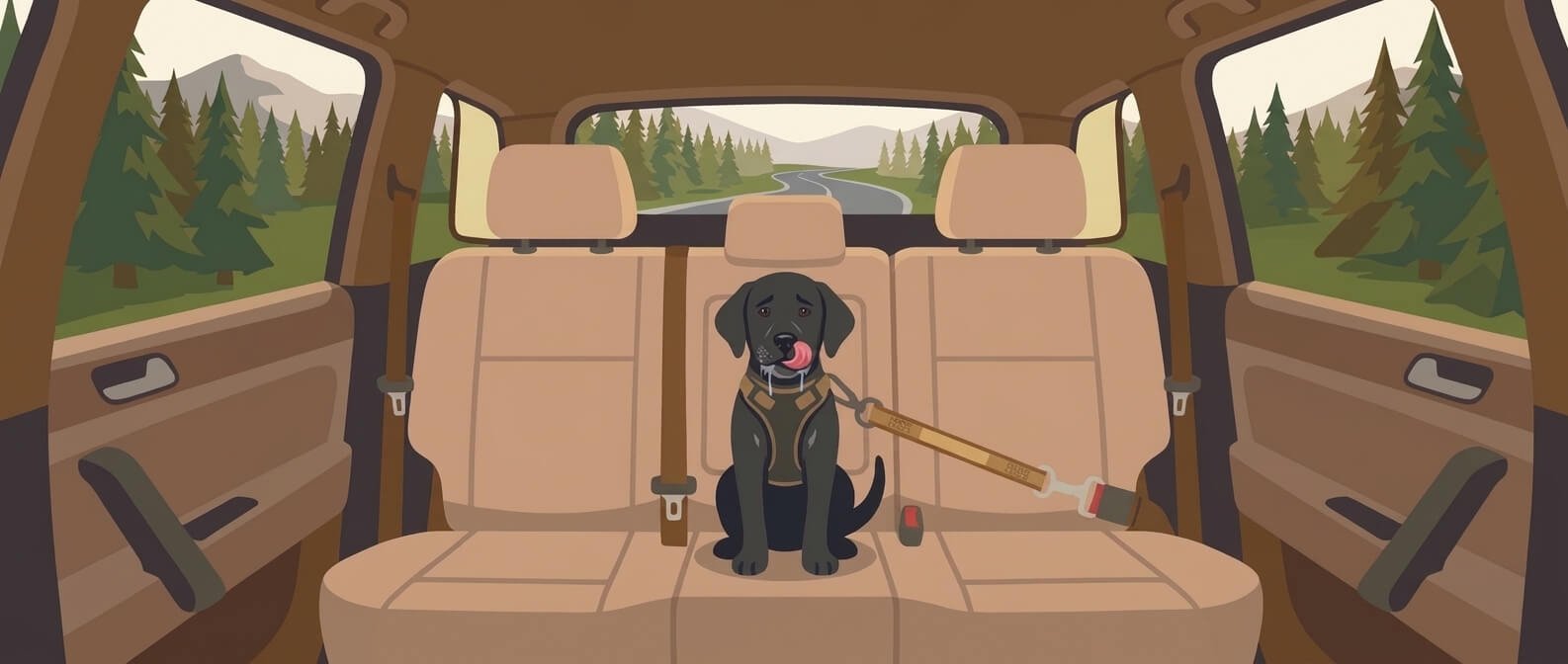
Excessive drooling
Lip licking or smacking
Frequent yawning
Whining or whimpering
Restlessness or pacing
Trembling or shaking
Lethargy or listlessness
Signs of Travel Anxiety
f your dog’s car sickness is driven by anxiety, you might see these signs before the car even moves:
Refusing to get into the car or pulling away
Shaking or trembling in or near the car
Bathroom accidents in the car
Increased vocalizing (barking or whimpering)
Later Signs (During or After Travel)
Vomiting or dry heaving
Diarrhea (in severe cases)
The key to learning how to prevent car sickness in dogs is recognizing the early signs before they escalate to vomiting. If you see your dog start to drool excessively, lip-smack, or yawn repeatedly, it’s time to pull over and let them settle.
Quick answer: Car sickness in dogs usually comes from one of two sources: motion sickness (a physical balance issue) or travel anxiety (an emotional response). Motion sickness is common in puppies because their inner ear structures aren’t fully developed. Travel anxiety often comes from associating car rides with stressful events (like vet visits). Many dogs have both—and anxiety can make motion sickness worse, creating a vicious cycle. Knowing how to prevent car sickness in dogs starts with identifying which problem your dog has.
Part 3
Training Techniques to Prevent Car Sickness
This is the most important part of learning how to prevent car sickness in dogs. Training builds positive associations with the car and helps your dog feel safe and secure. The goal is to gradually desensitize your dog to car travel and countercondition their emotional response.
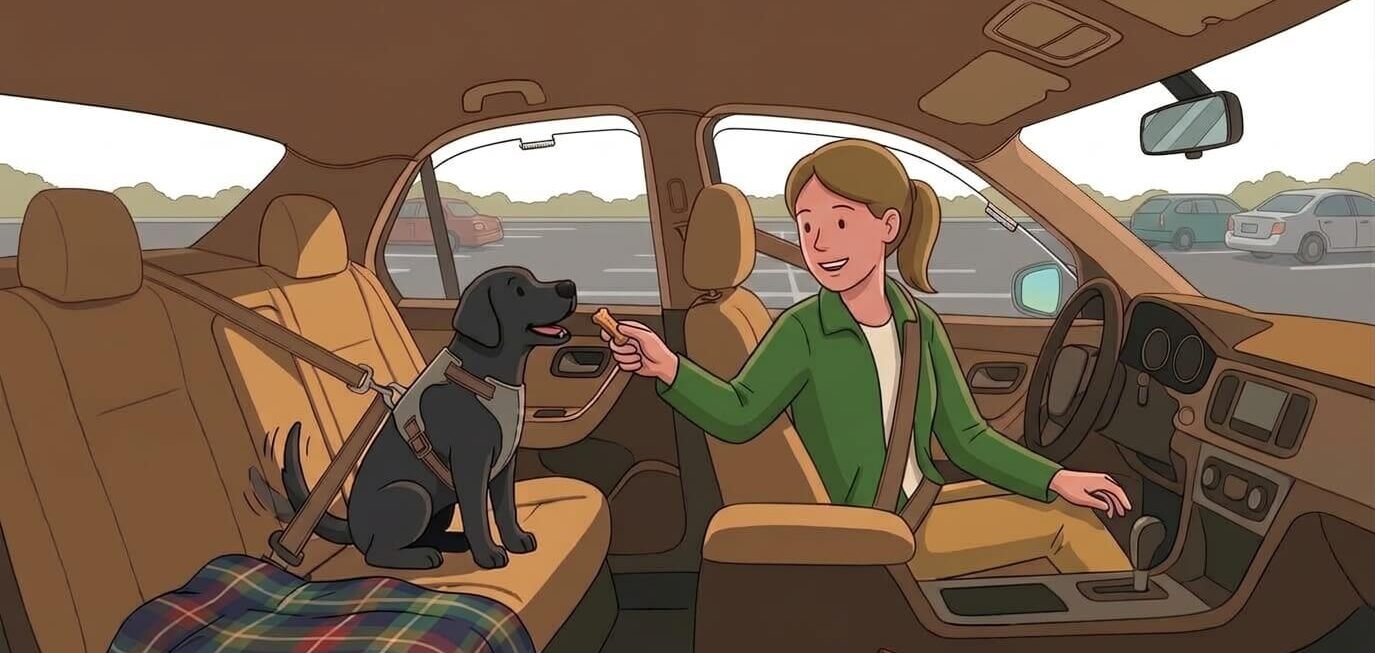
Step 1: Start with the Parked Car
Don’t rush straight to a long road trip. Start with the car parked and the engine off.
-
Take your dog to the car when you’re not travelling
-
Leave the doors open and let them sniff and explore
-
Reward calm behavior with high-value treats
-
Close the doors and sit with them inside for a few minutes
Warning: If your dog is stressed at any point, they won’t eat. If they refuse treats, you’ve moved too fast. Go back a step.
Step 2: Add the Engine
Once your dog is comfortable sitting in the parked car, add the engine.
-
Sit in the car with your dog and start the engine
-
Keep it short—just a minute or two
-
Reward calm behavior
-
Turn off the engine and repeat
Step 3: Short, Rewarding Trips
Now it’s time to move, but start small.
-
Drive to the end of your street and back
-
Then to somewhere fun—like the park or a friend’s house
-
If your dog seems worried, go back a step and take it slower
Important: If you only ever drive to the vet, your dog will start to dread the car. Make sure some trips go somewhere fun. A dog who associates car rides with the dog park is far less likely to get car sick than one who only goes to the vet’s office.
Step 4: Build Up Gradually
As your dog gains confidence, slowly increase the length of your trips. If they seem worried at any point, go back a step.
Expert tip: The PDSA recommends starting car training during the early socialization period (4–12 weeks) for puppies, because this is when their brains are learning what’s normal and safe. But older dogs can be trained too—it just takes more patience.
Quick answer: Training is the most effective way to learn how to prevent car sickness in dogs. The process has four steps: (1) start with the parked car, engine off, doors open, rewarding calm behavior; (2) add the engine, keeping sessions short; (3) take short, rewarding trips—especially to fun places like the park; (4) build up gradually as your dog gains confidence. If your dog refuses treats, you’ve moved too fast—go back a step. And if you only ever drive to the vet, your dog will start to dread the car—so make sure some trips are fun.
Part 4
Environmental Changes That Help Prevent Car Sickness
Simple changes to how you set up the car can make a big difference in learning how to prevent car sickness in dogs.
Limit Food Before Travel
A full stomach makes vomiting more likely. Don’t feed your dog a full meal 6–8 hours before travel. But an all-day fast isn’t the answer either—some dogs bring up yellow bile on an empty stomach.
What works: A small snack 2–3 hours before travel, but no big meals.
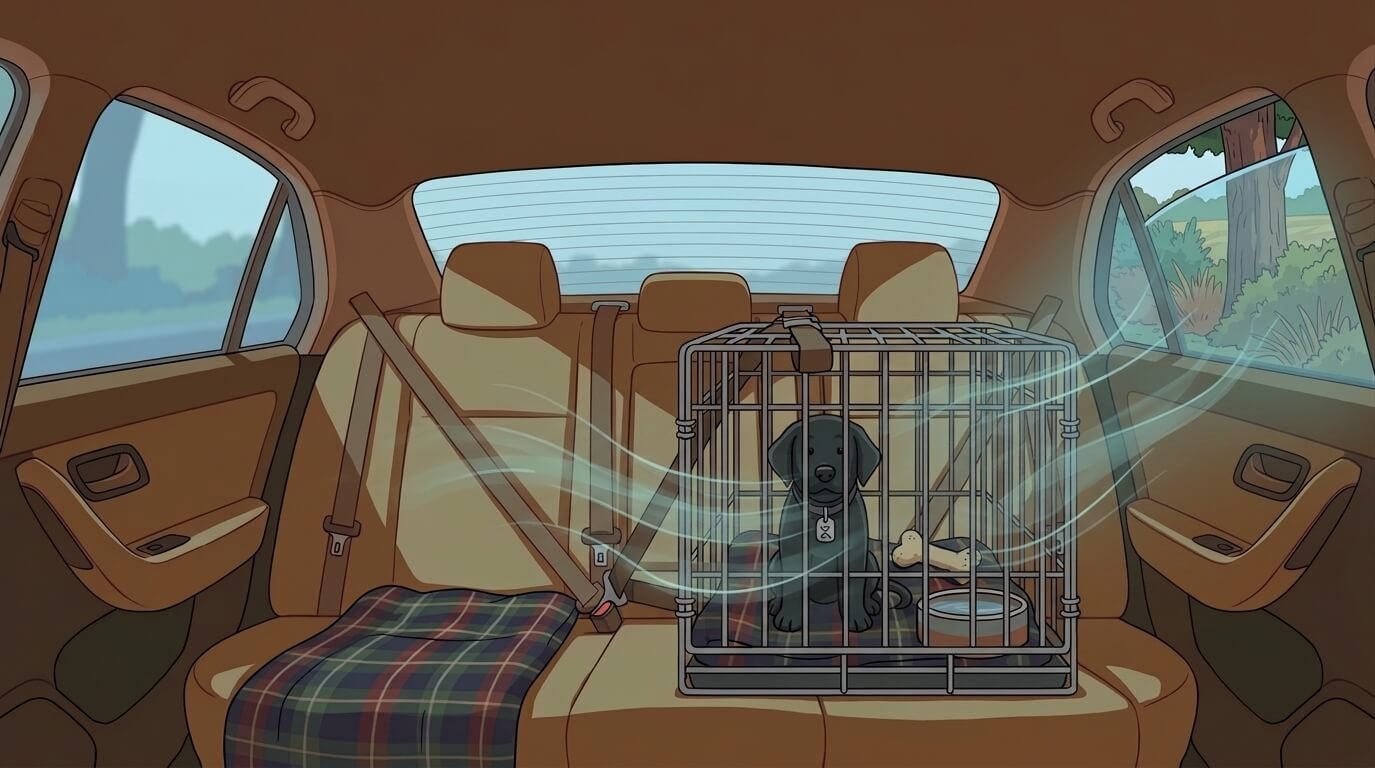
Keep the Car Cool and Well-Ventilated
Fresh, cool air can help settle a queasy stomach.
Crack the windows a couple of inches for fresh air
Turn on the air conditioning
Make sure cool air reaches your dog in the back
Secure Your Dog Properly
Secure Your Dog Properly
A stable, secure position reduces motion and helps your dog feel grounded.
-
Use a crash-tested harness or travel crate
-
Keep your dog facing forward—side windows blurring past are more likely to cause motion sickness
-
For small dogs, place the crate on the floor or in the middle seat to reduce movement
-
A crate with solid sides blocks the view of passing scenery, which can prevent nausea
Bring Familiar Smells
Familiar scents can dramatically reduce anxiety.
Bring a favorite blanket or bed that smells like home
A worn t-shirt that smells like you can be especially comforting
Bring a favorite toy
Manage the Drive
Take regular breaks every 2–3 hours on long trips
Walk your dog before a long journey to burn off restless energy
Play soft, calming music (classical is a good choice)
Quick answer: To prevent car sickness in dogs, small environmental changes make a big difference. Limit food before travel (no full meal 6–8 hours before, but a small snack 2–3 hours before is fine). Keep the car cool and well-ventilated—crack the windows and make sure cool air reaches the back. Secure your dog facing forward in a crash-tested harness or crate with solid sides. Bring familiar smells (a blanket, a worn T-shirt, a favorite toy). And manage the drive: take breaks every 2–3 hours, walk your dog before a long journey, and play soft, calming music. These habits are the practical side of how to prevent car sickness in dogs.
Part 5
Natural Remedies and Calming Aids
For mild cases, natural remedies can be a gentle way to help your dog feel more comfortable. Here are the options worth considering. None of these replace training, but they can support your broader plan for how to prevent car sickness in dogs.
Pheromone Sprays and Collars
Products like ADAPTIL release calming pheromones that can help reduce travel anxiety. The spray can be used in the car, and calming collars provide continuous support.
Herbal Supplements
Some herbal supplements may help with motion sickness symptoms:
-
Ginger—can help settle the stomach
-
Peppermint oil—may help with nausea
-
Skullcap and valerian—traditional herbs used for anxiety and nervousness
Important: Always check with your vet before giving any supplement to your dog.
The Sugar Trick
Some vets suggest giving your dog a sugary treat (like a jelly bean) before starting out, as sugar seems to calm queasy feelings. Never use anything with xylitol—it’s toxic to dogs.
Quick answer: For mild car sickness, natural remedies can help—but they’re not a substitute for training. Pheromone sprays and collars (like ADAPTIL) can reduce travel anxiety. Herbal supplements like ginger, peppermint oil, and skullcap/valerian may help with nausea and nervousness. Some vets suggest a sugary treat (like a jelly bean) before travel—but never use anything with xylitol, which is toxic to dogs. Always check with your vet before giving any supplement. These are supportive tools for how to prevent car sickness in dogs—not standalone solutions.
Part 6
Medications for Car Sickness — What Works and When to Use Them
If training and environmental changes aren't enough, medications can be an effective way to prevent car sickness in dogs. Always consult your vet before giving any medication.
Prescription Medications
Maropitant (Cerenia)
Cerenia is the most commonly prescribed medication for motion sickness in dogs. In a multicenter placebo-controlled trial, 69 of 105 dogs treated with the placebo vomited during a journey, compared with only 15 of 106 dogs treated with maropitant.
-
How it works: Prevents vomiting by blocking the chemical signals that trigger nausea
-
Dosing: Given by mouth at least 2 hours before travel, with a small amount of food
-
Duration: Can be used for up to 2 consecutive days
-
Age: Labeled for dogs 4 months and older
Important: The labeled dose for motion sickness is not the same as the dose for acute vomiting. Don’t use leftover tablets from a stomach upset—your vet needs to prescribe the correct dose for travel.
Over-the-Counter Options (Vet Approved)
Some human antihistamines can be used for dogs, but only under veterinary guidance.
Medication | Typical Use | Notes |
|---|---|---|
Diphenhydramine (Benadryl) | Mild motion sickness, mild anxiety | Dosage depends on weight—never guess |
Meclizine (Bonine) | Motion sickness in dogs | Less sedating than Benadryl |
Dimenhydrinate (Dramamine) | Motion sickness | Often causes drowsiness |
Important: Never give your dog human medication without talking to your vet first. Doses are different for dogs, and some human medications are toxic.
Warnings:
-
These medications can cause drowsiness or hyperactivity in dogs.
-
Never use products that contain decongestants (like pseudoephedrine)—they’re dangerous for dogs.
-
Do not use in dogs with glaucoma, prostate enlargement, or certain stomach, thyroid, seizure, or heart disorders.
Anti-Anxiety Medications
For dogs whose car sickness is driven by anxiety, your vet may prescribe:
-
Trazodone—an anti-anxiety medication
-
Diazepam—a sedative that can reduce travel-related anxiety
These are prescription-only and must be given under veterinary supervision.
Quick answer: When training and environmental changes aren’t enough, medications can help prevent car sickness in dogs. The most commonly prescribed option is maropitant (Cerenia), which blocks the chemical signals that trigger nausea. Some human antihistamines (like Benadryl, Bonine, or Dramamine) can be used under veterinary guidance—but never without your vet’s approval, and never products containing decongestants like pseudoephedrine. For anxiety-driven car sickness, vets may prescribe trazodone or diazepam. All medications require a vet visit and the correct dose for your dog’s weight. That’s the medical side of how to prevent car sickness in dogs.
Part 7
When to See a Vet
While car sickness is usually manageable, there are times when you should seek professional help. Knowing when to call the vet is part of how to prevent car sickness in dogs—not just treating it.
Signs That Warrant a Vet Visit
-
Vomiting continues after you arrive—or happens when the car isn’t involved at all
-
Blood in the vomit or black, tarry stool
-
Repeated retching that brings nothing up
-
Head tilt, circling, stumbling, or eyes flicking side to side—these can suggest vestibular disease
-
Sudden-onset motion sickness in an adult dog—this could indicate an inner ear infection or other medical issue
-
Panic severe enough to cause escape attempts or self-injury
What Your Vet Will Do
Your vet will likely:
-
Use an otoscope to check your dog’s ears for infection
-
Rule out other causes like inner ear issues
-
Recommend the right medication for your dog’s specific situation
-
Advise on the correct dosage for your dog’s weight
Quick answer: Most car sickness is manageable at home—but some signs mean it’s time to see a vet. Call your vet if: vomiting continues after you arrive (or happens without the car), there’s blood in the vomit or black tarry stool, repeated retching brings nothing up, your dog shows head tilt or stumbling (possible vestibular disease), sudden-onset motion sickness appears in an adult dog, or panic causes escape attempts or self-injury. Your vet will check the ears, rule out underlying causes, and recommend the right medication and dose. Knowing when to call the vet is part of how to prevent car sickness in dogs.
Sources and References
-
PetMD — Dog motion sickness: signs, causes, and treatment
-
PDSA — Travel training guidance for puppies
-
Purina — Step-by-step training guide for car-sick dogs
-
Ravimiregister (Estonian Medicines Register) — Cerenia (maropitant) prescribing information
-
The Voyage (citing multiple peer-reviewed sources) — Motion sickness vs. travel anxiety and the Cerenia trial
-
Great Pet Care — Counterconditioning and environmental changes
Disclaimer: I’m a dog owner, not a veterinarian. This content is for informational purposes only and does not replace professional veterinary advice. For any concerns about your specific dog—especially car sickness, motion sickness, or medication—please consult a licensed veterinarian.
FAQ: How to Prevent Car Sickness in Dogs
Yes, dogs can suffer from motion sickness just like humans do. It's particularly common in puppies and can continue into adulthood for some dogs. The good news: most cases are manageable with training, environmental changes, or medication.
Start with training—gradually desensitize your dog to the car by starting with the parked car (engine off), then adding the engine, then short trips to fun places. Limit food before travel (no full meal 6–8 hours before; a small snack 2–3 hours before is fine). Keep the car cool and well-ventilated. Bring familiar smells (a blanket or worn T-shirt). Some owners also use pheromone sprays (like ADAPTIL) or herbal supplements like ginger—but always check with your vet first.
The most commonly prescribed medication is maropitant (Cerenia), which blocks the chemical signals that trigger nausea. It's given at least 2 hours before travel, with a small amount of food. Some human antihistamines (like Benadryl, Bonine, or Dramamine) can also be used under veterinary guidance. Never give your dog human medication without talking to your vet first—doses are different for dogs, and some human medications are toxic.
Look at when the signs start. If your dog is calm in the parked car but shows signs once you're moving, it's likely motion sickness. If your dog balks, drools, or trembles in the driveway before the engine starts, it's likely travel anxiety. Many dogs have both—and anxiety can make motion sickness worse. The distinction matters because the solutions are different: motion sickness needs physical management (position, airflow, medication), while anxiety needs behavioral work (desensitization, counterconditioning).
Only under veterinary guidance. Dramamine (dimenhydrinate) can help with motion sickness in dogs, but the dose depends on your dog's weight and health. Never give any human medication without talking to your vet first. Some human medications (especially those with decongestants like pseudoephedrine) are toxic to dogs. Your vet can tell you whether Dramamine is safe for your dog and what dose to use.
Often, yes. Puppies are especially prone to motion sickness because the structures inside their ears responsible for balance aren't fully formed yet. Most puppies grow out of it by the time they're a year old. But some dogs carry it into adulthood—especially if they develop anxiety about the car in the meantime. Starting training early (during the socialization period, 4–12 weeks) can help prevent both motion sickness and anxiety from becoming long-term problems.
It depends on the medication. Maropitant (Cerenia) should be given at least 2 hours before travel, with a small amount of food. Antihistamines like Benadryl are usually given 30–60 minutes before travel. Always follow your vet's specific instructions for your dog's weight and health. And never give medication on an empty stomach unless your vet says otherwise.
Car Sickness Prevention Checklist
Before your next car trip, run through this checklist to minimize the risk of car sickness:
□ Skip the big meal — no food 6–8 hours before travel
□ Water only — keep your dog hydrated but limit food
□ Cool air — windows cracked or AC on
□ Secure your dog — crash-tested harness or crate, facing forward
□ Familiar smells — blanket, bed, or toy from home
□ Fun destination — some trips should go somewhere rewarding
□ Calming aids — pheromone spray if needed
□ Medication — given at least 2 hours before travel if prescribed
□ Leash ready — for rest stops
□ Patience — slow, gradual training works best
A Final Thought
Here’s the thing about car sickness: it’s treatable.
Most dogs can learn to love car rides again with the right combination of training, environmental changes, and—if needed—medication.
The key is patience. Don’t rush. Don’t force your dog into the car if they’re terrified. Start small, reward every good behavior, and build up slowly.
A car ride that ends at the vet isn’t a fun car ride. Make sure some trips go somewhere amazing—the park, a walk, a playdate. Your dog needs to learn that getting in the car means good things.
Whether it’s training, natural remedies, or a prescription from your vet, there’s a solution for your dog. Learning how to prevent car sickness in dogs takes time, but every car ride is an opportunity to build a better association.
Your dog wants to be with you. They want to go on adventures. With a little patience and the right approach, you can help them enjoy every single one. That’s what dog travel safety is really about.
More in This Series
This article is part of our Dog Travel & Car Safety series. Here’s what else to explore:
Dog Car Safety: The Complete Guide to Traveling Safely with Your Pup — The complete overview of dog car safety — how to secure your dog in the car, prevent heatstroke, manage car sickness, and pack for road trips.
Crash-Tested Harness vs Crate: Which Is Safer for Your Dog? — Crash-tested dog harness or crate — which is safer? Compare crash test results, costs, and real-world performance to choose the best restraint for your dog.
Hot Car Dangers for Dogs: Why Parked Cars Are Deadly — Hot car dangers for dogs are real — even on mild days. Learn how fast temperatures rise, heatstroke signs, and what to do if you see a dog in a hot car.
Road Trip Packing List for Dogs: What to Bring — Planning a road trip with your dog? This road trip packing list for dogs covers everything — food, water, safety gear, first aid, and comfort items.
How to Help an Anxious Dog Enjoy Car Rides: A Complete Guide — How to help an anxious dog enjoy car rides — learn behavioral strategies, desensitization techniques, and when to seek professional help.
All part of the Dog Travel & Car Safety module here on OutdoorDogSafety.com.
Dog car safety starts with a choice. Choose the right restraint for your dog. Never leave them alone in a parked car. Take breaks, bring supplies, and build positive experiences.
Every trip with your dog is a gift. Treat it like one — keep them safe, comfortable, and happy.
Safe travels, from all of us at OutdoorDogSafety.com.