
Pesticide Poisoning in Dogs:
Hidden Dangers on Walks
Pesticide poisoning in dogs is a real risk. Learn how to spot rodenticides, lawn chemicals, and antifreeze—and what to do in an emergency.
Pesticide poisoning in dogs happens more often than you think. You’re walking your dog through the neighborhood. The lawns are green, the flowers are blooming, and everything looks perfect. You don’t think twice about your dog sniffing the grass, licking their paws, or nibbling on a leaf. It’s just a normal walk.
But there’s what you can’t see: the chemicals soaking into that grass. The rat poison hidden in black plastic boxes near the garage. The fertilizer that smells like food to a curious nose.
These hidden dangers are everywhere—and they kill dogs every year.
According to the ASPCA Animal Poison Control Center, rodenticide exposures are among the top 10 most common poisonings reported in dogs. The EPA estimates that over 50,000 dogs are exposed to rodenticides annually in the United States alone. And lawn chemicals—fertilizers, herbicides, and pesticides—send thousands of dogs to emergency vets each year.
The scary part? Most exposures happen right in our own neighborhoods, on routine walks, during the most normal days. They’re silent, invisible, and easy to overlook.
That’s why pesticide poisoning in dogs matters—even if you live in the suburbs. I’m not a veterinarian. I’ve just spent time reading case reports, talking to poison control experts, and learning about these risks—so you don’t have to learn them the hard way. This guide covers the hidden chemical dangers on walks, what to look for, and what to do if your dog is exposed.
What's in This Guide
In this guide, I’ll walk you through:
-
Rodenticides (rat poison) — how they work, symptoms, and treatments
-
Pesticides and insecticides — the risks from lawn treatments and bug sprays
-
Fertilizers and herbicides — what’s actually dangerous
-
Antifreeze and automotive chemicals — the sweet-smelling killer
-
Mushrooms and toxic plants — natural but dangerous
-
How to spot chemical hazards on walks — what to watch for
-
Emergency steps — what to do if you suspect exposure
-
A chemical safety checklist — quick reminders for every walk
The bottom line: Pesticide poisoning in dogs is preventable—but only if you know what to look for. This guide will help you spot the dangers before your dog does.
Let’s get started.
Part 1
Rodenticides—The Poison Hidden in Plain Sight
Rodenticides are one of the most common causes of pesticide poisoning in dogs—and they're often hidden in plain sight on our daily walks. Here's what you need to know about rat poison and how to protect your dog.
What They Are
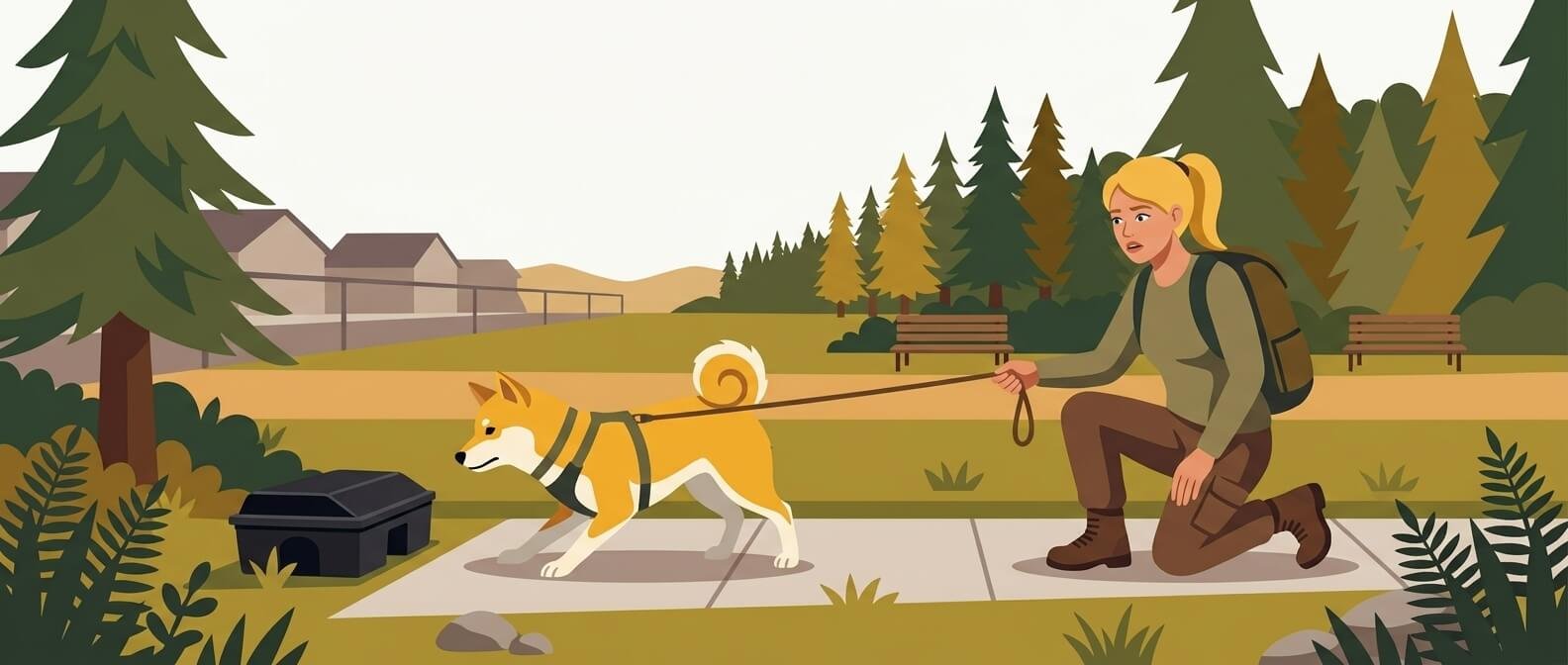
The most common form of pesticide poisoning in dogs comes from rodenticides—rat and mouse poisons designed to kill pests. They’re commonly found in:
-
Black plastic bait stations outside homes, businesses, and apartment buildings
-
Garages and sheds
-
Agricultural areas and parks
-
Along fences and building foundations
They’re designed to be attractive—and they’re often flavored with grain or peanut butter, which makes them appealing to dogs.
Types of Rodenticides and Their Effects
Type of Poison | Active Ingredient | How It Works | Symptoms | Antidote/Treatment |
|---|---|---|---|---|
Anticoagulant | Brodifacoum, bromadiolone, diphacinone | Prevents blood from clotting by blocking vitamin K | Lethargy, pale gums, nosebleeds, coughing up blood, bruising | Vitamin K (often for weeks) |
Bromethalin | Neurotoxin | Causes swelling of the brain and central nervous system | Tremors, seizures, paralysis, incoordination | No antidote—supportive care only |
Cholecalciferol | Vitamin D3 analog | Causes dangerous calcium buildup in organs | Vomiting, increased thirst, kidney failure | IV fluids, hospitalization, multiple medications |
What to Do If You Suspect Exposure
-
Call a vet immediately. Do not wait for symptoms.
-
Check the bait station label if possible—take a photo of the box or packaging. This tells the vet exactly which poison was involved.
-
Do NOT induce vomiting unless the vet or poison control tells you to. For some poisons (especially bromethalin and cholecalciferol), inducing vomiting can make things worse.
Prevention
-
Know where bait stations are on your regular walking routes. Avoid them.
-
Keep your dog on a short leash near garages, sheds, and commercial buildings.
-
Teach “Leave It” —it works for chemical bait stations just as well as it works for food.
Quick Answer: Rodenticides are one of the most common causes of pesticide poisoning in dogs. There are three main types: anticoagulants (cause bleeding, treated with Vitamin K), bromethalin (neurotoxin, no antidote), and cholecalciferol (Vitamin D3, causes kidney failure). If you suspect exposure, call a vet immediately—don’t wait for symptoms. Take a photo of the bait station label, and never induce vomiting unless your vet tells you to.
Part 2
Pesticides and Insecticides—What You're Really Stepping On
Lawn treatments, bug sprays, and garden chemicals can be just as dangerous as rat poison—especially when they cling to grass, sidewalks, or your dog's paws. Here's what to watch for. It's the second most common cause of pesticide poisoning in dogs—and one of the easiest to prevent.
The Risk
Pesticides are chemicals designed to kill insects. They’re sprayed on lawns, gardens, agricultural fields, and even used in flea and tick treatments for pets (which are safe when used as directed).
The problem is environmental exposure—lawns that have been treated, foggers that settle on sidewalks, and concentrated products left in garages or sheds.
Common Symptoms of Pesticide Poisoning
Severity | Symptoms |
|---|---|
Mild | Drooling, vomiting, diarrhea, lethargy |
Moderate | Tremors, incoordination, weakness |
Severe | Seizures, difficulty breathing, paralysis, coma |
What to Do If You Suspect Exposure
-
If the poison is on the skin or paws: Wash with mild soap and plenty of water.
-
If the poison was ingested: Contact a vet or poison control immediately.
-
Do NOT induce vomiting unless instructed to.
-
Bring the product label to the vet—it contains the active ingredients.
Prevention
-
Avoid walking on lawns that have been recently treated. Look for signs or flags that indicate chemical application.
-
Stay on sidewalks. Grass in residential areas is often treated.
-
Wash paws after walks (especially if you’ve been on unfamiliar ground).
-
Keep your dog away from treated agricultural fields or golf courses.
For more on pesticide safety, see the EPA’s pesticide page.
Quick Answer: Pesticides and insecticides can cause serious illness in dogs—especially when they cling to grass, sidewalks, or paws. Symptoms range from mild (drooling, vomiting, diarrhea) to severe (seizures, difficulty breathing, coma). If you suspect exposure, wash your dog’s paws with mild soap and water, call your vet or poison control, and bring the product label. Never induce vomiting unless instructed.
Part 3
Fertilizers and Herbicides: Green Grass Can Be Dangerous
That lush green lawn may look inviting, but it could be coated in chemicals that are toxic to your dog. Here's what to look for and how to stay safe. This is one of the most overlooked forms of pesticide poisoning in dogs.
The Risk
Fertilizers and herbicides are used on lawns, parks, and golf courses. The primary risks to dogs are:
-
Ingestion — dogs may eat grass or soil containing these chemicals
-
Contact — skin irritation, especially on paws
-
Toxin overload — swallowing a large amount of fertilizer can cause digestive and neurological issues
Fertilizers often contain iron, nitrogen, potassium, and other nutrients. While these are safe for plants, in large doses they can be toxic to dogs.
What to Look For
Product Type | Common Signs of Exposure |
|---|---|
Fertilizer | Vomiting, diarrhea, excessive drooling, lethargy |
Herbicides (weed killers) | Drooling, vomiting, lethargy, weakness |
Combination products | Multiple symptoms—depending on the active ingredients |
Prevention
-
Don’t let your dog eat grass from treated lawns.
-
Look for signs indicating recent treatment (many parks and golf courses post signs).
-
Wait at least 24–48 hours after a treatment before letting your dog on the lawn.
For more on lawn chemical safety, see the ASPCA Animal Poison Control Center.
Quick Answer: Fertilizers and herbicides can be toxic to dogs—especially in large doses. Watch for vomiting, diarrhea, drooling, lethargy, and weakness. To prevent exposure: don’t let your dog eat grass from treated lawns, look for signs indicating recent treatment, and wait at least 24–48 hours after treatment before letting your dog back on the lawn.
Part 4
Antifreeze and Automotive Chemicals: The Sweet Taste That Kills
Antifreeze is one of the most lethal substances for dogs—and it's everywhere in parking lots, garages, and driveways. A small amount can be fatal. It's the deadliest form of pesticide poisoning in dogs—and one of the most preventable.
The Invisible Killer
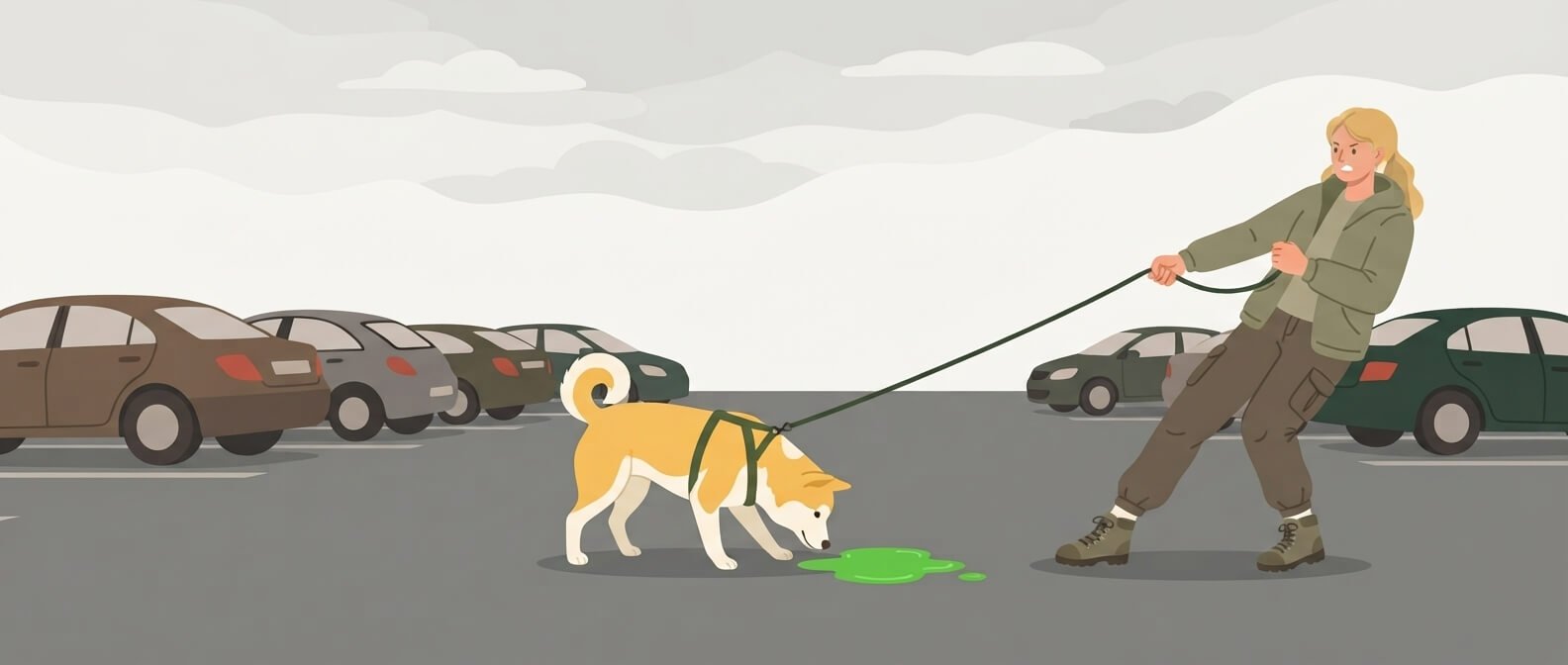
Antifreeze (ethylene glycol) is one of the most dangerous substances for dogs. It has a sweet taste that dogs find appealing—and even a small amount can be fatal.
How much is too much?
-
1–2 tablespoons (15–30 ml) can be lethal to a medium-sized dog
-
Smaller amounts can cause severe kidney damage
Symptoms of Antifreeze Poisoning
Stage | Time Frame | Symptoms |
|---|---|---|
Stage 1 | 0–12 hours | Uncoordinated walking, drooling, vomiting, excessive thirst |
Stage 2 | 12–24 hours | Seemingly "better" (but kidney damage is occurring) |
Stage 3 | 24–72 hours | Kidney failure—weakness, vomiting, lethargy, seizures, death |
What to Do
-
Call a vet immediately. Antifreeze poisoning is an emergency.
-
Do NOT wait for symptoms.
-
If you know what your dog ingested, tell the vet—they may have a specific antidote.
-
The faster you act, the better the outcome.
If you suspect exposure, call your vet or the ASPCA Animal Poison Control Centerimmediately. Antifreeze poisoning is a true emergency.
Prevention
-
Watch for puddles in parking lots, garages, and gas stations. Antifreeze leaks are common in these areas.
-
Don’t let your dog drink from puddles—you never know what’s in them.
-
Be aware of antifreeze warnings in the environment.
Quick Answer: Antifreeze (ethylene glycol) is one of the most lethal substances for dogs—1–2 tablespoons (15–30 ml) can kill a medium-sized dog. It has a sweet taste that attracts dogs. Symptoms progress in three stages: uncoordinated walking and vomiting (0–12 hours), seeming “better” (12–24 hours, but kidney damage is occurring), and kidney failure (24–72 hours). If you suspect exposure, call a vet immediately—don’t wait for symptoms. Antifreeze poisoning is a true emergency.
Part 5
Mushrooms and Toxic Plants: Natural Hazards
Not every danger comes from a chemical factory. Some of the most toxic hazards on your walk are completely natural—and hiding in plain sight. This is the natural side of pesticide poisoning in dogs—and it's just as dangerous.

The Risk
Not all chemical hazards are man-made. Some of the most dangerous plants are natural.
Common toxic plants found in residential areas:
Plant/Mushroom | Danger | Symptoms |
|---|---|---|
Sago palm | Highly toxic (amatoxins) | Vomiting, liver failure |
Oleander | All parts toxic (cycasin) | Liver failure |
Castor bean | Cardiac glycosides | Heart arrhythmias |
Azalea / Rhododendron | Ricin (one of the most toxic natural substances) | Severe GI distress, organ failure |
Autumn crocus | Grayanotoxins | Drooling, vomiting, heart arrhythmias |
Colchicine | Severe vomiting, organ failure |
The Golden Rule
If you don’t know what it is, don’t let your dog eat or sniff it.
Training a solid “Leave It” command can prevent most of these exposures.
What to Do If Your Dog Eats Something Toxic
-
Call a vet or poison control immediately.
-
Bring a sample of the plant or mushroom for identification.
-
Do NOT induce vomiting unless instructed to.
If you suspect your dog ate something toxic, call your vet or the ASPCA Animal Poison Control Center immediately.
Quick Answer: Some of the most dangerous hazards on your walk are completely natural—death cap mushrooms, sago palm, oleander, castor bean, azalea, and autumn crocus are all highly toxic to dogs. The golden rule: if you don’t know what it is, don’t let your dog eat or sniff it. If your dog eats something toxic, call a vet or poison control immediately, bring a sample for identification, and never induce vomiting unless instructed.
Part 6
How to Spot Chemical Hazards on Walks
Knowing what to look for is half the battle. Here are the visual cues that tell you a chemical hazard is nearby—and how to respond. This is the practical side of pesticide poisoning in dogs prevention.
What to Look For
Sign | What It Means | Action |
|---|---|---|
Small flags or signs on lawns | Recent pesticide or fertilizer application | Keep your dog off the grass |
Black plastic boxes | Rodenticide bait stations | Walk around them |
Colorful liquids or puddles | Antifreeze, coolant, or other chemicals | Avoid and report to property owner |
Burned or dead patches of grass | Possible herbicide or chemical spill | Avoid walking there |
Visible pesticides or chemicals | Someone has left them unattended | Walk away immediately |
When to Report
Authority | When to Report |
|---|---|
Property owner/manager | Bait stations near a sidewalk |
Parks department (or local parks authority) | Pesticide application without signage |
Local health department (or environmental agency) | Chemical spills or hazardous runoff |
For more on chemical safety, see the EPA’s pesticide page.
Quick Answer: To spot chemical hazards on walks, watch for: small flags or signs on lawns (recent pesticide application), black plastic boxes (rodenticide bait stations), colorful liquids or puddles (antifreeze or coolant), burned or dead patches of grass (herbicide or chemical spill), and visible pesticides left unattended. Keep your dog off the grass, walk around bait stations, and report hazards to the property owner, parks department, or local health department.
Part 7
Emergency Steps: What to Do If You Suspect Exposure
If you suspect your dog has been exposed to a chemical, time is critical. Here's what to do—and what not to do—in the first few minutes. With pesticide poisoning in dogs, those first few minutes can make the difference.
If You Suspect Your Dog Has Been Exposed to Any Chemical:
-
Call your vet or a local pet poison hotline immediately. Search for “[your country] pet poison hotline” or “[your country] animal poison control” if you don’t have the number saved. In the U.S., the ASPCA Animal Poison Control Center is available 24/7.
-
If you can identify the substance, take a photo of the product or packaging.
-
Do NOT induce vomiting unless the vet or poison control tells you to.
-
If the poison is on the skin, wash with mild soap and plenty of water.
-
If your dog is having trouble breathing or seizures, call your local emergency number or get to an emergency vet immediately.
Quick Answer: If you suspect your dog has been exposed to a chemical, act fast: call your vet or a local pet poison hotline immediately, take a photo of the product or packaging, and never induce vomiting unless told to. If the poison is on the skin, wash with mild soap and water. If your dog is having trouble breathing or seizures, call your local emergency number or go straight to an emergency vet. With pesticide poisoning in dogs, minutes matter.
FAQ: Pesticides, Rodenticides, and Lawn Chemicals
Anticoagulant: 3–5 days after ingestion
Bromethalin: 2–4 hours after ingestion
Cholecalciferol: 12–24 hours after ingestio
Call a vet or poison control immediately. Don't wait for symptoms.
Check the bait station label if possible.
Do NOT induce vomiting unless a vet or poison control tells you to.
Check the label of the weed killer to confirm when it's safe. Usually, it's recommended to wait at least 24–48 hours after application before allowing pets on the lawn. If you're unsure, avoid it.
Yes. In large amounts, fertilizer can cause gastrointestinal blockages and severe digestive issues. Some fertilizers also contain iron, which can be toxic in high doses. If your dog eats a large amount of fertilizer, call your vet.
Yes. Puddles and standing water can contain:
Leptospirosis bacteria (from wildlife urine)
Giardia (a parasite that causes diarrhea)
Blue-green algae toxins (can be fatal)
Chemicals (oil, antifreeze, fertilizers)
Always carry fresh water for your dog. Use a collapsible bowl and never let them drink from puddles, ponds, or lakes unless you are absolutely certain the water is safe. For more on this, see our guide to toxic water risks for dogs.
In the first 12 hours, symptoms are often drunkenness-like: uncoordinated walking, drooling, vomiting, and excessive thirst. This can be followed by a period of apparent recovery before kidney failure sets in within 24–72 hours. In severe cases, dogs may show seizures and weakness.
Natural fertilizers are generally safer than synthetic ones, but they're not completely risk-free. They can cause digestive issues or blockages if swallowed in large amounts. Even natural products should be used with caution around pets.
If you suspect chemical exposure, use a damp cloth or baby wipe to clean your dog's paws. You can also rinse with warm water and mild soap. Never use household cleaners—they can be toxic if ingested.
If you see a bait station without a label, a chemical spill, or a pesticide application without warning signs, you can report it to the property owner, parks department, or local health department. Reporting helps protect other dogs in your neighborhood.
Your local veterinarian: Always your best first call.
Your country's pet poison hotline: Search for "[your country] pet poison hotline" or "[your country] animal poison control."
In the U.S.: The ASPCA Animal Poison Control Center is available 24/7 at (888) 426-4435.
The Chemical Safety Checklist
Before every walk, run through this quick checklist:
□ I’m staying on sidewalks and open paths—not walking on recently treated lawns
□ I’m avoiding black plastic bait stations
□ I’m watching for puddles or spills in parking lots and garages
□ I’m not letting my dog eat grass, plants, or mushrooms
□ I know where the nearest emergency vet is
□ I have the ASPCA Poison Control number saved in my phone: (888) 426-4435
□ I’m staying off my phone and watching my dog’s behavior
A Final Thought
Chemical hazards are everywhere—on lawns, in garages, and along the sidewalks you walk every day. But they’re all manageable. A little knowledge goes a long way in keeping your dog safe.
The key is to be aware. Stay off treated lawns. Avoid bait stations. Watch for puddles, especially in parking lots. And if you’re ever unsure, call poison control or your vet. A quick call is always better than a trip to the emergency room.
I learned these lessons through research, not experience. Please learn them too—your dog is counting on you.
Stay safe out there. That’s what pesticide poisoning in dogs prevention is really about.
More in This Series
This article is part of our Wildlife & Environmental Risks series. Explore the other guides below.
Wildlife Encounters Dog Safety: How to Protect Your Dog from Coyotes, Snakes, and More — The complete overview of wildlife safety for dogs, how to prevent encounters, recognize warning signs, and respond fast when something goes wrong outdoors.
Coyote Attacks on Dogs: Prevention and Emergency Response— Coyote attacks on dogs are rising, but they’re highly preventable. Here’s how to avoid encounters, what to do if a coyote approaches, and when to use protective gear.
Toxic Water Risks for Dogs: Blue-Green Algae and Leptospirosis Explained— Toxic water risks for dogs are real. Learn how to spot blue-green algae, prevent leptospirosis, and keep your dog safe around ponds, lakes, and puddles.
Wildlife First Aid for Dogs: Porcupine Quills, Skunk Spray, and More— Porcupine quills, skunk spray, and other wildlife mishaps — here’s how to handle them quickly and safely, and when to call your vet.
All part of the Wildlife & Environmental Risks module here on OutdoorDogSafety.com.
Disclaimer: I’m a dog owner, not a veterinarian or a wildlife expert. This content is for informational purposes only and does not replace professional veterinary or safety advice. For any health concerns regarding your specific dog—especially after chemical exposure—please consult a licensed veterinarian.