
Coyote Attacks on Dogs:
Prevention and Emergency Response
Coyote attacks on dogs are rising—but they're highly preventable. Here's how to avoid encounters, what to do if a coyote approaches, and when to use protective gear.
You probably don’t think about coyotes when you walk your dog. They feel like a “wilderness” problem—something that happens to people who live way out in the country.
They’re not.
Coyotes now live in every major U.S. city. They thrive in parks, golf courses, greenbelts, and even suburban backyards. A coyote once trotted through a coffee shop in New Haven, Connecticut, not far from the Yale campus. They’ve been spotted in Central Park, downtown Chicago, and residential neighborhoods across North America.
The truth is: wherever you walk your dog, coyotes may be watching.
That’s why coyote attack prevention for dogs matters—even if you live in the city. I’m not a wildlife expert. I’m just someone who’s spent countless hours researching this topic—talking to wildlife officers, reading scientific studies, and compiling what I’ve learned so you don’t have to do the same. This guide covers the four things you need to know to protect your dog from coyote attacks:
-
Prevention: How to avoid encounters in the first place
-
Equipment: What gear actually helps (and what doesn’t)
-
Encounter response: What to do if a coyote approaches
-
Emergency response: What to do if the worst happens
The data is clear. Coyote attacks on pets are increasing. But they’re also highly preventable.
What's in This Guide
In this guide, I’ll walk you through:
-
Understanding coyote behavior—why they attack and what attracts them
-
Prevention strategies—leashing, timing, securing your yard, and coyote vests
-
What to do during a coyote encounter—hazing, body language, and safe retreat
-
Emergency response—how to protect your dog if an attack happens
-
FAQs covering the most common coyote safety questions
Let’s get started.
Part 1
Understanding Coyote Behavior—Why They Attack
Coyote attack prevention for dogs starts with understanding how coyotes think. They're not random killers—they're highly adaptable predators with specific triggers. Once you know what those are, you can avoid most encounters entirely.
The Basics
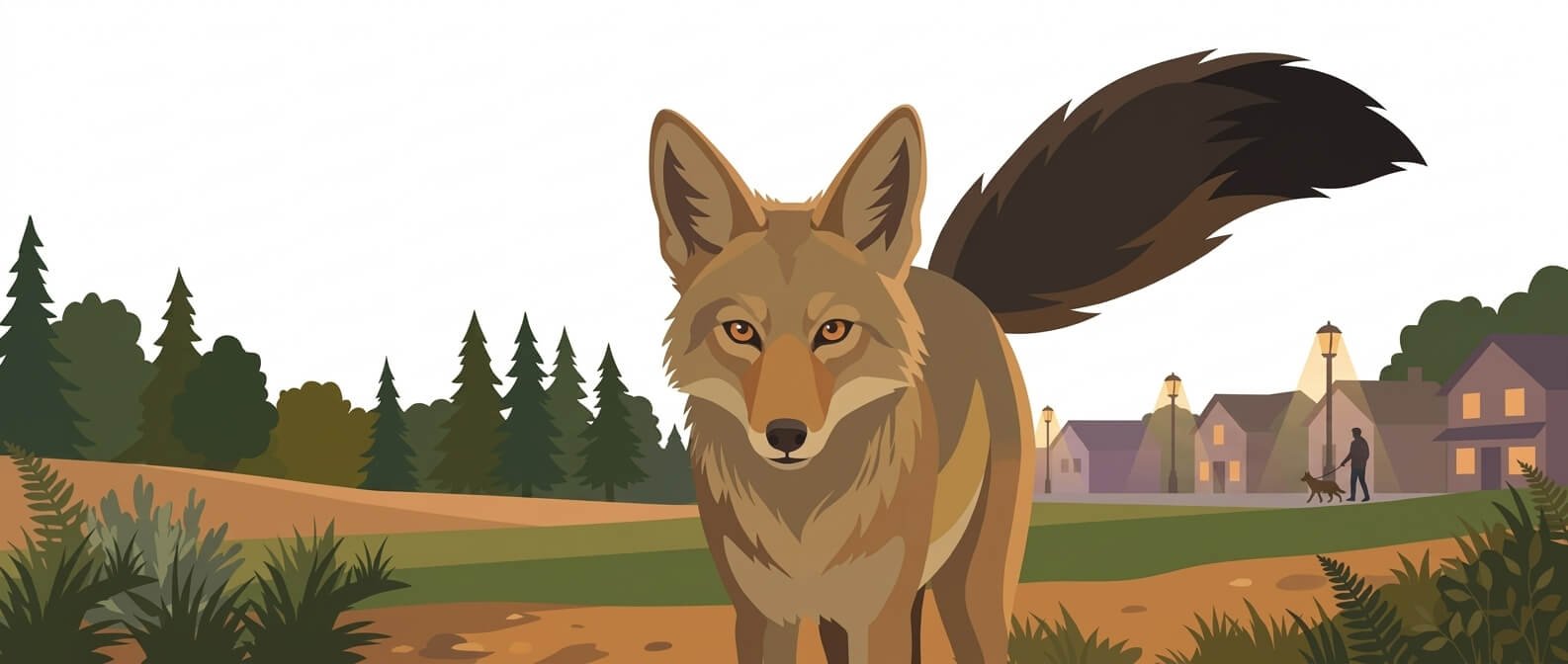
Coyotes are adaptable, intelligent, and opportunistic. They’ve learned to thrive alongside humans because we provide them with food, water, and shelter—often without realizing it.
Key coyote facts:
-
Weight: 20–50 pounds (9–23 kg)—similar to a medium-sized dog
-
Diet: Small mammals, birds, fruit, carrion, garbage, and small pets
-
Peak activity: Dawn, dusk, and night—but they can be active at any time
-
Seasonal risks: Mating season (January–March) and denning season (April–June) tend to see more aggressive encounters
Why Coyotes Target Dogs
Coyotes see small dogs (under 30 pounds / 13.5 kg) as prey. Larger dogs are seen as competitors or threats to their territory.
Here’s what the research shows:
-
Small dogs: Coyotes will stalk and attack them as food.
-
Large dogs: Attacks are usually territorial, not predatory. But they can still be dangerous—an older large dog is no match for the fighting skill of a coyote.
-
Off-leash dogs: The biggest risk factor. When dogs chase or approach coyotes, they trigger defensive or predatory responses.
The "Lure" Strategy
This is one you need to know about. One coyote may appear friendly or playful, luring your dog to chase. Meanwhile, 1–2 other coyotes wait in ambush nearby. This isn’t a myth—it’s a documented hunting strategy that has resulted in fatal attacks on small dogs, even in fenced yards.
Quick Answer: Coyotes see small dogs (under 30 lbs) as prey and larger dogs as territorial threats. The biggest risk factor is off-leash dogs—when a dog chases or approaches a coyote, it triggers defensive or predatory responses. Coyotes also use a “lure” strategy: one coyote acts playful to draw your dog in while others wait in ambush. Understanding these behaviors is the foundation of coyote attack prevention for dogs.
Part 2
Prevention—Keeping Encounters from Happening
Prevention is always easier than response. Here's what actually works.
Step 1: Leash Your Dog
This is the single most effective thing you can do.
According to the Humane Society, most coyote attacks on dogs happen when the dog is off-leash. An off-leash dog that chases or approaches a coyote triggers a defensive response—and once it starts, it’s hard to stop.
Rules to follow:
-
Always keep your dog on a short, fixed-length leash (4–6 feet / 1.2–1.8 m) in coyote-prone areas. Retractable leashes can let your dog wander into danger.
-
Stay on trails. Wildlife usually stays away from well-traveled paths. Going off-trail increases your risk.
-
Be aware of your surroundings. Stay off your phone. Put your earbuds away.
Step 2: Know When and Where to Walk
Risk Level | Time of Day | Location |
|---|---|---|
High | Dawn, dusk, night | Parks, greenbelts, brushy areas, near garbage |
Medium | Early morning, late evening | Residential streets, golf courses |
Low | Mid-morning, mid-afternoon | Open, well-trafficked areas |
Coyotes are most active at dawn, dusk, and night. If you can, walk your dog during mid-morning or early afternoon—when predators are usually resting.
Avoid areas where coyotes may hide:
-
Brush and dense undergrowth
-
Drainage ditches and culverts
-
Abandoned properties
-
Areas with unsecured garbage
Step 3: Remove Attractants from Your Property
Many coyote encounters happen in our own yards. Here’s what you can do:
Attractant | Why It Attracts Coyotes | What to Do |
|---|---|---|
Pet food left outside | Easy meal | Never leave food outdoors overnight |
Garbage | Smell attracts scavengers | Secure bins with locking lids |
Bird feeders | Attracts rodents → attracts coyotes | Remove or use in winter only |
Fallen fruit | Easy food source | Pick up fallen fruit from trees |
Dog feces | Coyotes are attracted to it | Clean up after your dog |
Compost | Food scraps attract wildlife | Keep enclosed and secure |
Secure your yard:
-
Install 6-foot (1.8 m) fencing with the bottom extending 1 foot (30 cm) underground to prevent digging.
-
Add roll bars or PVC pipe baffles to prevent climbing.
-
Use motion-sensor lights to deter night visitors.
Coyotes that aren’t hazed become bolder. Hazing isn’t just about protecting your dog today—it’s about protecting every dog in your neighborhood.
Step 4: Consider a Coyote Vest
What it is: A Kevlar vest with removable spikes that protect your dog’s neck and back from bites.
How it works:
-
Kevlar material prevents punctures from teeth
-
Chrome spikes deter biting and make your dog look bigger
-
Reflective strips increase visibility
Is it worth it?
-
For small dogs: Highly recommended. Coyotes see small dogs as prey, and a vest can be a literal lifesaver.
-
For large dogs: Less critical, but some owners use them for peace of mind.
-
Potential downside: Can be expensive ($100+), may overheat in warm weather, and can create a false sense of security (don’t let your dog roam more freely because they’re wearing it).
Top brands: CoyoteVest, SpikeVest, BullyVest
A note from a certified dog behavior consultant: “The vests should work fine in theory, but I’m more concerned about them creating a false sense of security for those who may let their pets roam more freely while wearing it.” — Beverly McKee, Toronto Humane Society
Step 5: Work on Recall
Even if you keep your dog on a leash (you should), a strong recall command is still valuable. If your dog ever slips their collar or gets out, being able to call them back could save their life.
That said: Don’t rely on recall alone. A dog’s prey drive can override any training in the moment. Leashing is still your best defense.
Quick Answer: The most effective coyote attack prevention for dogs is simple: keep your dog on a short leash in coyote-prone areas. Walk during low-risk times (mid-morning or early afternoon), avoid dense brush and drainage ditches, and remove attractants from your yard (pet food, garbage, fallen fruit, compost). For small dogs, a coyote vest can be a literal lifesaver. And train a strong recall—but never rely on it alone.
Part 3
What to Do During a Coyote Encounter
You're on a walk. You see a coyote—or worse, it sees you and starts following.
Here's what to do.
Step 1: Stay Calm and Stop
Do NOT run. Running triggers a coyote’s predatory response and gives it a reason to chase.
Stop where you are. Keep your dog close. If your dog is small enough, pick them up immediately.
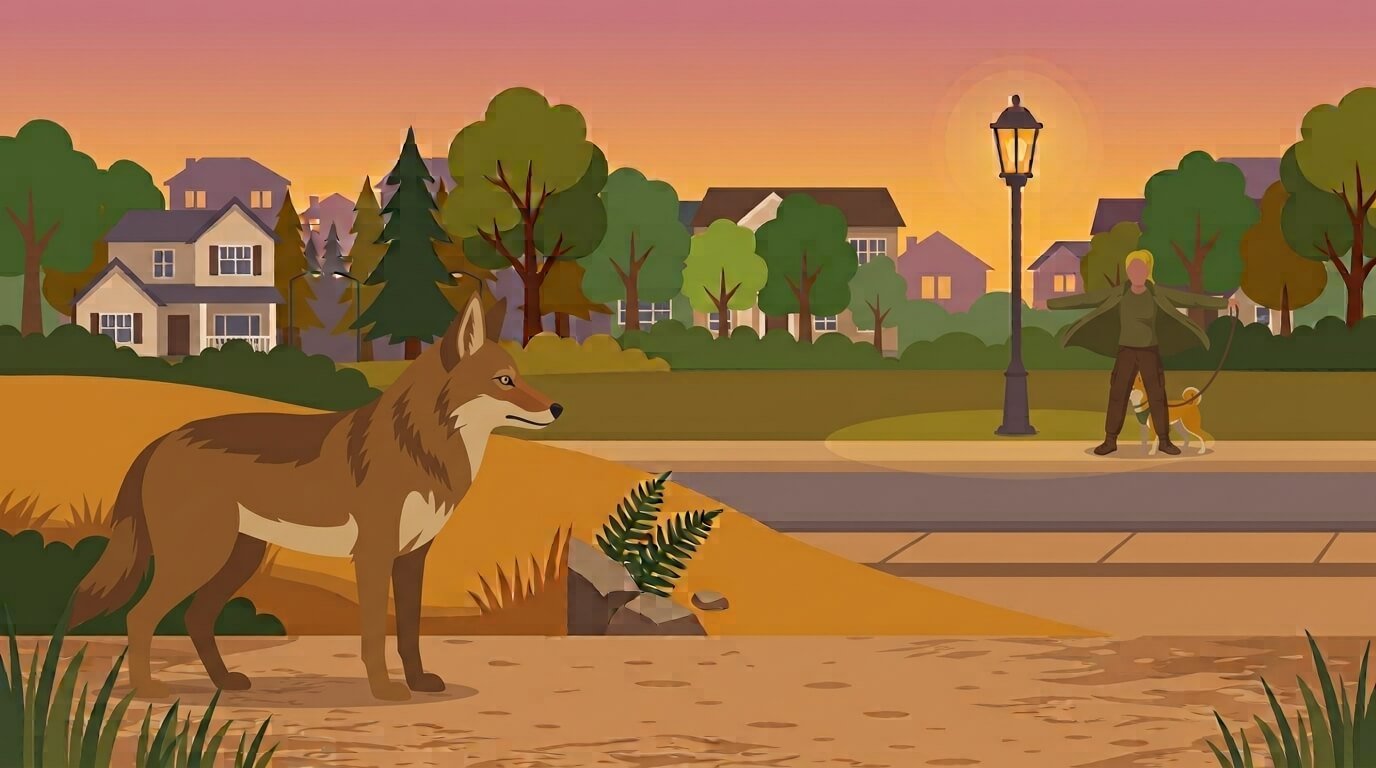
Step 2: Make Yourself Big
Coyotes are naturally wary of humans. You need to remind them why.
How to look intimidating:
-
Stand tall and spread your arms
-
Open your jacket to make yourself look larger
-
Wave your arms overhead
-
Stomp your feet
-
Shout in a firm, deep voice (“GO AWAY!”)
Step 3: Haze the CoyoteBullyVest
Humane hazing teaches coyotes to stay away from humans.
Effective hazing techniques:
-
Noise makers: Air horn, whistle, clapping, shaking a can filled with rocks, banging pots and pans
-
Throwing objects: Toss sticks, rocks, or balls toward the coyote (not at it) to scare it away
-
Water spray: If you have a water bottle, spraying it can deter them
-
Umbrella trick: Some experts carry an umbrella they can pop open and close to startle the coyote
If the coyote doesn’t leave immediately, keep hazing. It may take more than one attempt.
Step 4: Back Away Slowly
Maintain eye contact with the coyote, and slowly back away. Never turn your back. Walk in the direction you came from.
What NOT to Do
-
❌ Do NOT run
-
❌ Do NOT turn your back
-
❌ Do NOT scream (a firm shout is better than a panicked one)
-
❌ Do NOT feed the coyote
-
❌ Do NOT approach it or try to pet it
Quick Answer: If a coyote approaches, don’t run—that triggers a chase. Stop, pick up small dogs, make yourself big (arms out, jacket open, shout firmly), and haze the coyote with noise, thrown objects, or water. Back away slowly while facing it, and never turn your back. Keep hazing until it leaves.
Part 4
Emergency Response—What to Do If Your Dog Is Attacked
This is the worst-case scenario. But if you're prepared, you can improve your dog's chances.
If You See an Attack Happening
-
Do NOT physically intervene with your hands—you’ll be bitten.
-
Use a deterrent: Air horn, bear spray, citronella spray, or throwing objects.
-
Make loud noise to startle the coyote—shouting, clapping, using a whistle.
-
If you have a walking stick or umbrella, use it to create distance between the animals.
If Your Dog Is Bitten
-
Get to a vet immediately. Even if the wound looks small, puncture wounds can be deep and prone to infection.
-
Do NOT try to clean a deep wound before getting to the vet—you may push bacteria deeper.
-
Watch for rabies risk. Coyotes are a rabies vector species in many areas. Your dog may need a rabies booster. See the CDC rabies page for more.
Report the Attack
You should report coyote encounters to:
-
Local animal control
-
Park rangers (if in a park)
-
Your national or regional wildlife agency (in the U.S., that’s USDA Wildlife Services)
When to report:
-
If a coyote approaches you or your dog
-
If a coyote shows aggressive behavior
-
If a coyote appears sick or injured
-
If you see someone feeding coyotes
Reports help wildlife authorities track predator behavior and issue warnings to other pet owners.
Quick Answer: If a coyote is attacking your dog, don’t try to grab it with your hands—you’ll be bitten. Use a deterrent (air horn, bear spray, citronella), make loud noise, and create distance with a stick or umbrella. If your dog is bitten, get to a vet immediately—don’t try to clean a deep wound yourself. Watch for rabies risk, and report the attack to local animal control or your wildlife agency.
FAQ: Coyote Attacks and Dog Safety
Yes. Coyotes can jump up to six feet (1.8 m) and they can climb chain-link fences. They'll also use objects like stumps, picnic tables, or horizontal rails to climb over. If you have a fence, install a roll bar or PVC pipe baffle at the top to prevent climbing, and sink wire at least 1 foot (30 cm) underground to prevent digging.
Yes—two seasons stand out. Mating season (January–March) brings more territorial behavior, and denning season (April–June) makes coyotes more protective of their pups. During these months, coyotes are more likely to approach dogs and less likely to back down.
For small dogs, yes—it can be a literal lifesaver. Coyote vests use Kevlar panels to prevent puncture wounds and spikes to deter bites. They're not a guarantee, but they've saved lives. For large dogs, they're less critical but still provide peace of mind. The downside: they can overheat in warm weather and may create a false sense of security.
Yes. Small dogs (under 30 lbs) are at the highest risk—coyotes see them as prey. Herding breeds (Border Collies, Australian Shepherds) and high-prey-drive dogs (Huskies, Terriers) are also at higher risk because they're more likely to chase or confront a coyote. Off-leash dogs face the greatest danger regardless of breed.
Coyotes sometimes follow to assess whether you're a threat or potential prey.
Stop and pick up your small dog (if possible).
Make yourself big—wave your arms, open your jacket.
Shout firmly—use a deep, loud voice.
Back away slowly—do NOT run.
Use noise deterrents—whistle, air horn, or clap loudly.
If it continues to approach, throw rocks or sticks near it (not at it) to haze it away.
Report the sighting to local animal control.
Walking at night carries a higher risk of coyote encounters—they're nocturnal hunters and more active after dark. If you must walk at night:
Carry a powerful flashlight (coyotes will avoid bright light).
Stay in well-lit areas.
Keep your dog on a short leash.
Make noise—talk loudly, sing, or wear bells on your leash.
Carry a whistle or air horn.
Walking at night carries a higher risk of coyote encounters—they're nocturnal hunters and more active after dark. If you must walk at night:
Carry a powerful flashlight (coyotes will avoid bright light)
Stay in well-lit areas
Keep your dog on a short leash
Make noise—talk loudly, sing, or wear bells on your leash
Carry a whistle or air horn
lifestyle and local disease risk warrant the vaccine. It requires an annual booster.
The Ultimate Wildlife Safety Checklist
Before every walk in a coyote-prone area, run through this quick checklist:
☐ My dog is on a short, fixed-length leash (4–6 feet / 1.2–1.8 m).
☐ I’m walking during low-risk hours (mid-morning or early afternoon).
☐ I’m staying on open trails—not going into brush or dense cover.
☐ I have a whistle, air horn, or noisemaker with me.
☐ I have a flashlight (for dawn/dusk walks).
☐ My phone is charged (for emergencies).
☐ I’m staying off my phone and aware of my surroundings.
☐ I have fresh water for my dog (no need to risk puddles).
☐ I know the nearest emergency vet location.
☐ I have my dog’s ID and microchip info accessible.
The bottom line: This checklist takes 30 seconds. It can save your dog’s life.
Final Thoughts
Coyotes aren’t going anywhere. They’ve adapted to our neighborhoods, parks, and greenbelts—and they’re here to stay.
But coexisting with them doesn’t mean being afraid. It means being prepared. Leash your dog. Know when and where to walk. Carry a noisemaker. And if you see a coyote, don’t panic—haze it away. That’s the whole idea behind coyote attack prevention for dogs: respect, not fear.
The research is clear. The risks are real. And the steps to prevent them are well within your reach.
Your dog is counting on you. That’s what wildlife safety for dogs is really about.
More in This Series
This guide covered the big picture. Now dive deeper into specific risks.
Wildlife Encounters Dog Safety: How to Protect Your Dog from Coyotes, Snakes, and More — The complete overview of wildlife safety for dogs, how to prevent encounters, recognize warning signs, and respond fast when something goes wrong outdoors.
Toxic Water Risks for Dogs: Blue-Green Algae and Leptospirosis Explained— Toxic water risks for dogs are real. Learn how to spot blue-green algae, prevent leptospirosis, and keep your dog safe around ponds, lakes, and puddles.
Wildlife First Aid for Dogs: Porcupine Quills, Skunk Spray, and More— Porcupine quills, skunk spray, and other wildlife mishaps — here’s how to handle them quickly and safely, and when to call your vet.
Pesticide Poisoning in Dogs: Hidden Dangers on Walks— Pesticide poisoning in dogs is a real risk. Learn how to spot rodenticides, lawn chemicals, and antifreeze — and what to do in an emergency.
All part of the Wildlife & Environmental Risks module here on OutdoorDogSafety.com.
Disclaimer: This content is for informational purposes only and does not constitute veterinary or professional safety advice. Always consult with a qualified veterinarian or professional dog trainer regarding your dog’s specific needs and safety considerations.