High-Risk Dogs and Heat:
Summer Safety for Flat-Faced, Senior, and Fluffy Breeds
Not all dogs handle heat the same way. Here's how to protect high-risk dogs—flat-faced breeds, seniors, puppies, overweight dogs, and thick-coated breeds—from summer heat.
Not all dogs handle summer heat the same way.
Some dogs can romp around on a warm day and barely break a pant. Others—through no fault of their own—are at significantly higher risk of overheating, even on days that feel “fine” to you.
Here’s a number that should catch your attention: according to a 2020 study published in the Journal of Veterinary Internal Medicine, flat-faced (brachycephalic) dog breeds are more than twice as likely to develop heat-related illness compared to other breeds. Certain breeds within that category have even higher risk—the study found that French Bulldogs, Bulldogs, and Pugs are among the most vulnerable.
And they’re not the only ones. Senior dogs, puppies, overweight dogs, and dogs with thick double coats all face extra challenges when the temperature climbs.
The good news? You don’t need to keep your high-risk dog indoors all summer. You just need to know what makes them vulnerable—and how to adjust your routine to keep them safe. That’s what high risk dogs heat management really comes down to.
Quick note: I’m a dog owner, not a vet. This guide pulls together recommendations from veterinary experts and animal welfare organizations. For anything concerning your specific dog, always check with your vet.
This is part of our heat safety for dogs series. For an overview of all the key risks, start with the main guide: Heatstroke in Dogs: Signs, First Aid, and When to Call the Vet.
What's in This Guide
In this guide, I’ll walk you through:
-
Which dogs are most at risk for heatstroke — and why
-
Flat-faced (brachycephalic) breeds — why they struggle and how to protect them
-
Thick-coated and double-coated breeds — why shaving is a bad idea
-
Senior dogs, puppies, and overweight dogs — special considerations
-
Summer safety tips — tailored to each high-risk group
-
Early warning signs — what to watch for in high-risk dogs
(Quick note: I’m a dog owner, not a vet. For anything concerning your specific dog, always check with your vet.)
Part 1
Which Dogs Are Most at Risk for Heatstroke?
Veterinary research has identified several categories of dogs that are at higher risk for heat-related illness. Here's the breakdown—and what high risk dogs heat management actually looks like.
Flat-Faced (Brachycephalic) Breeds — Highest Risk
These dogs have the highest risk of all. Their shortened airways make panting—their primary cooling mechanism—far less efficient.
Breeds in this category:
Breed | Risk Level | Special Notes |
|---|---|---|
French Bulldog | Extremely High | Consistently top of heatstroke risk lists |
English Bulldog | Extremely High | Similar anatomy to Frenchies |
Pug | Extremely High | High risk, often overlooked |
Boston Terrier | Very High | Brachycephalic with a slightly longer muzzle, but still high risk |
Boxer | Very High | Brachycephalic, but less extreme than Frenchies and Pugs |
Shih Tzu | Very High | Brachycephalic + thick coat = double risk |
Cavalier King Charles Spaniel | High | Brachycephalic anatomy but slightly longer muzzle |
Chow Chow | High | Brachycephalic + thick double coat = double risk |
Lhasa Apso | High | Brachycephalic with a longer muzzle, but still vulnerable |
Pekingese | High | Brachycephalic + thick coat = double risk |
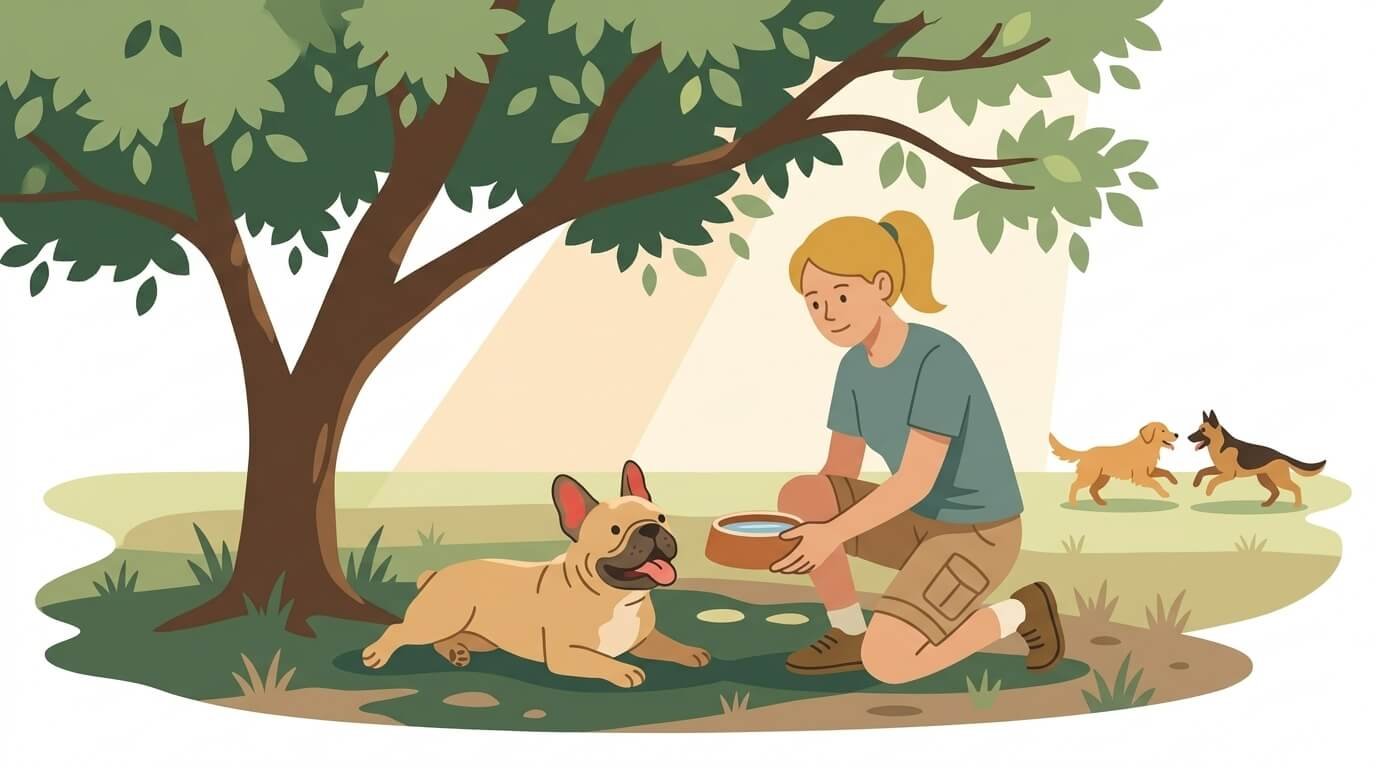
What makes flat-faced breeds so vulnerable?
Dogs cool themselves primarily through panting. When your dog pants, air moves across the moist surfaces of their tongue and airway, and moisture evaporates, carrying heat away.
But flat-faced breeds have shortened airways—a condition veterinarians call brachycephalic airway syndrome. The specific issues include:
-
Stenotic nares — narrowed nostrils that restrict airflow (think of trying to breathe through a coffee straw).
-
Elongated soft palate — a long soft palate that partially blocks the airway.
-
Hypoplastic trachea — a narrow windpipe.
These anatomical features mean flat-faced dogs can’t move as much air per breath. So when they need to pant hard—on a hot day, after exercise, or in humid conditions—they’re physically unable to cool themselves as effectively as longer-nosed dogs.
The result: They overheat faster, at lower temperatures, and with less warning than other breeds.
Thick-Coated and Double-Coated Breeds
Fluffy doesn’t just mean cute—it means hot.
Breeds like Huskies, German Shepherds, Golden Retrievers, Labrador Retrievers, and other double-coated breeds carry a thick undercoat that traps heat. In winter, that’s insulation. In summer, it’s a problem.
Key facts about double-coated breeds:
-
The undercoat traps air—great for warmth, bad for heat release.
-
Heat dissipates poorly through a thick coat, making it harder for these dogs to cool down.
-
Heavy shedding seasons (spring and fall) are when they’re most vulnerable because they’re still carrying winter coat while temperatures rise.
What to do: Never shave a double-coated dog—it can permanently damage their coat and make them more vulnerable to sunburn. Instead, focus on grooming, shade, and early-morning walks.
Other High-Risk Groups
Group | Why They're at Risk | Examples |
|---|---|---|
Senior dogs | Weaker heart/lungs; may have arthritis or other conditions | Any senior dog |
Puppies | Body temperature regulation not fully developed | Any puppy under 6 months |
Overweight/obese dogs | Extra fat = insulation; more mass to cool; harder to exercise safely | Any overweight dog |
Large/giant breeds | More mass to cool; heat dissipates slower | Great Danes, Mastiffs, St. Bernards |
Dogs with underlying conditions | Heart disease, respiratory issues, laryngeal paralysis, Cushing's disease | — |
Certain working/sporting breeds | High drive = won't stop when overheated | Border Collies, German Shepherds, Labradors |
Quick Answer: The highest-risk dogs for heat-related illness are flat-faced breeds (French Bulldogs, English Bulldogs, Pugs), followed by senior dogs, puppies, overweight dogs, double-coated breeds, and high-drive working breeds. If your dog falls into any of these groups, plan walks for early morning or late evening, bring water, and watch for early signs of overheating.
Part 2
Flat-Faced Breeds: Why They Struggle and How to Protect Them
Flat-faced breeds aren't just more prone to overheating—they're built differently. Their shortened skulls compress their airways, which makes every breath harder. Here's why that matters on a hot day, and how to protect them.
The Anatomy Problem
Flat-faced breeds are literally built differently. The shortened skull that gives them their characteristic appearance also compresses their airways into a smaller space. This is why many of them snore, snort, or breathe heavily even at rest.
When they exercise or get hot, they need to pant to cool down. But panting requires moving large volumes of air rapidly—and their anatomy makes that physically harder.
The result: Flat-faced dogs can develop heatstroke at temperatures that would be perfectly safe for other breeds.
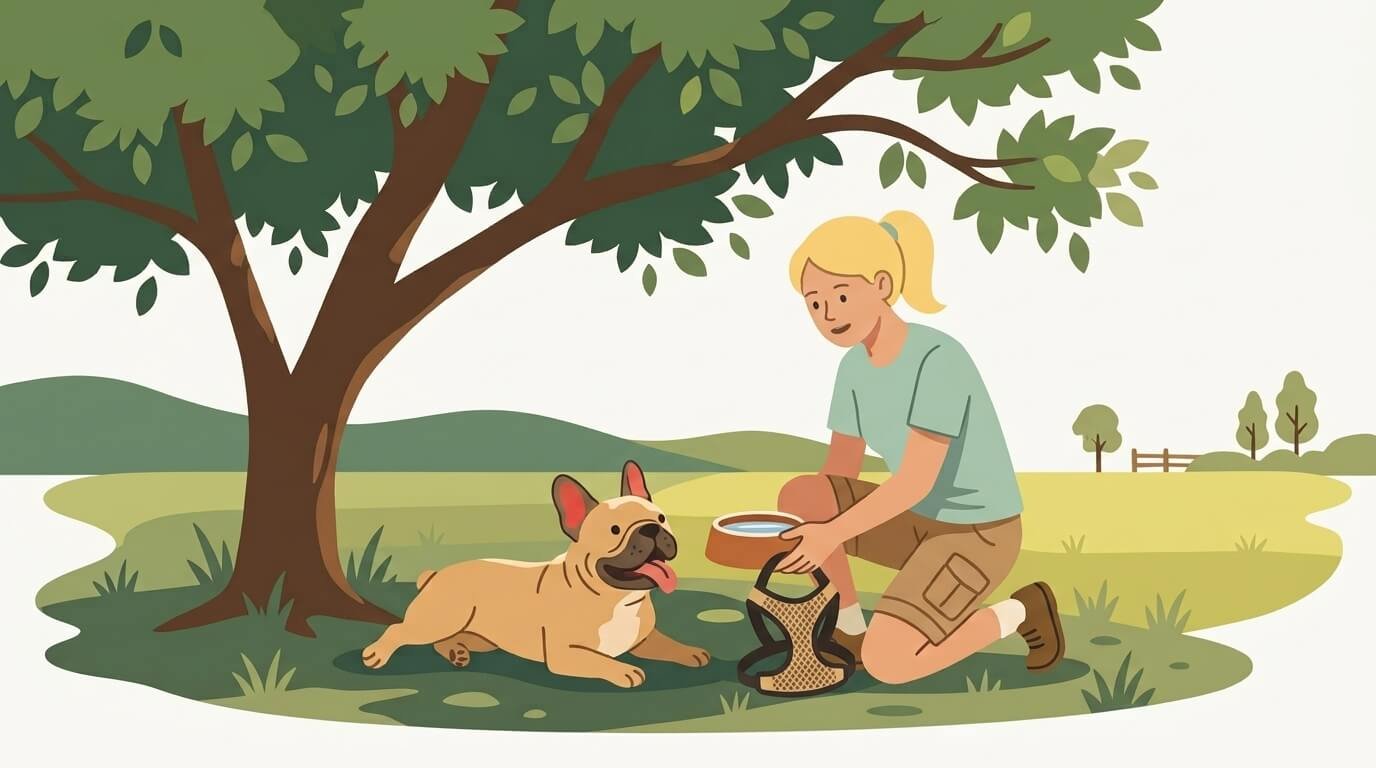
How to Protect Your Flat-Faced Dog
Here’s a practical guide based on veterinary recommendations:
Timing is everything:
-
Walk only before 8 AM or after 7:30 PM in warm weather.
-
If it’s above 75°F with high humidity, skip the walk entirely.
-
Flat-faced dogs should never be exercised in the heat of the day.
Keep it short:
-
Short walks are better than long ones.
-
5–10 minutes is often enough on a warm day.
-
Better to do several short walks than one long one.
Watch the humidity:
-
Humidity is the hidden killer for flat-faced dogs.
-
The more moisture in the air, the less evaporation during panting.
-
On humid days, even 70°F can be dangerous.
Use a harness, not a collar:
-
Collars put pressure on the trachea.
-
For flat-faced dogs with already compromised airways, this can restrict breathing further.
-
A well-fitted harness is much safer.
Keep them lean:
-
Every extra pound makes breathing harder.
-
Weight loss may be the single most important thing you can do for your flat-faced dog’s summer comfort.
Recognize their limits:
-
These dogs often don’t know when to stop.
-
They’ll keep playing or walking even when they’re overheated.
-
You have to be the one to call it quits.
Breeds with Double Risk
Chow Chows and Shar-Peis deserve special mention. They’re flat-faced AND have thick coats. This double whammy makes them among the highest-risk breeds for heatstroke. If you own one, take all of the above precautions—and then be even more conservative.
In high heat and humidity, flat-faced dogs should be kept indoors with air conditioning during peak hours.
Quick Answer: Flat-faced dogs struggle in heat because their shortened airways make panting less efficient. Protect them by walking only before 8 AM or after 7:30 PM, keeping walks to 5–10 minutes, watching humidity (even 70°F can be dangerous on humid days), using a harness instead of a collar, keeping them lean, and being the one to call it quits—because they won’t.
Part 3
Double-Coated Breeds: Why Shaving Is a Bad Idea
Here's a common summer mistake: shaving a fluffy dog to help them "stay cool."
It sounds logical—less fur, less heat. But according to the American Kennel Club (AKC) and veterinary dermatologists, it's actually the opposite. This is one of the most misunderstood parts of high risk dogs heat care.
Why You Shouldn't Shave Your Double-Coated Dog
A double coat consists of two layers:
-
Guard hairs (the top layer): Longer, coarser, and protective. They reflect sunlight and provide a barrier.
-
Undercoat (the bottom layer): Dense, soft, and insulating. In winter, it traps warm air. In summer, it helps regulate body temperature and protect against sunburn and skin cancer. Shaving removes both layers—and that’s when the problems start.
When you shave a double-coated dog:
-
You remove the insulation that helps regulate their body temperature.
-
You expose their skin to UV damage and sunburn.
-
The undercoat grows back faster than the guard hairs, often leading to poor coat texture and matting.
-
The coat’s natural cooling system is permanently disrupted.
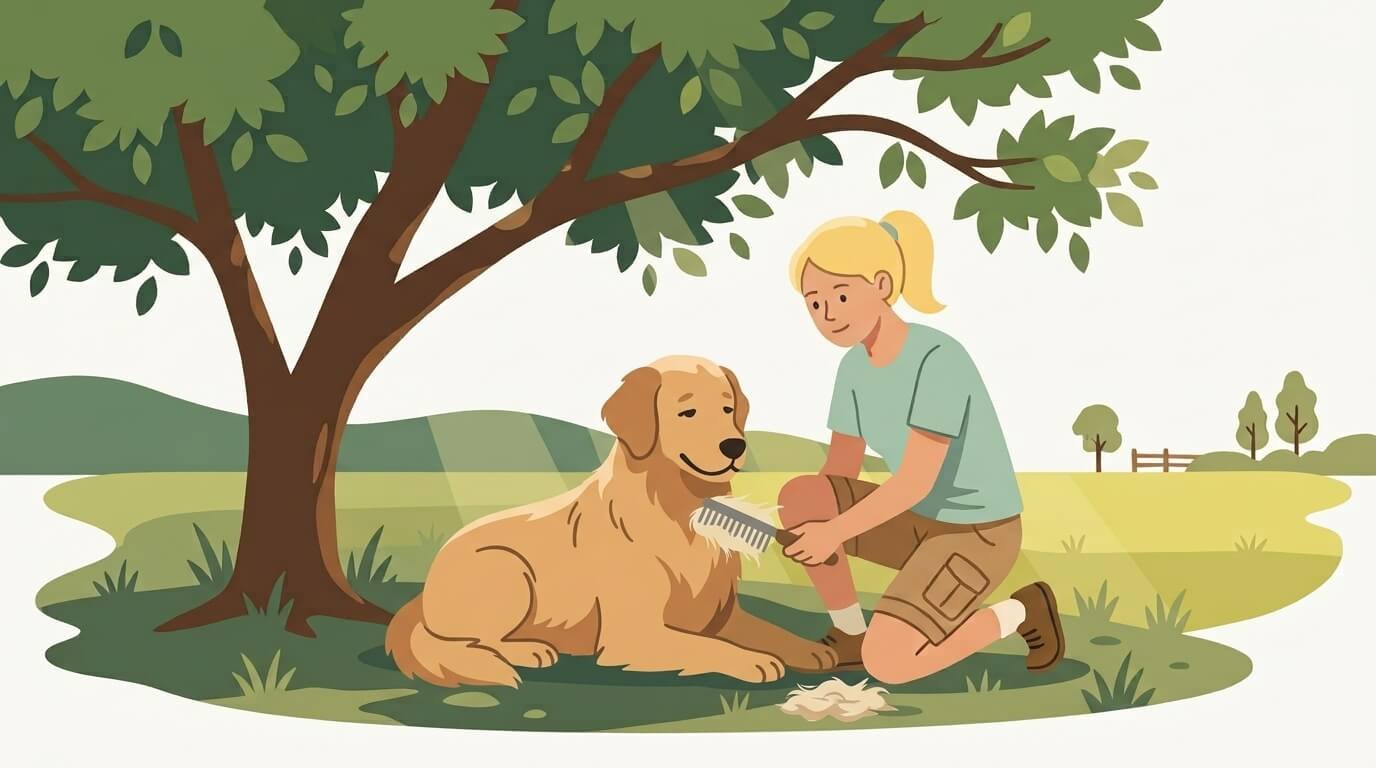
What to Do Instead
Instead of Shaving | Do This |
|---|---|
Shaving the entire coat | Regular brushing to remove dead undercoat |
Shaving down to the skin | Professional "deshedding" treatment |
DIY grooming | Professional groomer for thick-coated breeds |
Shaving in spring | Schedule deshedding appointments before the hot season starts |
Grooming tips for double-coated breeds:
-
Brush at least 2-3 times per week during shedding season
-
Use an undercoat rake to pull out dead fur
-
Bathing helps remove dead coat—ask your groomer for products that aid deshedding
-
A professional deshedding treatment can remove months of dead undercoat in one session
One important exception: Some senior dogs with hormonal issues may develop a coat that doesn’t shed properly and becomes matted. In these cases, a vet or professional groomer may recommend shaving for medical/comfort reasons—not for cooling. This is a veterinary decision, not a cosmetic one.
Most vets and groomers recommend: leave the coat alone and brush it thoroughly. It’s one of the simplest ways to protect high risk dogs from heat stress.
Quick Answer:
Never shave a double-coated dog to keep them cool. The undercoat helps regulate body temperature and protects against sunburn—shaving removes both. Instead, brush 2–3 times a week, use an undercoat rake, and consider a professional deshedding treatment. Only shave for medical reasons, and only on a vet’s recommendation.
Part 4
Senior Dogs, Puppies, and Overweight Dogs
Age, size, and weight all change how a dog handles heat. Senior dogs, puppies, and overweight dogs each face their own challenges—and each needs its own adjustments. Here's what high risk dogs heat care looks like for these three groups.
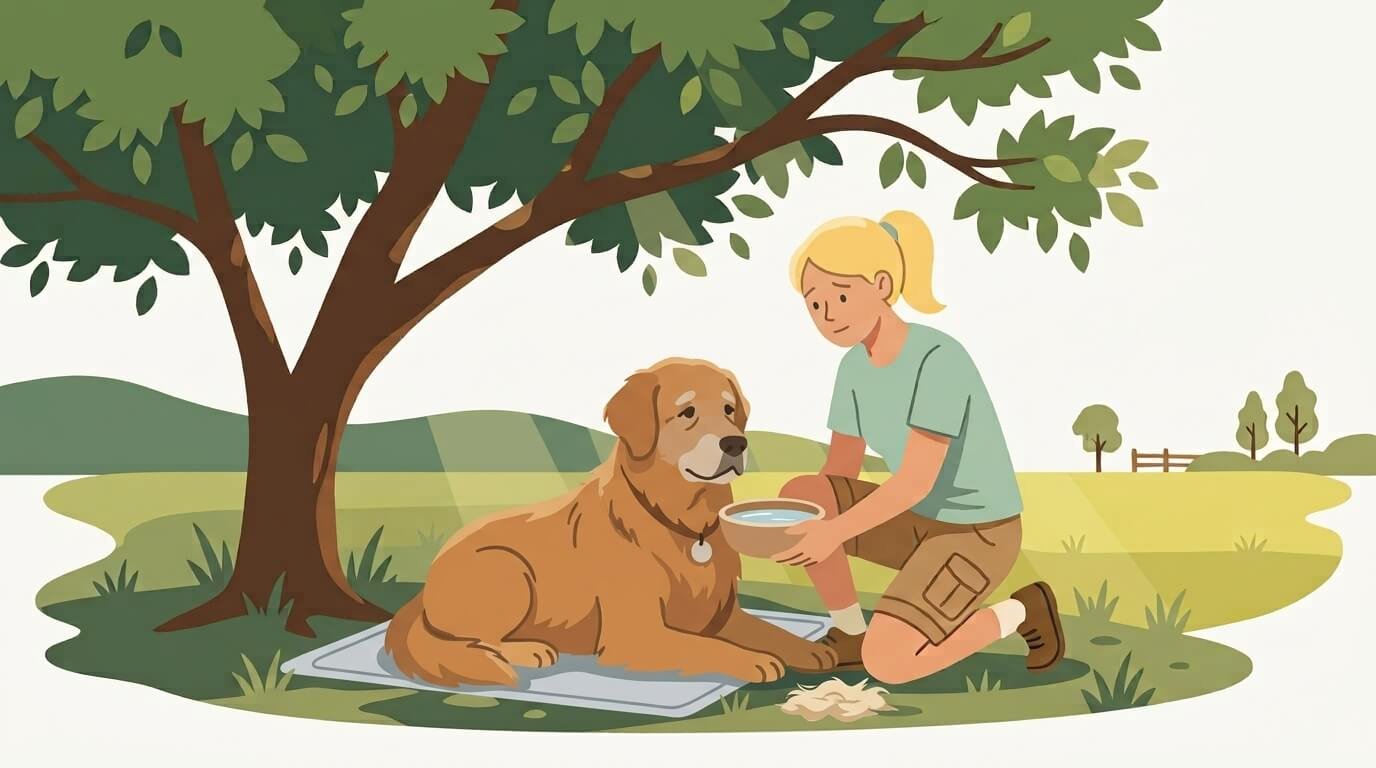
Senior Dogs
As dogs age, their bodies become less efficient at regulating temperature. Many senior dogs also have underlying conditions—heart disease, arthritis, kidney issues—that make heat harder to handle.
What to do:
-
Keep walks shorter than you would for a younger dog.
-
Choose the coolest parts of the day.
-
Watch for early signs of overheating—they appear faster in seniors.
-
Talk to your vet about what exercise is safe for your senior dog.
-
Consider cooling mats for indoor rest.
Puppies
Puppies are bundles of energy—and they don’t know when to stop.
They also have:
-
Underdeveloped temperature regulation systems.
-
Less body mass and less ability to dissipate heat.
-
More enthusiasm than sense.
What to do:
-
Limit playtime on warm days—even indoor play.
-
Provide forced rest breaks (puppies won’t take them on their own).
-
Always offer fresh water and watch their intake.
-
Never walk a puppy on hot pavement—paws burn faster.
-
Introduce outdoor exercise gradually as they grow.
Overweight Dogs
Extra fat is insulation. It traps heat inside the body and makes cooling harder. Overweight dogs also face more strain on their heart and lungs during exercise.
What to do:
-
Summer is a good time for weight management—start a vet-approved diet.
-
Keep exercise gentle and short until weight is reduced.
-
Walk in the coolest part of the day and on soft surfaces.
-
Consider swimming or water-based exercise (if safe for the dog).
-
Don’t overfeed—measure portions, limit treats.
Quick Answer:
Senior dogs, puppies, and overweight dogs each need extra heat precautions. Keep senior walks short and in the coolest part of the day. Limit puppy playtime, provide forced rest breaks, and never walk them on hot pavement. For overweight dogs, start a vet-approved diet, keep exercise gentle, and consider swimming. All three groups are high risk dogs when it comes to heat.
Part 5
Heat Exhaustion in Dogs: Early Warning Signs (High-Risk Edition)
For high-risk dogs, heat exhaustion can come on fast and with less warning than for other breeds. That's what makes high risk dogs heat care so different—you have to act sooner.
Signs Your Dog Is Overheating
Early Signs (Act Now) | Severe Signs (Call the Vet) |
|---|---|
Heavy panting that won't stop | Loss of coordination |
Thick, sticky saliva | Collapse |
Bright red or purple gums | Seizure |
Restlessness or pacing | Vomiting or diarrhea |
Excessive drooling | Glassy eyes |
Lethargy or reluctance to move | Unresponsiveness |
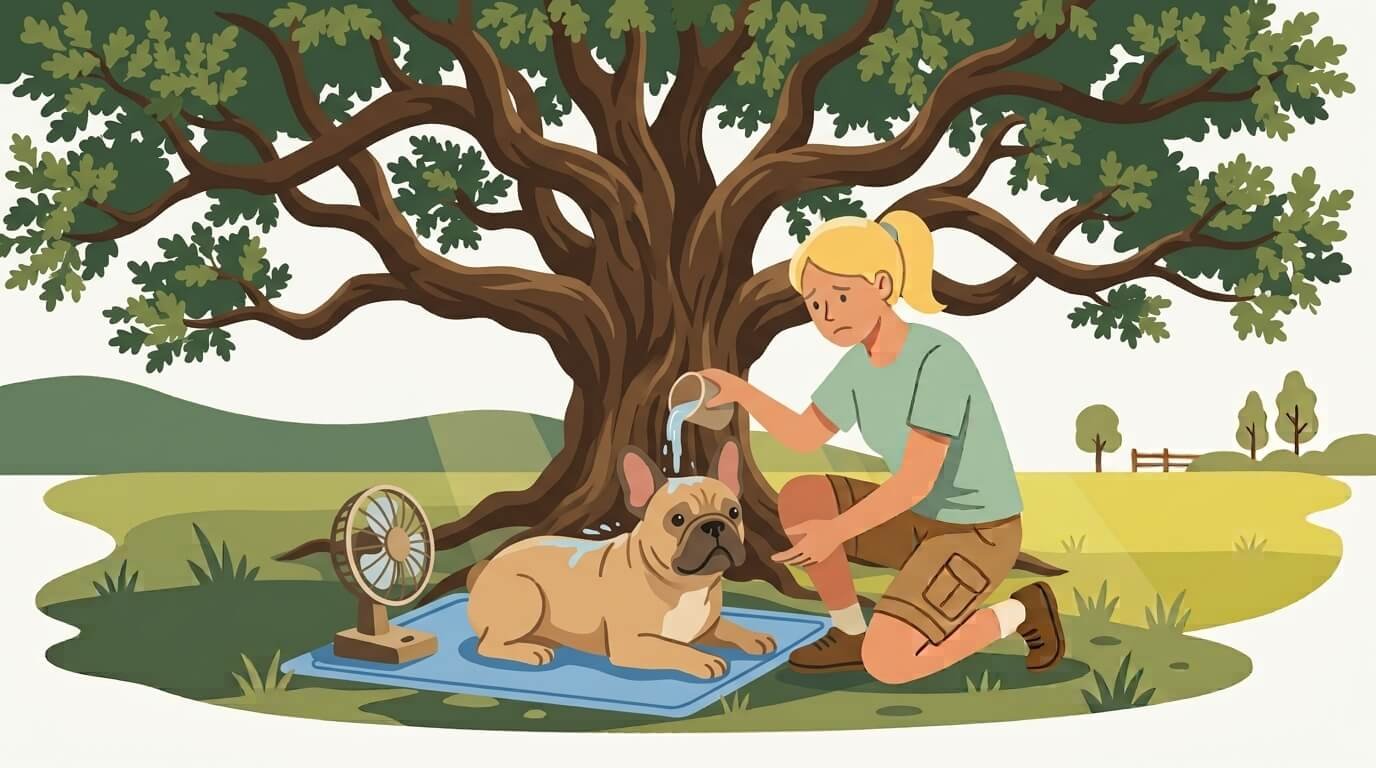
What to Do If You See These Signs
-
Stop all activity immediately.
-
Move to shade or A/C — carry them if they’re weak.
-
Offer small amounts of cool water (if awake and alert).
-
Cool the paws, belly, and groin with cool (not cold) water.
-
Use a fan to create airflow.
-
Call your vet immediately. For severe signs, skip the call and drive to the nearest emergency vet
What NOT to Do
-
No ice water or ice packs. Ice constricts blood vessels and can send your dog into shock. Use cool water instead.
-
No forcing water. If they’re not alert, they can inhale water into their lungs (aspiration pneumonia).
-
No wet towels wrapped around the body. A wet towel helps briefly, but if you don’t change it often, it traps heat like an oven.
-
Don’t “wait and see.” For high-risk dogs, waiting can be fatal. Act now.
Quick Answer:
Early signs of heat exhaustion in high-risk dogs include heavy panting, thick saliva, brick red gums, restlessness, drooling, and lethargy. Severe signs include loss of coordination, collapse, seizure, vomiting, and unresponsiveness. If you see early signs, stop activity, move to shade, offer cool water, and cool the paws, belly, and groin. If you see severe signs, go straight to an emergency vet.
Part 6
High-Risk Dogs in Summer: Daily Safety Checklist
Use this checklist every day during hot months. It's the simplest way to protect high risk dogs from heat—and it only takes a few minutes.
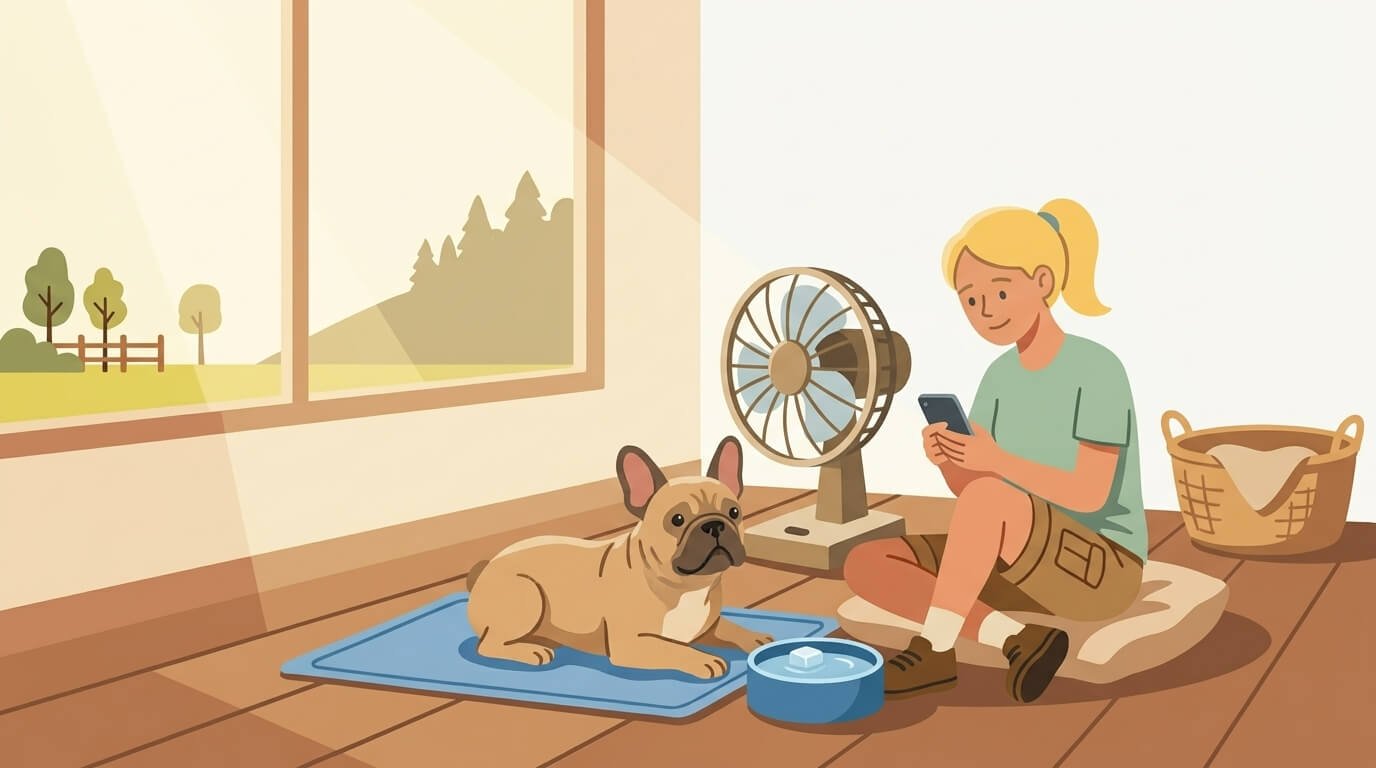
Morning Routine
☐ Walk before 8 AM or after 7:30 PM
☐ Use the 7-second pavement test before stepping out
☐ Bring water on every walk over 15 minutes
☐ Choose shady routes
☐ Keep walks short (5–10 min for flat-faced breeds)
☐ Consider a cooling collar or bandana for extra-hot days
Indoor Care
☐ Keep indoor temperature below 78°F
☐ Provide fresh, cool water at all times
☐ Use cooling mats (for dogs that like them)
☐ Ensure airflow with fans or A/C
☐ Never leave your dog in a parked car
☐ Freeze dog-safe treats or broth cubes for a cooling snack
Know Your Dog
☐ Know your dog’s risk factors
☐ Know your dog’s normal behavior so you can spot abnormal
☐ Know the signs of heat exhaustion
☐ Have your vet’s number and emergency clinic number saved
☐ Know your local pet poison hotline (for emergencies)
When to Skip the Walk Entirely
- Temperature above 80°F + high humidity → skip for flat-faced dogs
- Heat advisory in effect → stay indoors
- Pavement fails the 7-second test → skip or stay on grass
- Your dog seems off → skip and monitor
- Humidity above 70% → shorten or skip the walk
Quick Answer:
For high-risk dogs in summer, walk before 8 AM or after 7:30 PM, do the 7-second pavement test before heading out, and keep walks to 5–10 minutes for flat-faced breeds. Indoors, keep the temperature below 78°F and provide cooling mats and fresh water. Skip the walk entirely if there’s a heat advisory, humidity is high, or your dog seems off.
FAQ: High-Risk Dogs and Summer Heat
Yes. Brachycephalic (flat-faced) breeds like French Bulldogs, Bulldogs, and Pugs are at much higher risk. Other high-risk groups include thick-coated breeds, senior dogs, puppies, overweight dogs, and dogs with pre-existing conditions. If your dog falls into any of these groups, plan walks for early morning or late evening, and watch for early signs of overheating.
Yes—early morning is one of the safest times to walk a high-risk dog. Aim for before 8 AM, before the pavement absorbs heat. Even then, do the 7-second pavement test: place the back of your hand on the ground for 7 seconds. If it's too hot for you, it's too hot for your dog's paws.
Evening walks (after 7:30 PM) are a good alternative if mornings don't work for you. But be careful: pavement can stay hot for hours after sunset, especially in cities and on asphalt. Always do the 7-second test before you head out.
Keep indoor temperature below 78°F, provide fresh cool water at all times, and use cooling mats or fans. For flat-faced dogs, A/C is often non-negotiable in summer. Never leave your dog in a parked car—even for a few minutes.
Call your vet if you see early signs like heavy panting that won't stop, thick saliva, brick red gums, or lethargy. If you see severe signs—loss of coordination, collapse, seizure, or unresponsiveness—skip the call and drive straight to the nearest emergency vet.
Watch for the early signs: lagging behind, heavy panting, thick saliva, and refusing to move. Flat-faced dogs may also start wheezing or making a rasping sound. If you see any of these, stop, move to shade, and offer water.
Start with our Heat & Weather Safety hub, which covers daily checklists, cooling methods, and what to do in an emergency. The Heatstroke in Dogs guide is the most important read in that section.
Sources & Further Reading
This guide combines my own trail experience with these trusted sources:
-
American Veterinary Medical Association (AVMA) — Heatstroke in dogs, hot weather safety
-
American Kennel Club (AKC) — Summer safety, coat care, brachycephalic breeds
-
American College of Veterinary Emergency and Critical Care (ACVECC) — Heat-related injury protocols
-
Journal of Veterinary Internal Medicine — 2020 study on heat-related illness in dogs
-
Humane Society — Hot weather pet safety
Disclaimer: I’m a dog owner, not a veterinarian. This content is for informational purposes only and does not replace professional veterinary advice. For any health concerns regarding your specific dog, please consult a licensed veterinarian.
Final Thoughts
If you own a high-risk dog, you already know they’re special. They’re also more vulnerable—and that means you get to be extra careful for them.
The good news is that most heatstroke cases in high-risk dogs are preventable. It takes awareness, planning, and a willingness to say “no” to a walk when conditions aren’t right.
Your high-risk dog might not be able to join you for a midday summer hike. But they can still enjoy plenty of summer memories with you—in the early morning, in the cool evening, or inside with the A/C running.
They rely on you to be their voice. So listen to what they can’t say. Watch for the signs. And when in doubt, keep them cool. That’s what high risk dogs heat care really comes down to.
More in This Series
Heat and hot weather are just one part of year-round safety. Explore the rest of the series below.
Heatstroke in Dogs: Signs, First Aid, and When to Call the Vet — The most important article in this section. Learn the early signs, what to do in the first 10 minutes, and when to call the vet.
What Temperature Burns Dog Paws? Hot Pavement Safety & Summer Walking Tips — The 7-second pavement test, the real temperature threshold, and how to protect your dog’s paws on hot summer walks.
Dog Paw Pad Burns: How to Treat and Care for Your Dog’s Feet — How to spot a burn, treat it in the field, and prevent it on the next walk.
All part of the Heat & Weather Safety module here on OutdoorDogSafety.com.
Disclaimer: This content is for informational purposes only and does not constitute veterinary or professional safety advice. Always consult with a qualified veterinarian or professional dog trainer regarding your dog’s specific needs and safety considerations.