
Dog Paw Pad Burns:
How to Treat and Care for Your Dog's Feet
Dog paw pad burns are painful and preventable. Here's how to treat them at home—first aid steps, home care tips, signs of infection, and when to call the vet.
You’re out on a walk. Your dog steps onto the pavement, takes a few steps, and suddenly lifts a paw. They stop, look back at you, and refuse to move.
You check their paw. The pad looks red. Maybe a little raw. Maybe you can even see a blister.
Your heart sinks. Did I just burn my dog’s paws?
Here’s the thing: dog paw pad burns are one of the most common summer injuries vets see—and they’re almost always preventable. But when they do happen, knowing what to do in those first few minutes and hours can make a huge difference in how quickly your dog recovers.
In this guide, I’ll walk you through exactly how to treat and care for your dog’s paw pad burns—from what to do right after it happens, to how to manage healing at home, to when you absolutely need to call the vet.
Quick note: I’m a dog owner, not a vet. This guide pulls together recommendations from veterinary experts and animal welfare organizations. For anything concerning your specific dog, always check with your vet.
This is part of our heat safety for dogs series. For an overview of all the key risks, start with the main guide: What Temperature Burns Dog Paws? Hot Pavement Safety & Summer Walking Tips.
What's in This Guide
Click any section to jump straight there:
-
1. How to Tell If Your Dog Has a Paw Pad Burn
-
2. First Aid for Paw Pad Burns: What to Do Right Away
-
3. How to Treat Minor Burns at Home
-
4. When to Call the Vet
-
5. What Vets Do for Serious Paw Burns
-
6. How Long Do Paw Pad Burns Take to Heal?
-
7. How to Prevent Paw Pad Burns This Summer
-
FAQ: Dog Paw Pad Burns & Treatment
(Quick note: I’m a dog owner, not a vet. For anything concerning your specific dog, always check with your vet.)
Part 1
How to Tell If Your Dog Has a Paw Pad Burn
Paw pad burns can look different depending on how hot the surface was and how long your dog was on it. Recognizing the severity early is the first step in dog paw pad burn treatment. Here's what to look for:
Mild burns (first-degree):
-
Your dog lifts their paws or walks differently
-
The pads look slightly pink or red
-
They lick or chew at their paws more than usual
-
The pads feel a bit warm to the touch
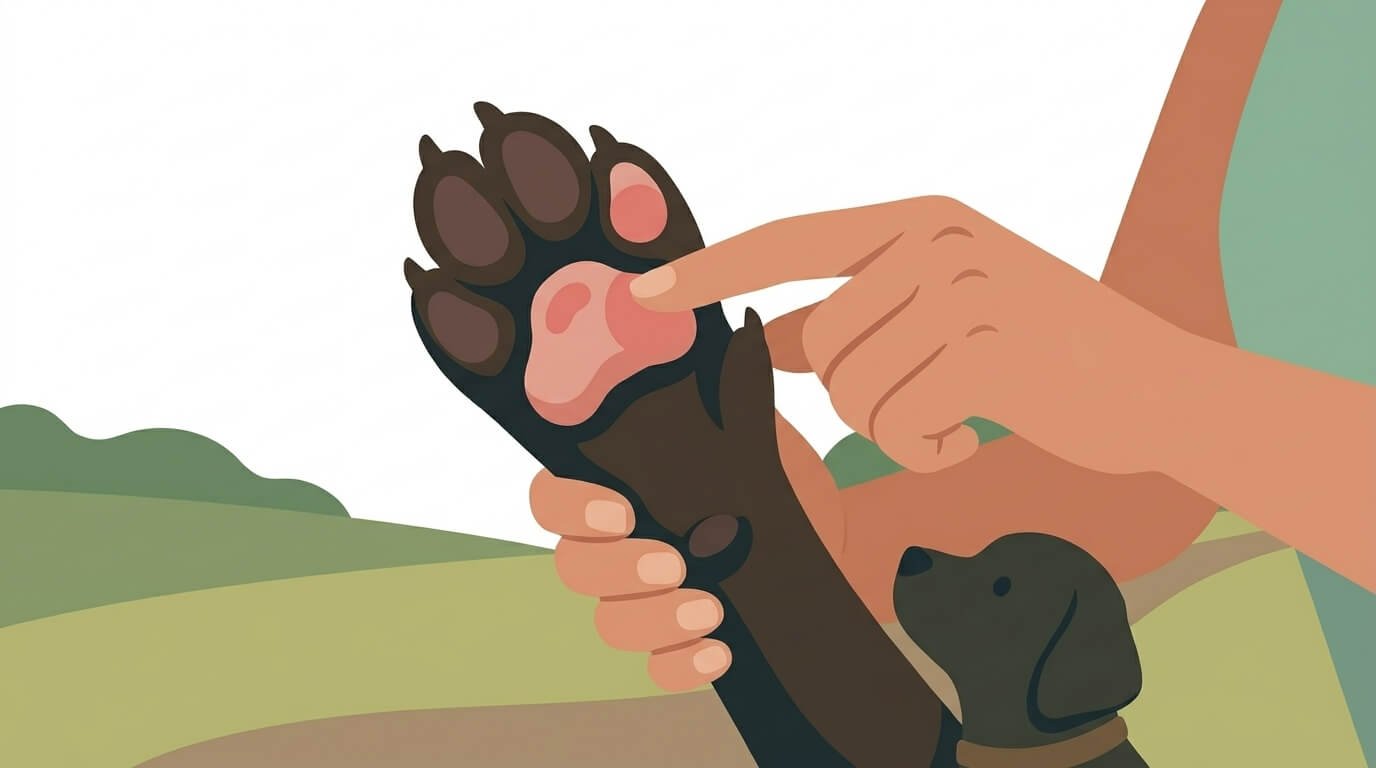
Moderate burns (second-degree):
Visible redness and swelling on the pads
Missing chunks of the pad surface—it may look flaky or peeled
Small blisters or bubbles on or between the pads
Limping or refusing to put full weight on the paw
- Pain when you gently touch the pad
Severe burns (third-degree):
-
Large blisters or open sores
-
Dark, charred-looking, or blackened tissue
-
Bleeding or weeping fluid from the pad
-
Your dog won’t put any weight on the paw at all
-
The pad feels cold to the touch (sign of deep tissue damage)
-
Your dog is lethargic or showing signs of shock
One thing to keep in mind: burns often don’t look their worst immediately. What starts as mild redness can develop into blisters over the next 12–24 hours. Check your dog’s paws carefully after every walk—and check them again a few hours later.
If your dog has severe burns or is showing signs of shock, skip the home treatment and get to a vet immediately.
Quick Answer: Paw pad burns come in three levels: mild (pink pads, slight limping), moderate (redness, swelling, blisters, limping), and severe (open sores, blackened tissue, refusal to walk, signs of shock). Burns often look worse 12–24 hours later, so check your dog’s paws again after every walk. Severe burns need immediate vet care—skip home treatment.
Part 2
First Aid for Paw Pad Burns: What to Do Right Away
If you suspect your dog has burned their paws on hot pavement, here's what to do in the first few minutes—these steps can make a real difference in how quickly they heal. This is the core of dog paw pad burn treatment—what you do in the first 10 minutes matters most.
Step 1: Get them off the hot surface immediately.
Carry your dog if you need to. Don’t let them walk on the hot pavement any longer than they already have. Move them to grass, shade, or indoors.
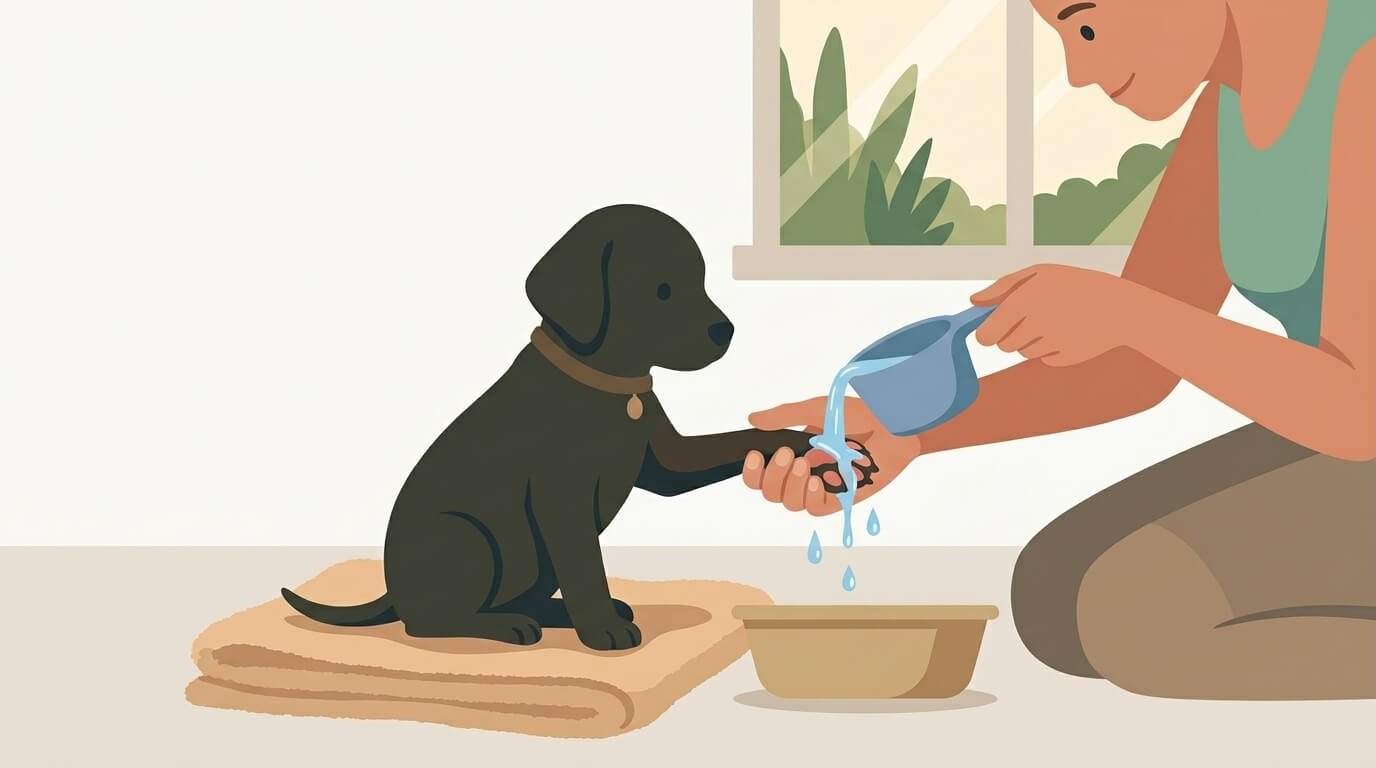
Step 2: Cool the paw with cool (not cold) water.
Run cool tap water over the burned pad for 5–10 minutes. This stops the burning process and provides immediate relief.
-
Use cool water—around 60–70°F (15–21°C). Not ice water.
-
Don’t use ice or ice packs—extreme cold can cause additional tissue damage and constrict blood vessels, which actually slows healing.
Step 3: Gently pat the paw dry.
Use a clean, soft cloth. Don’t rub—the pad may be fragile or blistered.
Step 4: Assess the injury.
Take a close look. Is the pad just red? Or are there blisters, open skin, or dark spots?
This will tell you whether you can manage it at home or need to see a vet.
Step 5: Prevent licking.
Your dog will want to lick the injured paw. Licking introduces bacteria and slows healing. Use an Elizabethan collar (the “cone”) if you have one, or cover the paw with a light bandage or a clean sock if your dog will tolerate it.
If your dog hates the cone: try a soft inflatable collar or a surgical recovery suit. The goal is the same—keep the tongue off the paw.
Step 6: Call your vet for advice.
Even if it looks mild, a quick phone call to your vet is always a good idea. They can help you decide if you need to bring your dog in or if home care is sufficient.
Quick Answer: For dog paw pad burn treatment, act fast: (1) Get your dog off the hot surface. (2) Cool the paw with cool—not cold—water for 5–10 minutes. (3) Gently pat dry. (4) Assess the burn for blisters or dark spots. (5) Prevent licking with a cone or bandage. (6) Call your vet for advice—even mild burns can get worse over 12–24 hours.
Part 3
How to Treat Minor Burns at Home
For mild burns—redness with no blisters or open skin—home care may be enough. Here's what veterinary sources recommend for dog paw pad burn treatment at home.
Daily care routine:
-
Clean gently. Rinse the paw with cool water once or twice a day. If your vet recommends a mild antiseptic (like diluted chlorhexidine or betadine), use it. Follow your vet’s dilution instructions—stronger is not better.
-
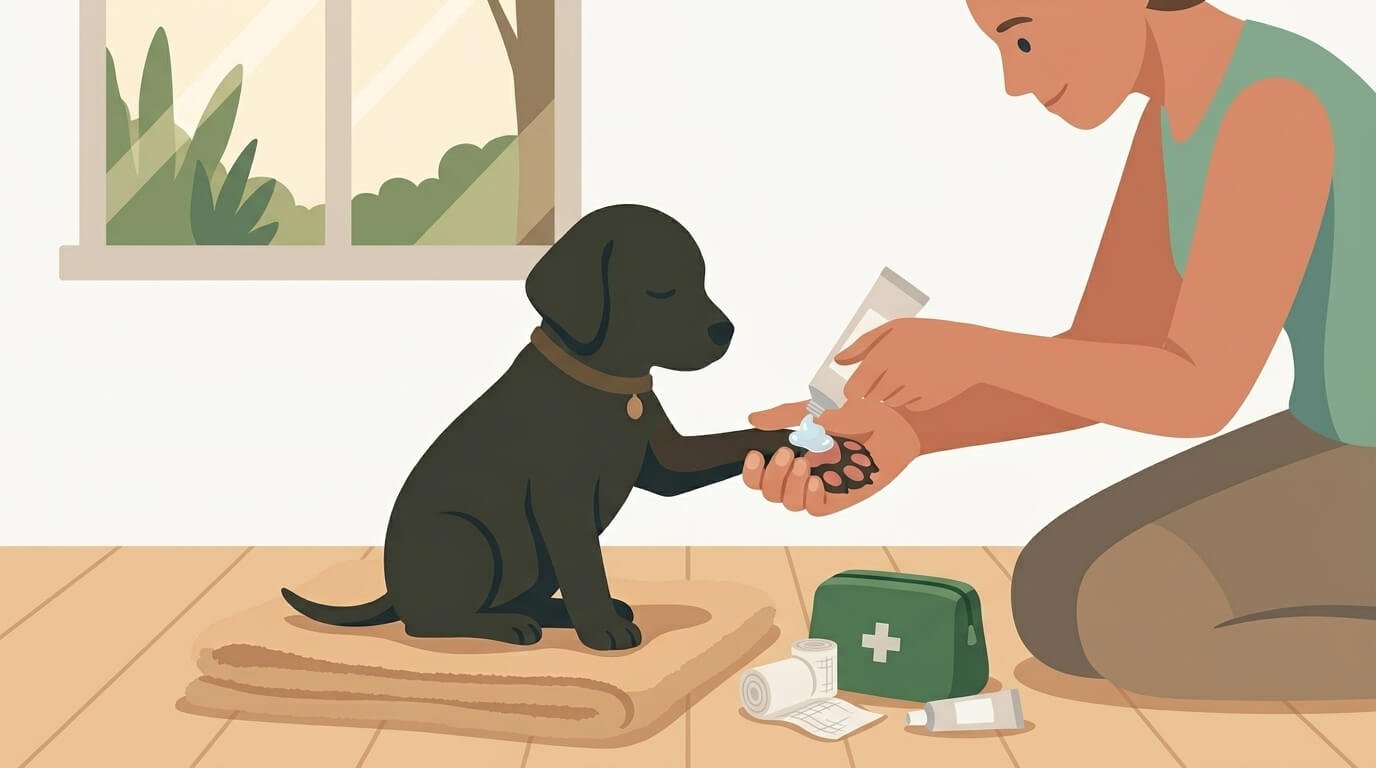
Apply a pet-safe ointment. A thin layer of a pet-safe antibiotic ointment can help. Ask your vet which product they recommend—some human products aren’t safe if licked.
-
Protect the paw. For short periods, you can cover the paw with a light bandage, a dog bootie, or even a clean sock. Keep it loose enough to allow circulation. Change the bandage daily or whenever it gets wet.
-
Restrict activity. Keep your dog off hard surfaces for at least 48 hours. Potty breaks on grass only. No walks on pavement. No running or jumping.
-
Keep the paw dry. Moisture can slow healing and encourage infection. Change bandages if they get wet. Dry the paw thoroughly after cleaning.
What to watch for during home treatment:
Improvement to look for | Concern to watch for |
|---|---|
Redness fading within 24–48 hours | Redness getting worse or spreading |
Less pain when touched | Your dog won't let you touch the paw at all |
Your dog starts using the paw normally | Limping or non-weight-bearing continues |
The pad looks more normal each day | Blisters develop or the pad looks worse |
If you see any of the “concern” signs, call your vet.
Quick Answer:
For mild dog paw pad burns, home care may be enough: clean gently with cool water or diluted antiseptic, apply a pet-safe ointment, protect the paw with a light bandage, restrict activity for 48 hours, and keep the paw dry. Call your vet if redness spreads, blisters form, or your dog won’t put weight on the paw.
Part 4
When to Call the Vet for Paw Pad Burns
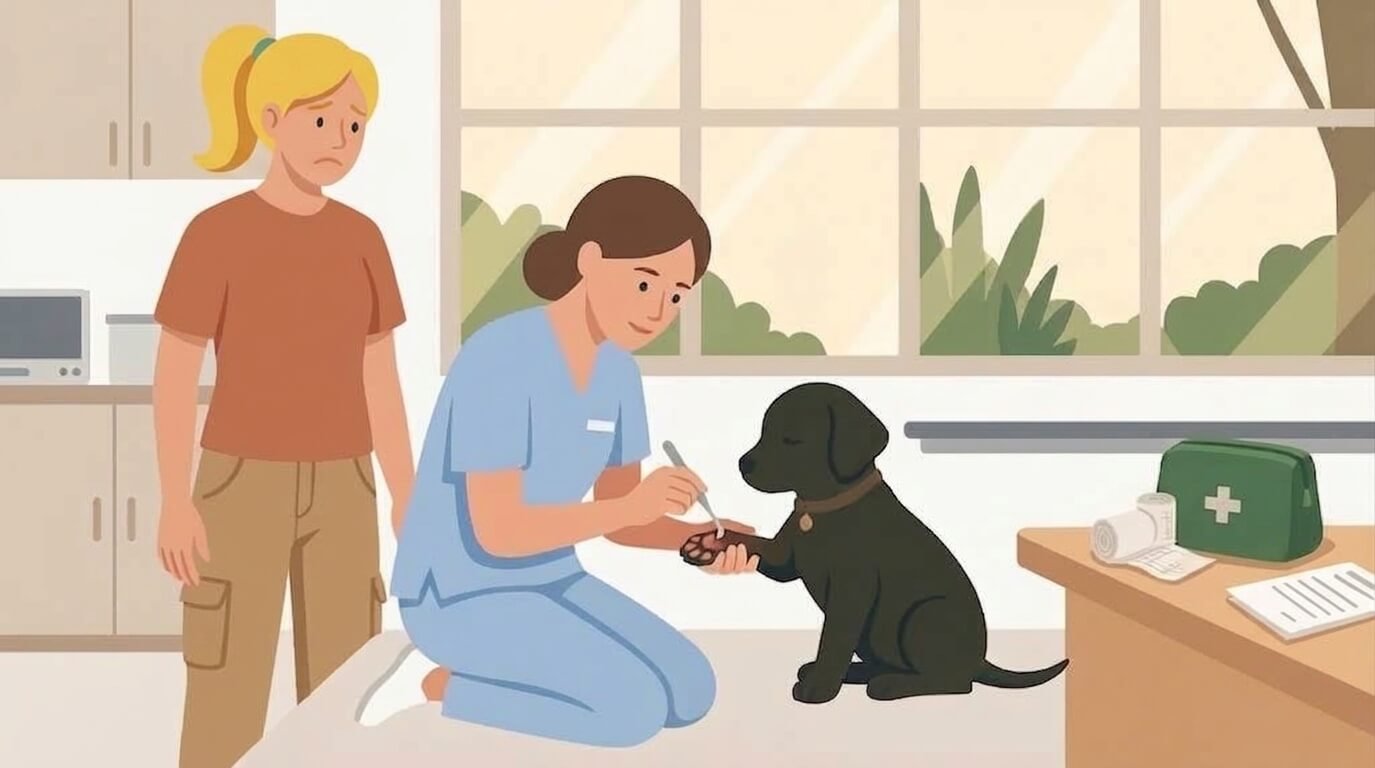
Some paw pad injuries are beyond what you can manage at home. Here's when you should stop home treatment and get professional help—because not every dog paw pad burn can be treated at home.
Symptom | Why It's a Concern |
|---|---|
Open blisters or bleeding | High risk of infection; may need prescription antibiotics |
Charred or blackened tissue | Indicates deep burns that won't heal on their own |
Swelling that spreads up the leg | Could be infection or more extensive damage |
Your dog won't put any weight on the paw | Could be a deep injury or fracture |
Signs of infection (pus, odor, heat) | Needs prescription treatment |
Burns on multiple paws | Usually indicates more severe exposure |
No improvement within 24 hours | May need professional assessment |
Your dog is lethargic, feverish, or not eating | Could be signs of systemic infection |
Don’t wait to see if it “gets better.” By the time an infection is visible, it’s already well established. A quick vet visit can save weeks of recovery time—and prevent a minor injury from becoming a major one.
Quick Answer: Call your vet for dog paw pad burns if you see open blisters, bleeding, charred or blackened tissue, swelling that spreads up the leg, signs of infection (pus, odor, heat), burns on multiple paws, or no improvement within 24 hours. If your dog is lethargic, feverish, or not eating, that could be a systemic infection—go to the vet right away.
Part 5
What Vets Do for Serious Paw Burns
If your vet determines that the burn is moderate to severe, here's what you can expect them to do. Knowing this helps you understand what dog paw pad burn treatment looks like beyond home care.
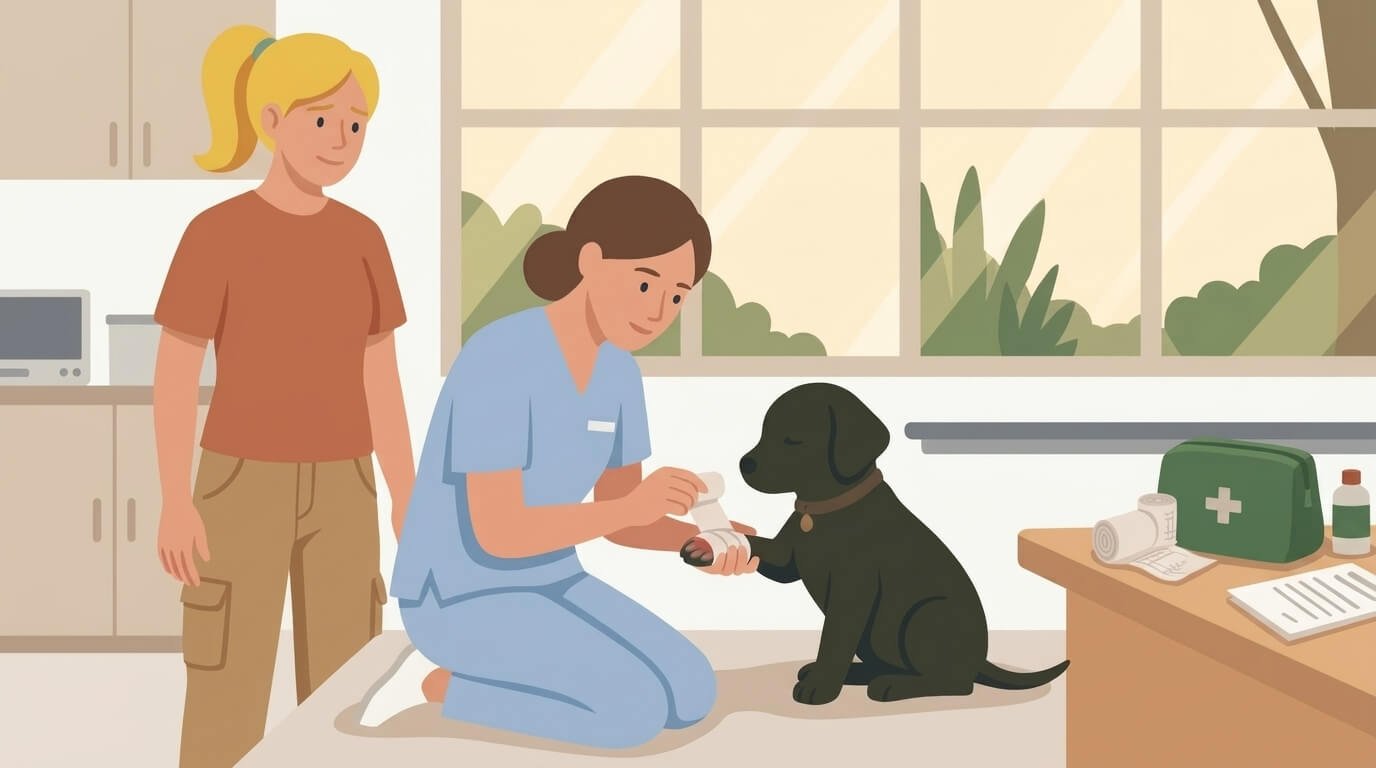
Assessment and cleaning.
Your vet will examine the paw and clean it thoroughly with sterile solutions. They’ll gently remove any dead tissue that could trap bacteria.
Pain management.
Your vet will examine the paw and clean it thoroughly with sterile solutions. They’ll gently remove any dead tissue that could trap bacteria.
Protective bandaging.
Burns are painful. Your vet can prescribe safe pain relievers specifically for your dog. Never use human pain medication on dogs—many are toxic.
Antibiotics.
Your vet will apply a professional bandage that stays in place and protects the healing pad. They’ll show you how to keep it clean and when to change it.
Follow-up care.
Your vet will tell you when to come back for a bandage change and how to monitor the healing at home.
In the worst cases:
For severe burns with deep tissue damage, your dog may need surgery to remove damaged tissue or even skin grafts. This is rare, but it happens—which is why it’s so important to take paw pad injuries seriously from the start.
Quick Answer: For serious paw pad burns, vets typically do five things: assess and clean the wound, manage pain with dog-safe medication, apply a protective bandage, prescribe antibiotics if needed, and schedule follow-up care. In rare cases, severe burns may need surgery or skin grafts—which is why early treatment matters so much.
Part 6
How Long Do Paw Pad Burns Take to Heal?
This is the part that surprises most dog owners: paw pad burns take time.
Unlike skin elsewhere on the body, paw pads are weight-bearing. Every time your dog stands, walks, or even shifts their weight, they're putting pressure on the healing tissue. That slows things down.
Here's a rough timeline for dog paw pad burn treatment recovery:
Burn type | Healing time | Notes |
|---|---|---|
Mild (first-degree) | 5–10 days | Often heals with minimal home care |
Moderate (second-degree) | 2–4 weeks | May need veterinary treatment and protective bandaging |
Severe (third-degree) | 6+ weeks | Requires veterinary care; may need specialized treatment |
Factors that affect healing:
-
Your dog’s age and overall health
-
Whether the paw stays clean and dry
-
Whether your dog leaves the bandage alone
-
How quickly you started treatment
What slows healing:
Allowing your dog to walk on hard surfaces
Licking or chewing the wound
Dirty bandages or moisture trapped against the pad
Not following the vet’s instructions
Quick Answer: Mild dog paw pad burns heal in 5–10 days, moderate burns in 2–4 weeks, and severe burns in 6+ weeks. Healing is slower on paw pads because they’re weight-bearing—every step puts pressure on the healing tissue. Keep the paw clean and dry, prevent licking, and follow your vet’s instructions to speed recovery.
Part 7
How to Prevent Dog Paw Pad Burns This Summer
The best treatment is always prevention. Here are the key strategies veterinary and animal welfare organizations recommend—because the best dog paw pad burn treatment is the one you never need.
Use the 7-second pavement test.
Press the back of your hand against the pavement for seven seconds. If it’s too hot for you, it’s too hot for your dog. Do this before every walk.
Time your walks.
Walk early in the morning (before 8 AM) or later in the evening (after 7:30 PM) when pavement has cooled down.
Choose your route carefully.
Grass and dirt stay cooler than asphalt. Shaded sidewalks are safer than unshaded ones. Even a short stretch of grass can give your dog’s paws a break.
Consider booties.
Booties can protect paws on hot surfaces. They need to be introduced gradually—don’t put them on for the first time on a hot day and expect your dog to be comfortable.
Check paws after every walk.
Make it a habit. Look for redness, cuts, or anything that seems off. Catching a burn early makes treatment much easier.
Keep paw pads healthy year-round.
Healthy, well-moisturized pads are less prone to cracking. Use a pet-safe paw balm regularly, and check for dryness or cracks during winter months too.
Quick Answer: To prevent dog paw pad burns, do the 7-second pavement test before every walk, walk early morning or late evening, choose grass and shaded routes, introduce booties gradually, check paws after every walk, and keep pads moisturized year-round. Prevention is the best dog paw pad burn treatment there is.
FAQ: Dog Paw Pad Burns & Treatment
Some human antibiotic ointments are safe in small amounts—but ask your vet before using any product on an open wound. Never use products with pain relievers (like hydrocortisone or lidocaine)—they're toxic to dogs. Pet-safe alternatives are available and are usually a better choice.
Yes—black, charred, or dark tissue is a sign of a severe (third-degree) burn. This is a medical emergency. Don't try to treat it at home. Cover the paw with a clean, dry bandage and get to a vet immediately.
For mild burns, a light, loose bandage or a clean sock can protect the paw for short periods. For moderate to severe burns, don't bandage it yourself—wrap it loosely with clean gauze to prevent contamination, and let your vet apply a proper bandage. Never wrap tightly; it can cut off circulation.
Yes. Limping can be caused by cuts, punctures, foreign objects (like glass or foxtails), sprains, or fractures—not just burns. Examine the paw carefully, look between the toes, and feel for swelling or heat. If you can't find the cause, or your dog won't put weight on the paw, call your vet.
Yes—short potty breaks on grass are usually fine, and grass is much cooler than pavement. Keep them brief, avoid running or jumping, and check the paw afterward. If the grass is wet or muddy, dry the paw thoroughly before going back inside.
Change the bandage at least once a day—or more often if it gets wet or dirty. A wet bandage traps moisture against the pad and can encourage infection. If your vet applied the bandage, follow their instructions exactly.
Sources & Further Reading
This guide combines my own trail experience with these trusted sources:
-
American Veterinary Medical Association (AVMA) — Burn injuries in animals, hot weather safety
-
American College of Veterinary Emergency and Critical Care (ACVECC) — Heat-related injuries and treatment protocols
-
American Kennel Club (AKC) — Paw care, summer safety tips
-
Humane Society of the United States — Hot weather pet safety
Disclaimer: I’m a dog owner, not a veterinarian. This content is for informational purposes only and does not replace professional veterinary advice. For any health concerns regarding your specific dog, please consult a licensed veterinarian.
Final Thoughts
Seeing your dog in pain is hard—especially when you know it could have been prevented.
But here’s the thing: paw pad burns happen to good dog owners. It doesn’t mean you’re careless. It means you didn’t know something. Now you do.
The next time you’re out on a summer walk, check the ground before your dog steps on it. And if you ever find yourself treating a burned paw, you’ll know exactly what to do—and when to call for help.
Your dog’s paws take them everywhere. With a little care, they’ll keep taking them there for years to come.
More in This Series
Heat and hot weather are just one part of year-round safety. Explore the rest of the series below.
Heatstroke in Dogs: Signs, First Aid, and When to Call the Vet — The most important article in this section. Learn the early signs, what to do in the first 10 minutes, and when to call the vet.
What Temperature Burns Dog Paws? Hot Pavement Safety & Summer Walking Tips — The 7-second pavement test, the real temperature threshold, and how to protect your dog’s paws on hot summer walks.
High-Risk Dogs and Heat: Summer Safety for Flat-Faced, Senior, and Fluffy Breeds — Why some dogs struggle in heat more than others — and how to adjust.
All part of the Heat & Weather Safety module here on OutdoorDogSafety.com.
Disclaimer: This content is for informational purposes only and does not constitute veterinary or professional safety advice. Always consult with a qualified veterinarian or professional dog trainer regarding your dog’s specific needs and safety considerations.