
Crash-Tested Harness vs Crate:
Which Is Safer for Your Dog?
Choosing a crash tested dog harness or a crate doesn't have to be complicated. Here's what the crash tests actually show—and which one fits your dog and your life.
Let me start with something that might surprise you.
In one ADAC crash test, a simple harness carabiner snapped on impact. The 22-pound test dog—weighing the equivalent of over half a ton at 50 km/h—flew forward like a missile into the front seat. In another test, a soft carrier crushed under the force of the seatbelt, leaving the dog dummy with no protection at all.
The Center for Pet Safety has tested close to 400 pet travel products since 2011. Most failed. Some catastrophically.
But here’s the good news: a handful of products actually work. And when you know what to look for, choosing between a crash tested dog harness and a crate becomes much clearer.
In the first guide, we covered the three main restraint types. Now let’s go deeper into the two options that actually provide crash protection: crash tested dog harnesses and crash-tested crates—and why the crash tested dog harness vs crate debate matters for every dog owner. This is one of the most important decisions in dog travel safety—and a core part of outdoor dog safety.
What's in This Guide
In this guide, I’ll walk you through:
How crash tests work — the science behind the certifications
Crash-tested crates — the gold standard, who it’s for, and what it costs
Crash-tested harnesses — the practical alternative, when it works, and when it doesn’t
Side-by-side comparison — which one wins in each category
How to choose — based on your dog, your car, and your lifestyle
What to avoid — the “Wild West” of the pet safety industry
Real-world scenarios — which option works best for different situations
Certified product list — where to find products that actually pass the tests
The bottom line: This guide breaks down the crash tested dog harness vs crate debate—what the tests actually show, what matters, and how to choose the safest option for your dog.
Let’s get started.
Part 1
How Crash Tests Actually Work
Before we compare the crash tested dog harness with a crate, let's understand how they're tested—because the testing itself tells you a lot about what to trust.
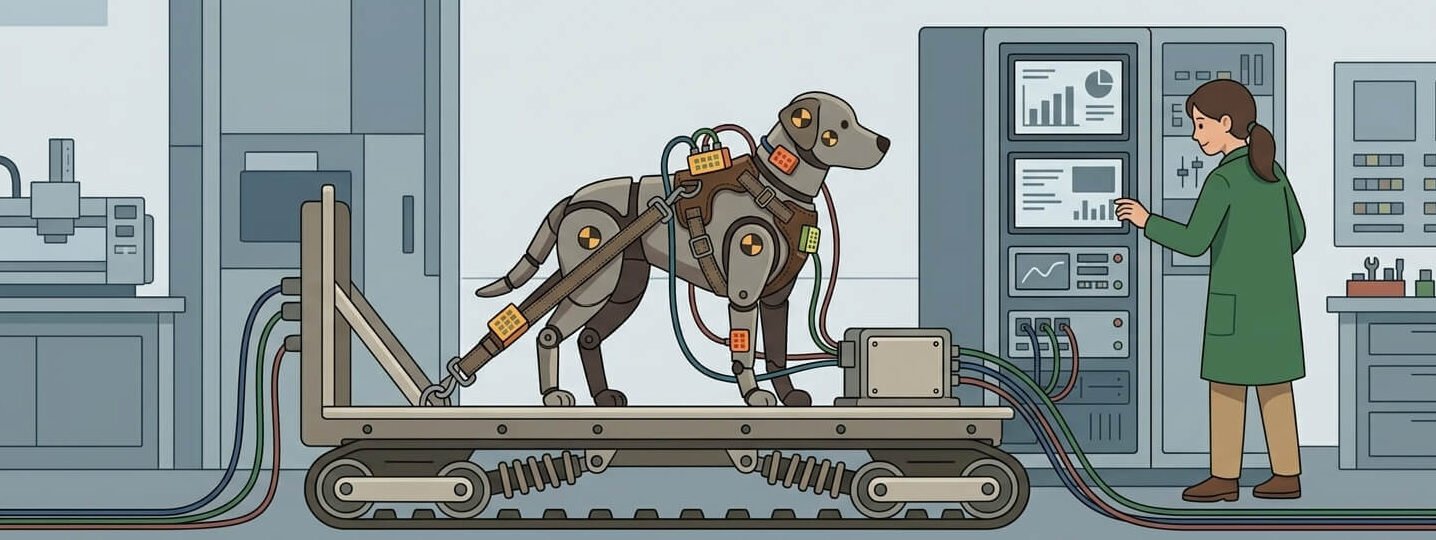
The Center for Pet Safety (CPS), a nonprofit founded by Lindsey Wolko after her own dog was injured in a car accident, has become the most trusted name in pet travel safety testing. They use anatomically correct crash-test dog dummies—weighted to match real dogs of different sizes, with the same center of gravity—and run them through 30 mph crash simulations.
ADAC, Germany’s automobile club, runs similarly rigorous tests, including emergency braking from 100 km/h and moose-test evasion maneuvers. They’ve consistently found that crates provide the highest level of protection, but only when properly installed and the right size for the dog.
What they look for:
Does the restraint keep the dog on the seat (or inside the crate)?
Does it prevent forward launch?
Does it reduce side-to-side and rotational movement?
Do the stitching, hardware, and attachment points hold?
The results have been eye-opening. Most products fail. The ones that pass are clearly certified—and those are the only ones worth considering when deciding whether a crash tested dog harness is right for your dog. This is the foundation of dog travel safety—knowing what’s actually been tested.
Quick answer: Crash tests for dog restraints are run by independent organizations like the Center for Pet Safety (CPS) and ADAC. They use anatomically correct dog dummies and run 30 mph crash simulations, checking whether the restraint keeps the dog on the seat, prevents forward launch, reduces side-to-side movement, and holds up under impact. Most products fail. The ones that pass are clearly certified—and those are the only ones worth considering when you’re choosing a crash tested dog harness.
Part 2
Option 1: Crash-Tested Crate (The Gold Standard)
A crate that has been independently crash-tested and strapped down in your vehicle is the safest way to travel with a dog. Period. In the crash tested dog harness vs crate debate, this is the protection champion.
What It Is
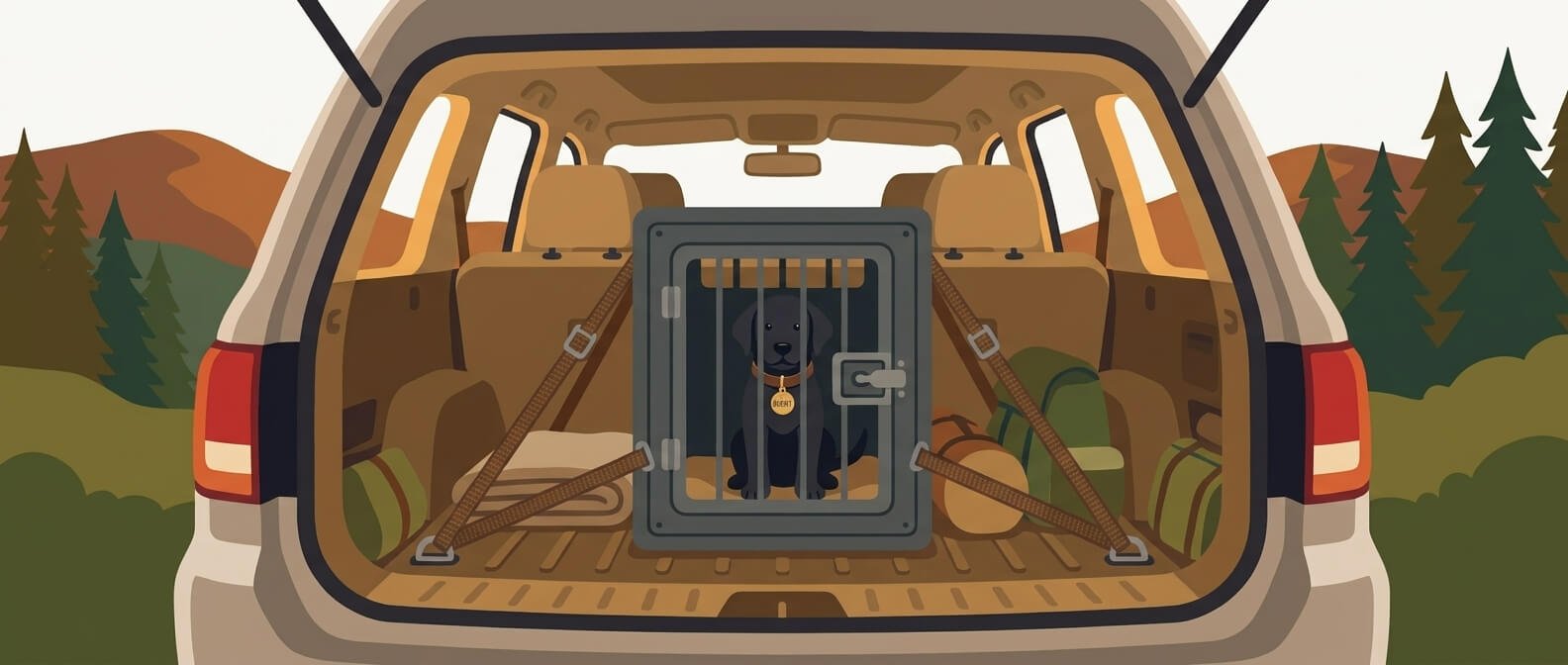
A rigid, reinforced crate designed specifically for vehicle travel. It’s secured to the vehicle using anchor straps attached to cargo tie-down points or, for smaller crates, seatbelt or ISOFIX/LATCH anchors in the back seat. The crate protects the dog from all sides and contains them completely in a crash, preventing them from becoming a projectile.
Who It's For
Dogs who feel safe in their own “den”
Owners who have the space (SUVs, wagons, trucks)
Larger breeds (50+ lbs)
Dogs who get anxious in open spaces
Owners who want the absolute maximum protection
Where It Goes
Large crates: cargo area of an SUV or wagon, strapped against the rear seatbacks
Small crates (for dogs under 33 lbs / 15 kg): back seat footwell or secured on the seat with seatbelt or ISOFIX anchors
Pros:
Highest level of crash protection available
Protects the dog from all sides in a collision
Prevents roaming and driver distraction
Familiar environment can reduce anxiety
Often doubles as a crate at your destination
Keeps cargo area organized and clean
Cons:
Takes up significant space
Expensive ($400–$1,200+)
Heavy and awkward to move in and out
Requires proper anchoring—not just “wedged in”
Not practical for small cars
What the Crash Tests Show
ADAC and TÜV SÜD consistently rate crash-tested crates as the safest option. In tests, crates that are properly anchored—either in the cargo area against the seatbacks or in the backseat footwell—contain the dog completely and absorb impact energy.
But the key word is “properly.” A crate that’s just sitting loose in the cargo area becomes a projectile itself. In one test, an unsecured crate and dog together reached 300–400 kg of impact mass at just 31 mph. That’s enough to crush anyone in its path.
Certified Brands to Look For
Gunner—independently CPS-certified
Rock Creek—CPS-certified
4×4 North America—CPS-certified
Variocage—ADAC and TÜV SÜD tested
Ruff Land—widely used in professional settings
Quick answer: A crash-tested crate is the safest option for car travel—when properly anchored. It protects the dog from all sides, prevents roaming and distraction, and contains them completely in a collision. It’s best for dogs who feel safe in a “den,” owners with SUVs or wagons, and larger breeds (50+ lbs). The downsides: it’s expensive ($400–$1,200+), takes up space, and must be anchored—a loose crate becomes a projectile itself. Certified brands include Gunner, Rock Creek, 4×4 North America, Variocage, and Ruff Land. In the crash tested dog harness vs crate debate, the crate wins on protection—if you have the space and budget.
Part 3
Option 2: Crash-Tested Harness (The Practical Alternative)
A crash tested dog harness is the most practical choice for most owners — it's affordable, fits any car, and provides solid protection when properly fitted. When weighing the crash tested dog harness vs crate decision, this is the flexible option.
What It Is
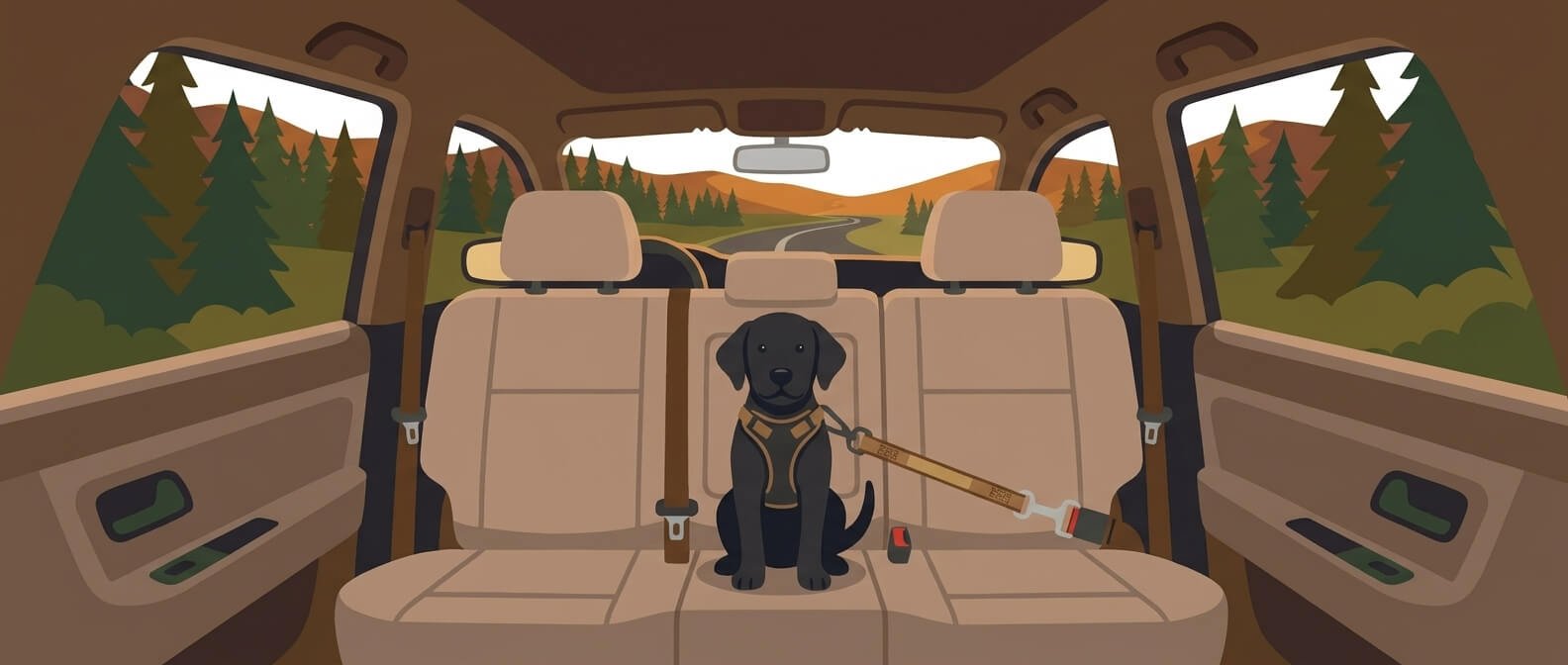
A padded dog harness specifically designed for car travel, with a tether that connects to the vehicle’s seatbelt or ISOFIX/LATCH anchors. The harness distributes crash forces across the dog’s chest (not the neck) and keeps them on the seat during a collision.
Who It's For
Dogs 18–90 lbs (check individual product weight limits)
Owners who don’t have space for a crate
Dogs who prefer being near people
Families who need to move the restraint between vehicles
Owners on a budget
Where It Goes
Backseat only—never the front seat. The harness connects to the seatbelt buckle, ISOFIX anchors, or LATCH system, and the dog sits on the seat, facing forward or lying down.
Pros:
Fits any car
Easy to put on and take off
More affordable ($50–$150)
Dog can sit, stand, or lie down comfortably
Some double as walking harnesses
Good for dogs who don’t like being confined
Cons:
Less protection than a crate in severe crashes
Can twist in a collision if not properly adjusted
Only works if perfectly fitted (too loose = dangerous)
Some dogs find the tether restrictive or chew on it
Doesn’t protect from side impact or intrusion
What the Crash Tests Show
The Center for Pet Safety’s first major study tested seven harnesses at 30 mph. Only one passed—the Sleepypod Clickit Utility Harness, which consistently kept the dog dummies on the seat, prevented forward launch, and reduced side-to-side movement.
The others had hardware problems, stitching failures, and catastrophic breakdowns. In many cases, the dog flew off the seat or out of the harness entirely.
Since then, a handful of harnesses have passed CPS testing. But the industry remains largely unregulated. The CPS has certified only 16 products since 2011, and just 13 are currently on the market.
That’s why choosing a crash tested dog harness requires careful attention to certification—not just marketing claims.
Certified Brands to Look For
Sleepypod Clickit Sport—CPS-certified for dogs up to 90 lbs
Sleepypod Clickit Terrain—CPS-certified
Kurgo Impact—CPS-certified
Ruffwear—some models have passed CPS testing
Fit Is Everything
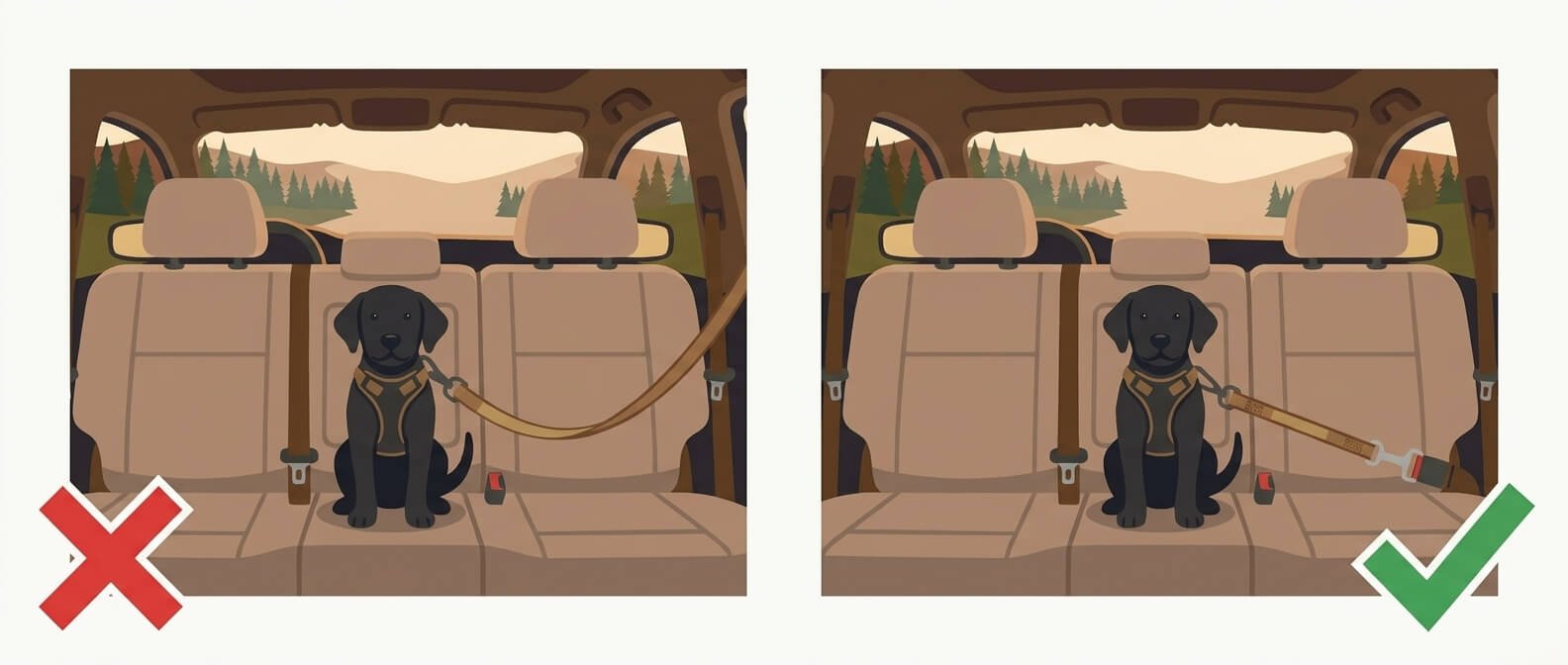
A crash tested dog harness that doesn’t fit properly is almost as dangerous as no restraint at all. It needs to be snug across the chest (not the throat) and the tether should be short enough that the dog can’t reach the front seats. In the crash tested dog harness vs cratechoice, a poorly fitted harness loses much of its safety advantage.
Note: Some harnesses don’t work for certain breeds. Sleepypod warns that their harnesses may not provide a safe fit for breeds with unique body types like Greyhounds, Whippets, Salukis, Afghan Hounds, and Borzoi.
Quick answer: A crash tested dog harness is the most practical option for most dog owners—affordable, fits any car, and provides solid protection when properly fitted. But most harnesses on the market are not crash-tested. The Center for Pet Safety tested seven harnesses at 30 mph and only one passed. Since 2011, only 16 products have been certified. Certified brands include Sleepypod Clickit Sport, Sleepypod Clickit Terrain, Kurgo Impact, and some Ruffwear models. Fit is everything—a poorly fitted harness is almost as dangerous as no restraint at all. In the crash tested dog harness vs crate debate, the harness is the flexible option—if you choose a certified one.
Part 4
Side-by-Side Comparison: Crash Tested Dog Harness vs Crate
Here's how the two options stack up across the categories that matter most—protection, cost, convenience, and comfort.
Category | Crash-Tested Crate | Crash-Tested Harness |
|---|---|---|
Crash Protection | ★★★★★—protects from all sides | ★★★★☆—keeps dog on seat |
Prevents Distraction | ★★★★★—completely contained | ★★★★☆—restricted movement |
Space Required | ★☆☆☆☆—large, cargo area only | ★★★★★—fits any car |
Cost | $$$ ($400–$1,200+) | $$ ($50–$150) |
Ease of Use | ★★☆☆☆—heavy and bulky | ★★★★★—easy on/off |
Portability | ★★★★☆—den-like | ★★★★★—moves between cars easily |
Dog's Comfort | ★★★★☆ — den-like | ★★★★☆—can sit/stand/lie |
Best For | Large dogs, SUVs/wagons, max protection | Most owners, small cars, budget-conscious |
When considering the crash tested dog harness vs crate decision, this comparison shows that each option excels in different areas—there’s no single “best” choice for everyone. That’s the practical reality of dog travel safety—the right answer depends on you and your dog.
Quick answer: In the crash tested dog harness vs crate comparison, a crate wins on crash protection and distraction prevention—but takes up space, costs more, and isn’t portable. A harness wins on space, cost, portability, and ease of use—but offers slightly less protection in severe crashes. Crates are best for large dogs, SUVs, and maximum protection. Harnesses are best for most owners, small cars, and budget-conscious buyers. There’s no single “best” choice—the right one depends on your dog, your car, and your lifestyle.
Part 5
How to Choose: Decision Framework
Still not sure which one is right for you in the crash tested dog harness vs crate debate? Here's my recommendation based on your specific situation:
Choose a Crash-Tested Crate If:
You have an SUV, wagon, or truck with cargo space
Your dog is over 70 lbs (larger dogs need the extra protection)
Your dog is anxious and prefers enclosed spaces
You want the absolute maximum protection available
You can afford the investment ($400+)
You don’t need to move the restraint between vehicles frequently
Choose a Crash-Tested Harness If:
You have a sedan, compact car, or small SUV
Your dog is between 18–90 lbs and falls within the product’s weight range
You’re on a budget ($50–$150)
You need to use the restraint in multiple vehicles
Your dog doesn’t like being confined
You want something easy to put on and take off
In most cases, a crash tested dog harness is the best starting point for the average dog owner. It’s affordable, practical, and fits any vehicle.
The Compromise Option
If you have the space but can’t afford a high-end crate, consider a crate in the cargo area paired with a barrier. The barrier protects the passengers, while the crate protects the dog. But remember: ADAC tests show that a barrier alone is not enough—the dog still hits the barrier and walls unrestrained in a crash. This isn’t a true crash tested dog harness vs crate choice, but it’s a middle ground for some owners.
Quick answer: Choose a crash-tested crate if you have an SUV, wagon, or truck, your dog is over 70 lbs, they prefer enclosed spaces, and you want the absolute maximum protection. Choose a crash tested dog harness if you have a sedan or compact car, your dog is 18–90 lbs, you’re on a budget ($50–$150), or you need to use the restraint in multiple vehicles. For most owners, a crash tested dog harness is the best starting point. If you have space but not the budget for a high-end crate, pair a crate with a barrier—but don’t rely on a barrier alone.
Part 6
What to Avoid: The "Wild West" of the Pet Safety Industry
Here's the uncomfortable truth: the pet travel safety industry is almost entirely unregulated.
Unlike child car seats, which must meet strict federal safety standards, dog restraints have no mandatory testing. The USDA, FDA, FTC, and Consumer Product Safety Commission don't oversee pet travel products.
That means any company can slap "crash-tested" on their product without proving anything.
Red Flags to Watch For
The product says “crash-tested” but doesn’t name an independent testing organization—if it’s not CPS, ADAC, or TÜV SÜD certified, assume it hasn’t been properly tested. A true crash tested dog harness will have clear certification.
It’s cheap—a $20 “seatbelt strap” on Amazon is almost certainly untested and will snap on impact.
It attaches to the dog’s collar—this is a broken neck waiting to happen. A collar attachment can cause catastrophic neck and spinal injuries.
The tether is too long—if your dog can reach the front seats, the harness isn’t doing its job.
No clear fit instructions—proper fit is critical. If the manufacturer doesn’t provide clear sizing guidelines, move on.
What the Experts Say
Lindsey Wolko, founder of the Center for Pet Safety, puts it bluntly: “If it is not on our list, do not buy the product.”
Out of nearly 400 products tested since 2011, only 16 have received CPS certification.That’s a 4% pass rate. That’s why the crash tested dog harness vs crate decision should always start with checking the CPS certification list.
Quick answer: The pet travel safety industry is almost entirely unregulated. Unlike child car seats, dog restraints have no mandatory testing—any company can claim “crash-tested” without proof. Watch for these five red flags: (1) the product claims “crash-tested” but doesn’t name CPS, ADAC, or TÜV SÜD; (2) it’s suspiciously cheap ($20 seatbelt straps on Amazon); (3) it attaches to the collar (broken neck risk); (4) the tether is too long (dog can reach the front seats); (5) no clear fit instructions. As Center for Pet Safety founder Lindsey Wolko says: “If it is not on our list, do not buy the product.” Out of nearly 400 products tested since 2011, only 16 received CPS certification—a 4% pass rate.
Part 7
Real-World Scenarios
The right restraint depends on your dog, your car, and your lifestyle. Here are four common scenarios—and what I'd recommend for each.
Scenario 1: You Drive a Small Car and Have a 40-lb (18 kg) Dog
Recommendation: Crash-tested crate (if budget allows).
A crate in the cargo area, strapped against the seatbacks, is the safest option for a large dog. Look at Gunner or Ruff Land—they’re expensive but offer the highest level of protection. If the budget doesn’t allow, a crash tested dog harness like the Sleepypod Clickit Sport (rated to 90 lbs) is the next best thing.
Scenario 2: You Drive an SUV and Have a 75-lb (34 kg) Golden Retriever
Recommendation: Crash-tested crate (if budget allows).
A crate in the cargo area, strapped against the seatbacks, is the safest option for a large dog. Look at Gunner or Ruff Land—they’re expensive but offer the highest level of protection. If the budget doesn’t allow, a crash tested dog harness like the Sleepypod Clickit Sport (rated to 90 lbs) is the next best thing.
Scenario 3: You Drive a Truck and Have Two Dogs
Recommendation: Two crates or two harnesses.
If you have the space, two crates side-by-side in the cargo area is ideal. If not, two CPS-certified harnesses in the backseat, each properly tethered, is the next best option. And never put two dogs in one restraint. A crash tested dog harness works for each dog individually.
Scenario 4: You Need to Move the Restraint Between Multiple Vehicles
Recommendation: Crash tested dog harness.
Harnesses are portable and easy to move between cars. A crate is heavy, bulky, and not practical for frequent transfers. If you regularly switch vehicles, the harness wins in the crash tested dog harness vs crate decision.
Quick answer: The pet travel safety industry is almost entirely unregulated. Unlike child car seats, dog restraints have no mandatory testing—any company can claim “crash-tested” without proof. Watch for these five red flags: (1) the product claims “crash-tested” but doesn’t name CPS, ADAC, or TÜV SÜD; (2) it’s suspiciously cheap ($20 seatbelt straps on Amazon); (3) it attaches to the collar (broken neck risk); (4) the tether is too long (dog can reach the front seats); (5) no clear fit instructions. As Center for Pet Safety founder Lindsey Wolko says: “If it is not on our list, do not buy the product.” Out of nearly 400 products tested since 2011, only 16 received CPS certification—a 4% pass rate.
Part 8
Certified Product List: What Actually Passed the Tests
Here are the Center for Pet Safety (CPS) certified products currently on the market. When making your crash tested dog harness vs crate decision, start here—these are the products that actually passed independent testing.
Safety Harnesses
Sleepypod Clickit Sport Plus—CPS-certified for dogs up to 90 lbs (41 kg)
Sleepypod Clickit Terrain—CPS-certified for dogs up to 90 lbs (41 kg)
Kurgo Impact—check CPS website for current status
Ruffwear—check CPS website for current certified models
Each of these is a genuine crash tested dog harness that has passed independent testing.
Travel Crates
Gunner Kennels—CPS-certified
Rock Creek Kennels—CPS-certified
4×4 North America—CPS-certified
Note: The CPS regularly reviews and updates its certification list. Always check the official CPS website before purchasing, as product changes can affect certification status. It’s the most important habit in dog travel safety—always verify before you buy.
Quick answer: The Center for Pet Safety (CPS) is the most trusted independent testing organization for pet travel products in the U.S. As of now, the CPS-certified safety harnesses include the Sleepypod Clickit Sport Plus, Sleepypod Clickit Terrain, and select models from Kurgo and Ruffwear. CPS-certified travel crates include Gunner Kennels, Rock Creek Kennels, and 4×4 North America. But the CPS list changes—always check their official website before you buy. Verifying certification is the smartest habit in dog travel safety.
Sources and References
Center for Pet Safety (CPS) — Independent crash-testing standards and certified product listings
ADAC (Germany) — Crash-test results for pet restraints
TÜV SÜD — Safety certification standards
AP News — Coverage of CPS crash-testing program and results
NBC News — Car travel safety for dogs, expert recommendations
WSOC-TV Investigates — “Hundreds of products fail four-legged crash dummies tests” (investigative report)
Disclaimer: I’m a dog owner, not a veterinarian or a professional dog trainer. This content is for informational purposes only and does not replace professional veterinary or safety advice. For any concerns about your specific dog—especially car-related injuries—please consult a licensed veterinarian.
FAQ: Crash-Tested Harness vs. Car Crate
Yes. In crash tests, crates consistently provide the highest level of protection—they contain the dog from all sides and prevent them from becoming a projectile. But a crash tested dog harness is still much safer than no restraint at all. In the crash tested dog harness vs cratedebate, the crate wins on protection, but the harness wins on practicality.
No. Regular walking harnesses aren't designed for crash forces. In CPS testing, most regular harnesses failed catastrophically. A crash tested dog harness must be independently certified—by CPS, ADAC, or TÜV SÜD—and rated for your dog's weight. If it doesn't have a certification stamp, assume it hasn't been tested.
No. A regular crate isn't crash-tested—it can collapse, tip over, or break apart on impact. Only crates that have passed independent crash testing (like Gunner, Rock Creek, or 4x4 North America) should be used in a vehicle. And they must be properly anchored to the car—not just placed in the cargo area.
Yes—but you need to choose a harness specifically rated for small dogs (usually under 20 lbs). Not all crash-tested harnesses come in small sizes, and a harness that's too loose won't protect your dog. For very small dogs, a crash-tested carrier secured with a seatbelt is often the safest option.
Because independent crash testing is expensive. Manufacturers pay for the tests, the engineering, and the certification process. A $50 harness might look similar to a $150 one—but only the certified one has been proven to hold up in a 30 mph crash. The price difference reflects real engineering, not just marketing.
Stop using it immediately. A chewed harness is structurally compromised—it won't hold up in a crash. Replace it with a new certified harness, and address the chewing behavior separately: provide more exercise, use a chew-resistant harness cover, or talk to your vet about anxiety or boredom.
Dog Car Safety Checklist
Before you head out, run through this quick checklist. It takes less than a minute and could save a life.
Restraint: Dog is secured with a crash-tested harness, crate, or barrier
Position: Dog is in the backseat, not the front
Windows: Closed or only cracked slightly for ventilation (no head-out)
Leash: Put on before opening the car door
ID: Collar tags and microchip are current and registered
Supplies: Water, food, bowls, poop bags, and first-aid kit packed
Breaks: Plan stops every 2–3 hours
Never alone: No leaving the dog in a parked car for any length of time
Comfort: Familiar blanket or bed brought along
A Final Thought
A crash tested dog harness isn’t the cheapest option—and it’s not always the most convenient. But when you consider what’s at stake, the math is simple.
A $50–$150 harness is a small price to pay for peace of mind. A crash-tested crate is even safer, if you have the space. And a non-certified product that claims to be crash-tested? That’s a gamble you don’t want to take.
The industry is unregulated. Most products fail. Only a handful have actually passed independent testing—and those are the only ones worth trusting with your dog’s life.
So check the certification. Verify the fit. And make sure your dog is secured—every trip, every time. That’s the heart of dog travel safety.
More in This Series
This article is part of our Dog Travel & Car Safety series. Here’s what else to explore:
Dog Car Safety: The Complete Guide to Traveling Safely with Your Pup — The complete overview of dog car safety — how to secure your dog in the car, prevent heatstroke, manage car sickness, and pack for road trips.
How to Prevent Car Sickness in Dogs: A Complete Guide — Learn how to prevent car sickness in dogs with training tips, natural remedies, and vet-approved medications — plus practical strategies for calmer, more comfortable car rides.
Hot Car Dangers for Dogs: Why Parked Cars Are Deadly — Hot car dangers for dogs are real — even on mild days. Learn how fast temperatures rise, heatstroke signs, and what to do if you see a dog in a hot car.
Road Trip Packing List for Dogs: What to Bring — Planning a road trip with your dog? This road trip packing list for dogs covers everything — food, water, safety gear, first aid, and comfort items.
How to Help an Anxious Dog Enjoy Car Rides: A Complete Guide — How to help an anxious dog enjoy car rides — learn behavioral strategies, desensitization techniques, and when to seek professional help.
All part of the Dog Travel & Car Safety module here on OutdoorDogSafety.com.
Dog car safety starts with a choice. Choose the right restraint for your dog. Never leave them alone in a parked car. Take breaks, bring supplies, and build positive experiences.
Every trip with your dog is a gift. Treat it like one — keep them safe, comfortable, and happy.
Safe travels, from all of us at OutdoorDogSafety.com.