
What to Do If Your Dog Gets Lost:
A Step-by-Step Emergency Plan
The first hour is critical. Here's exactly what to do — and what not to do — to bring your dog home safely.
Your dog is gone.
One moment they were there. The next—a gate left unlatched, a leash that slipped, a loud noise that sent them sprinting. Your heart drops. Your mind races. And for a few terrible seconds, you don’t know what to do if your dog gets lost.
First: breathe.
Panic is natural, but it won’t help your dog. Right now, they need you to think clearly and act fast. The first hour is the most critical window for finding a lost dog. How you respond in those initial moments can make all the difference.
Here’s the good news: most lost dogs are recovered safely. According to an ASPCA survey, 93% of dogs who go missing are eventually returned home. And if your dog has a microchip, their odds more than double—from 22% to 52%.
But those reunions don’t happen by accident. They happen because owners act quickly, use the right strategies, and don’t give up.
I’m not a professional pet detective or a veterinarian. I’ve just spent time talking to shelter staff, reading case reports, and learning from experts—so you don’t have to figure this out in the middle of a crisis. This guide walks you through exactly what to do if your dog gets lost, step by step.
What's in This Guide
In this guide, I’ll walk you through:
-
Part 1: The First 10 Minutes — Immediate Actions
-
Part 2: Understanding Your Dog’s Behavior — Why They Run and Where They Go
-
Part 3: Alerting Your Community — Neighbors, Social Media, and Apps
-
Part 4: Contacting Shelters, Vets, and Microchip Registries
-
Part 5: Creating Effective Lost Dog Flyers
-
Part 6: Expanding the Search — Day 2 and Beyond
-
Part 7: What NOT to Do — Common Mistakes That Delay Reunions
-
Part 8: When Your Dog Is Found — Next Steps
-
Emergency Checklist
-
FAQ
-
What’s Ahead in This Series
The bottom line: Knowing what to do if your dog gets lost isn’t about being paranoid—it’s about being ready. The first hour matters most.
Let’s get started.
Part 1
The First 10 Minutes: Immediate Actions
The moment you realize your dog is gone, the clock starts ticking. Here's what to do in the first 10 minutes. These are the most important moments for anyone wondering what to do if your dog gets lost.
Stay Calm and Verify Your Dog Is Actually Missing
Before you panic, take a breath and do a thorough check of your home and yard. Dogs are surprisingly good at hiding in plain sight—under beds, behind appliances, inside closets, or wedged behind furniture.
Check every room. Check every corner of your yard. Check garages, sheds, and any open vehicles. Shake a treat jar or squeak a favorite toy—sometimes that’s all it takes to lure a hiding dog out.
Once you’ve confirmed your dog isn’t on the property, it’s time to move.
Search the Immediate Area
Start your search close to where your dog was last seen. Many dogs stay within a relatively small radius of where they escaped, especially in the first few hours.
Follow these steps:
-
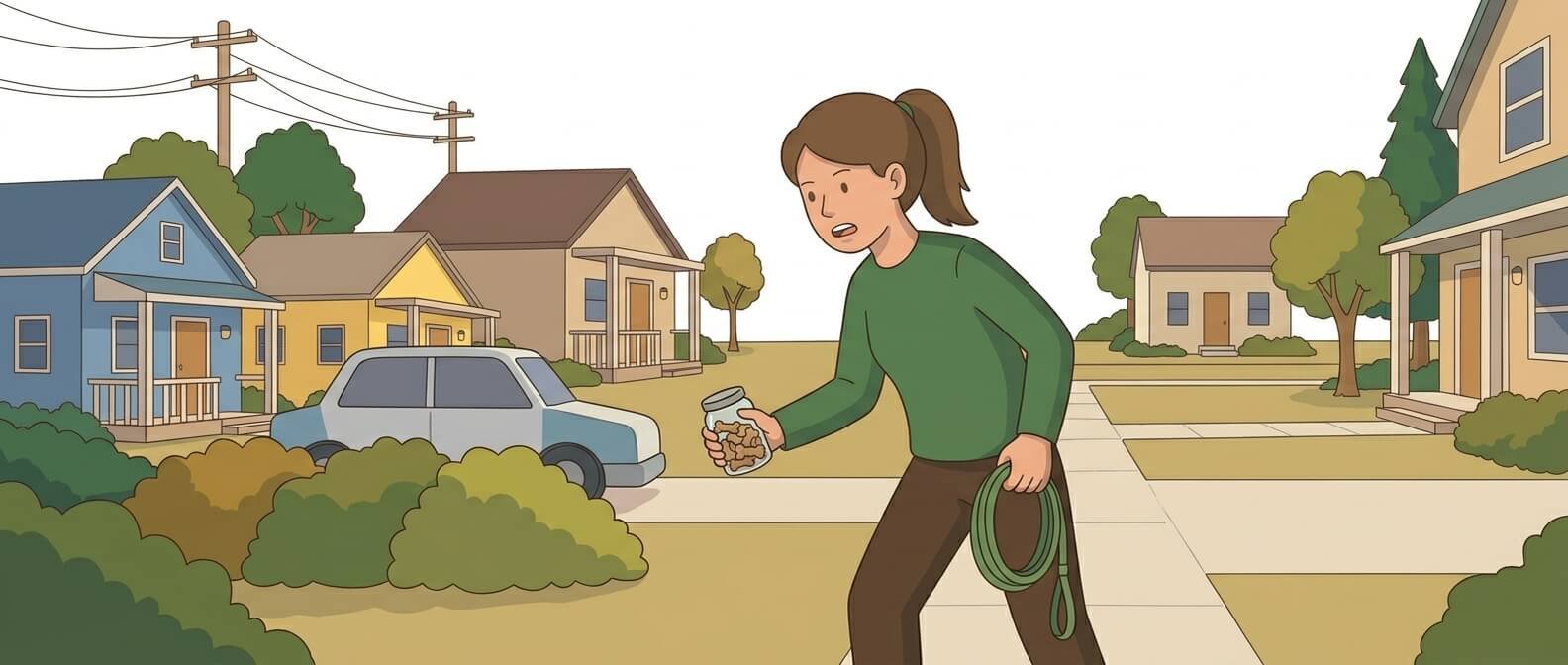
Walk the area on foot. Call your dog’s name in a calm, upbeat tone—not panicked shouting, which can sound threatening.
-
Bring high-value treats and a familiar toy. The sound of a treat jar or the jingle of a leash can trigger recognition.
-
Check hiding spots. Look under porches, in bushes, under parked cars, inside sheds, and in any tight spaces your dog might have crawled into.
-
Stop and listen. After an initial sprint, many dogs pause to reorient themselves. You might hear movement or a faint whimper.
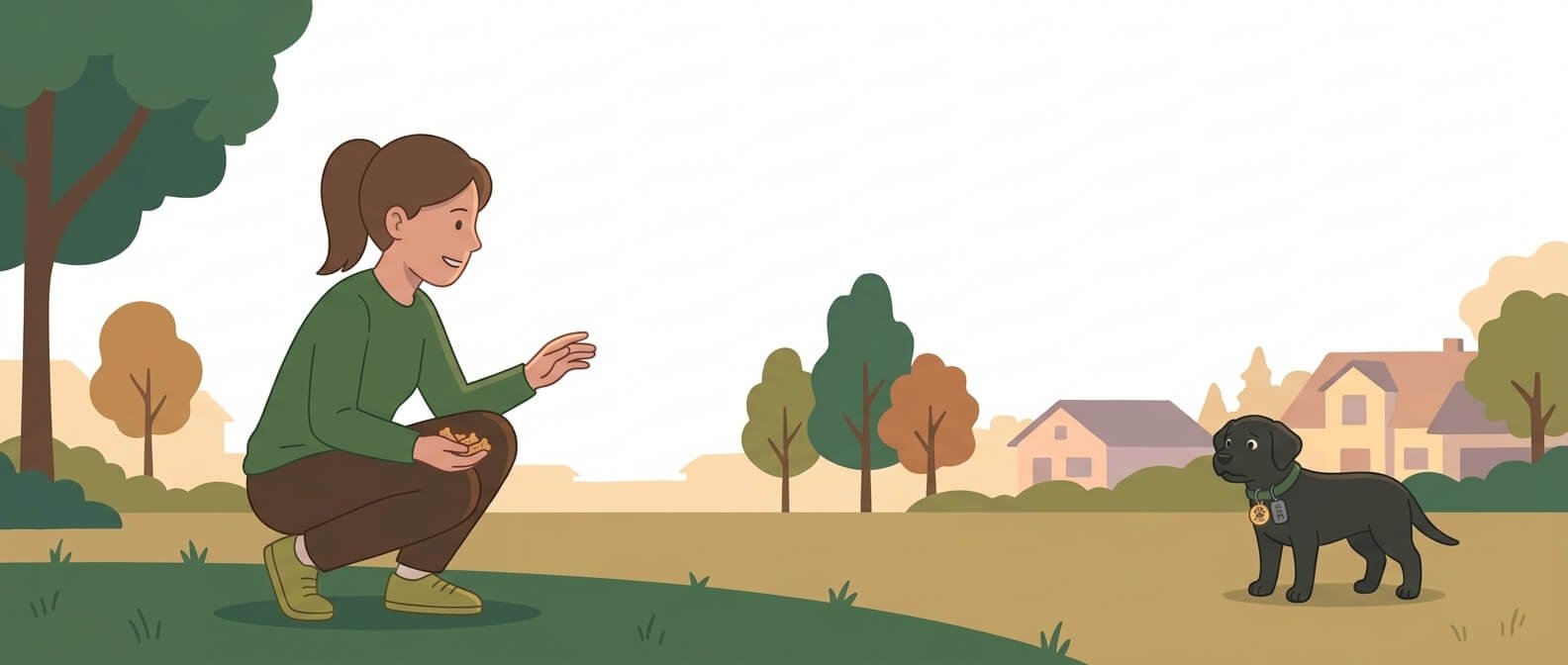
Do NOT chase your dog if you spot them but they’re frightened. Chasing triggers a flight response and can push them farther away. Instead:
-
Stop moving and turn sideways.
-
Avoid direct eye contact.
-
Crouch down and speak softly.
-
Toss treats nearby without approaching directly.
-
Let the dog come to you.
Leave Scent Items at the Last Known Location
Dogs navigate the world primarily through scent. If your dog is lost and scared, leaving familiar smells can help them find their way back.
What to leave:
-
An unwashed piece of clothing you’ve worn (a T-shirt works well)
-
A blanket or bed they sleep on
-
A bowl of strongly scented food—wet dog food, rotisserie chicken, or bacon
Place these items at the spot where your dog was last seen. If you’re in a wooded area, leave them at a central, visible location. Do not leave food in multiple random locations—this can lead your dog further away instead of drawing them back to a single point.
For more on scent-based search strategies, see the Humane Society’s lost pet resources.
Quick answer: If you’re wondering what to do if your dog gets lost, the first 10 minutes matter most. (1) Stay calm and check your home and yard thoroughly—dogs often hide in plain sight. (2) Search the immediate area on foot with treats and a familiar toy. (3) Never chase a frightened dog—crouch, avoid eye contact, and let them come to you. (4) Leave unwashed clothing, a familiar blanket, and strongly scented food at the last known location.
Part 2
Understanding Your Dog's Behavior: Why They Run and Where They Go
To find your dog, you need to think like your dog. Their behavior when lost is driven by fear, instinct, and breed tendencies. Understanding this is the second key step in what to do if your dog gets lost.
How Dogs React When Lost
A dog’s temperament shapes how they behave when lost:
-
A social, confident dog may approach strangers and be picked up within hours.
-
A shy or fearful dog may hide silently and avoid everyone—including you.
Dogs in a panic state can run far and fast on adrenaline, especially in the first 24 hours. After that, many enter a “survival phase” where they become more cautious and hide in sheltered spots. Eventually, they may enter a recovery phase where they become more social and approach people.
Breed-Specific Behaviors
Understanding your dog’s breed instincts can help predict where they might go:
Breed Type | Typical Lost Behavior |
|---|---|
Sight hounds (Greyhounds, Whippets) | Run far and fast; follow movement; hide in tall grass |
Scent hounds (Bloodhounds, Beagles) | Follow their nose; may travel far; less likely to respond to calls when tracking |
Herding dogs (Collies, Shepherds) | May try to "herd" other animals; seek high vantage points |
Terriers | Go underground or into small spaces; often found in industrial areas |
Retrievers | Generally friendly; attracted to water sources |
Toy breeds | Hide in very small spaces; may not survive harsh weather as long |
See the AKC’s breed profiles for breed-specific traits.
What Triggers Dogs to Bolt
Understanding why your dog ran can guide your search:
-
Sudden loud noises—fireworks, thunderstorms, gunshots, car backfires
-
Chasing prey—squirrels, deer, rabbits
-
Fear responses—unfamiliar environments, aggressive dogs, strangers
-
Leash or collar failure—a broken leash or a collar that slips off
-
Open gates or doors—delivery people, visitors, or unlatched fences
If your dog bolted in fear, they’re likely to stay hidden in a sheltered spot. If they chased something, they may have traveled further and followed paths of least resistance.
Quick answer: Understanding your dog’s behavior is a key part of what to do if your dog gets lost. A social dog may approach strangers quickly; a shy or fearful dog may hide silently for days. Breed matters too: sight hounds run far and fast, scent hounds follow their nose, herding dogs seek high ground, terriers go underground, and toy breeds hide in small spaces. If your dog bolted in fear, they’re likely hiding nearby. If they chased something, they may have traveled much farther.
Part 3
Alerting Your Community
Your neighbors and local community are your eyes and ears. The more people looking, the better your chances. This is the third key step in what to do if your dog gets lost.
Knock on Doors and Alert Neighbors
Start with the people nearest to where your dog was last seen:
-
Knock on doors within a 1–2 block radius. Ask neighbors to check their garages, sheds, and yards.
-
Provide a recent photo and your phone number. Leave this information with everyone you speak to.
-
Ask about security cameras. Neighbors with doorbell cameras may have footage of your dog passing by.
-
Talk to delivery drivers, mail carriers, and dog walkers—they spend hours outside and may spot your dog.
Post on Social Media and Neighborhood Apps
Social media is one of the most powerful tools for finding a lost dog. Posts reach hundreds or thousands of people instantly.
Where to post:
-
Local lost-pet Facebook groups—most communities have one.
-
Nextdoor—hyperlocal neighborhood app (U.S.).
-
PawBoost, Petfinder, and other lost-pet databases—many are regional or country-specific.
-
Craigslist (U.S.) or your local classifieds—both “Lost & Found” and “Pets” sections.
-
Ring Neighbors—security camera community app.
What to include in your post:
-
A clear, recent photo of your dog.
-
Dog’s name, breed, size, color, and distinguishing features.
-
Last known location and time.
-
Your phone number (and optionally, a reward offer).
-
A note about temperament—”approaches people” or “shy, do not chase.”
Avoid oversharing.
Don’t post every identifying detail publicly. If someone contacts you claiming to have found your dog, ask for a photo or specific description before sharing personal information. This helps filter out bad-faith callers.
For more on spreading the word, see the Humane Society’s lost pet resources.
Quick answer: Alerting your community is one of the fastest parts of what to do if your dog gets lost. Knock on doors within a 1–2 block radius, leave your photo and phone number with everyone, and ask about doorbell cameras. Post on local lost-pet Facebook groups, Nextdoor, PawBoost, and Ring Neighbors. Include a clear photo, your dog’s description, last known location, and temperament. But don’t overshare—ask for a photo or specific description before sharing personal information.
Part 4
Contacting Shelters, Vets, and Microchip Registries
Don't wait to report your dog missing. These organizations are your best allies in the recovery process. This is the fourth key step in what to do if your dog gets lost.
Call Local Shelters and Animal Control Immediately
Many lost dogs are picked up by kind strangers and taken to the nearest shelter. Call right away—don’t wait until later in the day.
Who to contact:
-
Municipal animal control
-
Local humane societies and rescue groups
-
Nearby veterinary clinics and emergency hospitals
What to provide:
-
Dog’s description (breed, color, size, sex)
-
A photo (send by email or text if possible)
-
Your contact information
-
Your dog’s microchip number (if available)
Visit shelters in person if you can. Intake systems can be overwhelmed, and visual identification is more reliable than a phone description. Check back daily—a dog that wasn’t there yesterday may be there today.
Report to Your Microchip Registry
If your dog is microchipped, contact the registry immediately to report them lost:
-
Call the microchip company or use their online portal to report your dog missing.
-
Confirm your contact information is up to date. If you’ve moved or changed numbers, update it now.
-
Note the microchip number so you can provide it to shelters and vets.
When a shelter or vet scans a found dog, they can see the lost pet alert in the database. This dramatically increases the chance of a reunion.
If your dog is microchipped through AKC Reunite (U.S.), call their helpline to report your dog lost. They can confirm your contact information and walk you through next steps. If you’re outside the U.S., check your registry’s website or contact your vet for the local process.
See the AAHA’s microchip lookup tool to find your registry if you’re not sure which one your dog is registered with.
Quick answer: Contacting shelters, vets, and microchip registries is one of the most important parts of what to do if your dog gets lost. Call local animal control, humane societies, and nearby vet clinics immediately—don’t wait. Provide a description, photo, and your contact info. Visit shelters in person and check back daily. If your dog is microchipped, report them missing to the registry and confirm your contact information is current.
Part 5
Creating Effective Lost Dog Flyers
Flyers remain one of the most effective tools for finding lost dogs—especially when they're well-designed and placed strategically. It's an old-school tactic that still works in the modern playbook of what to do if your dog gets lost.
What to Include on Your Flyer
Keep the design simple and easy to read from a distance:
-
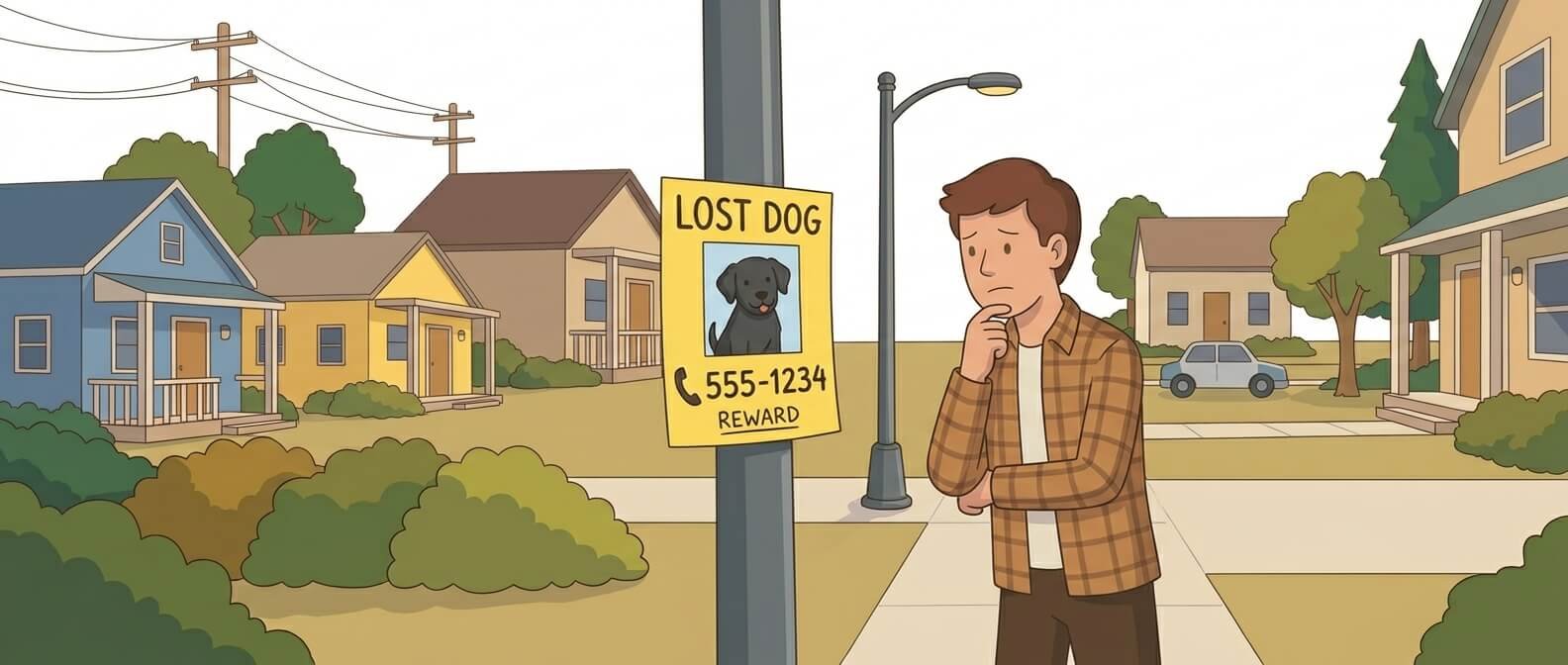
Big, bold headline—”LOST DOG” in large text at the top
-
A large, clear, recent photo—this is the most important element
-
Dog’s name, breed, size, color, and weight
-
Distinguishing features—scars, markings, collar color, tags
-
Last known location and date
-
Your phone number—include a secondary contact if possible
-
Temperament note—”DO NOT CHASE” if your dog is shy or fearful
A note on rewards: Offering a reward can motivate people to look for your dog, but avoid mentioning the exact amount on the flyer. This helps prevent bad-faith callers.
Where to Post Flyers
Get your flyers up as quickly as possible. Good locations include:
-
Major intersections and lampposts
-
Veterinary clinics and emergency hospitals
-
Pet supply stores and groomers
-
Community boards and supermarkets
-
Dog parks and walking trails
-
Schools—children can be surprisingly observant
Use bright paper—neon yellow, orange, or pink—for visibility from a distance. For a free flyer template, see the Humane Society’s lost pet resources.
Quick answer: If your dog is still missing after 24 hours, expand your search area to a 50+ mile radius, post in neighboring cities’ lost-pet groups, and check local classifieds for “found pet” posts. Try advanced techniques like the portable BBQ method (cooking bacon to attract your dog), trail cameras at feeding stations, and scent trails leading home. Track every sighting on a map—look for patterns, timing, and direction of travel. Prioritize verified sightings over vague ones.
Part 6
Expanding the Search: Day 2 and Beyond
If your dog hasn't been found within 24 hours, it's time to broaden your search. This is the next phase of what to do if your dog gets lost.
Widen the Geographic Radius
Expand your search area significantly:
-
Contact shelters within a 50+ mile (80+ km) radius
-
Post in lost-pet groups for neighboring cities
-
Check Craigslist and Facebook Marketplace (or your local classifieds) for “found pet” posts
-
Reach out to truckers, delivery drivers, and postal workers in the area
For more on expanding your search, see the Humane Society’s lost pet resources.
Use Advanced Search Techniques
If your dog is still missing after a few days, try these strategies:
-
Portable BBQ technique: Set up a portable BBQ near the last sighting location and cook bacon or sausages in the early morning or evening when it’s quieter. The smell can travel over a mile and attract your dog.
-
Trail cameras: Set up a camera at a feeding station to confirm if your dog is visiting.
-
Scent trails: Drag a piece of clothing you’ve worn along the ground, creating a scent trail that leads back to your home.
Analyze Sightings
Track every reported sighting on a map:
-
Look for patterns—lost pets often move between 2–3 key locations
-
Note timing—many lost dogs are most active at dawn and dusk
-
Track direction of travel to predict where to search next
Verified vs. unverified sightings: Prioritize sightings where someone has had a clear, close look and the description matches exactly. Treat vague “I think I saw a dog that might have been…” reports with caution.
Quick answer: If your dog is still missing after 24 hours, expand your search area to a 50+ mile radius, post in neighboring cities’ lost-pet groups, and check local classifieds for “found pet” posts. Try advanced techniques like the portable BBQ method (cooking bacon to attract your dog), trail cameras at feeding stations, and scent trails leading home. Track every sighting on a map—look for patterns, timing, and direction of travel. Prioritize verified sightings over vague ones.
Part 7
What NOT to Do: Common Mistakes That Delay Reunions
Knowing what not to do is just as important as knowing what to do. These mistakes are the most common—and the most avoidable—in what to do if your dog gets lost.
Don't Chase Your Dog
This is the most common mistake. When a scared dog is chased, their flight response kicks in and they run further away. Instead, crouch down, avoid eye contact, and let them come to you.
Don't Wait to Act
IEvery hour matters. Don’t wait to see if your dog comes back on their own. Start searching and alerting people immediately.
Don't Rely on One Search Method
Posting a flyer isn’t enough. You need to combine physical searching, social media, shelter contacts, and scent strategies for the best chance of success.
Don't Call Out in a Panicked Voice
Your dog may not respond to a panicked, high-pitched voice. Call their name in a calm, upbeat tone. If they’re scared, shouting can make them more fearful.
Don't Forget to Check Your Microchip Registration
If your dog is microchipped but your contact information is outdated, a found dog may sit in a shelter without anyone reaching you. Check this immediately. For more on microchip registration, see our Lost Dog Prevention: The Complete Guide.
Don't Give Up
Dogs have been reunited with their families days, weeks, and even months after going missing. Persistence pays off. For real reunion stories, see the Humane Society’s lost pet resources.
Quick answer: The biggest mistakes people make when their dog gets lost are: chasing a scared dog (which triggers flight), waiting to act (every hour matters), relying on just one search method, calling out in a panicked voice, forgetting to check the microchip registration, and giving up too soon. Dogs have been reunited with their families days, weeks, and even months after going missing—persistence pays off.
Part 8
When Your Dog Is Found: Next Steps
The moment you get the call that your dog has been found, it's a huge relief. But there are a few important steps to take. The final chapter of what to do if your dog gets lost is making sure they stay safe.
Check for Injuries
Lost dogs can encounter traffic, other animals, or hazardous substances. Once you have your dog back:
-
Check for visible injuries—bleeding, limping, open wounds
-
Watch for signs of shock, disorientation, or unusual behavior
-
Schedule a vet visit even if your dog appears fine—internal injuries or exposure to toxins may not be immediately obvious
For more on post-recovery care, see the AVMA’s pet care resources.
Reintroduce Your Dog to Home and Routine
Your dog may be stressed, tired, and disoriented. Give them time to settle back in:
-
Keep things quiet and low-stress
-
Reestablish normal feeding and walking routines gradually
-
Watch for changes in behavior or appetite—if something seems off, consult your vet
Prevent It from Happening Again
Once your dog is safely home, take steps to prevent a repeat:
-
Check and repair fencing and gates
-
Reinforce collar and leash security
-
Ensure your microchip registration is current
-
Practice recall training regularly
For a full prevention system, see our Lost Dog Prevention: The Complete Guide.
Quick answer: When your dog is found, check for injuries (bleeding, limping, shock, disorientation) and schedule a vet visit even if they seem fine—internal injuries and toxin exposure aren’t always obvious. Reintroduce them to home slowly: quiet environment, gradual return to routine, watch for behavior changes. Then prevent it from happening again: repair fences, reinforce collars and leashes, update microchip registration, and practice recall regularly.
References & Further Reading
The information in this guide is based on research and insights from the following sources:
-
American Veterinary Medical Association (AVMA) — Microchipping statistics and lost pet data
-
ASPCA — Lost pet survey and recovery data (93% of lost dogs returned home)
-
AKC Reunite — Lost dog reporting and recovery resources
-
PetLink — Lost pet behavior patterns and advanced search techniques
-
American Animal Hospital Association (AAHA) — Microchipping and lost pet prevention information
-
Veterinary industry consensus — Emergency response best practices
Disclaimer: I’m a dog owner, not a veterinarian or a professional pet detective. This content is for informational purposes only and does not replace professional veterinary or safety advice. For any concerns about your specific dog—especially after a lost dog incident—please consult a licensed veterinarian.
FAQ: What to Do If Your Dog Gets Lost
Start immediately. Don't wait to see if your dog comes back on their own. Within the first hour, search your immediate area on foot. After that, start alerting neighbors, posting on social media, and calling shelters. Asking for help isn't a last resort—it's the fastest way to bring your dog home.
It depends on the dog. A social, confident dog may return on their own or approach a stranger within hours. A shy or fearful dog is more likely to hide and wait—and may not come back without help. According to an ASPCA survey, 93% of lost dogs are eventually returned home—but only with active searching.
A reward can motivate people to look for your dog, but don't mention the exact amount on the flyer. "Reward offered" is enough. Mentioning a specific number can attract bad-faith callers or scammers. If someone claims to have your dog, ask for a photo or specific description before discussing the reward.
Don't chase them. Chasing triggers a flight response and pushes them farther away. Instead: crouch down, avoid direct eye contact, speak softly, toss treats nearby, and let the dog come to you. For very shy dogs, set up a feeding station with a trail camera and monitor it from a distance.
Microchipped dogs are returned at a rate of about 52%, compared to just 22% for dogs without chips. But microchips only work if the registration is current. If your dog is microchipped, confirm your contact information is up to date—every time you move or change phone numbers.
A big "LOST DOG" headline, a large recent photo, your dog's name, breed, size, color, distinguishing features, last known location, and your phone number. Add a "DO NOT CHASE" note if your dog is shy or fearful. Avoid mentioning the exact reward amount.
As long as it takes. Dogs have been reunited with their families days, weeks, and even months after going missing. Don't give up after the first week. Keep flyers up, keep posting on social media, and check shelters regularly.
Visit in person if you can. Intake systems can be overwhelmed, and visual identification is more reliable than a phone description. Check back daily—a dog that wasn't there yesterday may be there today.
If your dog has a microchip, a shelter or vet will scan it and contact you. If your dog has an ID tag, the finder can call you directly. If neither works, keep your phone lines open and monitor social media and lost-pet groups—finders often post "found dog" notices there.
Yes—if your dog is wearing one and the battery is charged. A GPS tracker shows real-time location on your phone, so you can find your dog during the search, not after someone else does. But GPS trackers can run out of battery or lose signal in remote areas. That's why they work best as part of a layered system with a microchip and ID tag.
Emergency Checklist
□ Check every room, closet, and hiding spot in your home
□ Check your yard, garage, and vehicles
□ Walk the immediate area, calling your dog's name calmly
□ Check under porches, bushes, and parked cars
□ Leave scent items at the last known location
□ Knock on neighbors' doors — provide a photo and your phone number
□ Post on local Facebook lost-pet groups and Nextdoor
□ Contact local animal control, shelters, and veterinary clinics
□ Report your dog lost to your microchip registry
□ Create and print lost dog flyers
☐ Post flyers at major intersections, vet clinics, and pet stores.
☐ Contact shelters within a 20-mile (32 km) radius.
☐ Check shelters in person if possible.
☐ Expand social media posts to neighboring communities.
☐ Keep searching—focus on dawn and dusk when dogs are most active.
☐ Widen the search area to 50+ miles (80+ km).
☐ Post in neighboring city lost-pet groups.
☐ Use scent trails and feeding stations.
☐ Consider a trail camera to monitor sightings.
☐ Don't give up—dogs can be found weeks or months later.
A Final Thought
Losing a dog is one of the most frightening experiences a pet owner can face. But here’s what I want you to remember: most dogs are found. The ASPCA survey found that 93% of lost dogs are eventually returned home.
The difference between a quick reunion and a long, agonizing search often comes down to preparation and speed. A microchip, an ID tag, and a GPS tracker give you a massive advantage. Knowing what to do in the first hour gives you another.
You are your dog’s best chance of coming home. Stay calm. Act fast. Use every resource available. And never give up. That’s the heart of what to do if your dog gets lost.
More in This Series
This article is part of our Lost Dog Prevention series. Explore the other guides below.
Lost Dog Prevention: The Complete Guide to Microchips, ID Tags, and GPS Trackers — Start with the complete guide, then dive into each layer in detail.
Dog Microchip vs GPS Tracker: Which One Does Your Pup Need? — A head-to-head comparison to help you choose.
Breakaway Collar vs Flat Collar for Dogs: Safety Trade-Offs Explained — Which collar is right for your dog’s lifestyle?
How to Train a Dog Recall: The Most Important Safety Command — Practical steps to build a recall you can count on.
All part of the Lost Dog Prevention module here on OutdoorDogSafety.com.
Disclaimer: This content is for informational purposes only and does not constitute veterinary or professional safety advice. Always consult with a qualified veterinarian or professional dog trainer regarding your dog’s specific needs and safety considerations.