
Toxic Water Risks for Dogs:
Blue-Green Algae and Leptospirosis Explained
Toxic water risks for dogs are real and often fatal. Learn how to spot blue-green algae, prevent leptospirosis, and keep your dog safe around ponds and puddles.
You probably don’t think twice when your dog splashes into a pond or laps up water from a puddle on a hot day. It seems natural. Refreshing. Harmless.
It can be deadly.
In the summer of 2023, a 9-month-old German Shepherd in North Carolina died within hours of swimming in a backyard pond. The cause: blue-green algae poisoning. The dog’s owner had no idea the water was toxic—it looked clean, smelled fine, and had been there for years. By the time symptoms appeared, it was too late.
That story isn’t isolated. According to the American Veterinary Medical Association (AVMA), blue-green algae blooms have been documented in every U.S. state—and cases spike during warm summer months when stagnant water heats up. Similar blooms are reported across Europe, Australia, and Asia. And blue-green algae is just one piece of the puzzle. Leptospirosis—a bacterial infection spread through wildlife urine—kills dogs every year, often because owners didn’t know their dog was exposed.
The truth is: standing water is one of the biggest hidden dangers on walks and hikes.And most dog owners don’t even know they should be worried.
That’s what toxic water risks for dogs really comes down to: knowing what’s in the water before your dog drinks it. I’m not a veterinarian. I’m just someone who’s spent countless hours researching waterborne risks, talking to vets, and reading case studies so you don’t have to learn these lessons the hard way. This guide covers everything you need to know about toxic water risks for dogs—from blue-green algae to leptospirosis and everything in between.
What's in This Guide
In this guide, I’ll walk you through:
-
Blue-green algae (cyanobacteria) — what it is, how to spot it, and why it’s lethal
-
Leptospirosis — how your dog gets it, what it does, and how to prevent it
-
Other waterborne threats — giardia, chemical runoff, and parasites
-
Safe hydration strategies — how to keep your dog hydrated without exposing them to danger
-
A toxic water safety checklist — quick reminders before every walk or hike
The bottom line: Toxic water risks for dogs aren’t rare—they’re everywhere. This guide will help you spot them before your dog does.
Let’s get started.
Part 1
Blue-Green Algae—The Invisible Killer
Toxic water risks for dogs often start with something invisible: blue-green algae. It looks like scum, smells like grass, and can kill a dog within minutes. Here's how to spot it—and how to keep your dog away from it.
What It Is and Why It's So Dangerous
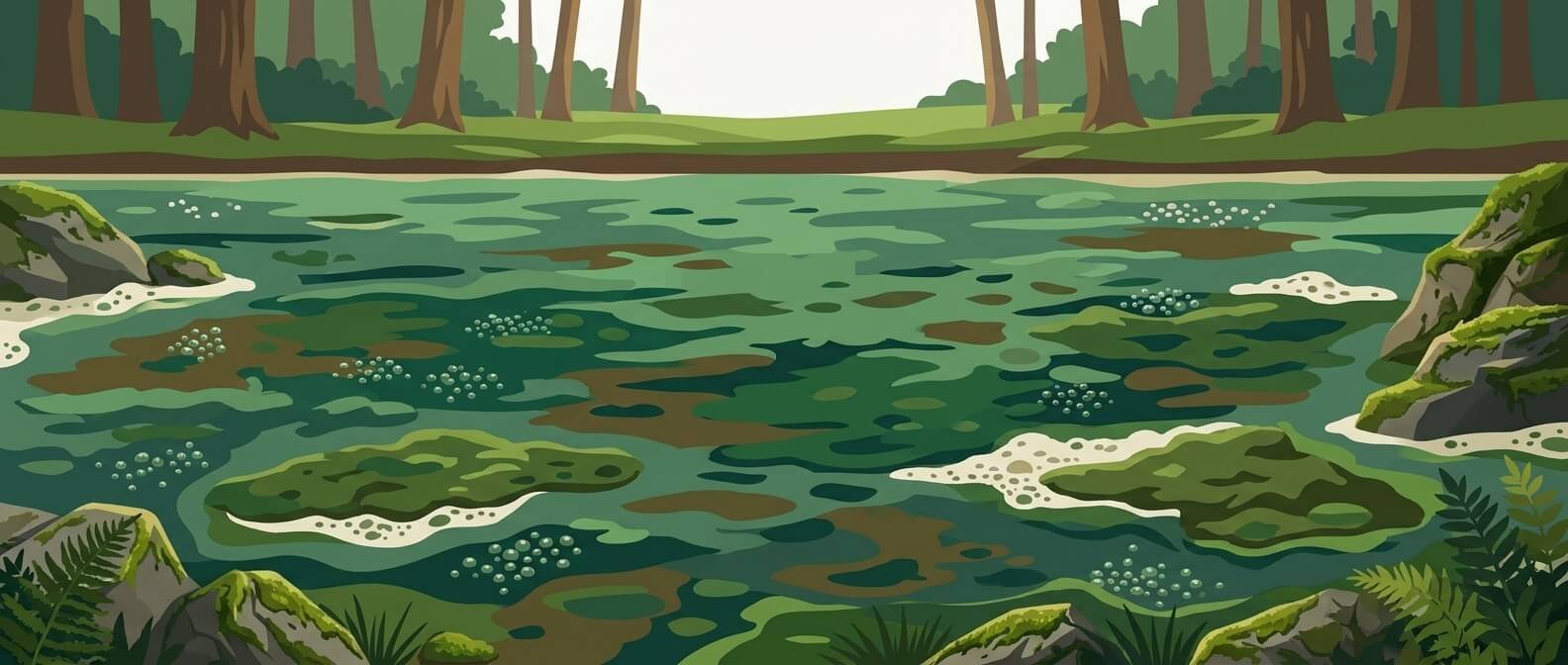
Blue-green algae, scientifically known as cyanobacteria, isn’t actually algae at all—it’s a type of bacteria that thrives in warm, nutrient-rich freshwater. When conditions are right (stagnant water, warm temperatures, excess nutrients from fertilizer runoff), it multiplies rapidly and creates what’s called a “bloom.”
Why it's so deadly:
Toxin Type | What It Affects | Time to Symptoms |
|---|---|---|
Neurotoxin | Nervous system (paralysis, respiratory failure) | 15–30 minutes |
Hepatotoxin | Liver (jaundice, vomiting, organ failure) | 1–4 hours |
Here’s the scariest part: there’s no antidote. Treatment is supportive care only. If the dose is high enough, a dog can die before you even reach the vet.
How to Identify Blue-Green Algae
Not all algae is toxic, and not all toxic blooms look the same. But here are the most common warning signs:
Visual Cue | What to Look For |
|---|---|
Color | Green, blue-green, red-brown, or sometimes white or yellow |
Texture | Like pea soup, spilled paint, or floating sludge |
Location | Stagnant water—ponds, lakes, slow-moving streams, even backyard puddles |
Surface appearance | Scum, foam, or mats on the water's surface |
Odor | A grassy or earthy smell (sometimes described as "freshly mowed grass") |
The “Cup Test”: If you’re unsure, take a clear cup or bottle and scoop some water from the surface. If the water looks like green or blue-green paint—not clear—do not let your dog near it.
Symptoms of Blue-Green Algae Poisoning
Symptoms can appear within minutes and escalate rapidly.
Neurotoxin symptoms:
-
Drooling
-
Stumbling or difficulty walking
-
Muscle twitching or tremors
-
Difficulty breathing
-
Paralysis
Hepatotoxin symptoms:
-
Vomiting
-
Diarrhea (sometimes bloody)
-
Weakness or collapse
-
Jaundice (yellowing of gums or whites of eyes)
-
Dark urine
What to do if you suspect exposure:
-
Immediately rinse your dog with fresh, clean water—do NOT let them lick themselves.
-
Get to an emergency vet immediately—call ahead to let them know you’re coming.
-
Bring a water sample from the source (if possible) for identification.
-
Do NOT induce vomiting—this can worsen neurotoxin absorption.
What to do if you suspect exposure:
-
In 2023, a 9-month-old German Shepherd died within hours after swimming in a pond with a blue-green algae bloom in North Carolina.
-
The owner reported: “He was fine when we left the water. By the time we got home, he was stumbling. Three hours later, he was gone.”
-
In Texas, 5 dogs died in a single week in June 2022 after swimming in the same lake.
-
According to the EPA, toxic algae blooms are increasing across the United States due to climate change, rising water temperatures, and agricultural runoff.
Prevention Is Everything
-
Assume any stagnant water is unsafe. Unless you’re absolutely certain it’s clean, don’t let your dog swim or drink.
-
Avoid warm weather ponds and lakes. Blooms are more common in summer and early fall.
-
Pay attention to warning signs. Many parks post signs when algae blooms are detected. Take them seriously.
Quick Answer: Blue-green algae (cyanobacteria) is a bacteria that thrives in warm, stagnant freshwater—and it can kill a dog within minutes to hours. It produces neurotoxins (which attack the nervous system) and hepatotoxins (which attack the liver). There’s no antidote. If your dog swims in or drinks contaminated water: rinse them with fresh water, don’t let them lick themselves, and get to an emergency vet immediately. Never induce vomiting. When in doubt, assume any stagnant water is unsafe.
Part 2
Leptospirosis—The Bacterial Danger You Can't See
Leptospirosis isn't as dramatic as blue-green algae—but it kills more dogs every year. And unlike algae, it's not always visible. Here's what you need to know. This is one of the most overlooked toxic water risks for dogs.
What It Is
Leptospirosis is a bacterial infection caused by Leptospira bacteria. It’s spread through the urine of infected wildlife—rodents, raccoons, deer, skunks, and even cattle or pigs. Dogs get it by:
-
Drinking contaminated water
-
Swimming in contaminated water
-
Walking through contaminated soil and later licking their paws
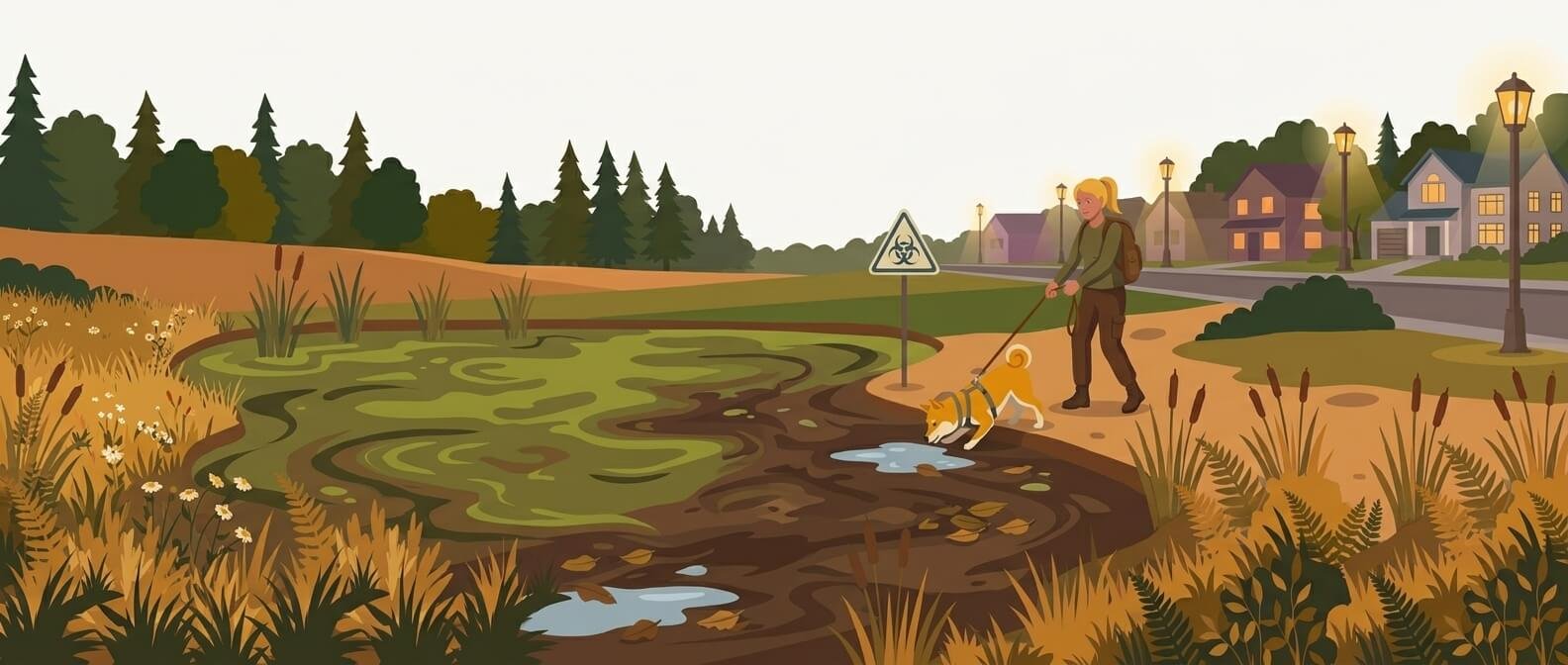
The bacteria can survive for weeks in warm, moist environments—which means ponds, puddles, and muddy trails can be reservoirs of infection. That’s what makes leptospirosis so easy to miss.
What Leptospirosis Does to a Dog
Leptospirosis attacks the liver, kidneys, and circulatory system. In severe cases, it can cause organ failure and death within days.
Common symptoms:
-
Fever
-
Vomiting
-
Diarrhea
-
Loss of appetite
-
Jaundice (yellowing of gums or eyes)
-
Muscle tenderness or stiffness
-
Increased thirst and urination (early sign of kidney damage)
Long-term effects: Even if a dog survives, leptospirosis can cause chronic kidney disease or liver damage that shortens their life.
The Leptospirosis Vaccine
The leptospirosis vaccine is not a core vaccine—it’s considered “lifestyle-based.” But most veterinarians strongly recommend it for dogs who:
-
Hike, swim, or walk near standing water
-
Live in or visit rural or suburban areas with wildlife
-
Are exposed to ponds, lakes, or streams
Important details:
-
The vaccine protects against the most common strains (called serovars) of Leptospira.
-
It requires an annual booster.
-
It is not 100% effective—but it dramatically reduces the severity of infection.
Talk to your vet. If your dog’s lifestyle puts them at risk, this vaccine is worth serious consideration.
For more on leptospirosis in dogs, see the CDC’s leptospirosis page.
Prevention Strategies
Strategy | Why It Works |
|---|---|
Avoid standing water | Eliminates the most common source of exposure |
Carry fresh water | Removes the temptation to drink from puddles or ponds |
Vaccinate | Reduces risk and severity of infection |
Wash paws after walks | Removes bacteria before your dog can lick it off |
Quick Answer: Leptospirosis is a bacterial infection spread through wildlife urine—and it can survive for weeks in warm, wet environments. Dogs get it by drinking, swimming, or walking through contaminated water or soil. Symptoms include fever, vomiting, diarrhea, jaundice, and increased thirst. The vaccine isn’t core, but it’s highly recommended for dogs that hike, swim, or live near wildlife. Prevention: avoid standing water, carry fresh water, and wash paws after walks.
Part 3
Other Waterborne Threats
Blue-green algae and leptospirosis get the most attention—but they're not the only threats in the water. Giardia, chemical runoff, and industrial contaminants can all make your dog seriously ill. Here's what to watch for—and what to add to your toxic water risks for dogschecklist.
Giardia
Giardia is a microscopic parasite that lives in the intestines of infected animals. It’s spread through feces and contaminated water. Dogs get it by drinking from puddles, streams, or ponds where infected animals have defecated. See the CDC’s Giardia page for more.
Symptoms:
-
Diarrhea (often watery and foul-smelling)
-
Vomiting
-
Weight loss
-
Dehydration
Prevention: Same as leptospirosis—no standing water, carry fresh water.
Chemical Runoff and Contaminants
Agricultural and urban runoff can introduce dangerous chemicals into ponds and puddles:
Contaminant | Source | Danger |
|---|---|---|
Fertilizers | Lawns, farms, golf courses | Algae blooms (which produce toxins) |
Pesticides | Agricultural fields, residential lawns | Poisoning, neurological damage |
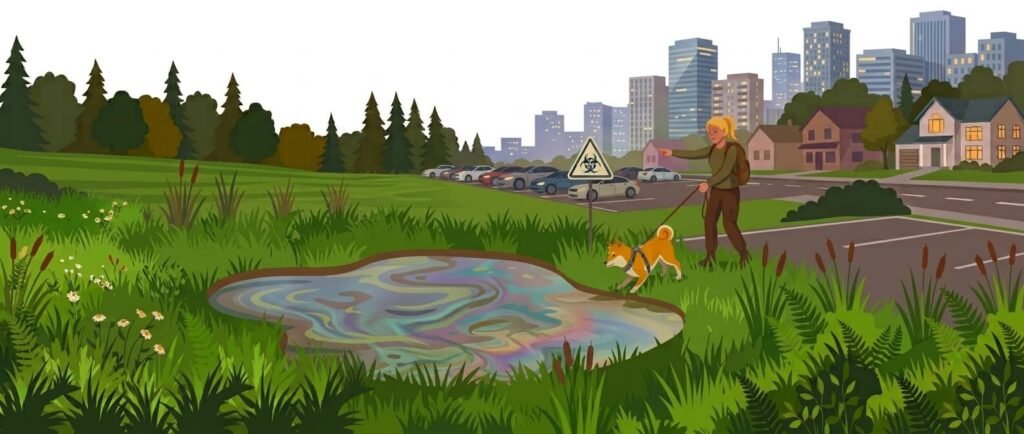
Oil and antifreeze | Parking lots, garages, roads | Kidney failure, death |
Heavy metals | Industrial runoff | Organ damage |
Rule: If you don’t know what’s in the water, don’t let your dog near it. Stagnant water in parking lots, near roads, or adjacent to farm fields is especially risky.
Quick Answer: Beyond blue-green algae and leptospirosis, the most common waterborne threats for dogs are giardia (a parasite that causes diarrhea and vomiting), chemical runoff (fertilizers, pesticides, oil, antifreeze), and heavy metals from industrial runoff. The rule is simple: if you don’t know what’s in the water, don’t let your dog near it. Stagnant water in parking lots, near roads, or next to farm fields is especially risky.
Part 4
How to Hydrate Your Dog Safely on Walks and Hikes
Your dog needs water—especially on warm days and long hikes. Here's how to give it to them without putting them at risk. It's the simplest solution to toxic water risks for dogs: bring your own water, every time.
Before You Leave
-
Pre-hydrate. Offer fresh water before you head out so your dog isn’t desperate for it on the trail.
-
Pack enough for the whole trip. A good rule of thumb: 1–2 cups (240–480 ml) of water per hour of activity, depending on your dog’s size and the weather. On hot days, bring more.
During the Walk
-
Offer water every 15–20 minutes on warm days. If you’re drinking, your dog should be drinking too.
-
Take breaks after drinking. A dog that drinks a full bowl and immediately runs around risks bloat (gastric dilatation-volvulus)—a life-threatening emergency. Rest for 15 minutes after drinking before resuming activity.
Gear That Helps
Gear | Why It's Useful |
|---|---|
Collapsible bowl | Lightweight and portable—fits in any bag |
Water bottle with built-in bowl | Convenient for short walks |
Hydration backpack | Good for long hikes—hands-free and extra capacity |
Water filter bottle | Removes bacteria and parasites from stream water (but does NOT remove blue-green algae toxins—so still avoid standing water) |
Recommended Portable Water Bowls
Brand | Why It's Useful |
|---|---|
Kurgo Collapsible Bowl | Durable, easy to clean, lightweight |
Ruffwear Quencher | Spill-proof design, good for active dogs |
Outward Hound Port-A-Bowl | Affordable and compact |
Musher's Secret Travel Bowl | Silicone, foldable, dishwasher-safe |
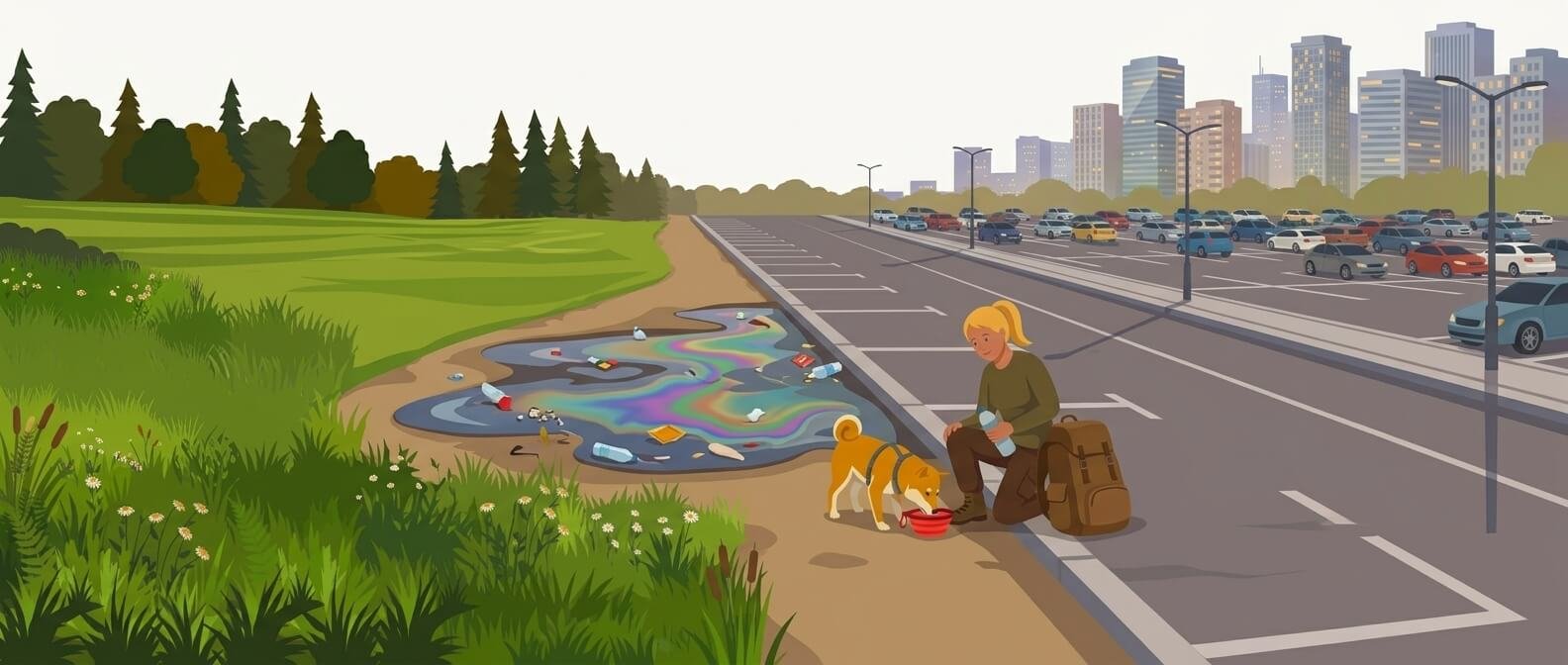
Rule: If you’re in doubt about water safety, carry your own. A collapsible bowl and an extra bottle of water weigh almost nothing and can save your dog’s life.
Quick Answer: The safest way to hydrate your dog on walks is to bring your own water. Pre-hydrate before you leave, pack 1–2 cups (240–480 ml) per hour of activity, and offer water every 15–20 minutes on warm days. Use a collapsible bowl or hydration backpack—and take a 15-minute break after drinking to prevent bloat. A water filter bottle removes bacteria and parasites, but it does not remove blue-green algae toxins.
FAQ: Toxic Water Risks for Dogs
Not all algae is toxic, and blooms don't always look the same. But here's what to watch for:
-
Color: Green, blue-green, red-brown, or sometimes white or yellow
-
Texture: Looks like pea soup, spilled paint, or floating sludge
-
Surface: Scum, foam, or mats on the water's surface
-
Odor: A grassy or earthy smell (like freshly mowed grass)
The "Cup Test": Scoop some water from the surface in a clear cup. If it looks like green or blue-green paint, do not let your dog near it.
Yes. Puddles can contain urine from infected wildlife—raccoons, rodents, deer, skunks—and that urine carries leptospirosis bacteria. Even a small amount of contaminated water can infect your dog.
The bacteria can survive for weeks in warm, moist environments. Puddles, ponds, and slow-moving streams are all potential sources.
Prevention: Carry fresh water every time you walk or hike.
The leptospirosis vaccine is not a core vaccine—it's categorized as "lifestyle-based." But most vets strongly recommend it for dogs that:
-
Hike, swim, or walk near standing water
-
Live in or visit rural or suburban areas with wildlife
-
Are exposed to ponds, lakes, or streams
Important details:
-
Requires an annual booster
-
Protects against the most common strains
-
Doesn't provide 100% immunity, but dramatically reduces infection severity
Talk to your vet about whether your dog's lifestyle puts them at risk.
No. Most portable water filters (like those for hiking) are designed to remove bacteria and parasites—not algae toxins. The toxins produced by blue-green algae are chemical compounds that can pass right through a filter.
If you're hiking, don't rely on a filter to make pond water safe. Carry fresh water instead.
Yes. Giardia is a parasite that lives in the intestines of infected wildlife. It's found in many streams, ponds, and puddles across North America.
Symptoms: Diarrhea (often watery and foul-smelling), vomiting, weight loss, dehydration.
Prevention: Same as leptospirosis—no standing water, carry fresh water.
Leptospirosis doesn't discriminate by breed—any dog can get it. But certain lifestyles put dogs at higher risk, especially:
-
Hunting dogs (frequent water exposure)
-
Hiking dogs (drinking from streams)
-
Rural dogs (exposure to wildlife and livestock)
-
City dogs who walk near parks with raccoons or rodents
Bottom line: Risk is lifestyle-based, not breed-based.
-
Immediately rinse your dog with fresh, clean water—do NOT let them lick themselves.
-
Watch for symptoms: Drooling, stumbling, vomiting, weakness, difficulty breathing.
-
Get to an emergency vet immediately if any symptoms appear.
-
Bring a water sample from the pond for identification.
-
Never induce vomiting—this can worsen neurotoxin absorption.
If they're not showing symptoms yet, monitor closely for the next 24–48 hours.Symptoms can appear quickly—don't wait.
-
Immediately rinse your dog with fresh, clean water—do NOT let them lick themselves
-
Watch for symptoms: Drooling, stumbling, vomiting, weakness, difficulty breathing
-
Get to an emergency vet immediately if any symptoms appear
-
Bring a water sample from the pond for identification
If they're not showing symptoms yet, monitor closely for the next 24–48 hours. Symptoms can appear quickly—don't wait.
The Toxic Water Safety Checklist
Before every walk or hike near water, run through this quick checklist:
☐ I know what blue-green algae looks like and I’m watching for it.
☐ I’m not letting my dog swim or drink from ponds, lakes, or puddles.
☐ I’ve packed enough fresh water for the whole trip.
☐ I’m offering water every 15–20 minutes on warm days.
☐ I’ve packed a collapsible bowl.
☐ I’ve talked to my vet about the leptospirosis vaccine.
☐ I know the symptoms of blue-green algae poisoning.
☐ I know the location of the nearest emergency vet.
☐ I’m staying off my phone and watching my dog’s behavior.
The bottom line: This checklist takes 30 seconds. It can save your dog’s life.
Final Thoughts
Water is supposed to be life-giving. But in the outdoors, stagnant water can be life-threatening.
Blue-green algae and leptospirosis are serious risks. They’re not rare—they’re documented in every state, every year. The good news is that both are highly preventable with a little knowledge and preparation. That’s what toxic water risks for dogs awareness really comes down to.
Carry fresh water. Watch for algae. Talk to your vet about the leptospirosis vaccine.
I learned these lessons through research, not experience. Please learn them too. Your dog is counting on you.
Stay safe out there. And keep your dog hydrated—safely. That’s what wildlife safety for dogs is really about.
More in This Series
This article is part of our Wildlife & Environmental Risks series. Explore the other guides below.
Wildlife Encounters Dog Safety: How to Protect Your Dog from Coyotes, Snakes, and More — The complete overview of wildlife safety for dogs, how to prevent encounters, recognize warning signs, and respond fast when something goes wrong outdoors.
Coyote Attacks on Dogs: Prevention and Emergency Response— Coyote attacks on dogs are rising, but they’re highly preventable. Here’s how to avoid encounters, what to do if a coyote approaches, and when to use protective gear.
Wildlife First Aid for Dogs: Porcupine Quills, Skunk Spray, and More— Porcupine quills, skunk spray, and other wildlife mishaps — here’s how to handle them quickly and safely, and when to call your vet.
Pesticide Poisoning in Dogs: Hidden Dangers on Walks— Pesticide poisoning in dogs is a real risk. Learn how to spot rodenticides, lawn chemicals, and antifreeze — and what to do in an emergency.
All part of the Wildlife & Environmental Risks module here on OutdoorDogSafety.com.
Disclaimer: This content is for informational purposes only and does not constitute veterinary or professional safety advice. Always consult with a qualified veterinarian or professional dog trainer regarding your dog’s specific needs and safety considerations.