
Wildlife Encounters Dog Safety:
How to Protect Your Pup from Coyotes, Snakes, and More
Learn how to identify common wildlife risks, prevent dangerous encounters, and keep your dog safe on trails, in parks, and around water.
You probably don’t worry about wildlife when you walk your dog. Those encounters feel like they happen “out there”—in national parks, deep forests, or remote wilderness.
The data says otherwise.
In 2023, two hikers and their dog were killed by a grizzly bear in Banff National Park. A follow-up study of 326 human-bear conflicts involving dogs found that dogs initiated 54% of those incidents—and off-leash dogs more than doubled the odds of a conflict. When an off-leash dog flushed a bear out of the brush, owners faced a 70% injury rate. And dogs died at more than 10 times the rate of their owners.
But bears are just one piece of the puzzle.
According to the AVMA, over 150,000 dogs are bitten by venomous snakes every year in the United States. Blue-green algae—which can kill a dog within minutes—has been documented in every state, including a case where a 9-month-old German Shepherd died within hours of ingesting algae from a backyard pond. Even in urban areas, coyotes now live in every major U.S. city. And a 2002 investigation by federal wildlife agencies found that 1,100 dogs had been accidentally killed by animal control traps and poisons meant for coyotes—a reminder that wildlife management itself can pose risks.
The numbers are clear: wildlife encounters aren’t rare. They’re happening everywhere—in our parks, our greenbelts, our backyards. And they’re often preventable.
This guide covers what you need to know about wildlife encounters dog safety. I’m not a wildlife expert or a veterinarian. I’ve just spent countless hours researching these risks, talking to wildlife officers and vets, and pulling it all together here—so you don’t have to start from scratch.
The data doesn’t lie. Your dog is counting on you to know these risks.
This is the first guide in our Wildlife & Environmental Risks series—and the foundation of wildlife safety for dogs. It covers the big picture: the animals, the plants, the water, and the chemicals that can threaten your dog. In the coming weeks, I’ll go deeper into each specific risk.
What's in This Guide
In this guide, I’ll walk you through:
Why wildlife encounters are more common than you think — and who’s most at risk
Coyotes, bears, and other large mammals — how to prevent and respond
Snakes and venomous reptiles — what to do if your dog gets bitten
Blue-green algae and toxic water — the hidden danger in ponds and lakes
Plants, chemicals, and traps — environmental risks beyond wildlife
How to prepare before you hit the trail — practical prevention
The bottom line: Wildlife isn’t just a problem for remote hikes. It’s in your neighborhood, your local park, and your backyard. The more you know, the safer your dog will be.
Part 1
Why Wildlife Encounters Happen More Than You Think
When it comes to wildlife encounters dog safety, the first step is understanding what draws animals into your path in the first place.
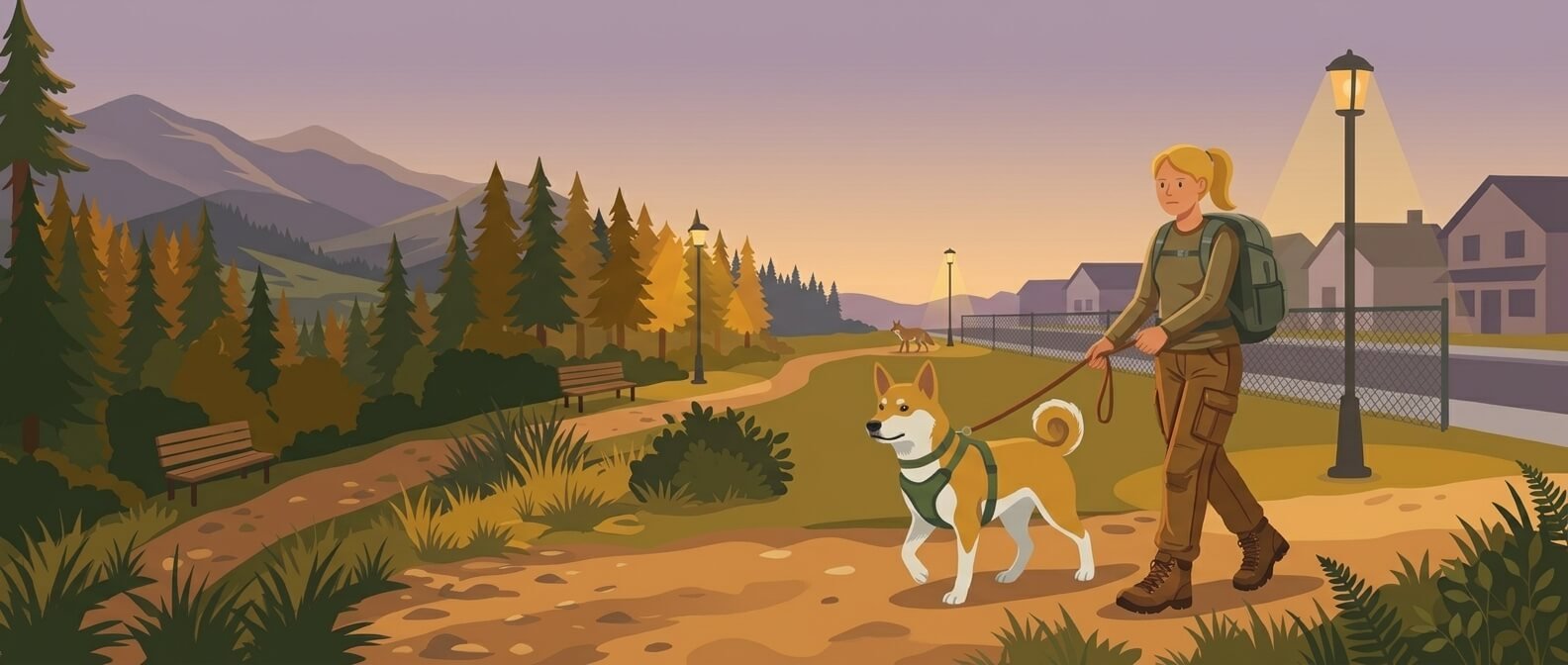
Why Wildlife Is Everywhere
Urban sprawl has pushed many wild animals into closer contact with humans than ever before:
Coyotes now live in cities across North America—and similar species (like foxes and jackals) are moving into urban areas worldwide.
Deer populations have exploded in suburban areas, bringing predators with them.
Bears are increasingly venturing into residential areas during drought years.
Snakes thrive in gardens, parks, and golf courses—not just remote wilderness.
Wildlife lives right next to us. We just don’t always see them.
What Attracts Wildlife to Walking Areas
Attractor | Why It Draws Animals | What You Can Do |
|---|---|---|
Food waste | Discarded food attracts raccoons, coyotes, rats | Keep your dog on a short leash near trash cans. Train "Leave It" like your dog's life depends on it. |
Pet food left outside | Coyotes and bears learn to associate homes with food | Never leave pet food outdoors overnight. |
Water sources | Ponds, streams, and even puddles attract all wildlife | Avoid letting your dog drink from standing water. It may look clean, but it's not. |
Dense brush | Provides cover for snakes, coyotes, bobcats | Stick to open trails. Avoid tall grass. |
Compost piles | Attracts rodents → attracts predators | Keep compost enclosed and away from walking paths. |
When Wildlife Is Most Active
Animal | Peak Activity Times | Seasonal Risk |
|---|---|---|
Coyotes | Dawn, dusk, and night | Spring (pup-rearing season) + Fall (dispersal) |
Rattlesnakes | Morning and evening (warm weather) | April–October (active season) |
Bears | Early morning and late evening | Spring–Fall (hyperphagia before hibernation) |
Moose | Dusk and dawn | Late spring–summer (calves) |
Raccoons | Night (nocturnal) | Year-round |
Key takeaway: The safest time to walk is mid-morning or early afternoon—when most predators are resting.
Quick Answer: Wildlife encounters with dogs are more common than most owners think—coyotes live in every major city, snakes thrive in parks and gardens, and bears are moving into suburbs during drought years. The main attractors are food waste, pet food left outside, standing water, dense brush, and compost piles. Wildlife is most active at dawn and dusk, so mid-morning and early afternoon are the safest times to walk.
Part 2
Coyotes—The Urban Predator
Coyotes are the most common large predator your dog will meet—and they've adapted to city life faster than almost any other wild animal. Understanding how they hunt is the first step in wildlife encounters dog safety.
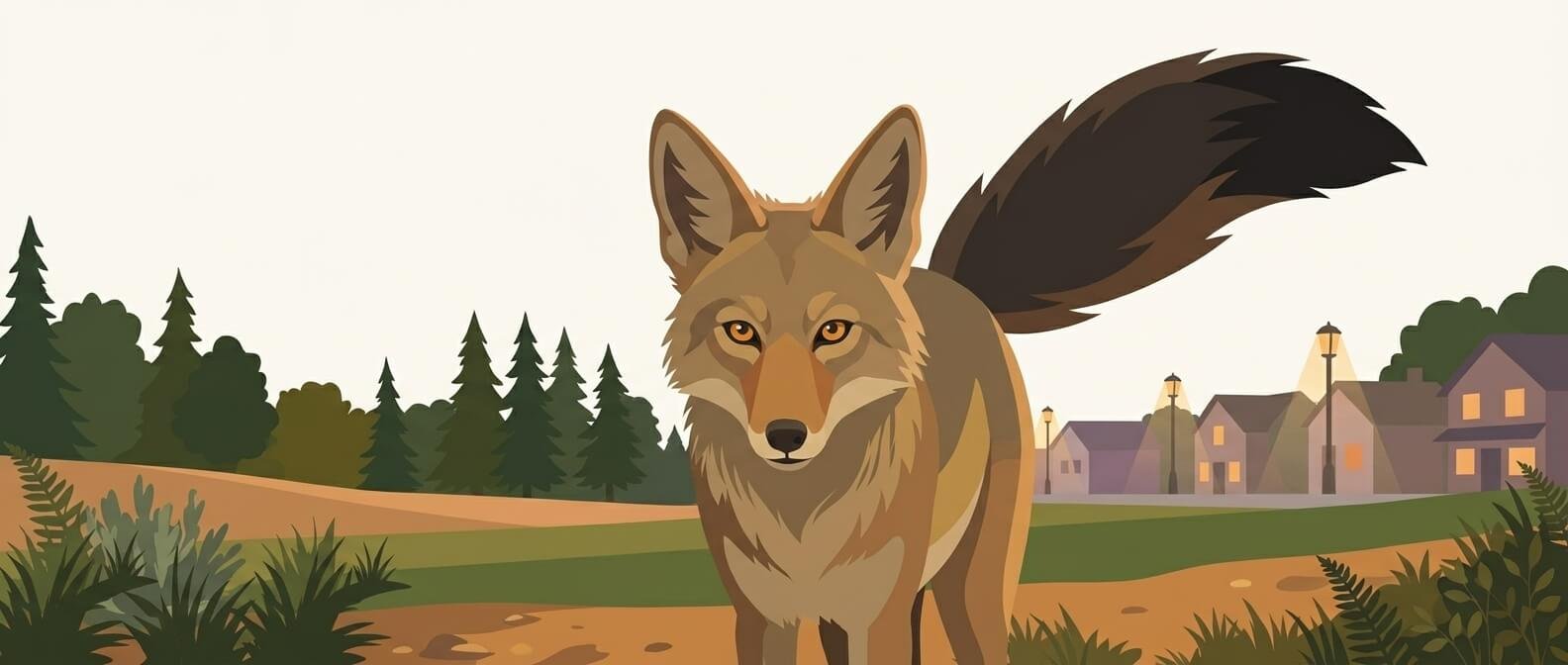
The Growing Threat
Coyotes have adapted remarkably well to urban and suburban life. They thrive in parks, golf courses, and greenbelts—the same places we walk our dogs.
Key Facts About Coyotes:
Weight: 20–50 pounds (9–23 kg) — similar to a medium-sized dog
Pack behavior: Generally solitary, but may hunt in pairs or family groups
Diet: Opportunistic—small mammals, birds, fruit, pet food, and small dogs
Why Coyotes Target Dogs
Coyotes view small dogs (under 30 pounds / 13.5 kg) as prey. Larger dogs are seen as competitors or threats—which can trigger defensive or pack aggression.
The “Lure” Behavior:
One coyote may appear friendly or playful, luring your dog to chase. Meanwhile, 1–2 other coyotes wait in ambush nearby. This is a known hunting strategy and has resulted in fatal attacks on small dogs even in fenced yards.
A fenced yard isn’t a guarantee. Coyotes can jump fences up to six feet (1.8 meters) tall, and they’ve been known to take small dogs from enclosed yards—even with owners nearby.
Prevention Strategies
Strategy | Why It Works | How to Implement |
|---|---|---|
Leash at ALL times | Removes the chase element | Never off-leash in areas with coyote activity. |
Walk in open areas | Coyotes rely on cover | Avoid brushy trails and overgrown greenbelts |
Use a "coyote vest" | Spikes/protective gear deters bites | For small dogs, consider a coyote vestwith spikes and Kevlar neck protection |
Make noise | Coyotes avoid human voices | Talk loudly, carry a whistle, or use a personal alarm |
Pick up small dogs | Removes them from the equation | If a coyote approaches, pick up your dog immediately |
What to Do During a Coyote Encounter
If you see a coyote ahead:
Stop and pick up your dog (if small).
Turn around and walk away calmly—do not run.
Make yourself big—wave arms, shout firmly.
Back away slowly—maintain eye contact.
Report the encounter to local wildlife authorities.
If a coyote approaches you:
“Haze” the coyote—shout, wave arms, throw rocks/sticks near it (not at it).
Use an air horn or whistle to startle it.
Do NOT turn your back—keep facing it while backing away.
Report the encounter to local wildlife authorities.
Coyotes that aren’t hazed become bolder. Hazing isn’t just about protecting your dog today—it’s about protecting every dog in your neighborhood.
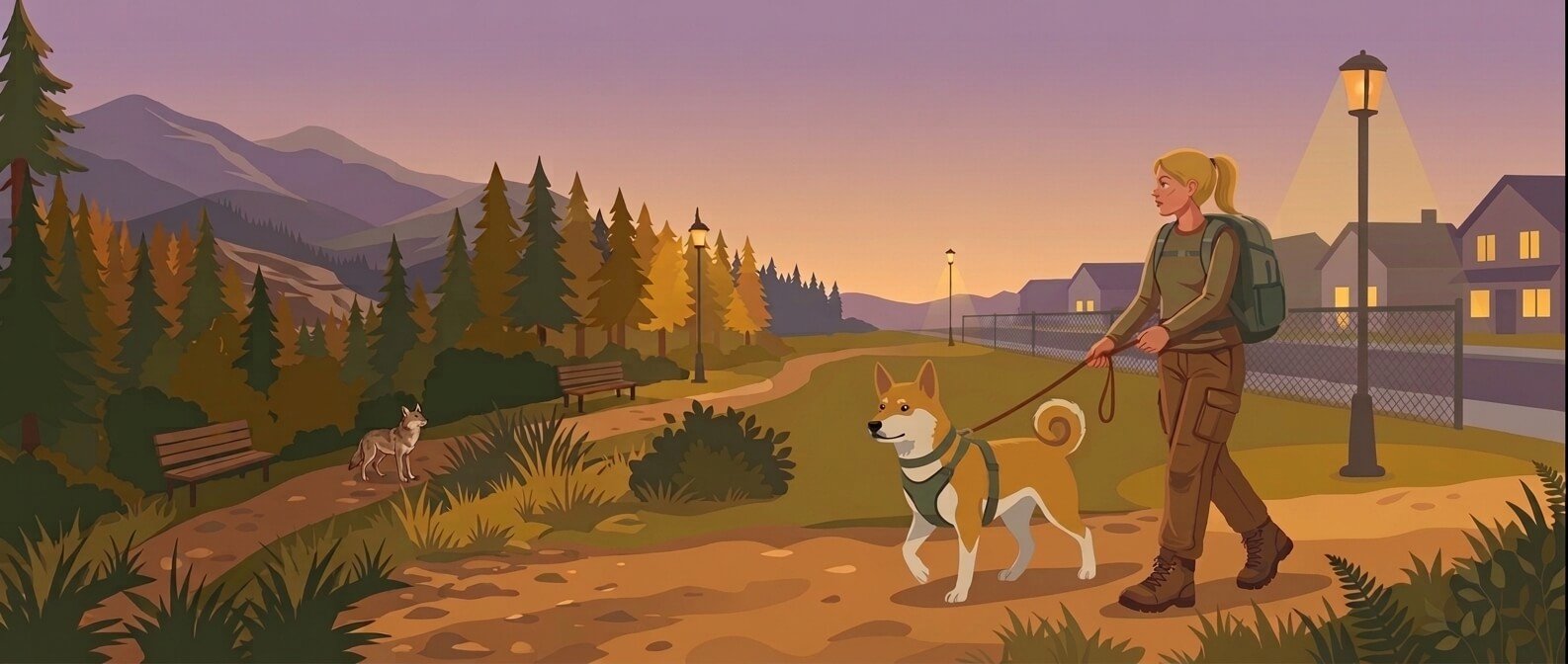
Quick Answer: Coyotes view small dogs (under 30 lbs) as prey and larger dogs as competitors. They’ve adapted to cities and can jump fences up to six feet. To protect your dog: keep it leashed, avoid dense brush, pick up small dogs, make noise, and consider a coyote vest. If a coyote approaches, haze it (shout, wave arms, throw things near it), never turn your back, and back away slowly.
Part 3
Rattlesnakes and Other Venomous Snakes
Snake bites are one of the most common wildlife emergencies vets see—and one of the most preventable. Understanding where snakes live, when they're active, and how your dog is most likely to get bitten is the core of wildlife encounters dog safety.
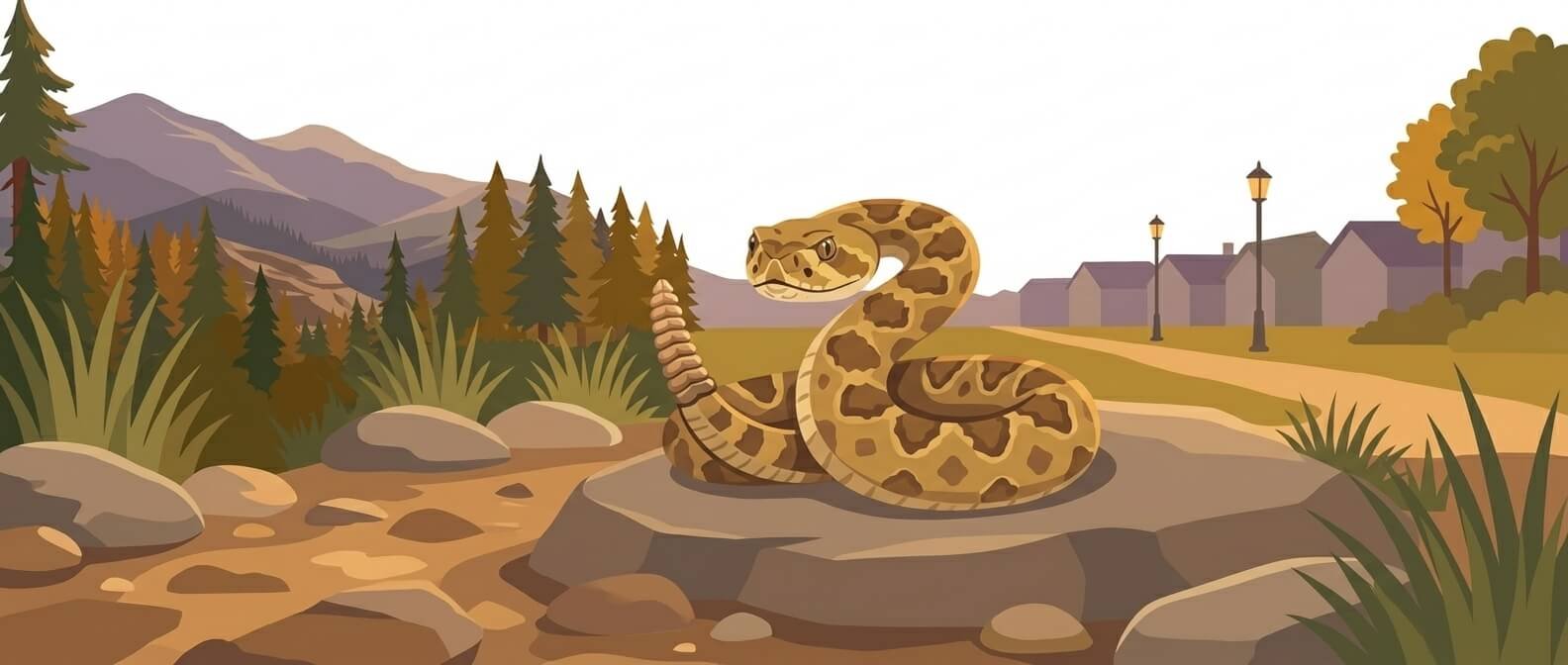
The Risk
Rattlesnake bites are one of the most common wildlife emergencies for dogs. According to the AVMA, over 150,000 dogs are bitten by venomous snakes each year in the U.S. alone—and similar numbers are reported in other parts of the world.
Most bites occur when:
A dog investigates a snake with its nose (the most common bite location)
A dog steps on a snake hidden in brush or tall grass
A dog tries to “play” with or attack the snake
Vets report that the nose is the most common bite site—dogs investigate snakes with their scent, and the face bears the cost. A bite on the nose can be life-threatening, but prompt treatment usually leads to a full recovery.
Geographical Risk
Venomous snakes exist on every continent except Antarctica. Here are the most common species by region:
Region | Common Venomous Snakes |
|---|---|
North America | Western Diamondback, Mojave Rattlesnake, Copperhead, Cottonmouth, Eastern Diamondback |
Europe | Common Adder, Asp Viper, Nose-Horned Viper |
Africa | Puff Adder, Black Mamba, Boomslang, Egyptian Cobra |
Asia | Russell's Viper, Indian Cobra, Malayan Pit Viper |
Australia | Eastern Brown Snake, Tiger Snake, Inland Taipan |
South America | Fer-de-Lance, Jararaca, Coral Snake species |
If you live outside these regions: check your national wildlife authority for the venomous snakes in your area.
Prevention Strategies
Strategy | Why It Works | How to Implement |
|---|---|---|
Stick to open trails | Snakes sun themselves on rocks/paths but avoid exposed areas | Avoid tall grass, rock piles, and dense underbrush |
Keep your dog on a 6-foot leash | Prevents wandering into strike zones | Standard road leash is ideal—not retractable |
Use a snake-proof bootie | Protects paws if stepped on | For high-risk areas, consider dog booties with thick soles |
Avoid hiking during peak hours | Snakes are most active in heat | Hike early morning (before 9 AM) or late evening |
Train "Leave It" religiously | Interrupts the "investigate" instinct | Practice with smells and objects on the trail. |
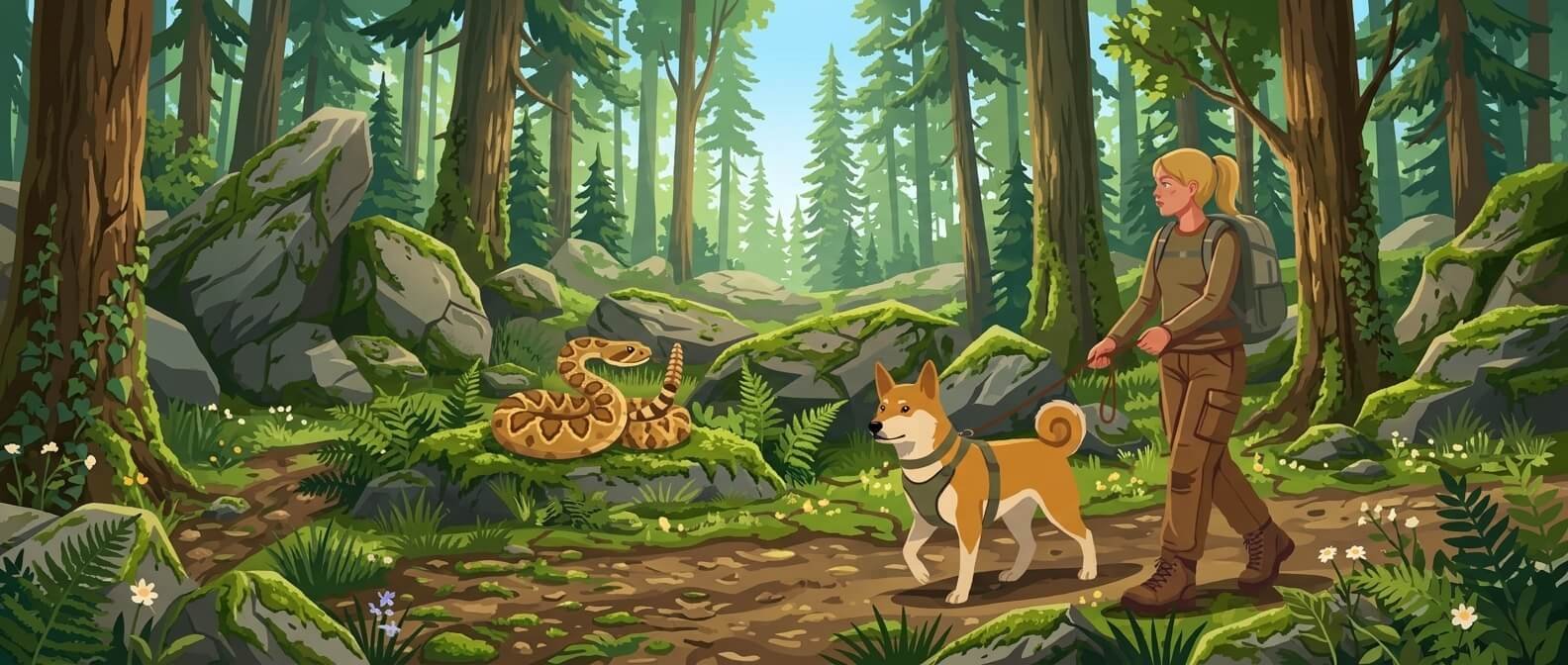
Rattlesnake Avoidance Training
Professional training is available and is considered essential for dogs that hike in rattlesnake country. These clinics typically use:
De-scented rattlesnakes (no venom)
Electric stimulation (mild, like a static shock collar) to teach association between snake scent and discomfort
The result: The dog learns to avoid the scent of rattlesnakes entirely.
Average cost: $80–$150 per session
Effectiveness: High, but requires occasional refresher sessions
Note: Electric-stimulation training is controversial. Some trainers and veterinary behaviorists prefer positive-reinforcement methods. If you’re considering this, talk to your vet and a certified trainer first.
What to Do If Your Dog Is Bitten
Immediate steps:
Stay calm—panic raises your dog’s heart rate and spreads venom faster.
Carry your dog if possible—keep the bite site below heart level to slow venom spread.
Remove the collar if the bite is on the neck/head (to prevent swelling restriction).
Get to a vet immediately—this is a true emergency.
What NOT to do:
❌ Do NOT apply a tourniquet
❌ Do NOT cut the wound
❌ Do NOT suck out the venom
❌ Do NOT apply ice
❌ Do NOT give your dog any medication without vet approval
Treatment typically includes: Antivenin, IV fluids, pain management, and monitoring for swelling/clotting issues. Prognosis is excellent (95%+ survival rate) if treated within 4–6 hours.
Quick Answer: Snake bites are one of the most common wildlife emergencies for dogs. Most bites happen when a dog investigates a snake with its nose or steps on one in tall grass. To prevent bites: keep your dog on a 6-foot leash, stick to open trails, avoid peak-heat hours, and train a strong “Leave it.” If your dog is bitten: stay calm, carry them if possible, keep the bite below heart level, and get to a vet immediately. Never cut, suction, or apply ice.
Part 4
Blue-Green Algae and Waterborne Dangers
Water is the one hazard most owners never think about. It looks clean, it smells fine—and it can kill a dog in minutes. This is the part of wildlife encounters dog safety nobody talks about.

The Invisible Killer
Blue-green algae (cyanobacteria) is not actually algae—it’s a bacteria that thrives in warm, stagnant freshwater during summer and early fall. When it blooms, it creates a green, pea-soup-like film on the surface of ponds, lakes, and even slow-moving streams.
Why It’s Deadly:
Produces neurotoxins (attack the nervous system) and hepatotoxins (attack the liver)
Can kill a dog within minutes to hours
No antidote exists—treatment is supportive care only
Every summer, news stories emerge of dogs dying within hours of swimming in algae-contaminated water. The bacteria can kill so fast that by the time symptoms appear, it’s often too late. Standing water isn’t worth the risk.
How to Identify Blue-Green Algae
Visual Cue | What to Look For |
|---|---|
Color | Green, blue-green, or red-brown |
Texture | Pea soup, spilled paint, or green sludge |
Location | Shallow, stagnant, or still water (not flowing streams) |
Odor | May smell like freshly mowed grass or earthy |
The “Cup Test”: If you see algae, do NOT let your dog enter the water. There is no safe amount of blue-green algae—even a few licks of contaminated water can be fatal.
Symptoms of Blue-Green Algae Poisoning
Type of Toxin | Symptoms | Time to Onset |
|---|---|---|
Neurotoxin | Drooling, stumbling, muscle twitching, paralysis, labored breathing | 15–30 minutes |
Hepatotoxin | Vomiting, diarrhea, weakness, jaundice, dark urine | 1–4 hours (can be fatal within 24 hours) |
What to Do If You Suspect Exposure
Immediately rinse your dog with fresh water—do NOT let them lick themselves
Get to an emergency vet immediately
Bring a water sample if possible (for identification)
Do NOT induce vomiting—this can worsen neurotoxin absorption
Leptospirosis: Another Waterborne Risk
Leptospirosis is a bacterial infection transmitted through the urine of infected wildlife (rodents, raccoons, deer, etc.). Dogs contract it by:
Drinking from contaminated water
Swimming in contaminated water
Coming into contact with contaminated soil
Prevention:
Vaccination: The leptospirosis vaccine is not a core vaccine but is highly recommended for dogs that hike or swim
Avoid standing water—don’t let your dog drink from puddles, ponds, or lakes
Carry fresh water in a collapsible bowl
Carrying fresh water is a small effort that could save a life. A collapsible bowl fits in any bag and eliminates the risk entirely.
Quick Answer: Blue-green algae (cyanobacteria) is a bacteria that thrives in warm, stagnant water—and it can kill a dog within minutes to hours. It’s not always visible, but look for green, pea-soup-like film on ponds or lakes. If your dog swims in or drinks contaminated water: rinse them with fresh water, don’t let them lick themselves, and get to an emergency vet immediately. Never induce vomiting. Carry fresh water on every hike—it’s the simplest way to prevent waterborne illness.
Part 5
Porcupines, Skunks, and Other Common Encounters
Not every wildlife encounter is life-threatening—but some are painful, expensive, and entirely preventable. Here's what to do when your dog meets the animals they're most likely to run into.
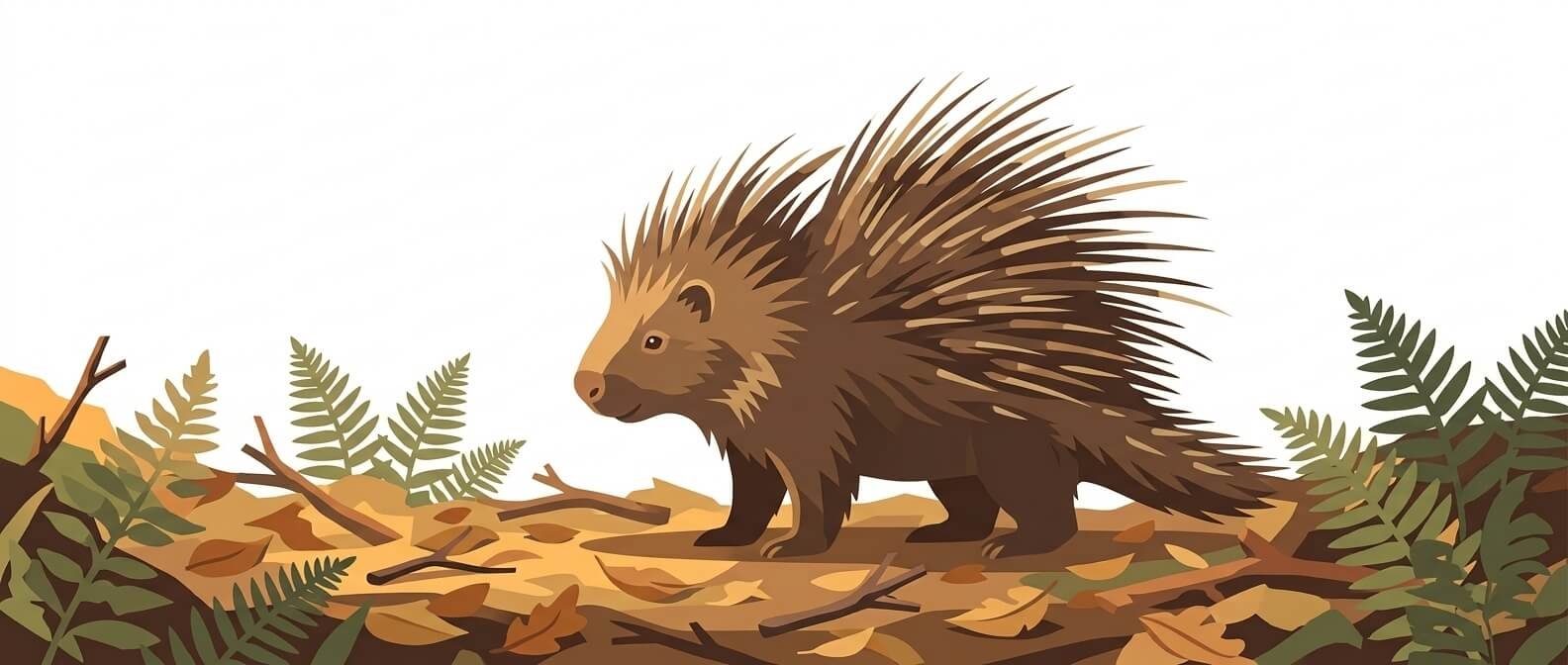
Porcupines: A Painful Curiosity
Dogs with a high prey drive may approach porcupines and get a face full of quills. Each quill has a barbed tip that makes it work deeper into the skin over time.
Immediate Steps:
Do NOT pull quills out at home—barbed tips can break off and migrate deeper, causing infection or abscess.
Go to the vet—they will sedate your dog and remove quills safely.
Quills in the mouth/throat are an emergency (can obstruct breathing).
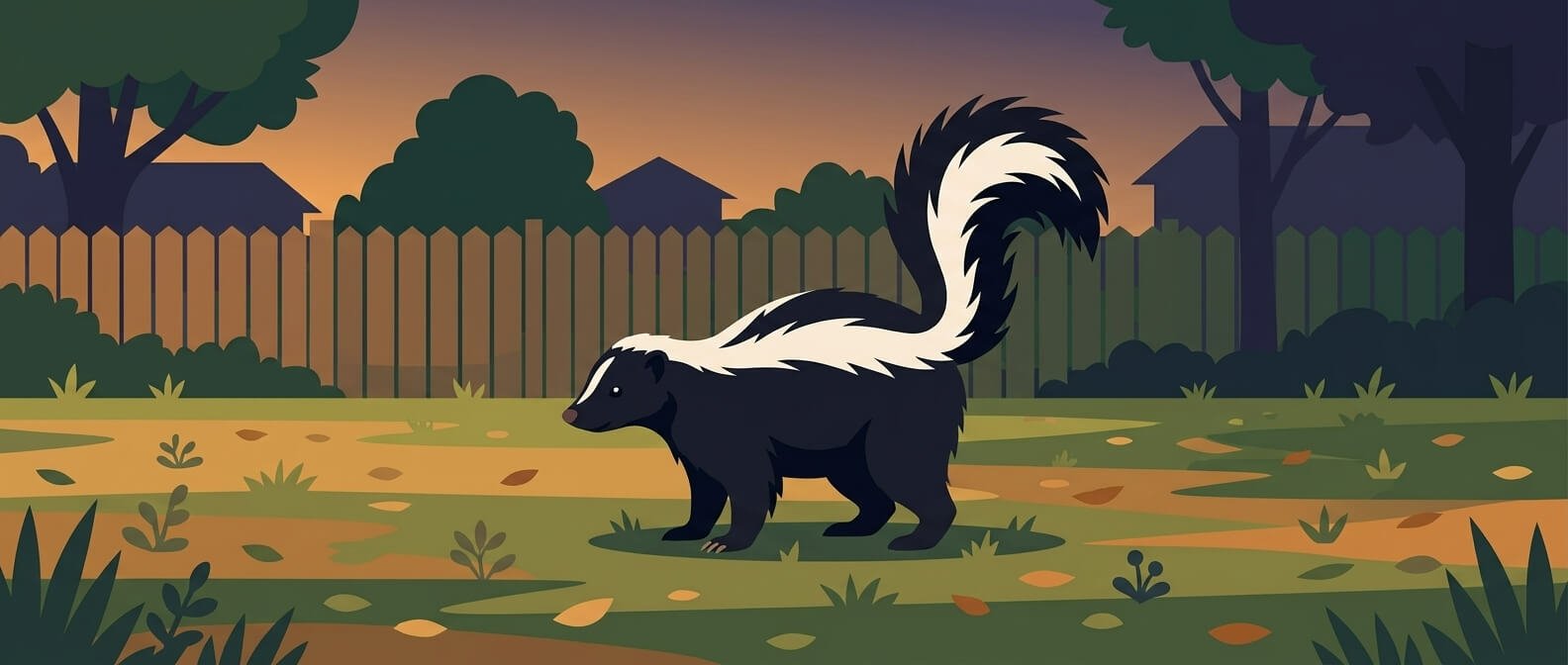
Skunks: More Than Just a Smell
Skunk spray is more than just an odor problem. It contains thiols—the same sulfur compounds that make rotten eggs smell bad—which can cause:
Eye irritation and temporary blindness
Anemia (in severe cases, skunk spray can damage red blood cells)
Gastrointestinal distress if ingested
De-skunking Recipe (for the body, NOT the face):
Ingredient | Amount |
|---|---|
Hydrogen peroxide (3%) | 1 quart (1 liter) |
Baking soda | 1/4 cup (60 g) |
Dish soap (Dawn) | 1 teaspoon |
Mix and apply for 5 minutes, then rinse thoroughly. Avoid getting in eyes/mouth. Do not store this mixture—it’s unstable.
For eyes/mouth: Rinse with water and consult your vet immediately.
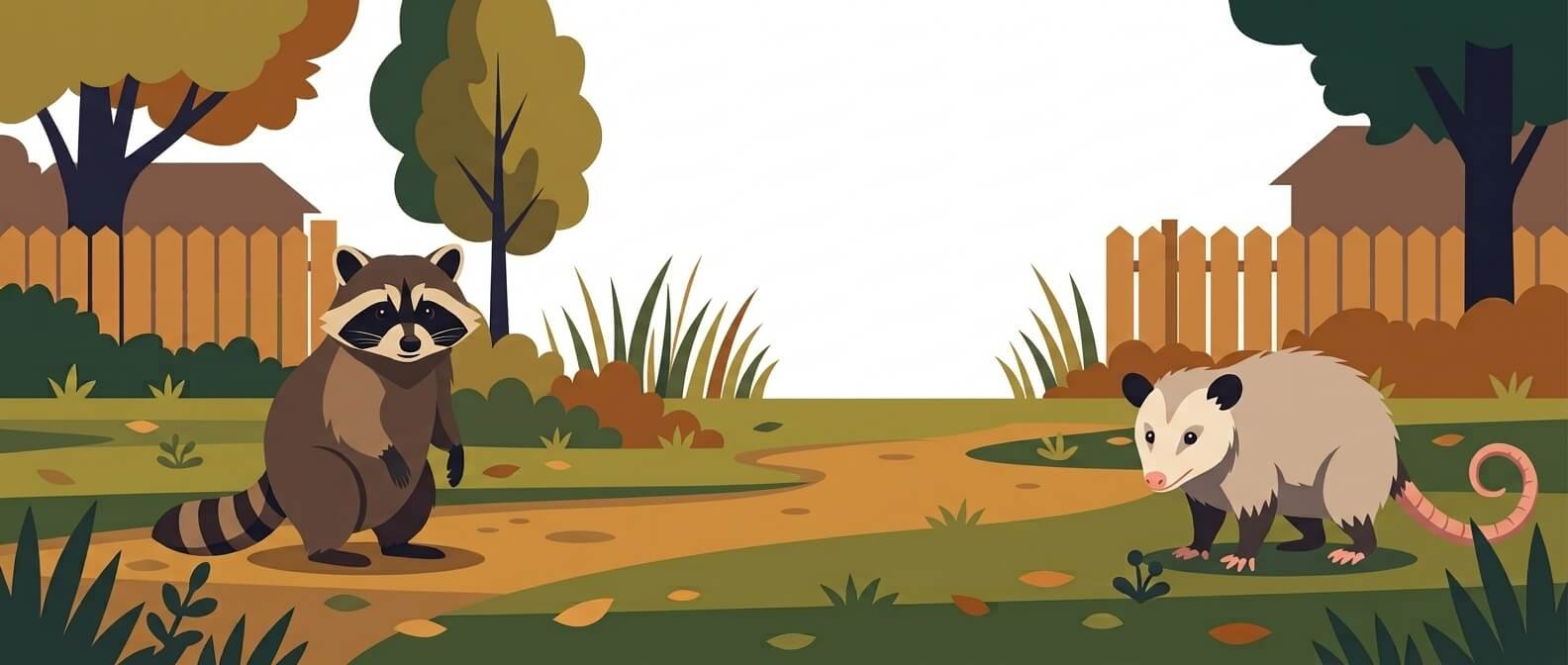
Raccoons and Opossums
Animal | Risk | Prevention |
|---|---|---|
Raccoons | Rabies vector; can transmit leptospirosis | Keep distance; aggressive raccoons may attack small dogs |
Opossums | Generally non-aggressive, but may hiss | Give them space—they're actually beneficial (eat ticks) |
Bears and Moose
Ingredient | Risk | Prevention |
|---|---|---|
Bears | May defend cubs or food sources | Make noise to avoid surprising; carry bear spray |
Moose | Highly defensive (especially with calves) | Give at least 50 yards of space; run if chased |
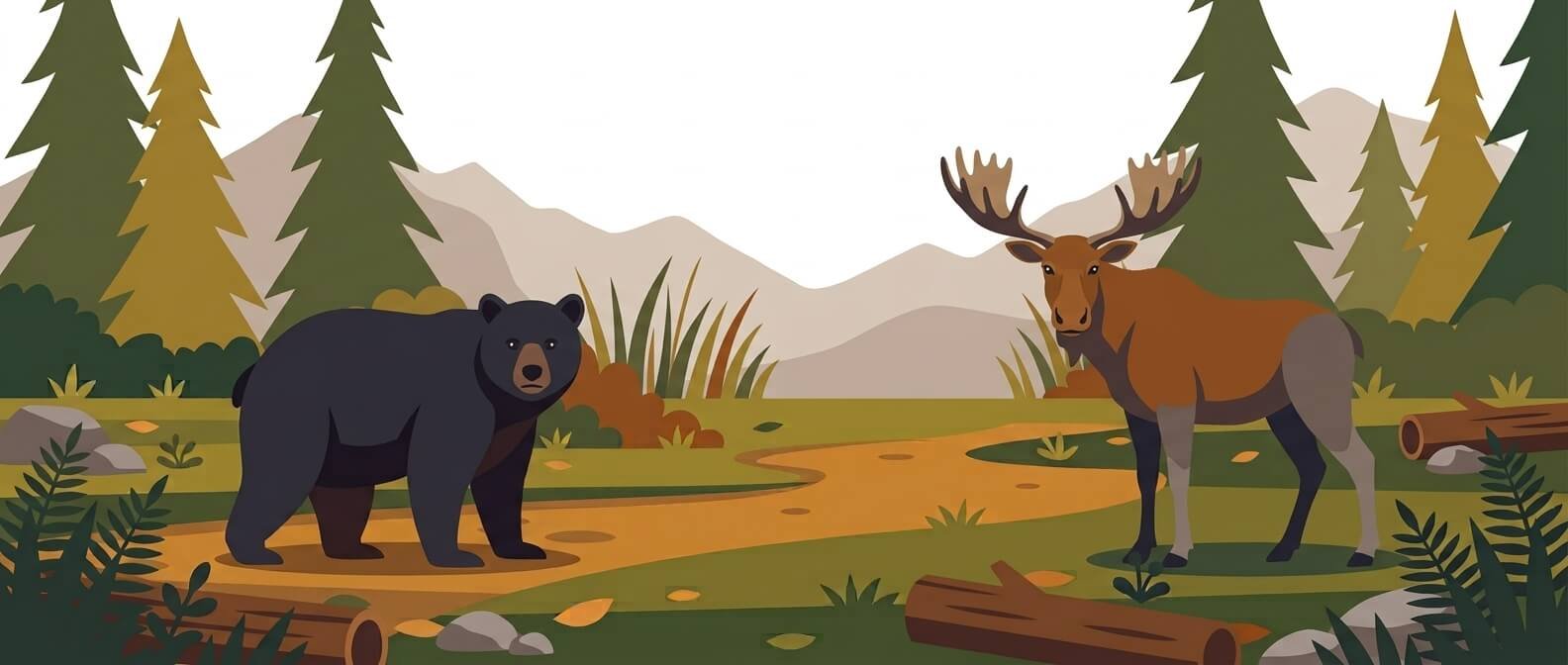
Expert Insight: “Moose are statistically more dangerous than bears in North America. They will stomp a dog—or a person—who gets too close to a calf.” — National Park Service
Quick Answer: Porcupine quills need a vet—don’t pull them out at home. For skunk spray, use the hydrogen peroxide + baking soda + dish soap recipe (never store it). Raccoons can carry rabies and leptospirosis; opossums are generally harmless. Give bears and moose plenty of space—moose are actually more dangerous than bears in North America.
Part 6
Pesticides, Rodenticides, and Environmental Toxins
Not all wildlife risks come from animals. Some of the most dangerous things your dog can encounter on a walk are chemicals—rat poison, pesticides, and toxic plants. Here's what to watch for, and what to do if your dog is exposed.
The Hidden Dangers on Walks
Not all wildlife risks come from animals. Humans have introduced thousands of chemicals into the environment that pose serious risks to dogs.
Rodenticides (Rat Poison)
Type of Poison | Active Ingredient | Symptoms | Antidote/Treatment |
|---|---|---|---|
Anticoagulant | Brodifacoum, bromadiolone | Bleeding (nose, gums, internal) | Vitamin K (for weeks) |
Bromethalin | Neurotoxin | Tremors, seizures, paralysis | No antidote |
Cholecalciferol | Vitamin D3 analog | Kidney failure | IV fluids, hospitalization |
Prevention:
Train a rock-solid “Leave It”
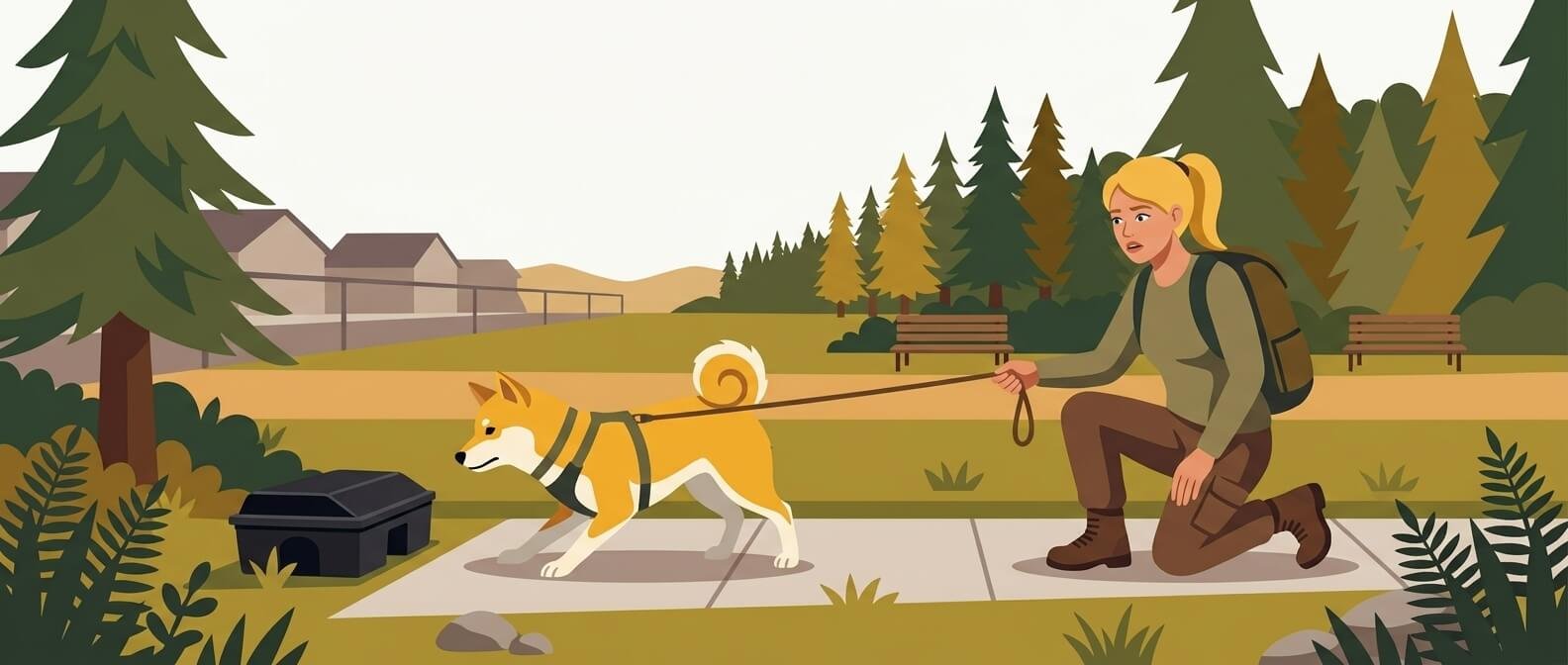
Avoid walking where you see bait stations (look for black boxes placed by pest control)
Keep your dog on a leash in urban areas
Pesticides and Lawn Chemicals
Lawns treated with herbicides and pesticides can be toxic to dogs:
Contact irritation: Paw pads, skin, and eyes
Ingestion: Vomiting, diarrhea, and neurological issues
Best practice:
Avoid walking on treated lawns
Let your dog walk on the sidewalk instead of grass in residential areas
Wash paws after walks (especially if you see signs of chemical treatment)
Mushrooms and Toxic Plants
Dogs eat some toxic mushrooms and plants out of curiosity.
Plant/Mushroom | Danger | Symptoms |
|---|---|---|
Death cap mushroom | Highly toxic (amatoxins) | Vomiting, liver failure |
Sago palm | All parts toxic (cycasin) | Liver failure |
Oleander | Cardiac glycosides | Heart arrhythmias |
Castor bean | Ricin (one of the most toxic natural substances) | Severe GI distress, organ failure |
Rule: If you don’t know what it is, don’t let your dog eat or sniff it. Train “Leave It.”
Quick Answer: The most common environmental toxins for dogs are rodenticides (rat poison), pesticides, lawn chemicals, and toxic plants. Anticoagulant rat poison causes bleeding and needs Vitamin K; bromethalin affects the brain and has no antidote; cholecalciferol causes kidney failure. For plants: death cap mushrooms, sago palm, oleander, and castor bean are all highly toxic. Train a rock-solid “Leave It” and avoid treated lawns.
Part 7
Building a Wildlife Safety Plan
Everything you've read in this guide comes down to one thing: having a plan before you need it. Here's how to build a wildlife safety plan that actually works.
Pre-Walk Checklist
□ Know your local wildlife—what’s common in your area?
□ Check the time of day—are you walking during peak activity?
□ Plan your route—avoid known high-risk areas
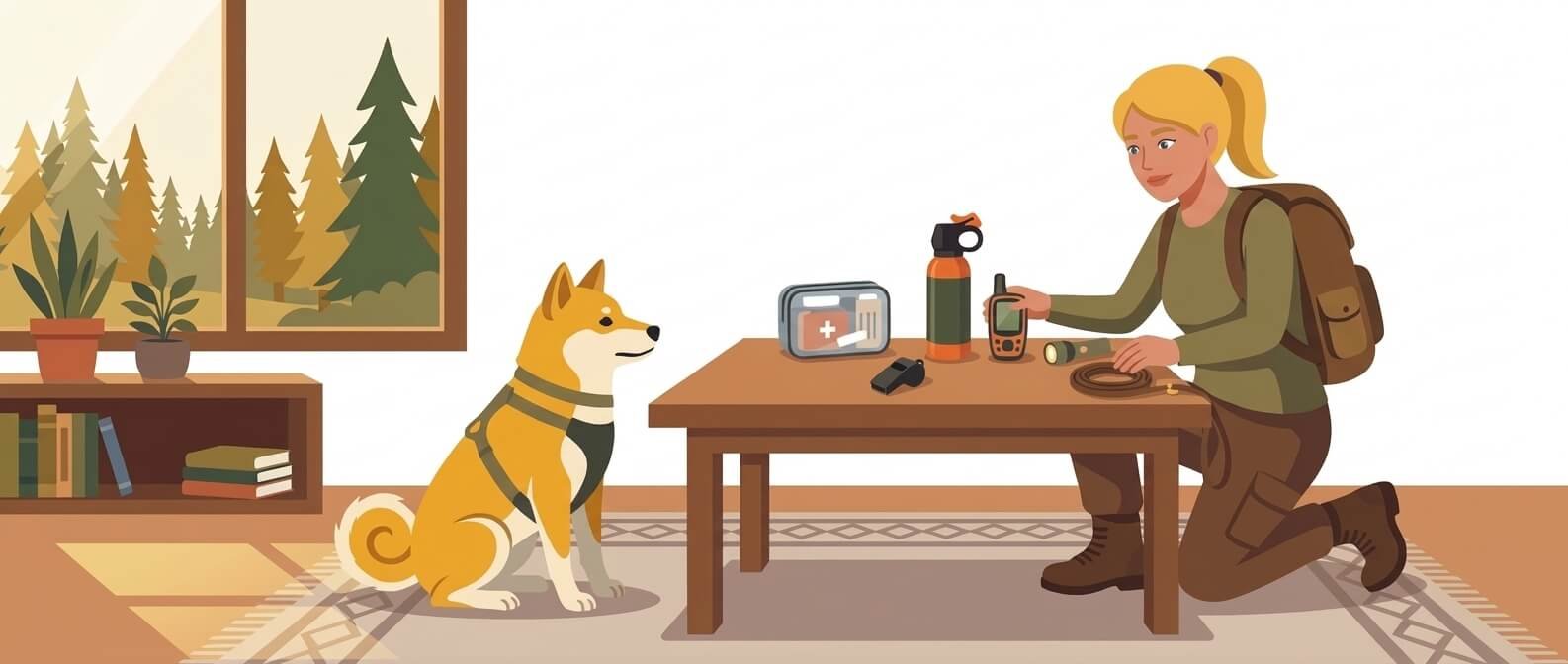
□ Bring prevention tools—whistle, bear spray (where applicable)
□ Charge your phone—for emergencies and photos
□ Pack a flashlight—for dawn/dusk walks
Gear That Helps
Gear | Why It Helps |
|---|---|
Short leash (4–6 feet / 1.2–1.8 m) | Prevents wandering into danger |
Coyote vest | Protects small dogs from bites |
Snake boots | Protects paws on rocky trails |
Loud whistle or air horn | Scares off predators |
Bear spray | For heavy predator areas (bears, coyote packs) |
GPS tracker | To find your dog if they bolt |
The bottom line: A wildlife safety plan isn’t about being paranoid—it’s about being prepared. Know your local wildlife, plan your route, bring the right gear, and trust your instincts. Most encounters are preventable—and the ones that aren’t are manageable when you know what to do.
Quick Answer: To build a wildlife safety plan: know your local wildlife, check the time of day, plan your route, bring prevention tools (whistle, bear spray), charge your phone, and pack a flashlight. Use a short leash, consider a coyote vest for small dogs, snake boots for rocky trails, and a GPS tracker. A little preparation prevents most encounters.
FAQ: Wildlife Encounters and Dog Safety
First, check your dog's eyes and mouth. If there's any irritation, rinse with clean water immediately and contact your vet.
For the body, use the de-skunking recipe (1 quart of 3% hydrogen peroxide + 1/4 cup baking soda + 1 teaspoon of dish soap). Apply for 5 minutes, then rinse thoroughly. Avoid the face and eyes. Do not store this mixture—it's unstable and can expand in a sealed container.
Important: Skunk spray can cause anemia in severe cases. If your dog seems weak, pale, or lethargic after a spray, see your vet.
You can't always tell from a distance—and you shouldn't get close enough to check. But venomous snakes usually have a triangular head, vertical pupils, and heat-sensing pits between the eyes and nostrils. Non-venomous snakes usually have round pupils and a rounded head. The safest rule: treat every snake as venomous, keep your dog away, and back off slowly.
Not for every dog—but if you have a small dog (under 30 lbs) and live in an area with coyote activity, it's a strong investment. Coyote vests have spikes and Kevlar panels that protect the neck and chest. They won't stop every attack, but they've saved lives.
Don't run—that triggers a chase. Instead: pick up small dogs, make yourself big, shout firmly, and back away slowly while facing the coyote. Use a whistle or air horn if you have one. If the coyote keeps following, throw rocks or sticks near it (not at it). Report the encounter to local wildlife authorities.
Yes. Puddles and standing water can contain:
Leptospirosis bacteria (from wildlife urine)
Giardia (a parasite that causes diarrhea)
Blue-green algae toxins (can be fatal)
Chemicals (oil, antifreeze, fertilizers)
Always carry fresh water for your dog. Use a collapsible bowl and never let them drink from puddles, ponds, or lakes unless you are absolutely certain the water is safe.
The leptospirosis vaccine is not a core vaccine—it's categorized as "lifestyle-based." But it is highly recommended for dogs that:
Hike, swim, or walk near standing water
Live in or visit rural or suburban areas with wildlife
Are exposed to ponds, lakes, or streams
Ask your veterinarian whether your dog's lifestyle and local disease risk warrant the vaccine. It requires an annual booster.
Don't pull them out at home. Barbed tips can break off and migrate deeper, causing infection. Go to the vet—they'll sedate your dog and remove quills safely. If quills are in the mouth or throat, it's an emergency (they can obstruct breathing).
Yes—bear spray is safe to use around dogs as long as you don't spray it directly in their face. It's a strong irritant, so aim at the bear, not your dog. After use, flush your dog's eyes and nose with water if they were exposed, and get to a vet if they show signs of distress.
The Ultimate Wildlife Safety Checklist
Before every walk in a wildlife-risk area, run through this quick checklist:
☐ I know what animals are active in this area.
☐ My dog is on a short leash (4–6 feet / 1.2–1.8 m).
☐ I have “Leave It” trained and will use it.
☐ I’m walking during low-risk hours.
☐ I have fresh water for my dog (no puddles).
☐ I have a whistle or air horn.
☐ My phone is charged (for emergencies).
☐ My dog is visible (reflective gear).
☐ I know the nearest vet emergency location.
☐ I have my dog’s ID and microchip info accessible.
The bottom line: This checklist takes 30 seconds. It can save your dog’s life.
Final Thoughts
Wildlife encounters dog safety isn’t about fear—it’s about respect and preparation. Understanding wildlife behavior, using the right equipment, and training your dog to respond to commands can dramatically reduce the risks.
The research is clear. The risks are real. And the steps to prevent them are well within your reach.
Please take this seriously. Your dog is counting on you. That’s what wildlife safety for dogs is really about.
More in This Series
This guide covered the big picture. Now dive deeper into specific risks.
Coyote Attacks on Dogs: Prevention and Emergency Response— Coyote attacks on dogs are rising, but they’re highly preventable. Here’s how to avoid encounters, what to do if a coyote approaches, and when to use protective gear.
Toxic Water Risks for Dogs: Blue-Green Algae and Leptospirosis Explained— Toxic water risks for dogs are real. Learn how to spot blue-green algae, prevent leptospirosis, and keep your dog safe around ponds, lakes, and puddles.
Wildlife First Aid for Dogs: Porcupine Quills, Skunk Spray, and More— Porcupine quills, skunk spray, and other wildlife mishaps — here’s how to handle them quickly and safely, and when to call your vet.
Pesticide Poisoning in Dogs: Hidden Dangers on Walks— Pesticide poisoning in dogs is a real risk. Learn how to spot rodenticides, lawn chemicals, and antifreeze — and what to do in an emergency.
All part of the Wildlife & Environmental Risks module here on OutdoorDogSafety.com.
Disclaimer: This content is for informational purposes only and does not constitute veterinary or professional safety advice. Always consult with a qualified veterinarian or professional dog trainer regarding your dog’s specific needs and safety considerations.