
Heatstroke in Dogs:
Signs, First Aid, and When to Call the Vet
Heatstroke signs in dogs and first aid steps every owner should know. Learn how to cool a dog safely, common mistakes to avoid, and when to call the vet.
Every summer, emergency vets see the same preventable tragedy: a dog whose body temperature has climbed so high that organs start shutting down. Heatstroke in dogs is one of the most preventable emergencies we see—and one of the deadliest.
The scary part? It can happen in minutes.
Here’s a number that should stop you in your tracks: according to the American Veterinary Medical Association (AVMA), heat-related canine emergencies more than triple during summer months compared to the rest of the year. And a significant portion of those cases end in tragedy—not because owners didn’t care, but because they didn’t know what to look for.
Here’s the thing: dogs don’t cool off like we do. They rely on panting to release heat. And when the air is hot and humid, panting stops working. Their body temperature climbs. Organs start to fail. And by the time you notice something’s wrong, it’s often an emergency.
The good news? Heatstroke is almost entirely preventable. And when it does happen, knowing what to do in those first few minutes can save your dog’s life.
Quick note: I’m a dog owner, not a vet. This guide pulls together recommendations from veterinary experts and animal welfare organizations. For anything concerning your specific dog, always check with your vet.
This is part of our heat safety for dogs series. For an overview of all the key risks, start with the Heat & Weather Safety hub—or jump straight to What Temperature Burns Dog Paws? if you’re worried about hot pavement.
What's in This Guide
In this guide, I’ll walk you through:
-
Signs of heatstroke in dogs — what to watch for at every stage
-
First aid for dog heatstroke — step-by-step what to do
-
What NOT to do — common mistakes that make things worse
-
When to call the vet — and why you shouldn’t wait
-
High-risk dogs — flat-faced, senior, overweight, and fluffy breeds
-
Prevention tips — how to avoid heatstroke altogether
(Quick note: I’m a dog owner, not a vet. For anything concerning your specific dog, always check with your vet.)
Part 1
What Is Heatstroke in Dogs and Why Is It So Dangerous?
Let's start with the basics.
A dog's normal body temperature is 100°F to 103°F (37.8°C to 39.5°C).
When their temperature climbs to 106°F (41°C) or higher, they're in heatstroke territory. At that point, their cells start to break down. Organs begin to fail. And without treatment, the damage can be irreversible—even fatal.
So why do dogs overheat so much faster than humans?
Simple: they barely sweat.
You and I cool off by sweating all over our bodies. Dogs? They have sweat glands only in their paw pads. Their main cooling mechanism is panting—they breathe rapidly to evaporate moisture from their tongue and airway.
As the Humane Society explains, panting works well in dry, breezy conditions. But when humidity is high, that moisture doesn’t evaporate. The cooling system breaks down. And heat builds up inside the dog’s body fast.
High humidity + high temperature is a dangerous combination for any dog—even if you’re only outside for a few minutes. That’s why heatstroke in dogs can happen faster than most owners expect.
Quick Answer: A dog’s normal temperature is 100–103°F (37.8–39.5°C). Heatstroke begins at 106°F (41°C) or higher—when cells break down and organs start to fail. Dogs overheat faster than humans because they barely sweat and rely on panting, which stops working in high humidity. High heat + high humidity is the most dangerous combination.
Part 2
Signs of Heatstroke in Dogs: What to Watch For
Your dog can't tell you, "I'm overheating." They rely on you to read their body language.
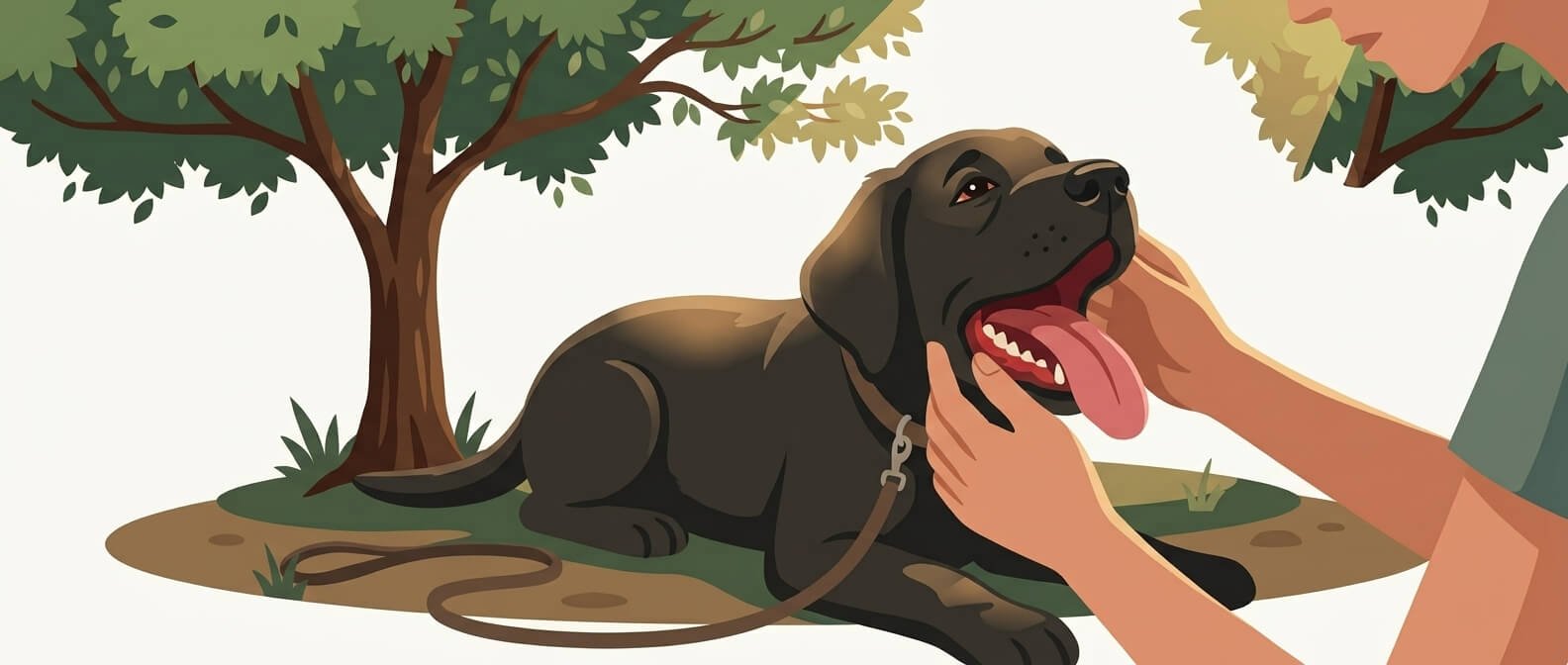
The AVMA and the American College of Veterinary Emergency and Critical Care (ACVECC)list these as key warning signs. Watch closely:
Early Signs (Act Now)
What You Might See | Why It's Happening |
|---|---|
Heavy, excessive panting | Your dog is desperately trying to cool off |
Rapid breathing or heart rate | The body is working overtime |
Bright red or dark red gums | Blood vessels are dilated to release heat |
Thick, sticky saliva | Dehydration is setting in |
Restlessness or pacing | Your dog is uncomfortable and looking for relief |
Drooling more than normal | Body is struggling to regulate temperature |
Severe Signs (Call the Vet Immediately)
What You Might See | Why It's Happening |
|---|---|
Wobbly, unsteady movement | The brain is affected by the heat |
Pale, blue, or purple gums | Oxygen levels are dropping |
Vomiting or diarrhea (may contain blood) | Internal organs are starting to fail |
Collapse or loss of consciousness | This is a life-threatening emergency |
Seizures or muscle tremors | Neurological damage is occurring |
The key takeaway: if you see any of the early signs, stop the walk immediately and start cooling your dog down. If you see any of the severe signs, call your vet while you’re cooling your dog.
Quick Answer: Early signs of heatstroke in dogs include heavy panting, rapid breathing, bright or dark red gums, thick saliva, restlessness, and excessive drooling. Severe signs include wobbly movement, pale or blue gums, vomiting, collapse, and seizures. If you see early signs, stop and cool your dog down. If you see severe signs, call your vet while you cool.
Part 3
First Aid for Dog Heatstroke: What to Do Right Away
If you suspect your dog is overheating, don't wait to see if they "bounce back." Every minute counts.
Here's a step-by-step first aid protocol based on recommendations from veterinary emergency sources:
Step 1: Stop All Activity and Get Them Out of the Heat
Move your dog to shade, a cool room, or an air-conditioned space immediately. Carry them if they’re too weak to walk on their own.
Step 2: Start Cooling with Cool (Not Cold) Water
This is the most important step.
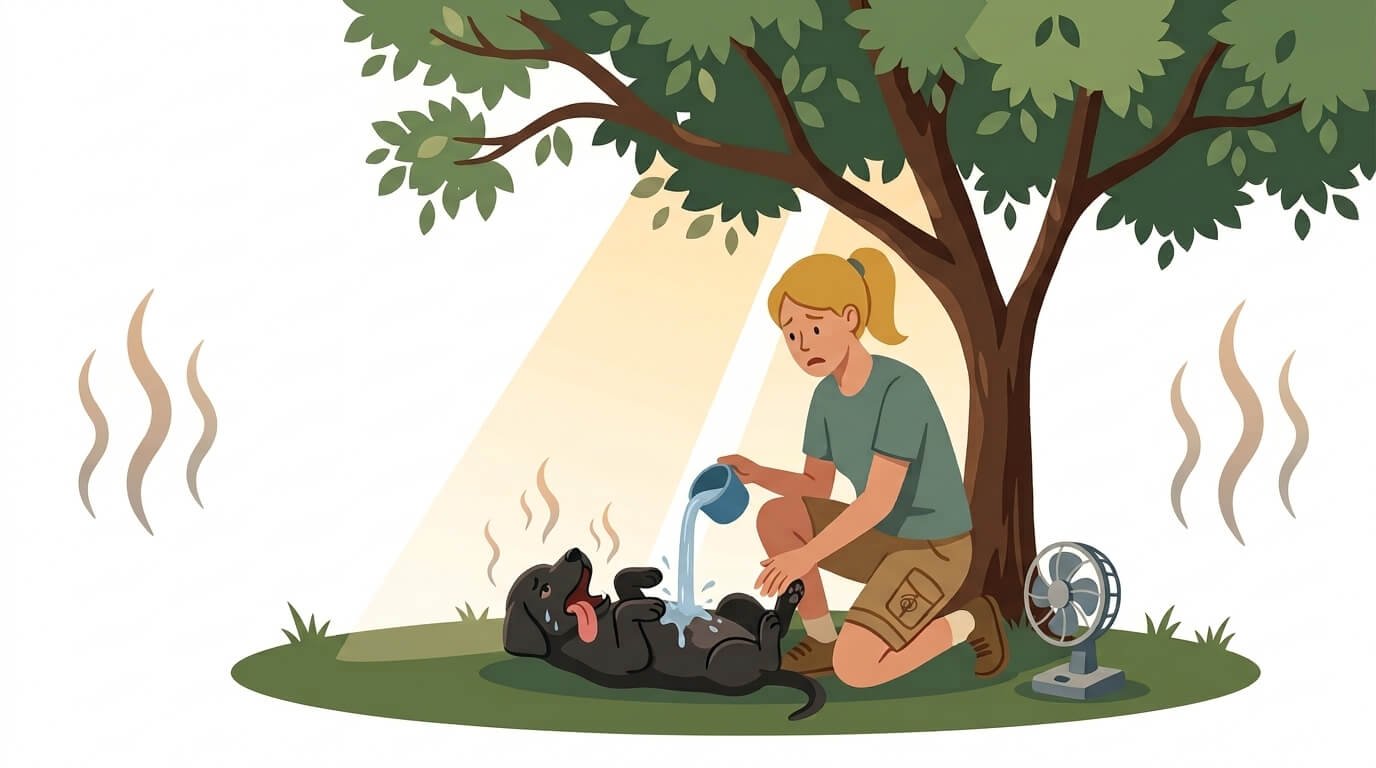
Use cool water—not ice water. Run it over their belly, inner thighs, paw pads, and groin area. These are spots where blood vessels are close to the skin surface, so cooling them cools the blood and lowers core temperature faster.
What to use:
-
Cool tap water (around 60–70°F)
-
A hose or spray bottle on a gentle setting
-
A damp cloth or towel placed loosely over their body
What NOT to use (this is critical):
-
No ice water or ice packs. The extreme cold constricts blood vessels and actually traps heat inside the body.
-
No tight wet towels. A towel draped tightly over the body traps moisture and heat, preventing cooling.
Step 3: Create Airflow
Point a fan at your dog while you’re cooling them with water. This speeds up the cooling process by helping moisture evaporate.
Step 4: Offer Small Amounts of Water
If your dog is alert and can swallow easily, offer small sips of cool water. Don’t let them gulp a huge amount all at once.
If they’re weak, unresponsive, or having trouble swallowing, do not offer water—it could end up in their lungs.
Step 5: Call Your Vet Immediately
While you’re cooling your dog, have someone call the vet or the nearest emergency clinic. Let them know you’re on your way. Even if your dog seems to get better, you should still go to the vet—internal organ damage can happen even after external symptoms improve.
The "Cool First, Transport Second" Rule
Veterinary emergency experts recommend this priority:
Cool first, then transport.
Don’t load a severely overheated dog into a hot car and drive across town without cooling them first. They’ll continue to heat up during the drive. Start cooling at the scene, then transport with air conditioning running.
Stop cooling when your dog’s temperature reaches 103°F (39.4°C)—you want to avoid overcooling. If you’re not sure what their temperature is, stop cooling when they seem to be breathing more comfortably and their gums are returning to a normal pink color.
Quick Answer: For heatstroke in dogs, first aid is: (1) move to shade, (2) cool with cool—not cold—water on the belly, inner thighs, paws, and groin, (3) create airflow with a fan, (4) offer small sips of water if alert, (5) call your vet while cooling. Cool first, transport second—never load a hot dog into a hot car without cooling them down first.
Part 4
What NOT to Do in a Heatstroke Emergency
There's a lot of well-meaning but wrong advice out there. Here are the common mistakes to avoid, based on veterinary guidance—because in heatstroke in dogs, doing the wrong thing can make a bad situation worse.
❌ Don't Do This | ✅ Do This Instead |
|---|---|
Don't use ice water or ice packs. They constrict blood vessels and trap heat. | Use cool tap water (60–70°F / 15–21°C) on belly, inner thighs, and groin. |
Don't wrap your dog in wet towels. They trap heat against the body. | Keep towels loose and re-wet frequently, or just use running water. |
Don't force water down their throat. They can inhale it into their lungs. | Offer small sips if they're alert. If not, don't offer water at all. |
Don't assume they're fine if they seem to recover. Internal damage may still be happening. | Always see a vet after a heatstroke episode, even if they seem to bounce back. |
Don't rush to the vet without cooling first. They'll continue to overheat in the car. | Cool first for 5–10 minutes, then transport with A/C on. |
Quick Answer: In a heatstroke emergency, never use ice water or ice packs, never wrap your dog tightly in wet towels, never force water down their throat, never assume they’re fine if they seem to recover, and never rush to the vet without cooling first. Cool your dog for 5–10 minutes before transporting—and always see a vet afterward, even if they seem to bounce back.
Part 5
When to Call the Vet (Don't Wait)
Here's a straightforward rule: if you're wondering whether to call the vet, call them.
Veterinary emergency teams would much rather get a call and tell you "you're doing the right things at home" than see your dog in critical condition an hour later.
Call your vet immediately if your dog shows any of these signs:
-
Heavy panting or rapid breathing that doesn’t stop after a few minutes in the shade
-
Gums that are bright red, dark red, blue, purple, or pale
-
Unsteady walking, collapse, or loss of consciousness
-
Vomiting or diarrhea during or right after a walk
-
Body temperature above 104°F (40°C) — take it rectally if you can, but don’t delay cooling to find a thermometer
-
Signs of confusion or disorientation
-
Any of the “severe signs” listed earlier
Key principle: For moderate to severe heat exhaustion, veterinary treatment is essential even if your dog seems to perk up. Internal damage can still be happening even after external symptoms improve—organs like the kidneys and liver can take damage that only shows up later.
For mild heat exhaustion, you may be able to recover at home. For moderate to severe heatstroke, veterinary treatment is essential—they can provide IV fluids, monitor organ function, and catch hidden complications before they become life-threatening.
Quick Answer:Call your vet immediately if your dog has heavy panting that won’t stop, abnormal gum color (bright red, blue, purple, or pale), unsteady walking, collapse, vomiting, a body temperature above 104°F (40°C), or confusion. Even if your dog seems to perk up, internal organ damage can still be happening—always see a vet after a heatstroke episode.
Part 6
Which Dogs Are Most at Risk for Heatstroke?
Not all dogs handle heat the same way. If your dog falls into any of these categories, they're at higher risk for heatstroke in dogs—and you'll need to be extra careful.
Flat-Faced (Brachycephalic) Breeds
French Bulldogs, English Bulldogs, Pugs, Boston Terriers, Boxers, and Shih Tzus have shorter airways, which makes panting less efficient. They overheat faster—even at lower temperatures.
Senior Dogs
Older dogs may have heart, respiratory, or joint conditions that make heat harder to handle. Their cooling systems also become less efficient with age.
Puppies
Puppies haven’t fully developed their ability to regulate body temperature. They also get carried away with play and don’t know when to stop.
Overweight Dogs
Extra body fat acts as insulation—it traps heat inside the body and makes cooling harder. Even a few extra pounds can increase heatstroke risk
Thick-Coated and Double-Coated Dogs
Huskies, Golden Retrievers, German Shepherds, and other fluffy breeds have coats that trap heat. Don’t shave them—shaving actually makes overheating worse. Regular brushing removes loose undercoat and improves airflow.
Dogs with Medical Conditions
If your dog has heart disease, respiratory issues, or takes regular medications, talk to your vet about how heat and exercise affect them.
Want the full breakdown? See our High-Risk Dogs and Heat guide for detailed protection tips for each group.
Quick Answer: The dogs most at risk for heatstroke are flat-faced breeds (Frenchies, Pugs, Bulldogs), senior dogs, puppies, overweight dogs, double-coated breeds, and dogs with medical conditions. If your dog falls into any of these groups, keep walks shorter, walk in the early morning, and watch for signs of overheating sooner than you would for other breeds.
Part 7
How to Prevent Heatstroke in Dogs This Summer
The best treatment is always prevention. Here are the practical steps every dog owner should take:
Time your walks wisely.
Walk before 8:00 AM or after 7:30 PM. Avoid 10:00 AM to 4:00 PM, when the sun is strongest.
Check the ground.
Use the 7-second back-of-hand test before every walk. If the pavement is too hot for your hand, it’s too hot for your dog’s paws—and that same heat affects their whole body.
Always bring water.
For any walk over 15 minutes in warm weather, bring a portable water bottle and a collapsible bowl. Offer small sips regularly.
Never leave your dog in a parked car.
Not even for “just a minute.” Not even with the windows cracked. On an 85°F (29°C) day, the inside of a car can reach 120°F (49°C) in just 10 minutes.
Choose shady routes.
Grass, dirt, and shaded trails are much cooler than asphalt. A shorter walk in the shade is safer than a long walk on exposed pavement.
Know your dog's limits.
Age, breed, weight, and health conditions all affect how your dog handles heat. Be extra cautious with high-risk dogs.
Consider indoor alternatives on dangerously hot days.
A quick potty break followed by indoor games, training sessions, or puzzle toys is always better than pushing through dangerous heat.
Want a deeper dive? See our guides on What Temperature Burns Dog Paws? for hot pavement safety, and Dog Paw Pad Burns for treating and preventing paw injuries.
Quick Answer: To prevent heatstroke in dogs, walk before 8 AM or after 7:30 PM, do the 7-second pavement test before every walk, bring water for walks over 15 minutes, never leave your dog in a parked car, choose shaded routes, know your dog’s heat limits, and consider indoor alternatives on dangerously hot days.
FAQ: Heatstroke in Dogs
It depends on the severity. Mild cases may recover within 24–48 hours with proper cooling and rest. Moderate to severe cases require veterinary treatment and may take weeks to fully recover—some organ damage can be permanent.
Yes—especially in a hot, poorly ventilated house or apartment without A/C. Flat-faced breeds, seniors, and overweight dogs are most at risk. Keep indoor temperatures below 78°F (26°C), provide airflow with fans, and offer fresh water at all times.
Tired dogs slow down, but overheated dogs show specific signs: heavy panting that won't stop, thick saliva, bright or dark red gums, restlessness, and reluctance to move. If you're not sure, cool them down anyway—it won't hurt a tired dog.
They can help—but they don't replace shade, water, breaks, and smart timing. Cooling vests work through evaporative cooling (you wet the material, and it pulls heat away as it evaporates). They're most useful for flat-faced and thick-coated dogs, but they're a helper, not a substitute.
V
Cool water is better than ice water. Ice-cold water can cause stomach cramps, and for an overheated dog, it can constrict blood vessels and slow cooling. Offer cool—not cold—water in small amounts. If your dog is showing signs of heatstroke, never force them to drink.
Heat exhaustion is the earlier stage—heavy panting, thick saliva, restlessness, and reluctance to move. Heatstroke is the later, life-threatening stage—body temperature above 106°F (41°C), wobbly movement, abnormal gums, vomiting, collapse, or seizures. Heat exhaustion can be managed with cooling; heatstroke is a medical emergency.
If you have a digital rectal thermometer, yes—it gives you a real number to work with. But don't delay cooling to find one. If you can't take their temperature, cool them based on their symptoms and call your vet.
Yes. Even after a dog seems to recover, heatstroke can cause lasting damage to the kidneys, liver, heart, and brain. This is why always seeing a vet after a heatstroke episodeis essential—even if your dog seems to bounce back.
Sources & Further Reading
This guide combines my own trail experience with these trusted sources:
-
American Veterinary Medical Association (AVMA) — Heatstroke in dogs, hot weather safety
-
American Kennel Club (AKC) — Heatstroke prevention and treatment
-
Humane Society of the United States — Hot weather pet safety
-
American College of Veterinary Emergency and Critical Care (ACVECC) — Heat-related injury protocols
Disclaimer: I’m a dog owner, not a veterinarian. This content is for informational purposes only and does not replace professional veterinary advice. For any health concerns regarding your specific dog, please consult a licensed veterinarian.
Final Thoughts
Heatstroke is one of those things that happens quietly and suddenly. Your dog can go from “fine” to “emergency” in the time it takes to walk a single block.
But here’s the thing: you can prevent it. A few simple habits—timing your walks, checking the ground, bringing water, watching your dog’s behavior—can make all the difference. That’s the whole message of heatstroke in dogs care: prevention is everything.
Your dog relies on you to read the signs they can’t tell you. Know what to look for. Know what to do. And when in doubt, call your vet. They’d rather hear from you than see you in the emergency room.
Stay cool. Stay safe. And give your dog an extra scratch behind the ears for me. That’s what heat safety for dogs is really about.
More in This Series
This guide covered the big picture. Now dive deeper into specific risks.
What Temperature Burns Dog Paws? Hot Pavement Safety & Summer Walking Tips — The 7-second pavement test, the real temperature threshold, and how to protect your dog’s paws on hot summer walks.
High-Risk Dogs and Heat: Summer Safety for Flat-Faced, Senior, and Fluffy Breeds — Why some dogs struggle in heat more than others — and how to adjust.
Dog Paw Pad Burns: How to Treat and Care for Your Dog’s Feet — How to spot a burn, treat it in the field, and prevent it on the next walk.
All part of the Heat & Weather Safety module here on OutdoorDogSafety.com.
Disclaimer: This content is for informational purposes only and does not constitute veterinary or professional safety advice. Always consult with a qualified veterinarian or professional dog trainer regarding your dog’s specific needs and safety considerations.