
What Temperature Burns Dog Paws?
Hot Pavement Safety & Summer Walking Tips
The 7-second pavement test, the real temperature threshold, and how to protect your dog's paws on hot summer walks.
Every summer, heat-related dog emergencies more than triple—and most are entirely preventable. The biggest hidden danger? The ground beneath your dog’s feet.
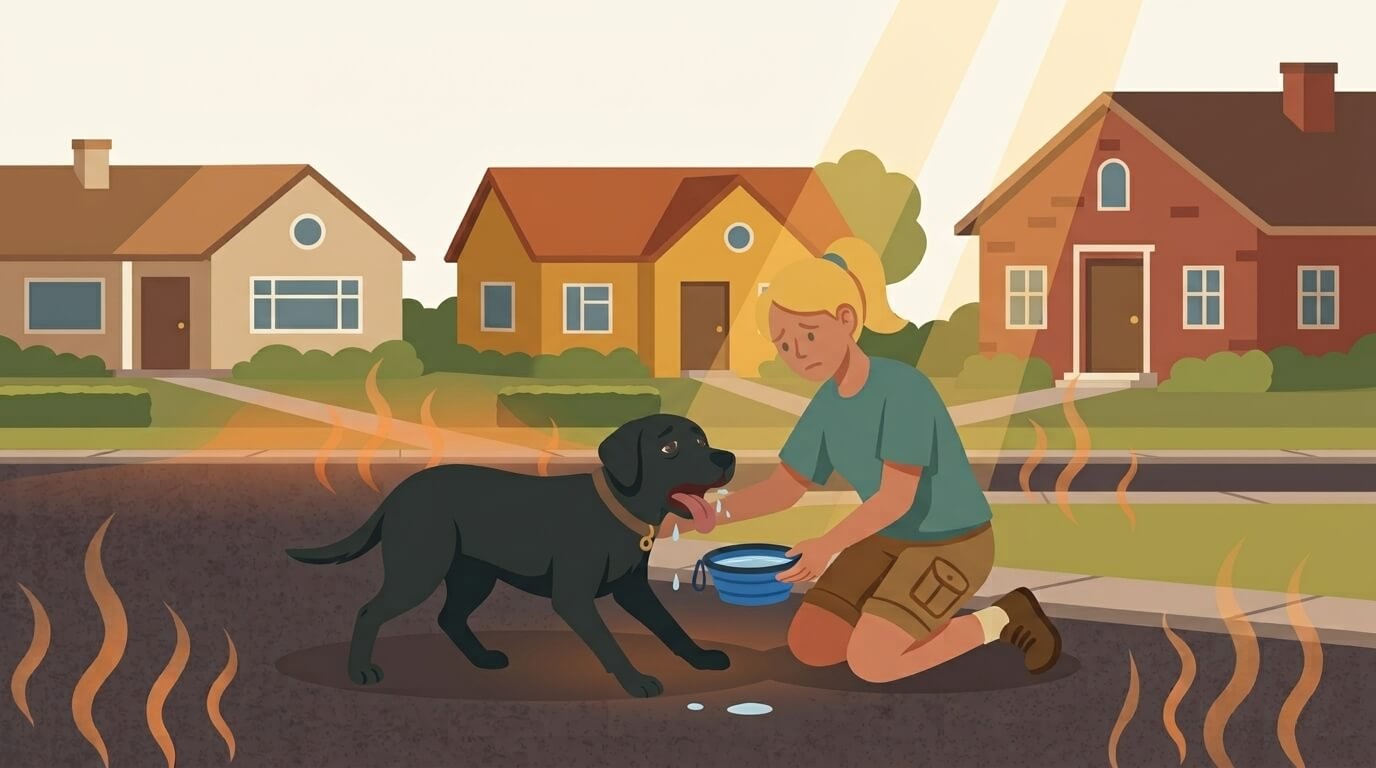
So what temperature burns dog paws? When it’s 85°F outside, asphalt in direct sun can hit 140°F. That’s hot enough to burn your dog’s paws in under 60 seconds—even when the air feels “fine” to you.
This guide pulls together recommendations from the AVMA, AKC, and Humane Society to help you spot the risks before they become emergencies.
You’ll learn: the 7-second pavement test, early signs of heat exhaustion, summer walking strategies, gear that actually helps, special care for high-risk breeds, and first aid steps if your dog overheats.
Quick note: I’m a dog owner, not a vet. For anything concerning your specific dog, always check with your vet.
Part 1
How to Tell If Pavement Is Too Hot for Dogs
Here's the simplest safety check you'll ever learn—and it doesn't cost a thing.
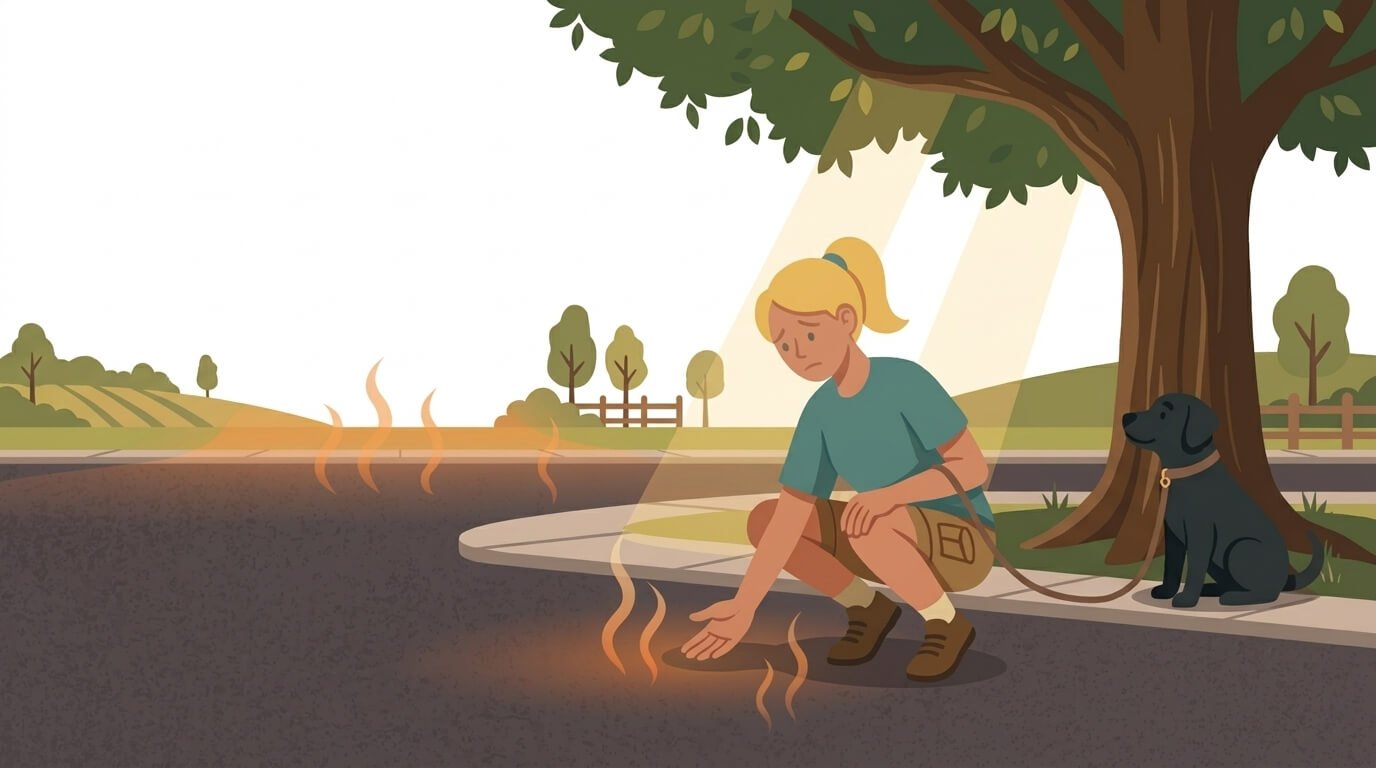
Before every summer walk, press the back of your hand against the pavement. Hold it there for seven full seconds.
If it’s too hot for your hand to tolerate for seven seconds, it’s too hot for your dog’s paws. Full stop.
This is one of those habits that takes five seconds but can save your dog a world of pain. Make it part of your routine, right alongside grabbing your keys and poop bags. The American Kennel Club (AKC) recommends exactly this approach in their summer safety guidelines—and for good reason. Paw pads are more sensitive to heat than your palms are.
So do it. Every time. Driveway, sidewalk, parking lot—doesn’t matter. Check it before your dog steps on it.
Summer Dog Walking Temperature Chart: Air vs. Pavement
Here’s where a lot of us get tripped up—and I’ve been guilty of this too.
You check your weather app. It says 85°F. “Not bad,” you think. “We’ll be fine.”
But that number tells you almost nothing about what’s happening on the ground. According to the American Veterinary Medical Association (AVMA), asphalt in direct sunlight can run 50–60°F hotter than the air temperature.
Think about that. An 80°F day can mean 130°F+ pavement. That’s not “warm.” That’s burn territory.
Here’s a quick reference chart based on veterinary and animal welfare sources:
Air Temperature | Pavement Can Reach | Risk Level | What to Do |
|---|---|---|---|
75°F | ~125°F | High | Check carefully; stick to shade and grass |
85°F | ~140°F | Very High | Keep pavement time short |
90°F+ | 150°F+ | Severe | Skip pavement entirely—just a quick potty break |
Sources: Compiled from AVMA and Humane Society hot weather safety guidelines. Actual temps vary based on sunlight, surface color, and shade.
The bottom line? Pavement can be dangerously hot even when you’re comfortable. Trust the test, not the weather app.
If your dog starts limping, licking their paws, or refusing to walk, stop and check their feet. For any signs of burns or blisters, call your vet for next steps.
Quick Answer: To tell if pavement is too hot for your dog, press the back of your hand against it for 7 seconds. If it’s too hot for you, it’s too hot for your dog’s paws. Asphalt in direct sun can run 50–60°F hotter than the air temperature—so an 85°F day can mean 140°F pavement.
Part 2
The Hidden Dangers of Overheating
Okay, we've covered the paws. But here's the thing: summer heat affects your dog's whole body—not just their feet.
And it can happen faster than you'd think.
One minute your pup is happily trotting along. The next? Panting hard, slowing down, looking for shade. That transition can happen in just a few minutes, especially if they're running, playing, or walking on exposed pavement in the middle of the day. And it's not just about what temperature burns dog paws—it's about the whole body.
Why Dogs Can't Cool Off Like We Do
You and your dog handle heat very differently.
When you get hot, your body sweats all over—it’s a highly efficient cooling system.
Your dog? Not so much.
Dogs sweat mainly through their paw pads (yes, really) and rely on panting to release heat. As the Humane Society explains in their pet care resources, panting works—but it’s not nearly as efficient as human sweating.
And here’s the kicker: humidity makes it even harder. When the air is already damp, panting becomes less effective because moisture doesn’t evaporate easily. So a hot, humid day is way more dangerous for your dog than a hot, dry one.
Bottom line: don’t judge a summer walk by temperature alone. Humidity and direct sun matter just as much.
6 Early Signs of Heat Exhaustion in Dogs
Your dog can’t say, “Hey, I’m overheating.” They’re counting on you to read their body language.
The AVMA lists these as key early warning signs. Keep an eye out for:
Excessive or unusually heavy panting—more than what’s normal for your dog
Thick or sticky saliva—it gets gluey when they’re dehydrated
Brick red or bright red gums—a sign their body is struggling
Wobbly or uncoordinated movement—they look unsteady on their feet
Vomiting or diarrhea—things are getting serious
Lethargy or slow responses—they’re not reacting like usual
If you see any of these, stop the walk immediately. Move your dog to a cooler spot and start gentle cooling. Don’t wait to see if they “walk it off.” They won’t.
Heatstroke Warning Signs: When It's an Emergency
Heatstroke is life-threatening. It moves fast, and you need to know the difference between “keep a close eye” and “get to the vet NOW.”
Based on veterinary emergency protocols, here’s the breakdown:
Watch Closely — Act Now | Vet Immediately — Emergency |
|---|---|
Heavy panting | Collapse |
Fast breathing or heart rate | Seizure |
Bright red gums | Loss of consciousness |
Restlessness or weakness | Blue, purple, or very pale gums |
Mild wobbliness | Can't stand or walk |
Lots of drooling | Severe confusion or unresponsiveness |
If your dog collapses, has a seizure, or shows any of those severe signs: start cooling and get to a vet immediately.
Don’t debate whether it’s “bad enough.” Heatstroke doesn’t wait for you to make up your mind.
Quick Answer: Dogs cool off mainly by panting—not sweating like humans—so humidity makes heat far more dangerous. Early signs of heat exhaustion include heavy panting, thick saliva, brick red gums, wobbliness, vomiting, and lethargy. If you see these, stop the walk and cool your dog down. If they collapse, have a seizure, or lose consciousness, it’s an emergency—go straight to a vet.
Part 3
Smart Summer Walking Strategies
The easiest way to avoid summer heat problems? Don't put yourself in that position in the first place.
You don't need fancy equipment. Just a few smart adjustments to your routine—and you'll never have to worry about what temperature burns dog paws again.
Best Time to Walk Your Dog in Summer
Timing is everything. Here’s what works:
Go early or go late:
Early morning — ideally before 8:00 AM
Late evening — often after 7:30 PM (but always check the pavement anyway)
Avoid the middle of the day:
10:00 AM to 4:00 PM — when the sun is strongest and pavements are hottest
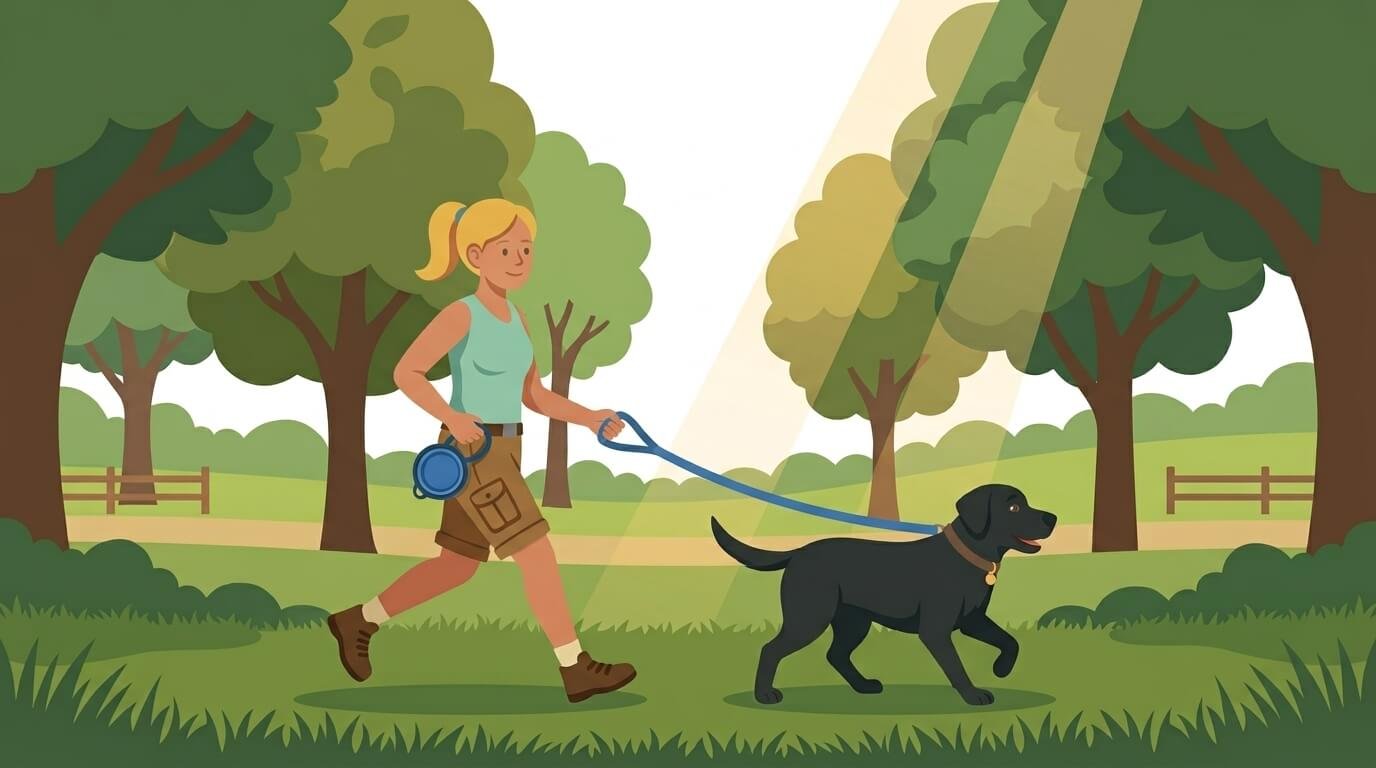
If you have to walk midday: stick to grass or shaded trails, keep it under 10 minutes, and bring water. Even a short walk on hot pavement can burn paws in under 60 seconds.
These aren’t hard rules. Some evenings stay hot. Some mornings warm up early. Always check the actual conditions rather than just following the clock.
And remember: grass and dirt stay much cooler than asphalt, especially in the shade. On hot days, try to route your walk through a park with shaded trails instead of neighborhood sidewalks. Your dog’s paws will thank you.
Quick Answer: The best time to walk your dog in summer is early morning (before 8 AM) or late evening (after 7:30 PM). Avoid 10 AM to 4 PM, when the sun is strongest. Stick to grass and shaded trails instead of asphalt. And always do the 7-second pavement test—even in the evening, pavement can stay hot for hours.
Part 4
Summer Walking Gear
Good gear can help. But it's not a magic solution.
Think of summer equipment as an extra layer of protection—not permission to stay outside longer than you should. No gear replaces knowing what temperature burns dog paws and when to head home.
Do Dog Booties Work on Hot Pavement?
Yes, booties can protect paw pads from hot surfaces, rough ground, and sharp debris.
But here’s the honest truth: not every dog will wear them.
Some dogs act like you’ve put bricks on their feet. Others refuse to move entirely. That’s normal—it’s a new sensation, and it takes time.
If you want to try booties, here’s a gradual approach that trainers recommend:
Let your dog sniff the booties. Reward curiosity.
Put one bootie on for a few seconds. Treat and praise.
Gradually increase wearing time over several days.
Practice walking indoors first.
Then try short outdoor sessions.
One thing to keep in mind: booties protect paws, but they don’t prevent overheating. Your dog’s whole body still needs protection from the heat. Use them as a tool, not a free pass.
If your dog refuses booties: paw balm can help, but it’s not a substitute. Your best option is still to walk on grass or shaded trails—or skip the walk entirely.
Do Cooling Vests and Bandanas Work?
If your walk is longer than about 15 minutes in warm weather: bring water. Period.
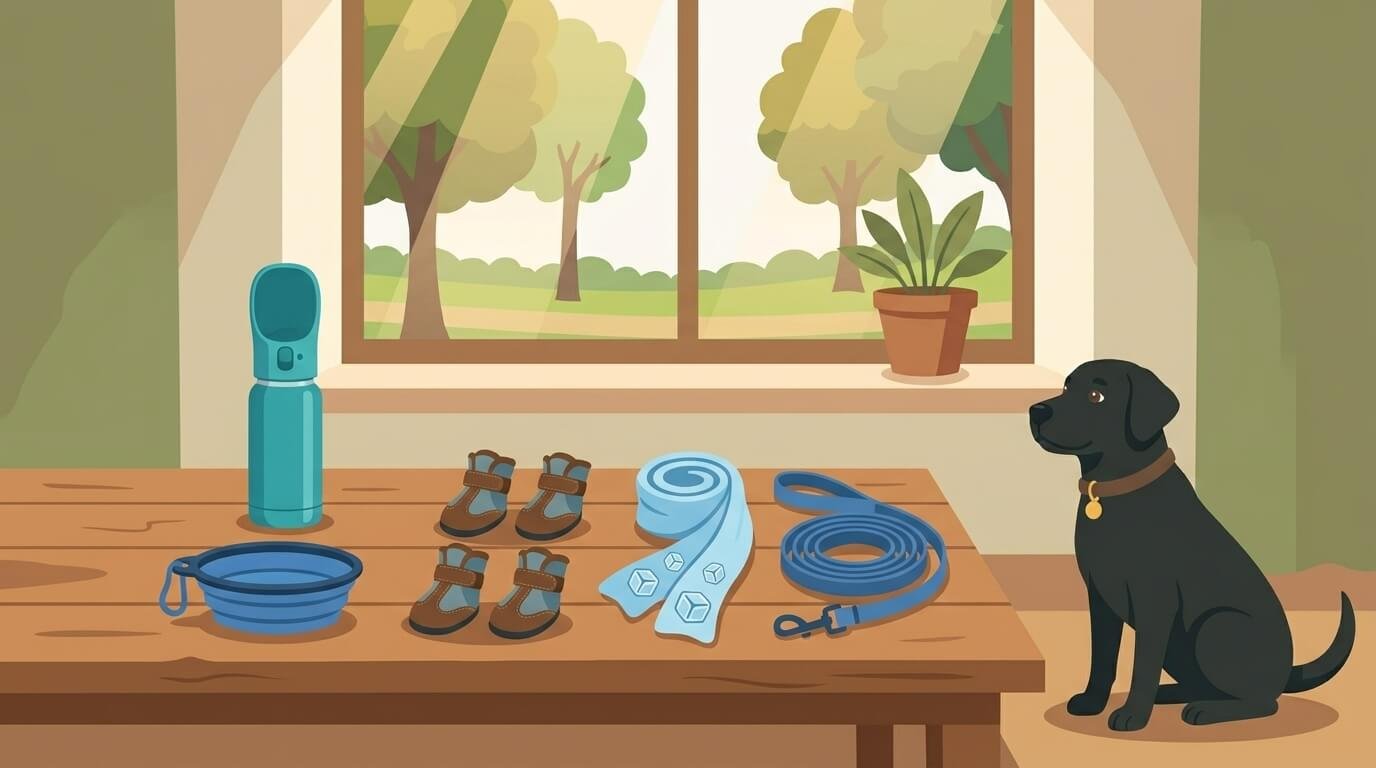
A portable water bottle and a collapsible bowl take almost no space and can make a huge difference.
How much to offer? General veterinary hydration guidelines suggest roughly:
1/2 cup every 15–20 minutes for a medium-sized dog (40–50 lbs)
2–3 tablespoons for smaller dogs
Up to 1 cup for larger breeds
These are rough estimates—watch your dog and adjust. Offer small sips regularly, but don’t let them gulp a huge amount all at once, which can upset their stomach.
Water: Don't Leave Home Without It
If your walk is longer than about 15 minutes in warm weather: bring water. Period.
A portable water bottle and a collapsible bowl take almost no space and can make a huge difference.
How much to offer? General veterinary hydration guidelines suggest roughly:
1/2 cup every 15–20 minutes for a medium-sized dog (40–50 lbs)
2–3 tablespoons for smaller dogs
Up to 1 cup for larger breeds
These are rough estimates—watch your dog and adjust. Offer small sips regularly, but don’t let them gulp a huge amount all at once, which can upset their stomach.
Summer Walking Gear Checklist
Must-Have | Nice-to-Have |
|---|---|
Portable waterMust-Have | Cooling vest |
Collapsible bowl | Dog booties |
Poop bags (yes, even in summer) | Cooling bandana |
Secure leash and well-fitted collar/harness | Portable fan |
Phone for emergencies | Cooling mat |
Quick Answer:
The best summer walking gear includes portable water, a collapsible bowl, poop bags, a secure leash and harness, and your phone. Nice-to-haves include cooling vests, dog booties, cooling bandanas, and a portable fan. But no gear replaces good judgment—booties and cooling vests help, but they don’t prevent overheating on their own.
Part 5
High-Risk Dogs
Here's something important: not all dogs handle summer heat the same way.
Two dogs can walk the same route on the same day and have completely different experiences. If your dog falls into one of these groups, you'll want to be extra cautious.
Flat-Faced Breeds (Brachycephalic Dogs)
French Bulldogs, English Bulldogs, Pugs, Boston Terriers, Boxers, Shih Tzus—these flat-faced breeds have a much harder time cooling off.
Their shorter airways make panting less efficient, which means they overheat faster than other dogs. The American Kennel Club (AKC) and veterinary researchers have consistently shown this.
If you own a flat-faced dog: keep walks shorter, take more breaks, and watch both temperature and humidity. Don’t wait for obvious distress before calling it quits. Many vets recommend being especially conservative with these breeds in any weather above 80°F.
Puppies, Seniors, and Overweight Dogs
Puppies haven’t fully developed their ability to regulate body temperature. They also get carried away with play and don’t know when to stop.
Senior dogs may have heart, respiratory, or joint conditions that make heat harder to handle.
Overweight dogs carry extra insulation that traps heat, making them more vulnerable too.
If your dog has any medical conditions or takes regular medication, talk to your vet about how heat and exercise affect them specifically. For these groups, shorter walks, earlier start times, and more shade are non-negotiable.
Should You Shave a Double-Coated Dog in Summer?
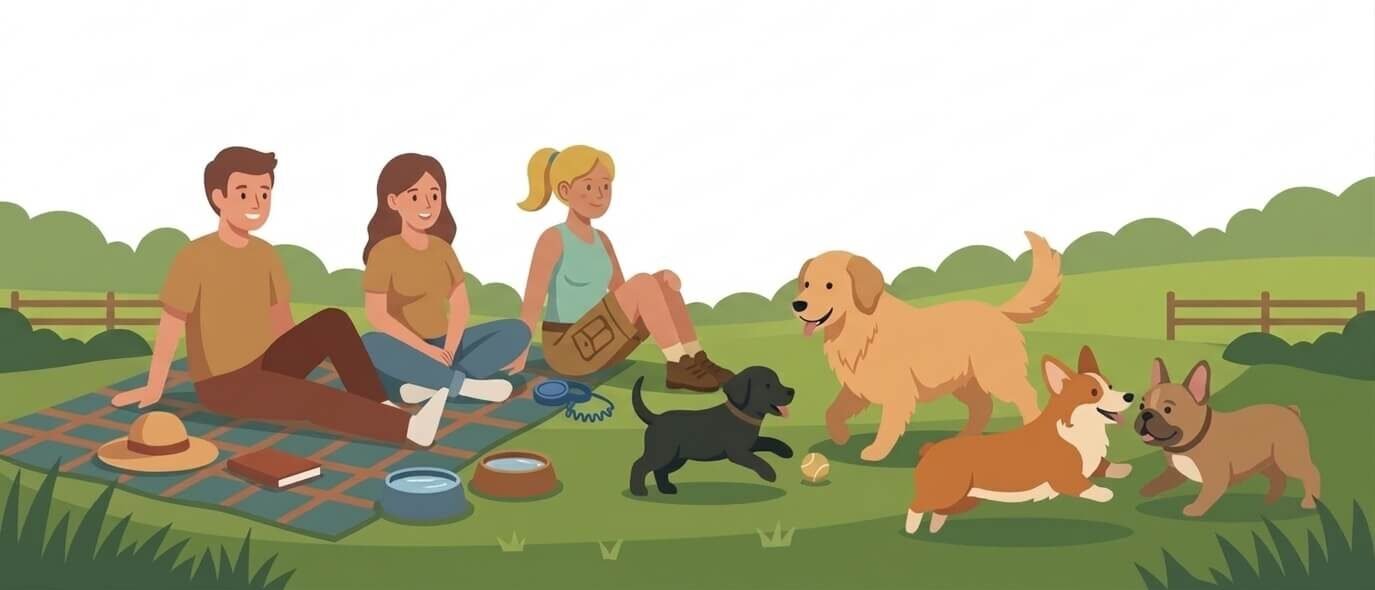
Huskies, Golden Retrievers, German Shepherds, and other fluffy pups might look like they’re suffering in summer.
But please—don’t shave them.
According to the American Kennel Club (AKC) and veterinary dermatology experts, a double coat isn’t just “fur.” It’s a natural insulation system that protects against both cold and heat. Shaving it can actually make your dog more susceptible to overheating and sunburn.
Instead: focus on regular brushing to remove loose undercoat. This improves airflow without damaging the guard hairs that protect their skin. Your vet or a professional groomer can advise on the best routine for your dog’s specific coat.
Quick Answer: High-risk dogs in summer include flat-faced breeds (Frenchies, Pugs, Bulldogs), puppies, seniors, overweight dogs, and double-coated breeds. Flat-faced dogs overheat fastest—keep walks short and avoid temperatures above 80°F. Never shave a double-coated dog; instead, brush regularly to remove loose undercoat.
Part 6
What to Do If Your Dog Is Overheating
If your dog starts showing signs of overheating, don't keep walking and hope they'll bounce back.
Your job is to get them out of the heat, start cooling, and contact a vet. This is the part of what temperature burns dog paws nobody wants to think about—but it's the part that saves lives.
First Aid Steps for an Overheated Dog
Based on emergency protocols from the Humane Society and veterinary sources:
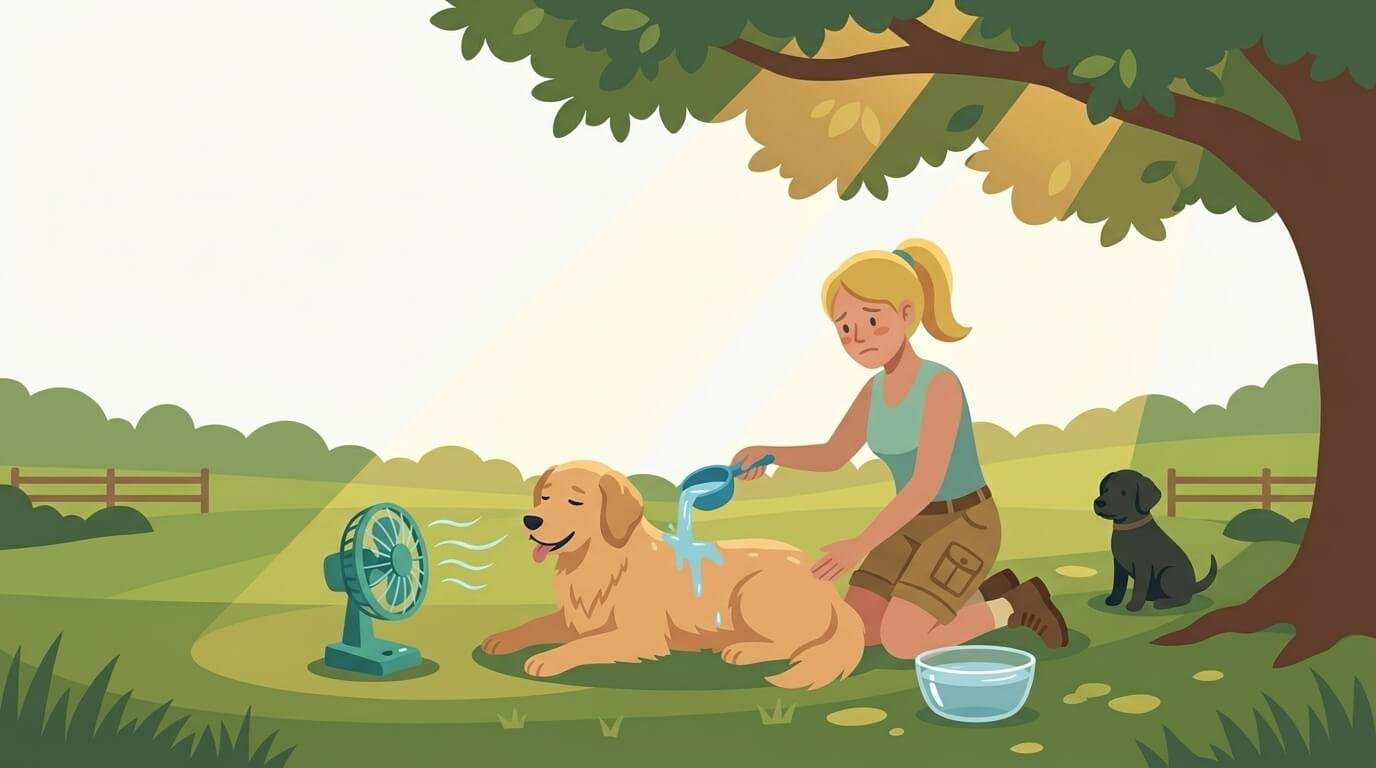
Move your dog to shade or air conditioning immediately.
Stop all exercise.
Offer small sips of cool (not cold) water. If your dog is alert and able to drink safely, offer a little at a time. Don’t force it.
Start gentle cooling. Use cool water on areas with lots of blood vessels near the surface: paws, belly, groin, and inner thighs. Cooling these spots helps lower core temperature faster.
Create airflow. A fan, air conditioning, or even a piece of cardboard used as a fan can help.
Call your vet or nearest emergency clinic while you’re cooling your dog. If symptoms are severe, don’t wait.
For serious heatstroke, veterinary treatment is essential even if your dog seems to perk up. Internal damage can still be happening even after external symptoms improve.
What NOT to Do
There’s a lot of well-meaning but wrong advice out there. Here’s what to avoid:
Don’t use ice water or ice packs.
Extreme cold can constrict blood vessels, which actually slows cooling. It also causes discomfort and can lead to shock.
Don’t force water into your dog’s mouth.
A weak or confused dog can easily inhale liquid into their lungs. Offer water—don’t pour it down their throat.
Don’t wrap your dog tightly in a wet towel.
A wet towel traps warm moisture against the body instead of letting heat escape. If you use a wet towel, keep it loose and change it frequently.
Quick-Reference Emergency Checklist
Save this to your phone right now—you’ll be glad you did:
☐ Stop exercise immediately
☐ Move your dog to shade or air conditioning
☐ Offer small sips of cool water (if alert and able to drink)
☐ Start gentle cooling with cool water and airflow
☐ Do not use ice water, ice packs, or force water into their mouth
☐ Call your vet or nearest emergency vet clinic
☐ If your dog collapses, seizes, or loses consciousness — treat as life-threatening and transport immediately
The bottom line: Cooling starts at home, not at the vet. Every minute you save matters.
Quick Answer: If your dog is overheating, move them to shade or A/C, stop all exercise, offer small sips of cool water, and start gentle cooling on the paws, belly, and groin. Never use ice water, force water, or wrap them in a tight wet towel. Call your vet immediately—for severe signs like collapse or seizure, go straight to an emergency clinic.
FAQ: Hot Weather Dog Walking Questions
Booties protect paw pads from hot surfaces, but they don't make extreme heat safe. Your dog's whole body can still overheat even if their feet are protected. Think of booties as an extra layer, not permission to walk during the hottest part of the day.
Night walks can be safer, but they're not automatically safe. Pavement can stay hot for hours after sunset, especially on asphalt in cities. Always do the 7-second pavement test before heading out—day or night. And use reflective gear so drivers can see you both.
Wait at least 1 hour after a full meal before a walk in warm weather. A full stomach + exercise + heat is a recipe for bloat (gastric torsion), which is life-threatening. Small treats before a walk are fine; a full meal is not.
Do the 7-second test: press the back of your hand against the pavement for 7 seconds. If it's too hot for you, it's too hot for your dog's paws. Asphalt in direct sun can run 50–60°F hotter than the air temperature.
Move your dog to a cool, shaded area and rinse the paws with cool (not cold) water. Don't apply ice, butter, or ointments. Wrap the paws loosely with a clean bandage, and call your vet—burns can blister and become infected.
Grass and dirt stay much cooler than asphalt, so they're a better choice on hot days. But grass can still be hot in direct sun, and it can hide ticks and other hazards. Always do the 7-second test—even on grass.
Early morning (before 8 AM) or late evening (after 7:30 PM) are safest. Avoid 10 AM to 4 PM, when the sun is strongest and pavement is hottest. If you have to walk midday, stick to grass or shaded trails and keep it under 10 minutes.
Summer Walk Safety Checklist
Run through this before you grab the leash:
☐ Check the weather — temperature, humidity, and heat advisories all matter
☐ Check the pavement — the 7-second back-of-your-hand test
☐ Choose the right time — before 8:00 AM or after 7:30 PM when possible
☐ Plan a cooler route — shade, grass, and dirt beat long stretches of asphalt
☐ Bring water — for any walk over 15 minutes
☐ Adjust distance — shorten walks on hot days
☐ Slow down — more sniffing, more breaks
☐ Watch for warning signs — heavy panting, wobbliness, vomiting mean stop
☐ Know your dog’s risk level — flat-faced, young, senior, or overweight? Be extra careful
☐ Have your vet’s number handy — and know the nearest emergency clinic
☐ Bring your phone — for emergencies and photos of anything unusual
The bottom line: This checklist takes 60 seconds. It can save your dog’s paws, or their life.
Sources & Further Reading
This guide combines my own trail experience with these trusted sources:
American Veterinary Medical Association (AVMA) — Heatstroke in dogs, hot weather safety
American Kennel Club (AKC) — Summer safety tips for dogs, paw care
Humane Society of the United States — Hot weather pet safety
American College of Veterinary Emergency and Critical Care (ACVECC) — Heatstroke protocols
Disclaimer: I’m a dog owner, not a veterinarian. This content is for informational purposes only and does not replace professional veterinary advice. For any health concerns regarding your specific dog, please consult a licensed veterinarian.
Final Thoughts
Summer walks can still be one of the best parts of your dog’s day. The key is shifting how you think about it—from how you feel to how your dog feels on those paws and in that body.
Check the ground before you step out. Time it wisely. Bring water. Watch your dog closely. That’s the whole answer to what temperature burns dog paws—it’s not one number, it’s a habit.
If it’s too hot, skip the long walk. A quick potty break and some indoor games are always better than pushing through dangerous heat.
Your dog doesn’t care about the miles. They care about being with you—and feeling good while doing it.
Keep them safe. Keep them cool. And enjoy those summer strolls—on their terms. That’s what heat safety for dogs really looks like.
More in This Series
Heat and hot weather are just one part of year-round safety. Explore the rest of the series below.
Heatstroke in Dogs: Signs, First Aid, and When to Call the Vet — The most important article in this section. Learn the early signs, what to do in the first 10 minutes, and when to call the vet.
High-Risk Dogs and Heat: Summer Safety for Flat-Faced, Senior, and Fluffy Breeds — Why some dogs struggle in heat more than others — and how to adjust.
Dog Paw Pad Burns: How to Treat and Care for Your Dog’s Feet — How to spot a burn, treat it in the field, and prevent it on the next walk.
All part of the Heat & Weather Safety module here on OutdoorDogSafety.com.
Disclaimer: This content is for informational purposes only and does not constitute veterinary or professional safety advice. Always consult with a qualified veterinarian or professional dog trainer regarding your dog’s specific needs and safety considerations.