
Winter Dog Walking Safety:
How to Protect Your Dog from Cold, Ice, and Salt
Cold walks don't have to be risky — here's how to protect your dog when temperatures drop.
Every winter, emergency vets see the same preventable injuries: dogs with frostbitten paws, hypothermia from long walks in freezing temperatures, and chemical burns from de-icing salt. Cold-weather injuries in dogs are almost entirely preventable — but only if you know what to look for.
The scary part? It can happen in minutes. A short walk on icy pavement, a sudden temperature drop, or a patch of rock salt on the sidewalk — and your dog is in trouble.
Here’s the thing: dogs don’t handle cold the way we do. They rely on their coat, body fat, and paw pads to stay warm. But small dogs, short-haired breeds, puppies, and seniors lose heat fast. And by the time you notice something’s wrong, it’s often already a problem.
The good news? Winter dog walking safety comes down to a few simple habits. And when something does go wrong, knowing what to do in those first few minutes can save your dog’s life.
Quick note: I’m a dog owner, not a vet. This guide pulls together recommendations from veterinary experts and animal welfare organizations. For anything concerning your specific dog, always check with your vet.
This is part of our Heat & Weather Safety series. For an overview of all the key risks, start with the Heat & Weather Safety hub — or jump straight to Sidewalk Hazards for Dogs if you’re worried about salt and ice.
What's in This Guide
In this guide, I’ll walk you through:
How cold is too cold — temperature guide by size, breed, and age
Hypothermia and frostbite — signs to watch for at every stage
Paw protection — ice, snow, and de-icing salt dangers
Winter visibility — staying safe on dark, short-day walks
Winter gear checklist — what to bring for you and your dog
What to do if your dog gets too cold — emergency steps
Part 1
Winter Dog Walking Safety — How Cold Is Too Cold?
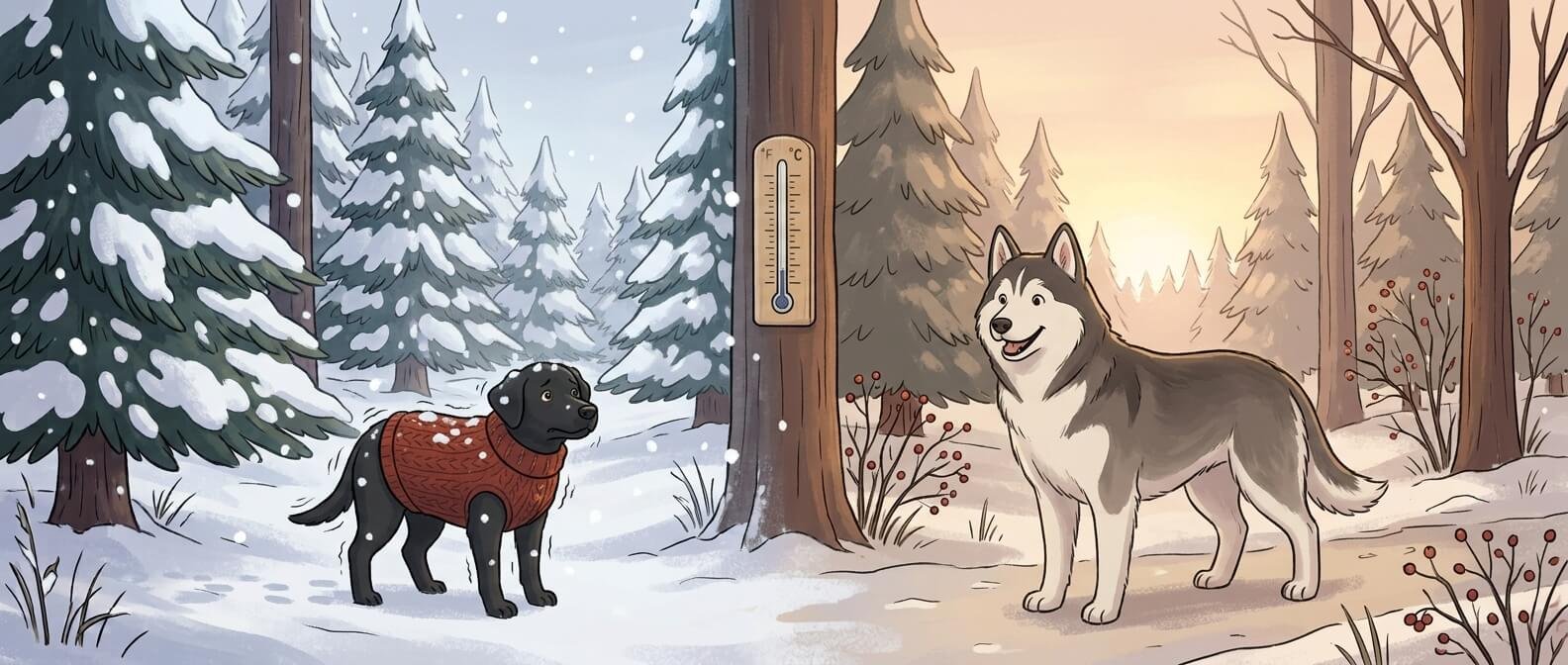
There's no single number that works for every dog. Cold tolerance depends on size, coat type, age, and health. A Husky in 20°F weather is comfortable; a Chihuahua in the same temperature is at risk.
The American Kennel Club (AKC) recommends using a temperature guide based on your dog's size and breed — not a one-size-fits-all rule.
Temperature Guide by Dog Size and Breed
Temperature | Risk Level | What to Do |
|---|---|---|
Above 50°F (10°C) | Low | Normal walks are fine |
40–50°F (4–10°C) | Low–Moderate | Short-haired dogs may need a coat |
32–40°F (0–4°C) | Moderate | Small dogs, seniors, puppies need a coat; shorten walks |
20–32°F (-7–0°C) | High | All dogs need protection; limit walks to 15–20 minutes |
Below 20°F (-7°C) | Severe | Short potty breaks only; avoid long walks |
Breed Matters
Breed Type | Cold Tolerance |
|---|---|
Golden Retrievers, Labradors | High — built for cold |
Golden Retrievers, Labradors | Medium — handle cold well |
Chihuahuas, Greyhounds, short-haired breeds | Low — need coats |
Seniors, puppies, sick dogs | Low — extra care needed |
The ASPCA notes that short-haired breeds, small dogs, and senior dogs are most vulnerable to cold-related injuries.
Signs Your Dog Is Too Cold
Shivering — the most obvious sign
Lifting paws — one or more paws off the ground
Whining or barking — trying to tell you something
Slowing down or stopping — refusing to walk
Curling up or tucking tail — trying to conserve heat
Looking for shelter — pulling toward home or doorways
If you see any of these, head home immediately.
Quick Answer: Most healthy dogs can handle walks down to 20°F (-7°C) for short periods. Below 32°F (0°C), small dogs, short-haired breeds, puppies, and senior dogs need extra protection. Watch for shivering, lifting paws, whining, or slowing down — these are early signs your dog is too cold. If you see them, head home.
Part 2
Hypothermia and Frostbite in Dogs
Hypothermia and frostbite are the two most serious cold-weather risks for dogs. Both can happen faster than most owners expect.
Early Warning Signs of Hypothermia
According to the American Veterinary Medical Association (AVMA), hypothermia develops in three stages:
Mild hypothermia
(99–101°F / 37.2–38.3°C):
Strong shivering
Cold ears and paws
Lethargy
Whining
Moderate hypothermia
(95–99°F / 35–37.2°C):
Weak shivering
Stiff muscles
Slow, shallow breathing
Confusion
Severe hypothermia
(below 95°F / 35°C):
No shivering
Unconsciousness
Weak pulse
Fixed pupils
Frostbite in Dogs
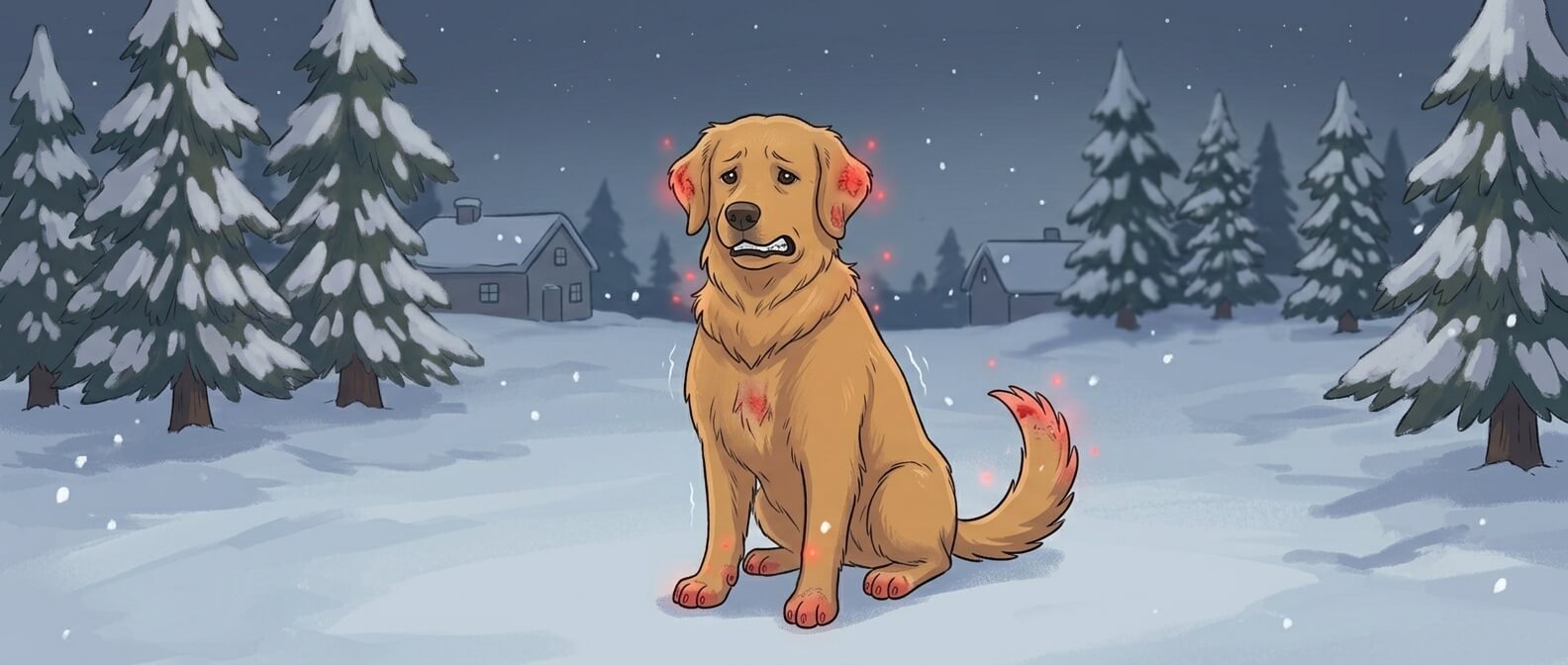
Frostbite happens when skin and tissue freeze. It most commonly affects:
Ears
Tail
Paws
Scrotum
Signs:
Pale, gray, or bluish skin
Cold, hard skin
Swelling
Blisters (after rewarming)
Pain when touched
What to Do in an Emergency
Get your dog inside immediately
Wrap them in warm blankets (not direct heat)
Use warm (not hot) water on frostbitten areas — never rub
Do not use hair dryers or heating pads — can burn
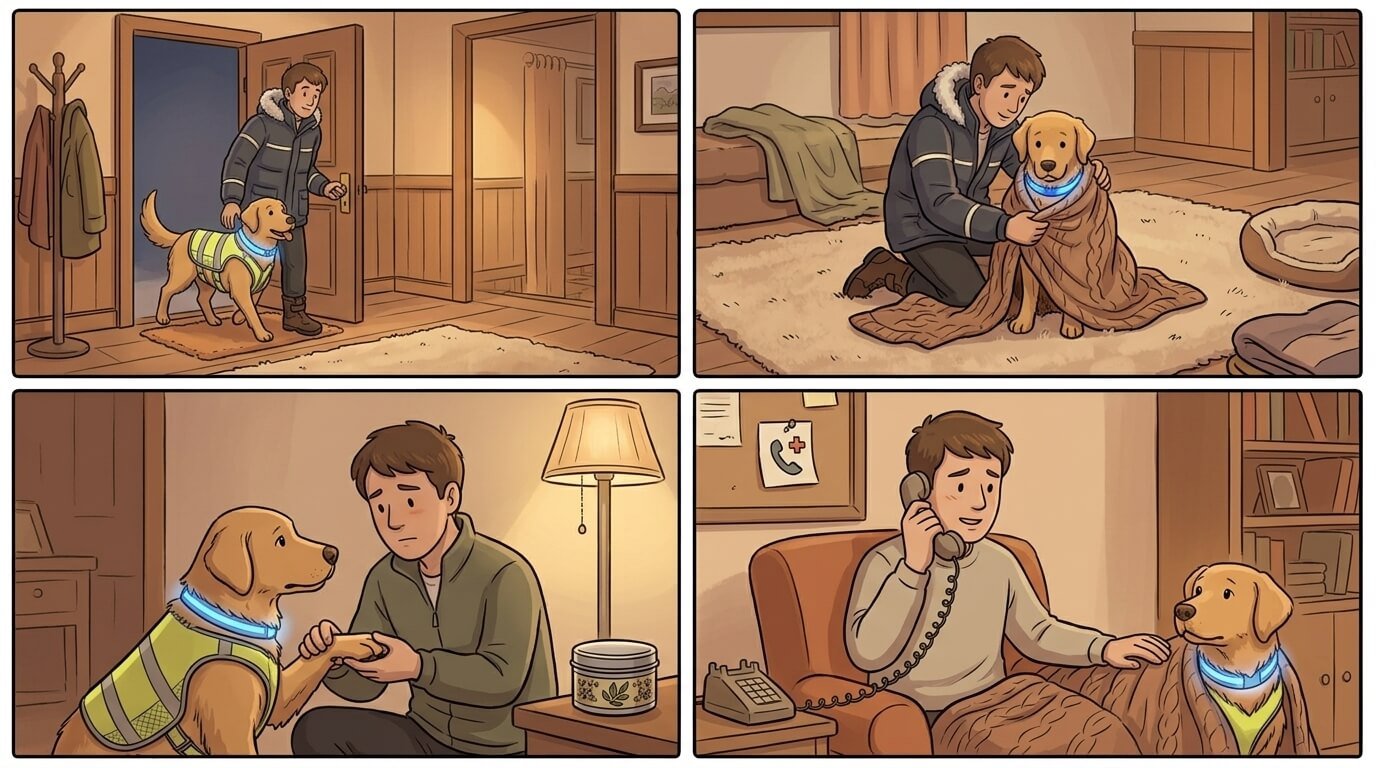
Call your vet — hypothermia and frostbite need medical attention
Quick Answer: Hypothermia happens when a dog’s body temperature drops below 99°F (37.2°C). Early signs: strong shivering, cold ears and paws, lethargy. Frostbite affects ears, tail, and paws — look for pale, gray, or bluish skin. If you suspect either, get your dog inside, wrap them in warm blankets, and call your vet.
Part 3
Paw Protection: Ice, Snow, and De-Icing Salt
Paws are the most vulnerable part of your dog in winter. They're in direct contact with cold pavement, ice, and salt.
Why Salt Is Dangerous
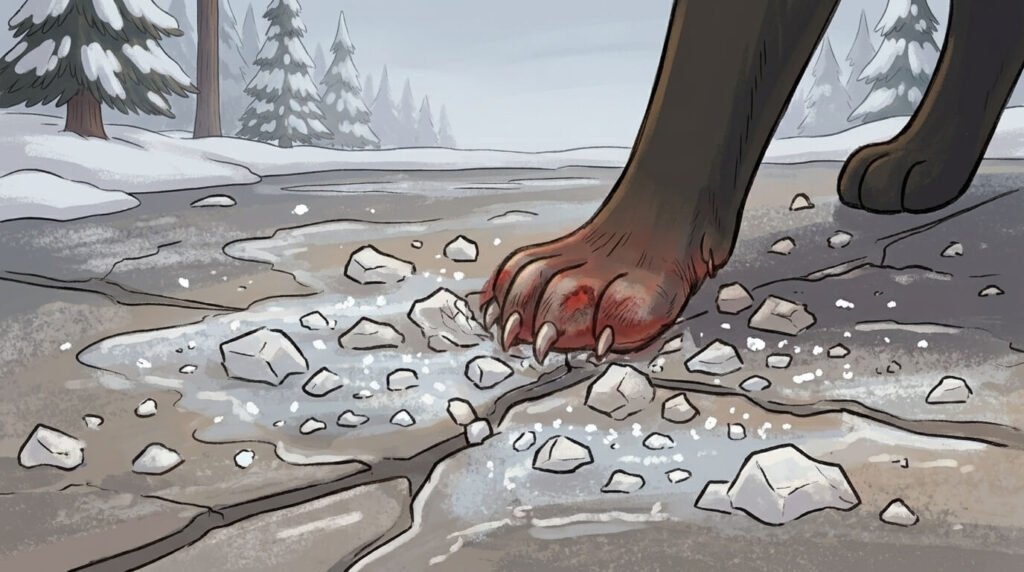
De-icing salts (rock salt, calcium chloride, magnesium chloride) are common on winter sidewalks. According to the ASPCA Animal Poison Control Center, they can:
Burn paw pads — chemical burns
Cause irritation — cracked, dry paws
Be toxic if ingested — licking paws after walks
Cause drooling, vomiting, and disorientation
Symptoms of salt poisoning:
Excessive drooling
Vomiting
Diarrhea
Lethargy
Seizures (severe cases)
If you suspect salt poisoning, call your vet or the ASPCA Animal Poison Control Center immediately.
How to Protect Your Dog's Paws
Before the walk:
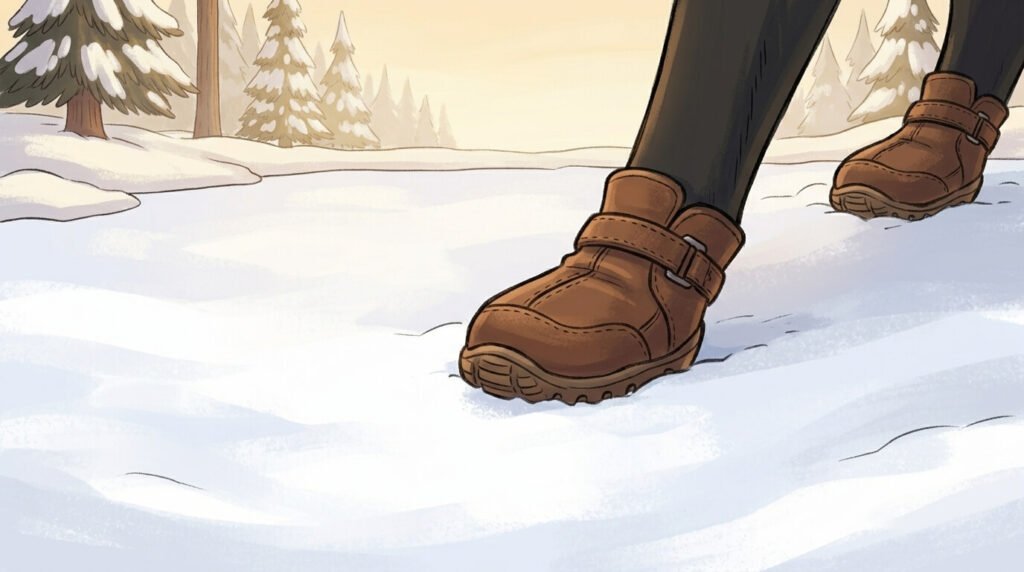
Apply paw balm or wax — creates a protective barrier
Use dog booties — best protection for ice and salt
After the walk:
Rinse paws with warm water — removes salt and ice
Dry thoroughly — prevents cracking
Check for cuts, cracks, or redness
Paw Balm vs Dog Booties
Feature | Paw Balm | Dog Booties |
|---|---|---|
Protection | Moderate | High |
Salt protection | Partial | Full |
Ice protection | Partial | Full |
Cost | Low | Medium |
Dog comfort | High | Varies |
Best for | Light walks | Long walks, harsh conditions |
Best practice: Use both — booties for long walks, balm for short ones.
Quick Answer: De-icing salts can burn paw pads, cause irritation, and are toxic if ingested. Use paw balm or dog booties before walks. After every winter walk, rinse your dog’s paws with warm water and dry them thoroughly. If you suspect salt poisoning (drooling, vomiting, disorientation), call your vet immediately.
Part 4
Winter Visibility: Shorter Days and Dark Walks
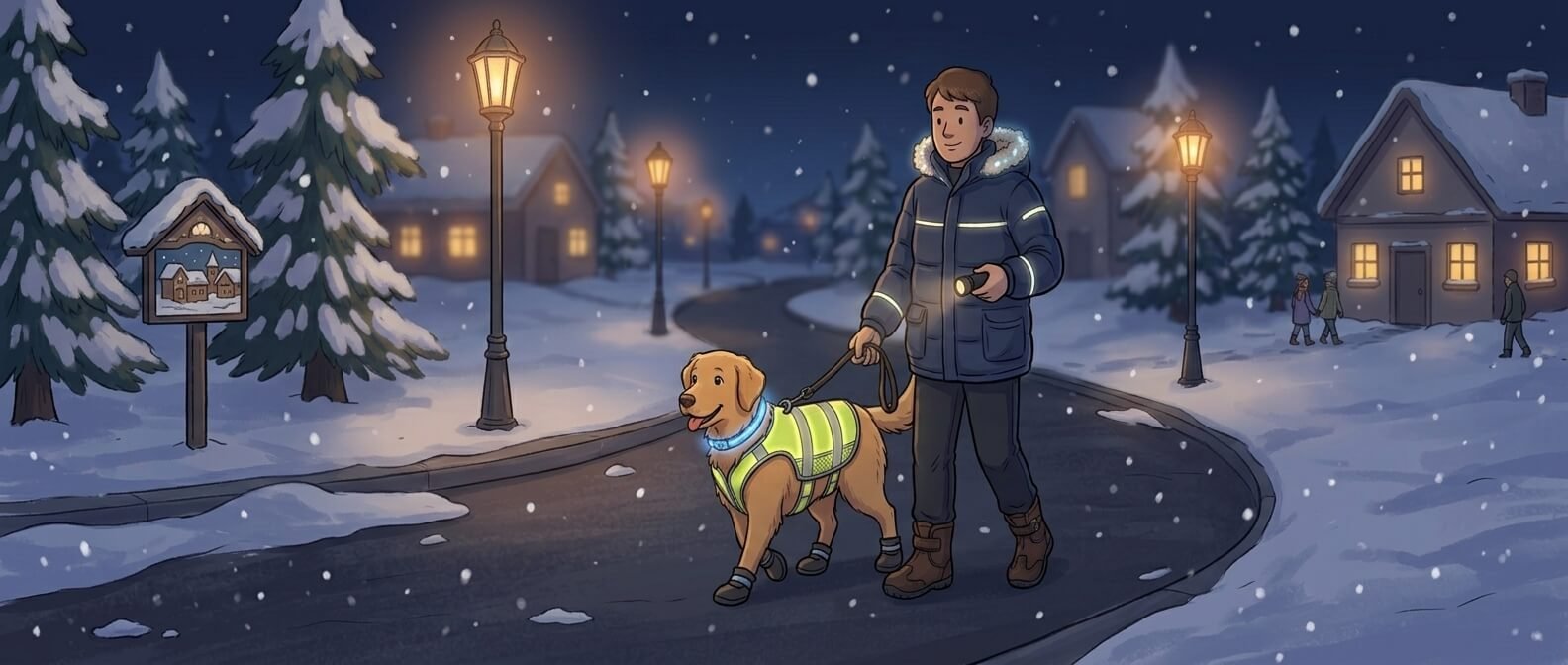
Winter walks often happen before sunrise or after sunset. That means more time walking in low light — and more risk from cars, cyclists, and uneven ground.
Reflective Gear
Reflective vest or harness for your dog
Reflective strips on your jacket
Lighted collar or clip-on light for your dog
Lights and Leashes
Flashlight or headlamp — see where you’re going
Lighted leash — makes you visible to drivers
Reflective leash — reflects car headlights
Night Walking Tips
Stick to well-lit routes
Avoid dark parks and trails
Walk with a buddy if possible
Leave headphones at home — you need to hear traffic
For a full guide, see our Night Dog Walking Safety Tips.
Quick Answer: Winter means shorter days and more walks in the dark. Use reflective gear on your dog (vest, harness, or lighted collar) and on yourself (reflective strips, flashlight). Stick to well-lit routes, avoid dark parks, and leave headphones at home so you can hear traffic.
Part 5
Winter Dog Gear Checklist
The right gear makes winter walks safer and more comfortable for both of you.
For Your Dog
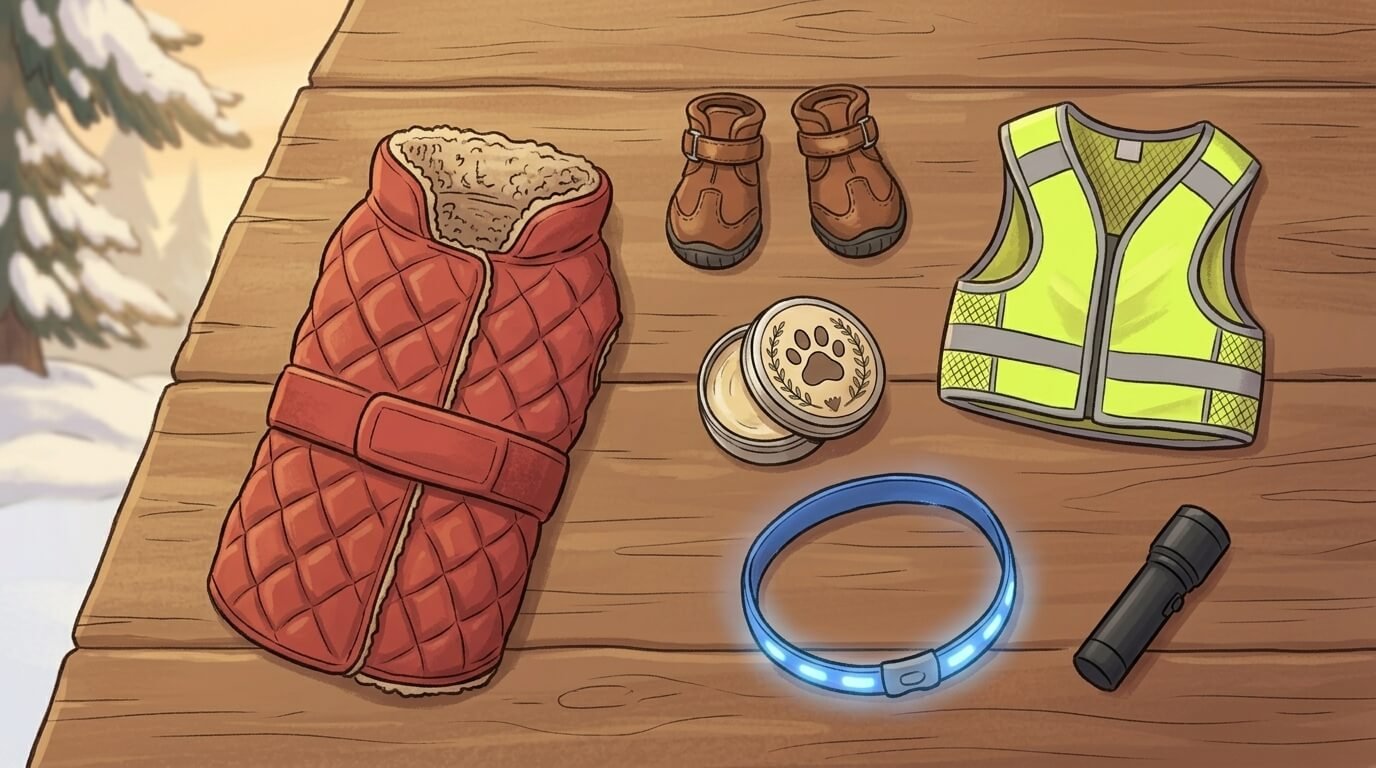
Winter coat — for short-haired, small, or senior dogs
Dog booties — protect paws from ice and salt
Paw balm — for between-walk protection
Reflective vest or harness — for visibility
Lighted collar or clip — for dark walks
ID tags — always, but especially in winter
The AKC recommends checking that coats fit properly — not too tight, not too loose — and that booties stay on during walks.
For You
Reflective jacket or strips
Flashlight or headlamp
Warm gloves — you’ll be holding a leash
Waterproof boots
Treats — for rewards and warmth
Quick Answer:
For your dog: winter coat (for short-haired, small, or senior dogs), dog booties, paw balm, reflective vest, lighted collar, ID tags.
For you: reflective jacket, flashlight or headlamp, warm gloves, waterproof boots, treats.
Part 6
What to Do If Your Dog Gets Too Cold
If your dog shows signs of hypothermia or frostbite, act quickly.
Emergency Steps
Get inside immediately
Wrap in warm blankets
Warm gradually — not with direct heat
Check paws for frostbite
Offer warm water (not hot)
When to Call the Vet
Severe shivering that won’t stop
Pale, gray, or bluish skin
Confusion, weakness, or collapse
Difficulty breathing
Suspected salt poisoning
When in doubt, call your vet.
Quick Answer:
Get inside immediately. Wrap your dog in warm blankets (not direct heat). Warm them gradually — never rub frostbitten areas. Check paws for frostbite. Offer warm (not hot) water. Call your vet if you see severe shivering, pale skin, confusion, or difficulty breathing.
FAQ: Winter Dog Walking
Most healthy dogs can handle walks down to 20°F (-7°C) for short periods. Below 32°F (0°C), small dogs, short-haired breeds, puppies, and senior dogs need extra protection. Watch for shivering, lifting paws, and slowing down — these are signs your dog is too cold.
It depends on the breed. Huskies and Samoyeds don't need coats. But short-haired breeds (Chihuahuas, Greyhounds), small dogs, seniors, and puppies benefit from a warm, waterproof coat.
Yes — de-icing salts can burn paw pads, cause irritation, and are toxic if ingested. Always rinse your dog's paws with warm water after winter walks, and consider pet-safe de-icing products at home.
For most dogs, 15–30 minutes is safe in temperatures above 20°F (-7°C). Below 20°F, keep walks to 10–15 minutes or shorter. Puppies, seniors, and short-haired breeds should have shorter walks.
Below 20°F (-7°C) is considered high risk for most dogs. Below 0°F (-18°C), avoid walks entirely — short potty breaks only.
Heat exhaustion is the earlier stage—heavy panting, thick saliva, restlessness, and reluctance to move. Heatstroke is the later, life-threatening stage—body temperature above 106°F (41°C), wobbly movement, abnormal gums, vomiting, collapse, or seizures. Heat exhaustion can be managed with cooling; heatstroke is a medical emergency.
If you have a digital rectal thermometer, yes—it gives you a real number to work with. But don't delay cooling to find one. If you can't take their temperature, cool them based on their symptoms and call your vet.
Yes. Even after a dog seems to recover, heatstroke can cause lasting damage to the kidneys, liver, heart, and brain. This is why always seeing a vet after a heatstroke episodeis essential—even if your dog seems to bounce back.
Sources & Further Reading
This guide combines my own trail experience with these trusted sources:
American Veterinary Medical Association (AVMA) — Cold weather safety for dogs, hypothermia prevention
American Kennel Club (AKC) — Winter walking safety, breed-specific cold tolerance
ASPCA Animal Poison Control Center — De-icing salt toxicity, paw protection
Humane Society of the United States — Cold weather pet safety
American College of Veterinary Emergency and Critical Care (ACVECC) — Hypothermia and frostbite protocols
Disclaimer: I’m a dog owner, not a veterinarian. This content is for informational purposes only and does not replace professional veterinary advice. For any health concerns regarding your specific dog, please consult a licensed veterinarian.
Final Thoughts
Winter walks can be some of the best walks — crisp air, quiet streets, and a dog who’s thrilled to be outside. But cold weather brings risks that don’t exist in summer.
The good news is that most cold-weather injuries are preventable. A few simple habits — checking the temperature, protecting paws, watching your dog’s behavior, and knowing when to head home — can make all the difference.
Your dog relies on you to read the signs they can’t tell you. Know what to look for. Know what to do. And when in doubt, call your vet. They’d rather hear from you than see you in the emergency room.
Stay warm. Stay safe. And give your dog an extra scratch behind the ears for me.
That’s what outdoor dog safety is really about.
More in This Series
This guide covered the big picture. Now dive deeper into specific risks.
What Temperature Burns Dog Paws? Hot Pavement Safety & Summer Walking Tips — The 7-second pavement test, the real temperature threshold, and how to protect your dog’s paws on hot summer walks.
High-Risk Dogs and Heat: Summer Safety for Flat-Faced, Senior, and Fluffy Breeds — Why some dogs struggle in heat more than others — and how to adjust.
Dog Paw Pad Burns: How to Treat and Care for Your Dog’s Feet — How to spot a burn, treat it in the field, and prevent it on the next walk.
All part of the Heat & Weather Safety module here on OutdoorDogSafety.com.
Disclaimer: This content is for informational purposes only and does not constitute veterinary or professional safety advice. Always consult with a qualified veterinarian or professional dog trainer regarding your dog’s specific needs and safety considerations.