
How to Build Dog Hiking Endurance:
Preventing Trail Fatigue and Getting Lost
Trail fatigue and getting lost are two of the most common dog hiking endurance problems. Here's how to spot the early signs, build stamina, and keep your dog safe on the trail.
A tired dog rarely says “I give up.”
They’ll drag their paws, lag behind, and look up at you with glassy eyes—but because they love being with you, they’ll push past their physical limits until they simply collapse.
I remember taking Max on what I thought was a “beginner-friendly” 4-mile loop. He was just 2 years old, so I assumed he had infinite energy. By mile 3, he had slowed to a crawl. I didn’t realize that the heat, the elevation, and the uneven ground had completely drained him. We barely made it back to the car, and he slept for two full days afterward.
That experience taught me a critical lesson about dog hiking endurance: You have to be the one to call it quits.
But what happens when a dog isn’t just tired, but actually gets lost? The wilderness is noisy and full of scents. A deer bolts, your dog chases, and suddenly they’re 500 yards away in dense forest with no idea how to get back.
This guide is dedicated to helping you manage your dog’s physical stamina and prevent the terrifying experience of a lost pup on the trail. It’s a core part of hiking with dog safety—and one of the most overlooked outdoor dog safety skills.
Quick note:
I’m a dog owner, not a vet or a search-and-rescue specialist. This guide pulls together my personal trail experiences, athletic conditioning recommendations from canine sports medicine experts, and wilderness safety protocols. If your dog collapses or goes missing, professional help is your first priority.
This is part of our hiking with dog safety series. For the big-picture overview of trail preparation and etiquette, start with the main guide here: The Ultimate Guide to Hiking with Your Dog.
What's in This Guide
In this guide, I’ll walk you through:
-
Understanding your dog’s real physical limits
-
Trail fatigue: The silent warning signs you need to catch
-
Building stamina: How to train your dog for the trail
-
Fueling the hike: Nutrition and hydration for long distances
-
When to turn around: The “Golden Rules” of calling off a hike
-
Why dogs get lost: Understanding their instincts
-
How to find a lost dog: Immediate action steps
Part 1
Understanding Your Dog's Real Physical Limits
Let's face it: Most of our dogs are not working sled dogs. They are our couch buddies who happen to love the outdoors.
The distance a dog can hike varies wildly based on age, breed, fitness level, and weight. A fit Labrador might be able to hike 8 miles, while a senior Beagle might struggle with 2.
Here's a rule of thumb I use to calculate my dog's limit:
The 30% Rule:
If your dog can comfortably walk 1 mile around the neighborhood, they can probably handle 1.3 miles of flat, easy trail terrain. But hiking uphill is exponentially harder.
Breed specific limits:
Flat-faced breeds (Pugs, Frenchies) should be kept to under 2 miles on flat ground. Giant breeds (Great Danes) tire quickly due to their massive weight putting strain on their joints.
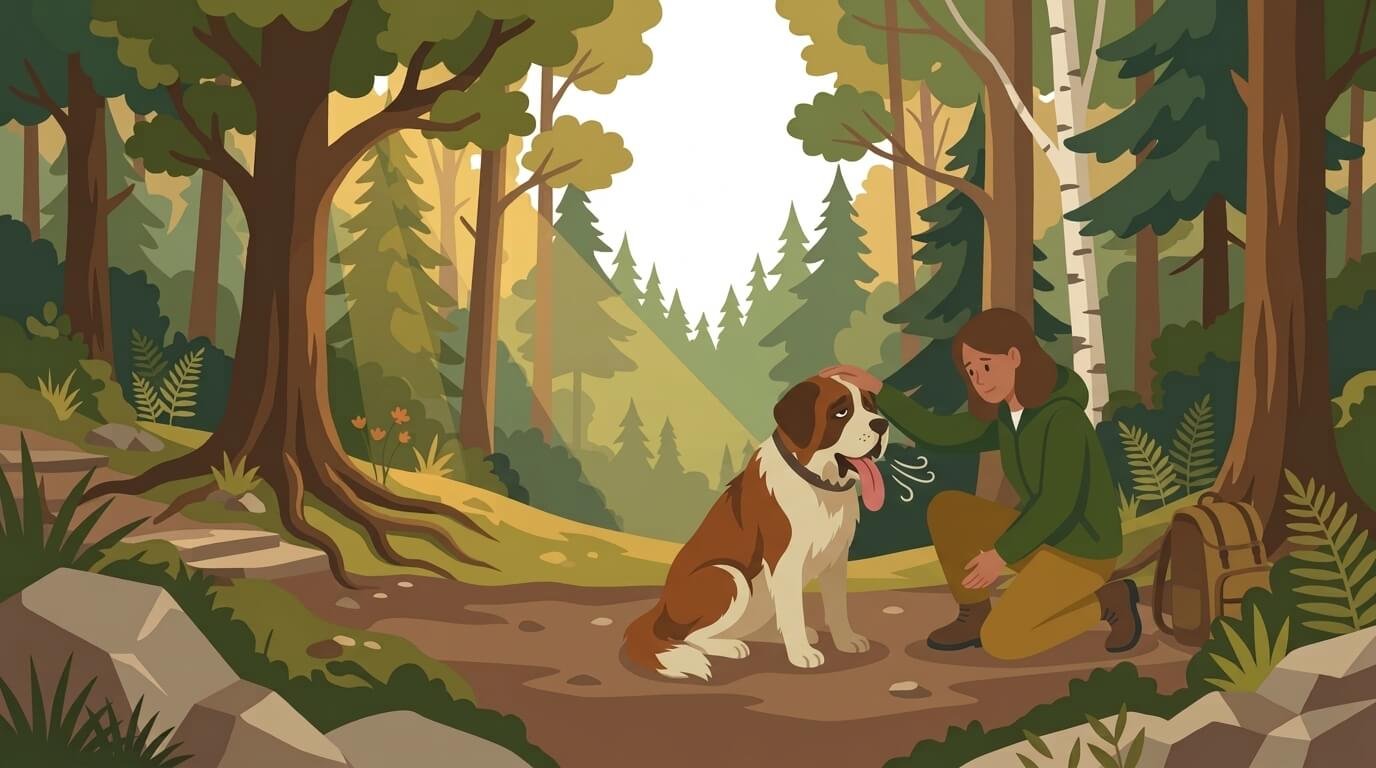
Quick Answer: A dog’s hiking limit depends on age, breed, fitness, and weight — not just distance. As a rule of thumb, a dog that comfortably walks 1 mile on flat ground can likely handle 1.3 miles on an easy trail. Flat-faced breeds (Pugs, Frenchies) should stay under 2 miles, and giant breeds tire quickly due to joint strain. Uphill hiking is exponentially harder than flat ground.
Part 2
Trail Fatigue: The Silent Warning Signs You Need to Catch
Dogs are stoic animals. In the wild, showing weakness makes them vulnerable, so they'll mask their exhaustion. You have to be a detective—because dog hiking enduranceproblems rarely announce themselves.
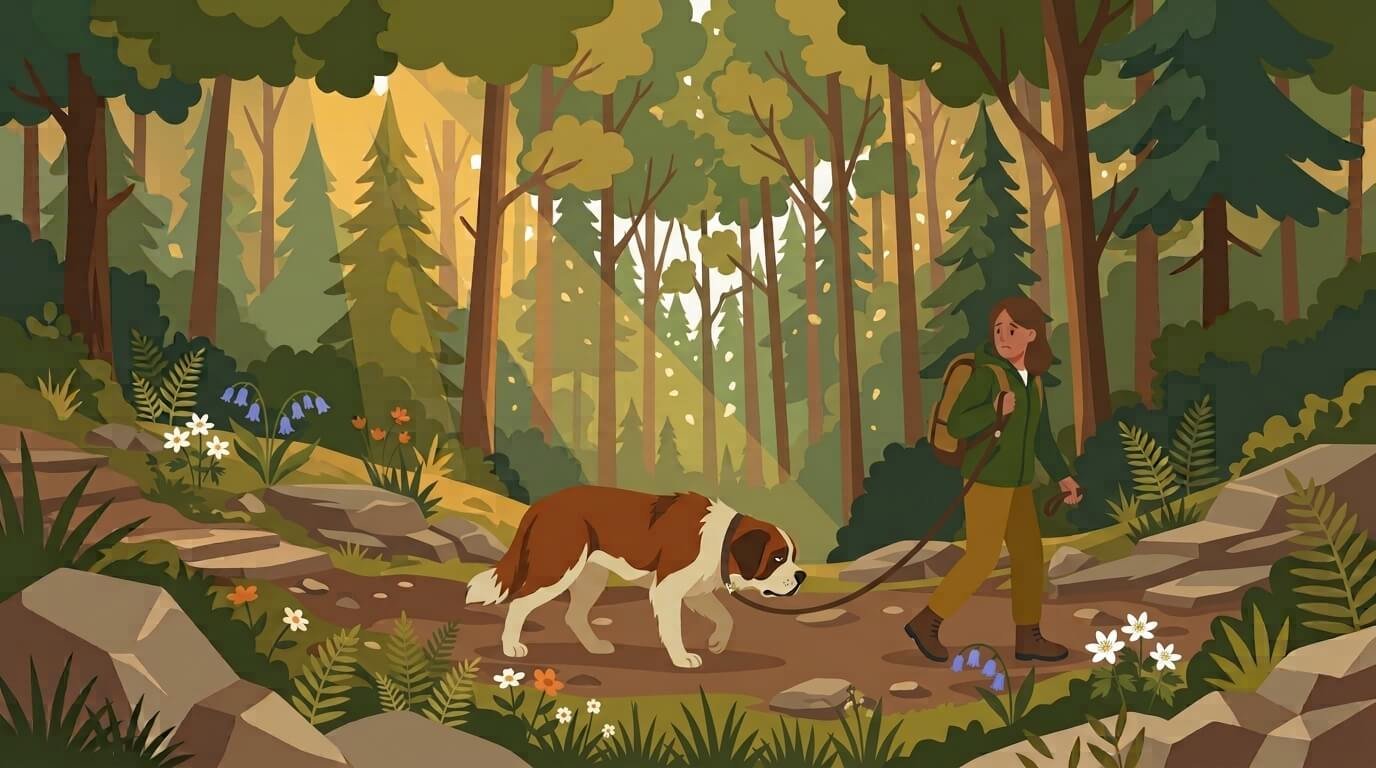
Early Signs of Fatigue (Stop and Rest Now):
“The Hitch” — Lagging behind you, refusing to walk at their normal pace.
“The Flop” — Sudden sitting or lying down on the trail, even during a short break.
“The Tongue” — Heavy, frantic panting that doesn’t stop after a few minutes of rest.
“The Ears” — Ears drooping, tail tucked, or loss of interest in sniffing around.
“The Stare” — Stopping and looking back at you, as if asking to turn around.
Severe Signs of Overexertion (Turn Back or Carry Immediately):
Stumbling on flat ground — or stepping high like a “prancing horse.”
Gums turning pale, bright red, or blue — a sign of heatstroke or shock.
Refusing treats or water — which usually means they’re in real distress.
Vomiting or dry heaving — a sign of overheating or GI distress.
Collapse or unresponsiveness — this is an emergency. Carry them out and get to a vet.
Quick Answer: Early signs of fatigue include lagging behind, flopping down, heavy panting, and drooping ears. Severe signs of overexertion include stumbling, pale gums, refusing water, vomiting, or collapse. If you see early signs, stop and rest. If you see severe signs, carry your dog out immediately.
Part 3
Building Stamina: How to Train Your Dog for the Trail
Just like training for a marathon, you can't take a dog from the couch to a mountain peak in one week. It takes gradual conditioning to increase their dog hiking endurance.
The "Progressive Overload" training plan:
Start on flat ground. Increase your neighborhood walks by 10–15% each week. This builds a base without stressing joints.
Add elevation slowly. After a month of flat walking, introduce small hills. Even a gentle slope uses different muscles than flat ground.
Carry weight (optional). For very fit dogs, adding a lightweight dog backpack with 5–10% of their body weight builds core strength. Check with your vet first—not every dog should carry weight.
Practice on rough ground. Walk them on gravel, dirt paths, and uneven grass to build the calluses on their paw pads before you hit the trail.
How long does it take? Plan for at least 4–6 weeks of gradual conditioning before a serious hike. A dog that’s been lounging on the couch all winter needs a real training plan—not a single weekend of practice.
Quick Answer: To build your dog’s hiking endurance, follow a “Progressive Overload” plan. Start on flat ground and increase distance by 10–15% weekly. After a month, slowly add hills. Plan for at least 4–6 weeks of gradual conditioning before attempting a serious hike to prevent joint stress and injury.
Part 4
Fueling the Hike: Nutrition and Hydration for Long Distances
Just because you pack a granola bar for yourself doesn't mean your dog doesn't need a snack! Nutrition is a core part of dog hiking endurance—and most owners get it wrong.
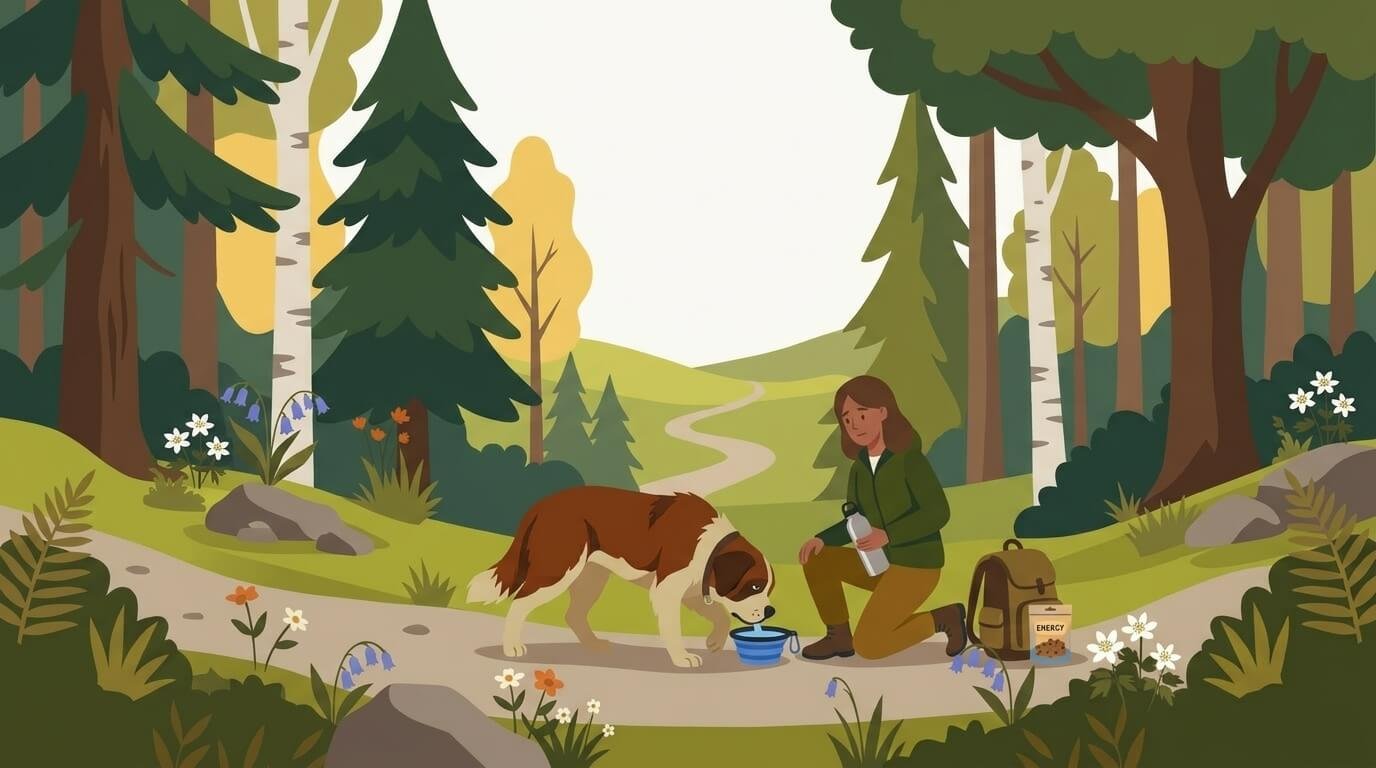
Hydration:
Never ration water. Offer water every 15–20 minutes on warm days.
Watch their intake. A dog that drinks a full bowl and immediately runs risks bloat—a life-threatening stomach twist. Take a 15-minute break after they drink before continuing.
Bring more than you think you need. A good rule of thumb: 1 liter per 10 kg (22 lb) of body weight for a half-day hike.
If they won’t drink: try a collapsible bowl, add a splash of broth, or offer water from your hand. Some dogs won’t drink from an unfamiliar source.
High-Energy Fuel:
Pack high-calorie, easily digestible treats like freeze-dried liver or jerky.
Feed small and often. Feeding a large meal right before a hike is a recipe for stomach issues. Save the big bowl for home.
What NOT to bring: chocolate, grapes, raisins, onions, garlic, macadamia nuts, or anything with xylitol. All of these are toxic to dogs.
Time it right. Offer a small snack every 45–60 minutes, and always after a water break—not before.
Quick Answer: For long hikes, offer your dog water every 15–20 minutes and bring at least 1 liter per 10 kg (22 lbs) of body weight for a half-day trip. Feed high-calorie, easily digestible treats like freeze-dried liver in small amounts every 45–60 minutes. Never bring toxic foods like chocolate, grapes, raisins, onions, or xylitol.
Part 5
When to Turn Around: The "Golden Rules" of Calling Off a Hike
This is the hardest part of being a trail dog parent: Pulling the plug.
As dog lovers, we often see our dogs enjoying the hike and think, "Oh, they're having fun, let's keep going." But the moment they show signs of fatigue, the hike is over—and that's the hardest part of dog hiking endurance to accept.
The "Three-Question" Test
Ask yourself these three questions before continuing:
Do they have an extra 30% left?
You need them to have the energy to hike back in case of an emergency. If they’re at 70% or lower, it’s time to turn around.
Is the trail getting harder?
If the path turns into constant uphill switchbacks and they’re already lagging, you won’t make it. The hard part is ahead, not behind.
Can you carry them?
If they get completely exhausted 2 miles from the car, are you physically capable of carrying them out? If the answer is no, turn back before they collapse.
If the answer to any of these is “no,” turn around. It’s not worth the risk.
Quick Answer: Before continuing a hike, ask three questions: Do they have 30% energy left for the trip back? Is the trail getting harder, not easier? Can you physically carry them out if they collapse? If the answer to any of these is no, turn around. Turning back early is always the right call.
Part 6
Why Dogs Get Lost: Understanding Their Instincts
We've talked a lot about their physical limits, but what about their mental limits?
Dogs get lost for one primary reason: Prey drive and scent overload.
A forest is a symphony of smells. A dog's nose is at least 10,000 times more sensitive than ours. When a deer, rabbit, or even a squirrel darts through the brush, the dog’s primal "chase" instinct takes over. They will bolt without thinking, and by the time they realize they are lost, they are disoriented.
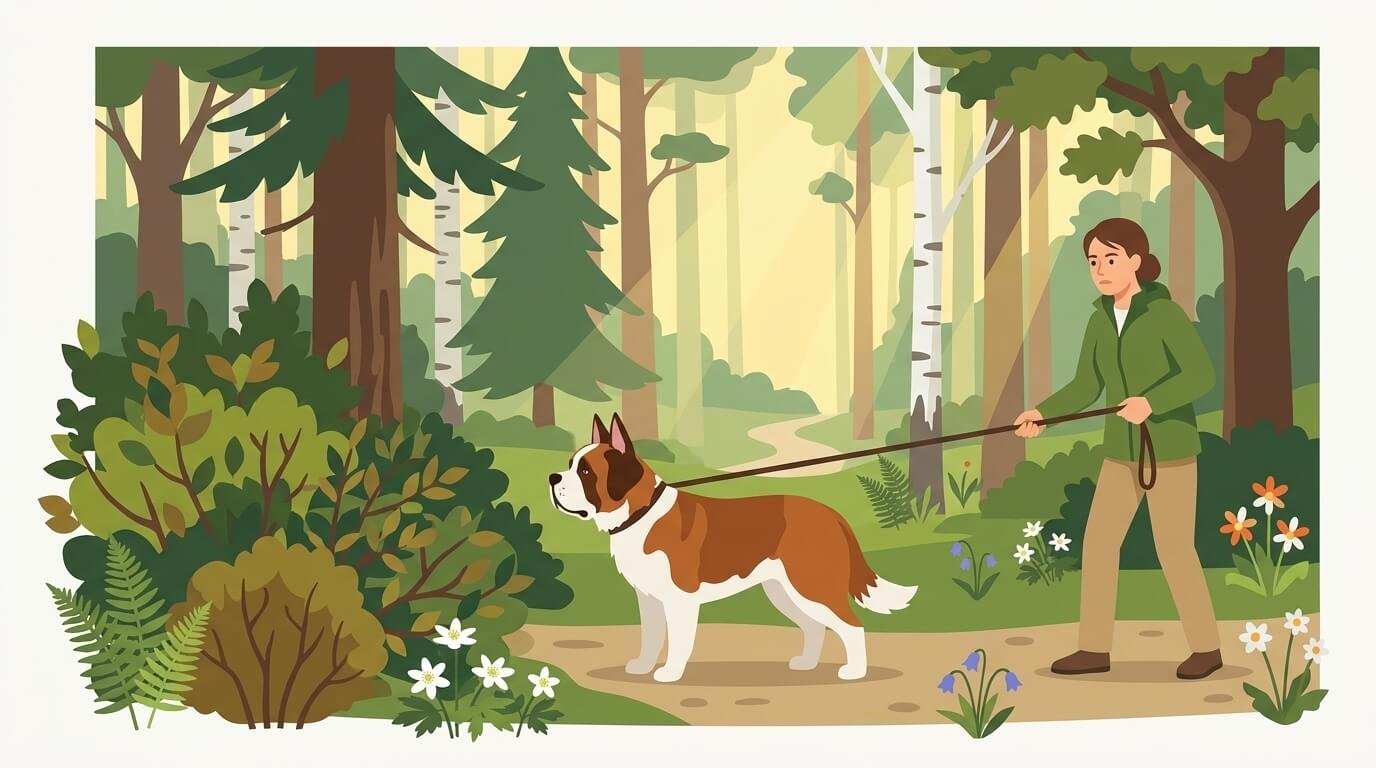
The "Prey Drive" Warning Signs:
Ears shooting up, body stiffening, intense staring into the brush.
Whining and straining against the leash.
A sudden crouch or freeze — the moment before a bolt.
How to prevent it:
Keep them on a long line (or short leash) in areas with heavy scent or wildlife.
Train a rock-solid “RECALL” (Come) command. If they’re off-leash and you call them, they must return to you immediately—no matter what they’re looking at.
Use a GPS tracker on their collar. This is the single best investment for off-leash hikes. If they bolt, you find them by phone—not by searching blindly.
Know your dog’s triggers. Some dogs bolt for deer. Others for rabbits. Others for other dogs. Know what sets yours off—and avoid those situations.
Quick Answer: Dogs get lost because of prey drive and scent overload—their nose takes over and they bolt before thinking. Watch for warning signs like stiffening, staring, whining, or a sudden crouch before a sprint. Keep them on a long line in wildlife areas, train a rock-solid recall, and use a GPS tracker on their collar.
Part 7
How to Find a Lost Dog: Immediate Action Steps
Oh no. Your heart is racing. Your dog just bolted into the woods and disappeared.
Do not panic. Time is of the essence, and you need a clear plan. This is the worst-case scenario for dog hiking endurance—but knowing what to do can make all the difference.
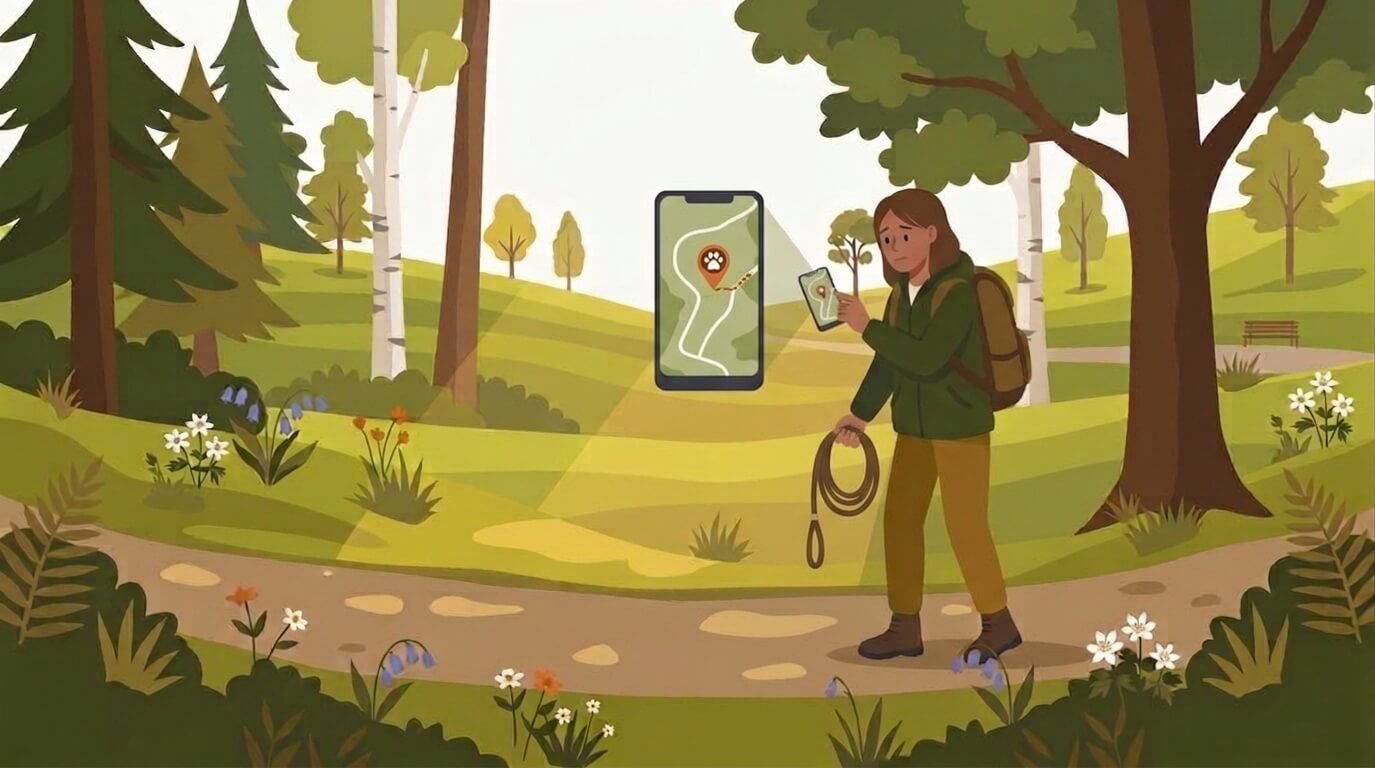
Step 1: STOP and Listen
Most dogs don’t run indefinitely. They’ll often stop 100 yards in to sniff and orient themselves. Stop all movement, crouch down, and listen very carefully for a rustling in the brush or a jingle from their collar.
Step 2: The "Staged" Call
Don’t frantically scream their name—this can scare them further. Call their name using a normal, happy tone. Do not move from your spot for at least 10 minutes. They’ll often follow your scent back to the exact spot you were standing.
Step 3: Use the "Trailhead" Trick
If your dog has a high prey drive and is used to the trail, they might instinctively try to backtrack to the trailhead—where they smell their own scent from earlier. You stay put, but send a hiking partner back to the car or the trail entrance to wait for them.
Step 4: Use Technology
If your dog was wearing a GPS tracker (which I highly recommend), open the app immediately. It’ll give you their exact location.
Step 5: Enlist Help
If they don’t come back within 15 minutes, call park rangers, local animal control, and local lost-pet Facebook groups. Have a picture ready. Stay in the area—most lost dogs are found within a mile of where they bolted.
Step 6: When You Find Them
Don’t scold them. Even if you’ve been panicking for an hour, greet them calmly and happily. A scared dog that gets yelled at may bolt again. Leash them, offer water, and check for injuries before heading back.
Quick Answer:
If your dog bolts on a hike, stop and listen first—most dogs stop within 100 yards. Stay in one spot for at least 10 minutes and call them in a happy tone. Send a partner back to the trailhead, check your GPS tracker, and call park rangers or animal control after 15 minutes. When you find them, greet them calmly—never scold a scared dog.
FAQ: Dog Hiking Endurance and Lost Dogs
A fit, healthy adult dog can usually handle 5–8 miles in a day, depending on terrain and weather. But a beginner dog should start with 1–2 miles and gradually build up their dog hiking endurance. Watch your dog, not the mileage.
Stop immediately. Offer water, find shade, and check their paws for cuts or blisters. If they still won't move after a 10–15 minute break, they're done—carry them out or turn back. Never push a dog that has stopped moving; it's their way of telling you something is wrong.
Three things: keep them on a long line in wildlife areas, train a rock-solid "Come" command, and put a GPS tracker on their collar. Prevention is always easier than search and rescue.
Watch for the early signs: lagging behind, flopping down during breaks, heavy panting that won't stop, and drooping ears. If they're stumbling on flat ground or refusing water, it's an emergency—turn back or carry them out.
Yes—small, high-calorie treats every 45–60 minutes. Think freeze-dried liver, jerky, or dog-specific energy chews. Avoid anything with chocolate, grapes, raisins, onions, garlic, macadamia nuts, or xylitol—they're all toxic to dogs.
If they can't walk, carry them. Use a harness with a handle, a chest carrier for small dogs, or a sling for larger dogs. If you can't carry them, stay with them and call for help—don't leave them alone on the trail.
Only if their recall is 100% reliable in every situation—including around wildlife. For most dogs, that's a long training process. If you're not sure, keep them on a long line. It's not worth the risk.
Start with our main guide to hiking with dog safety, and explore the Hiking & Outdoor Hazards hub for more on gear, heat safety, trail etiquette, and emergency prep.
Sources & Further Reading
This guide combines my own trail experience with these trusted sources:
American Kennel Club (AKC) — Exercising your dog, canine conditioning
American College of Veterinary Sports Medicine and Rehabilitation (ACVSMR) — Overuse injuries in active dogs
American Veterinary Medical Association (AVMA) — Pet travel and outdoor safety
World Small Animal Veterinary Association (WSAVA) — Global veterinary guidelines for small animal care
Disclaimer: I’m a dog owner, not a veterinary sports specialist or a professional search-and-rescue team member. This content is for informational purposes only and does not replace professional veterinary advice. Always consult your vet about your dog’s specific fitness levels before pushing them on hard trails.
Final Thoughts
The wilderness is a vast, beautiful, and exhausting teacher. It will remind you very quickly that you and your dog are just visitors.
Building your dog’s stamina takes time. It requires patience, a strong recall command, and the humble ability to say “No” when the trail gets too long.
And if they ever do slip away, stay calm, use your tools, and trust your instincts. Being prepared for both the physical and mental challenges of the trail is the ultimate act of love for your furry best friend—and the heart of dog hiking endurance.
Stay safe, keep them fueled, and keep them close! 🐾 That’s what hiking with dog safetyis all about.
What's ahead in this series:
Hiking With Dog Safety: The Ultimate Guide to Prep, Gear & Trail Etiquette
Discover essential hiking with dog safety tips! From pre-hike prep and must-have gear to trail etiquette and wildlife hazards, this guide keeps your pup safe.
Dangerous Wildlife & Plants on Trails: What Every Dog Owner Must Know
Snakes, bears, toxic mushrooms, and poison oak — learn how to protect your dog from dangerous wildlife and plants on the trail. Practical, vet-informed tips.
Dog Hiking First Aid: Injuries, Paw Care & Emergency Carries
Paw pad injuries, sprains, cuts, and emergency carries — here’s how to handle dog hiking first aid on the trail. Practical, vet-informed steps for hiking with dog safety.
Trail Hazards for Dogs: Risky Terrain, Steep Slopes & How to Prevent Falls
Steep slopes, loose scree, and uneven terrain are the most common trail hazards for dogs. Here’s how to prevent falls, spot risky ground, and keep your dog safe.
Disclaimer: This content is for informational purposes only and does not constitute veterinary or professional safety advice. Always consult with a qualified veterinarian or professional dog trainer regarding your dog’s specific needs and safety considerations.