
Trail Hazards for Dogs:
Risky Terrain, Steep Slopes & How to Prevent Falls
Steep slopes, loose scree, and uneven terrain are the most common trail hazards for dogs. Here's how to prevent falls, spot risky ground, and keep your dog safe on the trail.
You’ve packed the water, checked for ticks, and even brought the first aid kit. But have you looked down at the ground?
When I first started hiking with Max, I was terrified of wildlife. I scanned every bush for rattlesnakes and every tree for bears. But the most dangerous threat on the trail isn’t alive at all. It’s the terrain itself.
One of the scariest moments I’ve ever had on a hike was watching Max slip on a patch of loose scree (small, unstable rocks) on a steep downhill. He tumbled a few feet, yelped, and looked up at me with sheer terror in his eyes. Luckily, he only ended up with a scraped knee. But it taught me a vital lesson about trail hazards for dogs: the ground you walk on is the number one cause of severe hiking injuries.
Rocks, roots, and steep cliffs don’t have an off switch. They don’t care if your dog is friendly or tired. Understanding the terrain and teaching your dog how to navigate it safely is one of the most crucial hiking with dog safety skills I can give you. It’s the foundation of outdoor dog safety—and it starts with the ground beneath your feet.
Quick note:
I’m a dog owner, not a vet or a mountaineering expert. This guide pulls together my personal trail experiences and safety recommendations from veterinary sports medicine experts. For serious falls or limb injuries, always get to a professional immediately.
This is part of a series on hiking safety. For the big-picture overview of trail preparation and etiquette, start with the main guide here: The Ultimate Guide to Hiking with Your Dog.
What's in This Guide
In this guide, I’ll walk you through:
-
Loose scree and rocky debris — the hidden ankle-rollers that catch dogs mid-stride
-
Steep inclines and cliff edges — how to keep your dog away from the drop
-
Tree roots, hidden holes, and slippery mud — what lies beneath the leaves
-
Sharp, hazardous materials — man-made dangers like broken glass, wire, and old traps
-
Downhill dangers — why descending is harder on a dog’s joints than climbing
-
High-altitude and exposed ridges — when to be extra cautious
-
Terrain safety training — the commands that keep your dog safe on uneven ground
The bottom line: The ground you hike on is the one hazard you can’t avoid—so you have to learn to read it. Every trail hazards for dogs guide starts here.
Part 1
Loose Scree and Rocky Debris: The Hidden Ankle-Rollers
If you've ever hiked a switchback in the mountains, you've seen it: patches of small, loose, gravel-like rocks that roll and slide under your feet. For dogs, this terrain is brutal—and it's one of the most common trail hazards for dogs I see.
Why it's dangerous:
Unlike humans, dogs rely heavily on their paw pads for grip, and they distribute their weight across four legs. When they step onto loose scree, the ground shifts—and their paws slide out from under them. This puts sudden, extreme stress on their joints, especially their wrists (carpus) and shoulders. The result is often a severe sprain, a ligament tear, or worse.
How to Handle It
-
Stay on the main trail. Scree is usually loose right at the edges of the path. Keep your dog centered.
-
Slow down. I know dogs want to sprint, but on scree, you need to keep them on a short, tight leash. Their speed increases the force of the fall.
-
Skip the “Zoomies.” Never let your dog run free over rocky terrain, no matter how agile they look. A high-speed slip turns a minor scrape into a catastrophic break.
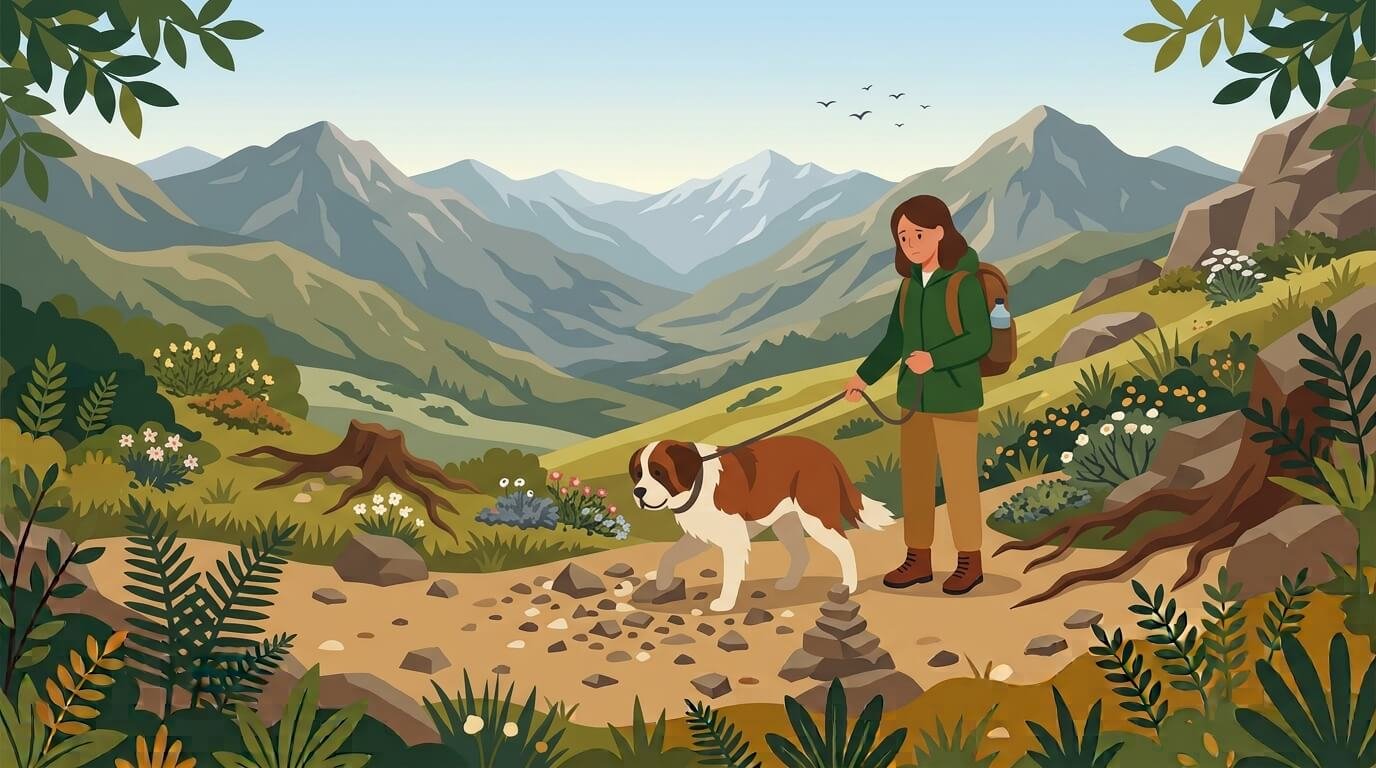
Quick Answer: Loose scree is one of the most common trail hazards for dogs—their paws slide out from under them, putting sudden stress on their wrists and shoulders. Stay on the main trail, keep your dog on a short leash, and never let them sprint over rocky ground. Even a minor slip can turn into a serious joint injury.
Part 2
Steep Inclines and Cliff Edges: The "Don't Look Down" Rule
Puppies and young dogs are notoriously clumsy. Senior dogs might misjudge their footing. But when there’s a drop-off, you can’t afford even a single misstep.
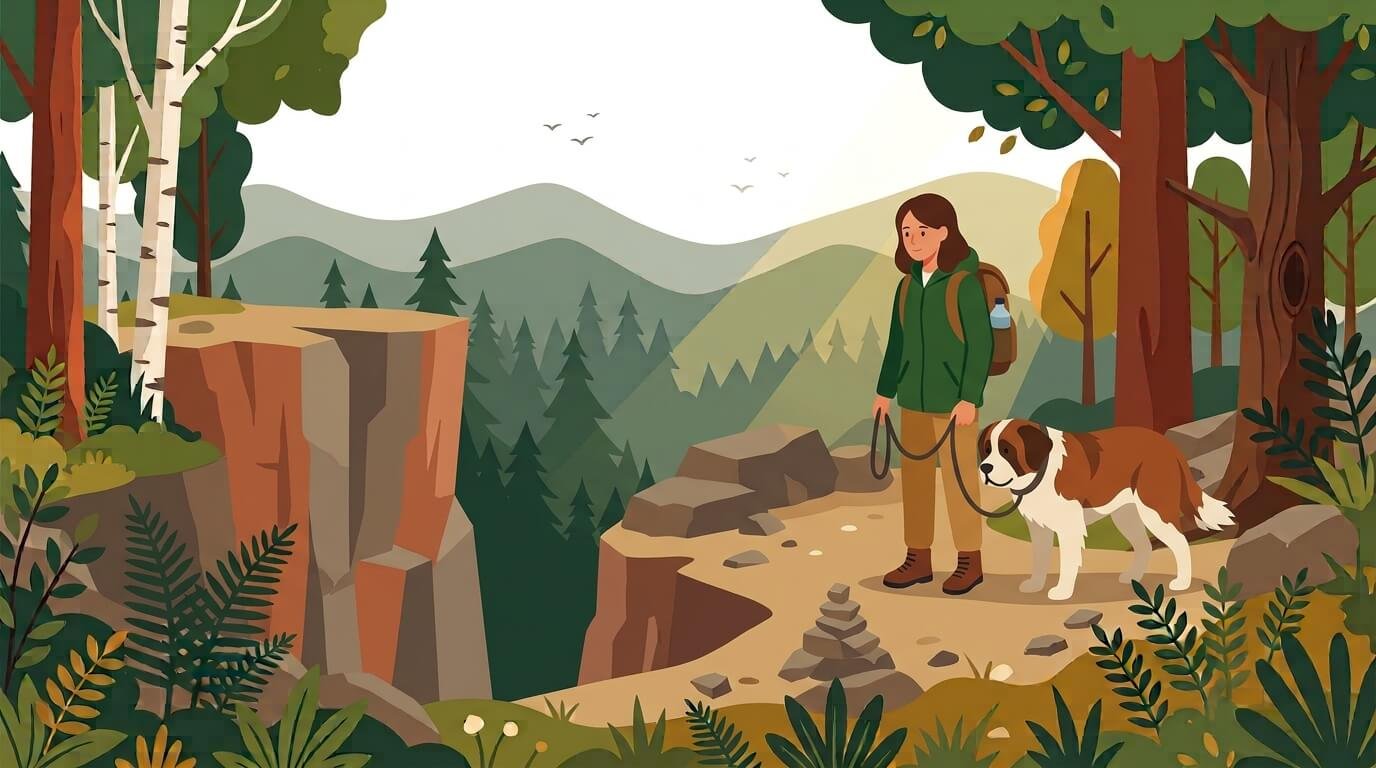
The "No Ledge Rule":
I have a strict rule when hiking on exposed ridges: Max does not go within 3 feet of a cliff edge, period.
Dogs are curious and nose-led. They might see a groundhog at the bottom of a cliff and lunge forward without realizing there’s a 200-foot drop.
How to handle it:
-
Keep them on a tight, short leash in exposed areas. A hands-free waist leash is great for most of the trail—but wrap your hand around the leash near the collar when passing a cliff.
-
Walk on the inside. If the trail is narrow, you walk on the side closer to the drop-off. This physically blocks your dog from veering off the edge.
-
Use verbal cues. Train a solid “Close” or “Heel” command so they walk directly by your side, not out ahead, on dangerous sections.
-
If they get too close: don’t lunge or grab. Crouch low, call them back calmly, and reward them when they come. A sudden grab can startle a dog into stepping the wrong way.
Quick Answer: On exposed ridges and cliff edges, keep your dog within 3 feet of you, on a tight leash, and walk on the inside of the trail. Train a strong “Close” or “Heel” command. If your dog gets too close to the edge, crouch low, call them back calmly, and never lunge or grab.
Part 3
Tree Roots, Hidden Holes, and Slippery Mud: What Lies Beneath
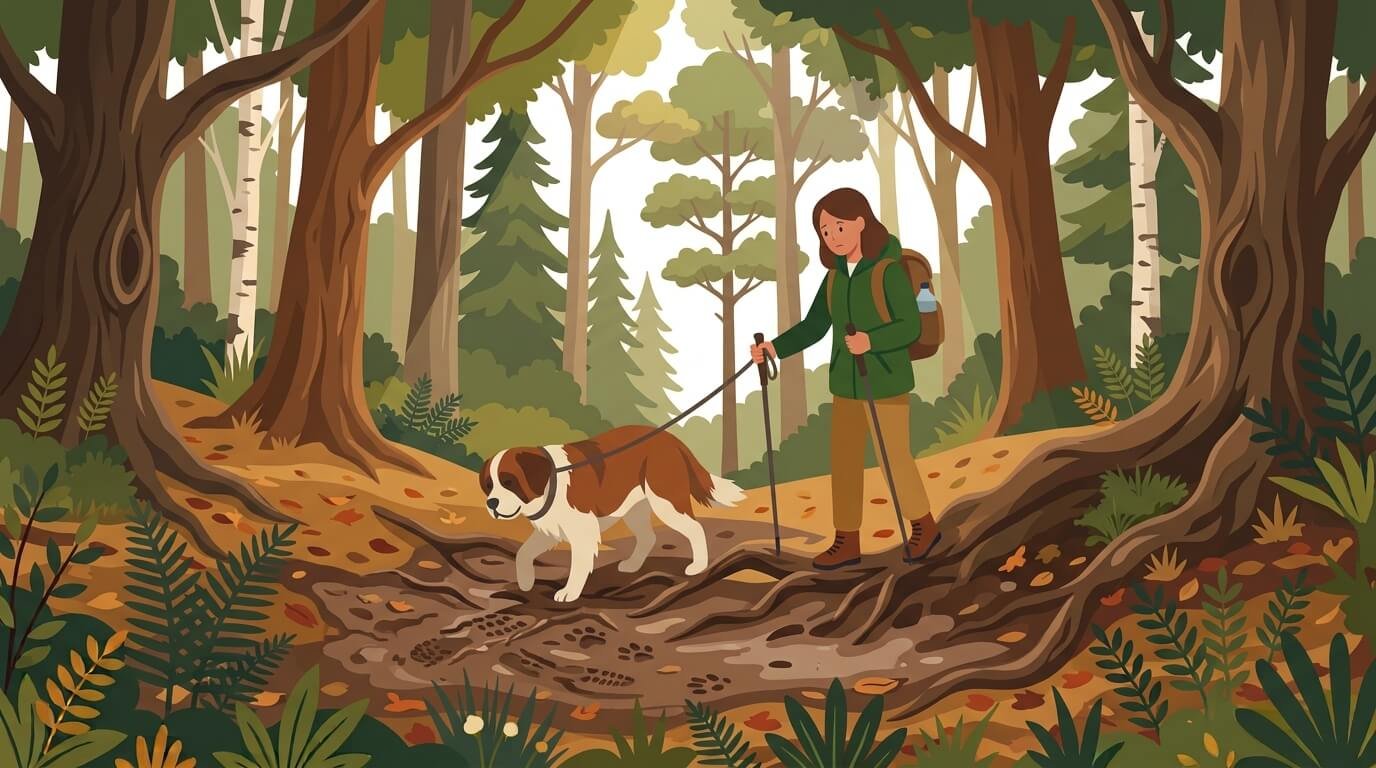
Sometimes, the most dangerous path is the one that looks the most innocent. Under a layer of fallen leaves, there could be a jagged rock, a deep hole, or a treacherous mud pit—and these hidden trail hazards for dogs are the hardest to spot.
Tree Roots:
Exposed roots are slippery, especially when wet. They also pose a real risk of toe fractures. A dog doesn’t step over a root—they step on it, which can catch a paw and twist it.
Hidden Holes and Cracks:
Puppies and smaller dogs can fall into narrow crevices in rocks or deep holes in the ground, trapping their legs. If your dog goes down and can’t get up, don’t pull—support the leg and lift them out carefully.
Slippery Mud:
Mud is the great equalizer. Even the most athletic dog can tear a muscle slipping on slick, wet clay. Cross mud patches slowly, and keep your dog on a short leash so they can’t bolt.
How to handle it:
-
Keep their weight off the paw pads. Consider paw booties or paw balm for extra traction when the terrain looks wet or slippery.
-
Use a strong “Wait” command. When you see an obstacle (like a fallen tree or a slippery patch), command them to “Wait,” step over it yourself first, then call them over carefully.
-
Use a hiking pole to test the ground. A pole tells you if a patch is solid or if it’s hiding a hole—before your dog finds out the hard way.
-
Don’t trust a “clean” trail. Fallen leaves hide roots, rocks, and holes. When the path looks too smooth, slow down.
Quick Answer: Tree roots, hidden holes, and slippery mud are some of the most deceptive trail hazards for dogs—they hide under leaves and look harmless. Use paw booties for traction, train a strong “Wait” command, test the ground with a hiking pole, and slow down on any path that looks too clean.
Part 4
Sharp, Hazardous Materials: Man-Made Dangers on the Trail
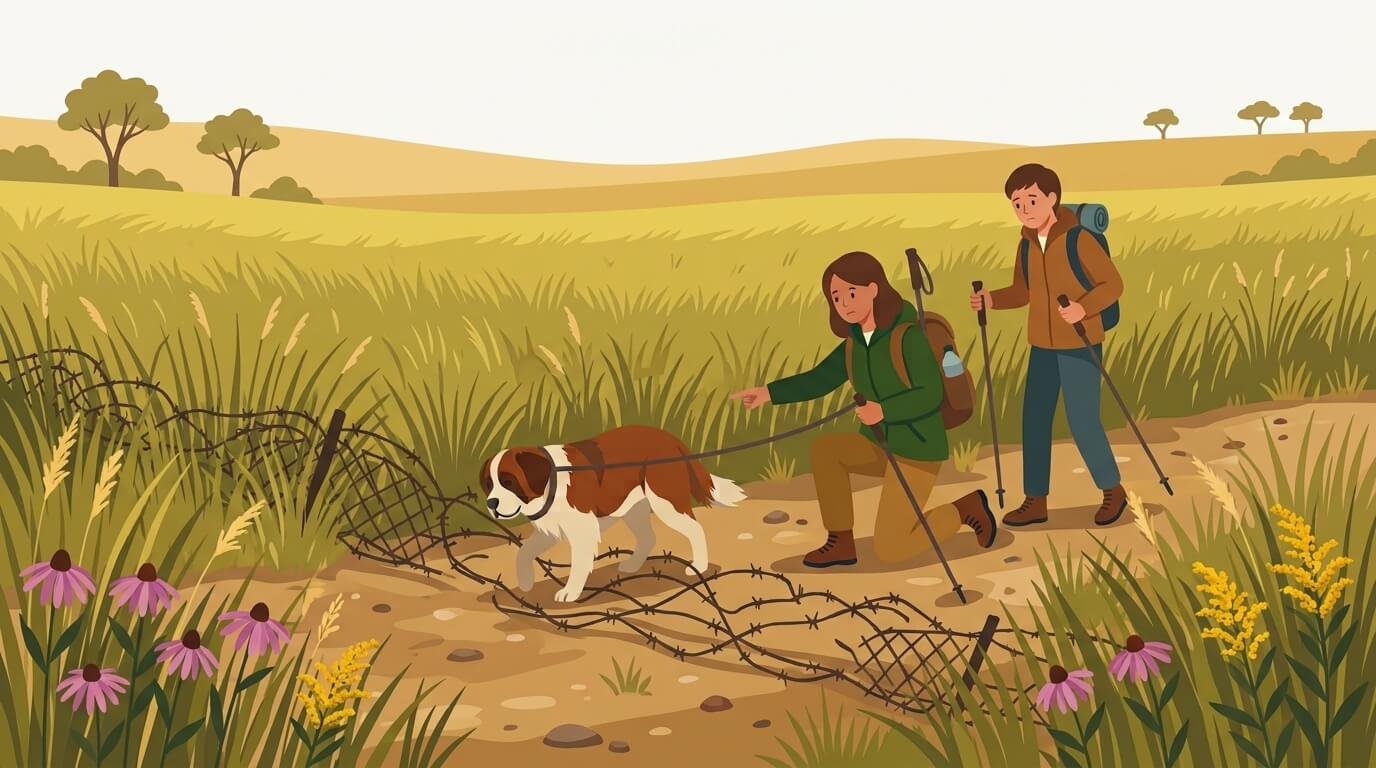
Wilderness isn't always completely wild. Old logging roads, abandoned trails, and storm damage can leave behind dangerous man-made objects—and they're some of the least expected trail hazards for dogs.
Common man-made trail hazards for dogs:
-
Old barbed wire — Often hidden in grass. Can cause deep, vicious cuts to the face and chest.
-
Broken glass or metal debris — Often found near old campsites and fire rings.
-
Abandoned animal traps — Rare, but always be vigilant in remote areas.
-
Horse manure — Not sharp, but still a hazard. Dogs love to roll in it or eat it, which can lead to GI issues. Keep them away.
How to handle it:
-
Scan the ground ahead. Old wire, glass, and traps are easier to spot from a distance than from up close.
-
Keep your dog on the trail. Don’t let them wander into tall grass, brush, or old campsites.
-
Do a “100% body scan” after every hike. I run my hands through Max’s fur, checking for hidden cuts, barbed wire slivers, and ticks. You’d be surprised what you can pick up in dense brush that only reveals itself an hour later.
-
If your dog gets cut: stop the bleeding, clean the wound, and check for embedded debris. If the cut is deep or you can’t remove the debris safely, get to a vet.
Quick Answer: The most common man-made trail hazards for dogs are old barbed wire, broken glass, abandoned animal traps, and horse manure. Scan the ground ahead, keep your dog on the trail, and do a 100% body scan after every hike. If your dog gets cut, clean the wound and check for embedded debris—then get to a vet if the cut is deep.
Part 5
Downhill Dangers: Why Descending is Harder on Dogs
Here's a hard truth: Going down a mountain is much harder on a dog than going up.
When climbing up, dogs use their powerful back legs to push. When descending, gravity pulls them forward—and their front legs absorb the massive impact of their entire body weight with every step. This is a primary cause of elbow and wrist pain in older dogs, and one of the most overlooked trail hazards for dogs.
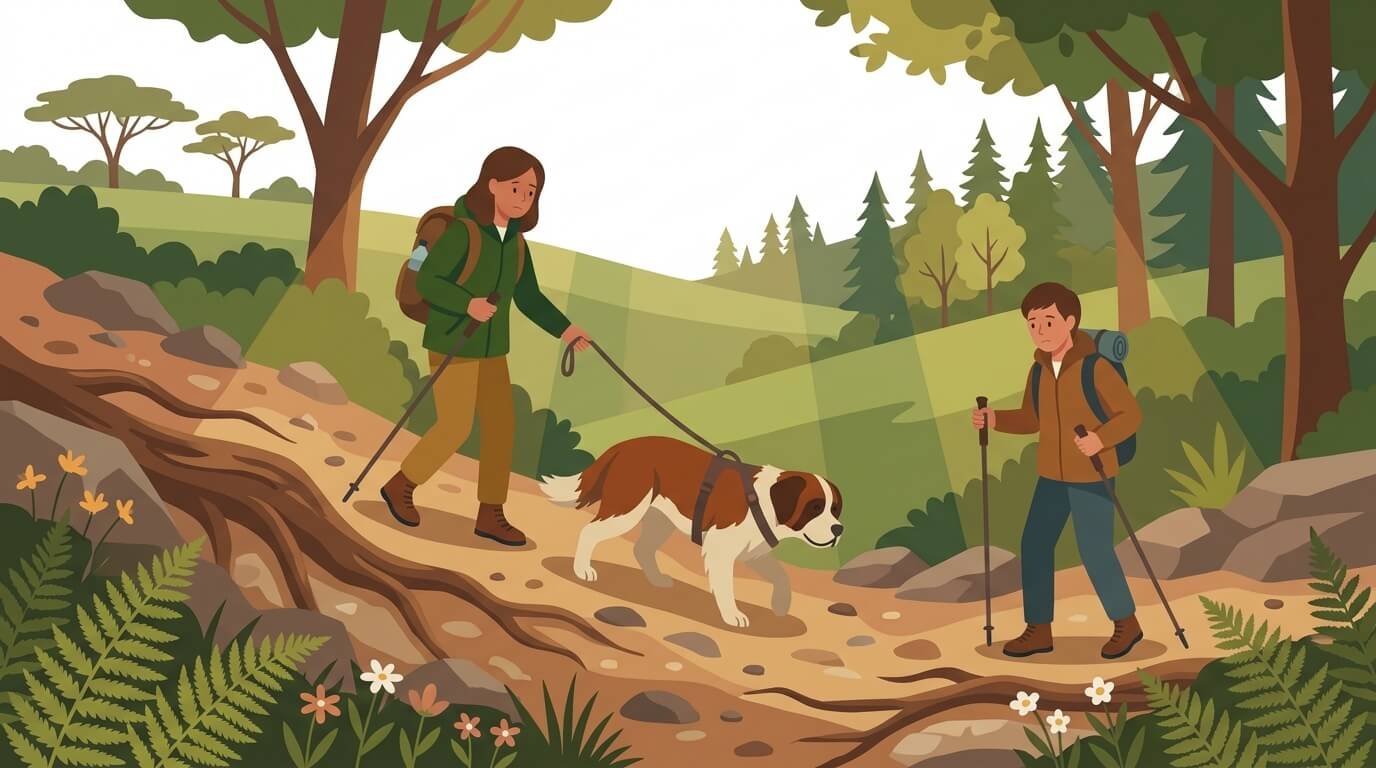
How to manage the descent:
Protect their front legs.
Keep the pace slow. A tired dog is a sloppy dog—and a sloppy dog on a steep downhill is an injury waiting to happen
Use a harness, not a collar.
If a dog slips going downhill, a collar can choke them or cause severe neck trauma. A harness safely supports their chest if they need a little tug up.
Take frequent breaks.
Stretch their front legs gently—never force it. If they refuse to walk, put them on a short leash and keep them steady.
Quick Answer: Downhill hiking is harder on dogs than going up because gravity forces their front legs to absorb the full impact of every step. Slow the pace, use a harness instead of a collar, and take frequent breaks to protect their elbows and wrists.
Part 6
High-Altitude and Exposed Ridges: When to Be Extra Cautious
High altitude isn't just a weather issue—it's a terrain issue. Above the tree line, there's no shelter. The ground is often a mix of sharp, jagged rocks and dirt. The air is thinner, making breathing harder for flat-faced breeds. And a slip on an exposed ridge is much more catastrophic—because there's nowhere to catch yourself.
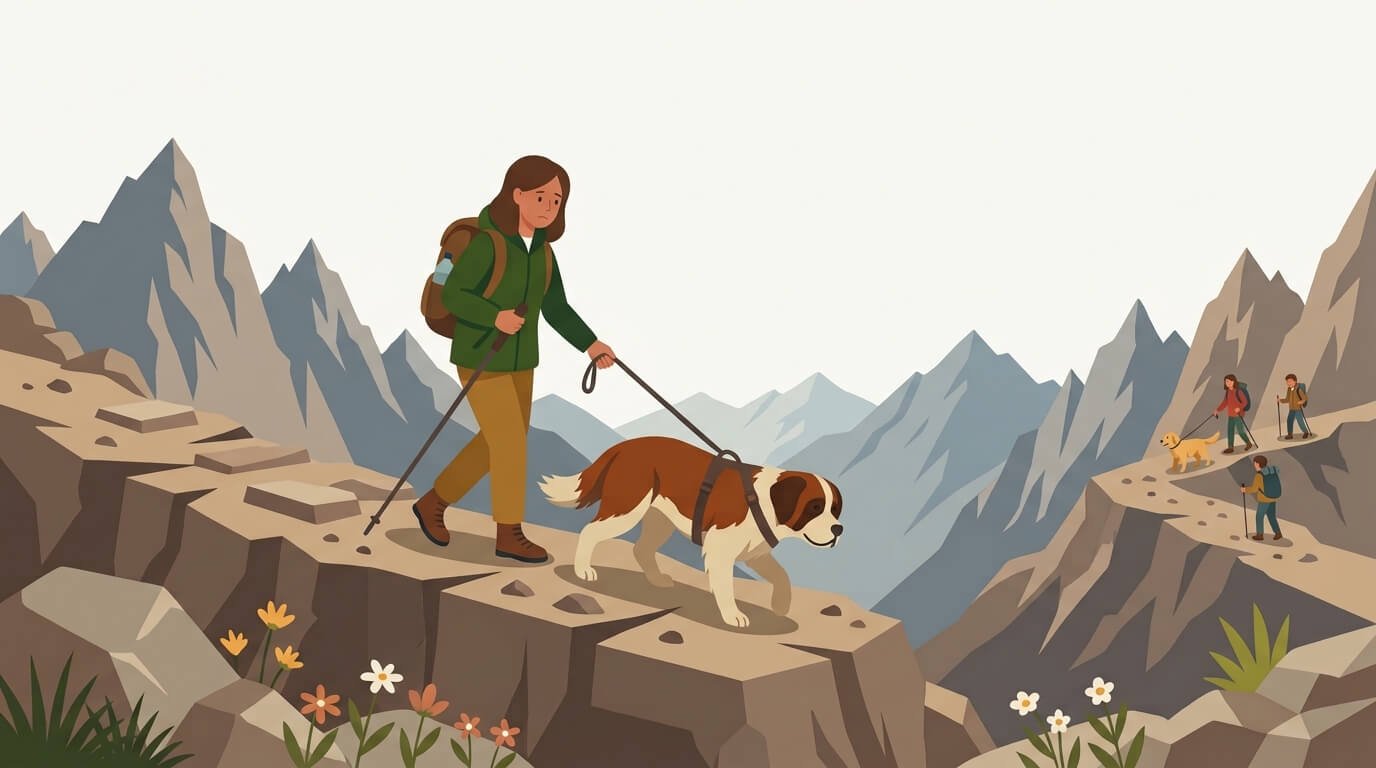
How to handle it:
Check your dog’s fitness level first.
High-altitude ridges are not for dogs with respiratory problems (like flat-faced breeds) or overweight dogs.
Always bring a carrier.
If you’re doing a ridge hike with a 15 lb (7 kg) dog, bring a chest carrier. They will get tired—and you don’t want to carry them across sharp rocks in your arms.
Turn around earlier.
If the terrain looks too risky for your dog, trust your gut. It’s better to turn around an hour early than to carry a 70 lb (32 kg) dog off a mountain in the dark.
Quick Answer: High-altitude ridges are one of the most unforgiving trail hazards for dogs—there’s no shelter, the ground is sharp, and the air is thinner. Check your dog’s fitness first, bring a carrier if you have a small dog, and turn around earlier than you think you need to. A slip on an exposed ridge is much harder to recover from.
Part 7
Terrain Safety Training: Commands That Keep Them Safe
The best gear in the world can't replace good training. These are the two most important commands for terrain safety—and the most valuable trail hazards for dogs prevention tools you can build.
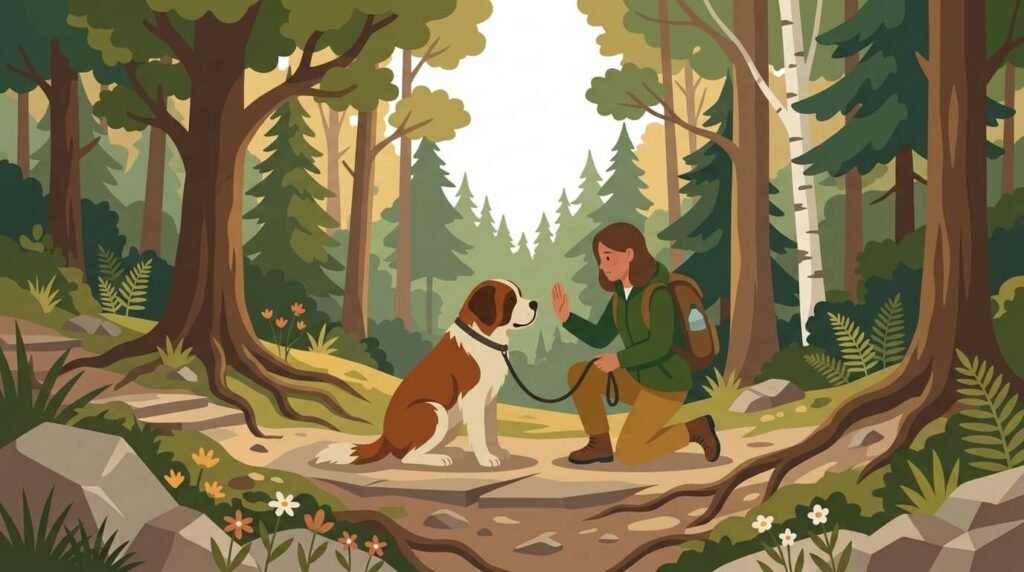
1. "Wait" (or "Stop"):
This is the emergency brake. When you see a cliff or a dangerous path ahead, say “Wait” firmly. They must stop and sit, no matter what. Practice this at home, on flat ground, with treats—then gradually add distractions.
2. "Close" (or "Heel")
This means “walk right next to my leg.” It’s crucial when passing other hikers on a narrow ledge, or when you need to keep them physically away from a drop-off. Start with short sessions on quiet paths, and reward every step they stay beside you.
When to start: Today. Even a 5-minute session in your living room builds the habit. The trail is not the place to teach these commands for the first time.
Quick Answer: The two most important commands for terrain safety are “Wait” (stop and sit immediately) and “Close” (walk right next to you). Practice both at home, on flat ground, with treats—before you ever need them on the trail. No piece of gear can replace good training.
FAQ: Hiking Terrain and Fall Prevention for Dogs
This usually comes down to paw pad friction and terrain. Wet, muddy, or loose rocky surfaces provide little grip. Booties, paw balm, or just keeping them on a leash so they can't run can help prevent slips.
Downhill hiking is harder on a dog's body than going up—gravity forces their front legs to absorb the full impact of every step. For older dogs, this can lead to elbow and wrist pain over time. Slow the pace, use a harness, and take frequent breaks.
If your dog is small enough to carry safely, and the descent is steep or slippery, carrying them is often safer than letting them walk. For larger dogs, use a harness with a handle, walk slowly, and stop often. Never let a tired dog "tough it out" on a steep descent.
Watch for limping, refusing to walk, lagging behind, whining, panting in the shade, or a change in behavior. Dogs are stoic—they'll often hide pain until it's serious. If something seems off, stop, check their paws and legs, and turn back if needed.
Don't move them unless there's immediate danger. Check for bleeding, broken bones, and signs of shock. Keep them warm and still, and call for help. If you can carry them safely, do it slowly. If not, stay with them and call for rescue.
Yes—if your dog will wear them. Booties protect against sharp rocks, hot ground, and ice, and they add traction on loose scree. The key is to train your dog to wear them at home first, with short sessions and treats. If they refuse, paw balm is a good backup.
Start with short, gentle hills at home or on easy trails. Practice "Wait" and "Close" on flat ground first, then add distractions. Build up gradually over weeks, not days. And remember: training happens before the hike, not during it.
Start with our main guide to hiking with dog safety, and explore the Hiking & Outdoor Hazards hub for more on gear, heat safety, trail etiquette, and emergency prep.
Sources & Further Reading
This guide combines my own trail experience with these trusted sources:
-
American Veterinary Medical Association (AVMA) — Slips and falls in pets, orthopedic injuries
-
American Kennel Club (AKC) — Hiking safety, muscle and joint injuries in dogs
-
Leave No Trace Center for Outdoor Ethics — Safety on uneven terrain
-
World Small Animal Veterinary Association (WSAVA) — Global veterinary guidelines for small animal care
Disclaimer: I’m a dog owner, not a veterinarian or a wildlife expert. This content is for informational purposes only and does not replace professional veterinary advice. For any health concerns regarding your specific dog, please consult a licensed veterinarian immediately.
Final Thoughts
The wilderness is a beautiful, raw, and unforgiving place. You can’t negotiate with a cliff edge, and you can’t reason with a patch of loose scree.
By watching the ground just as carefully as you watch the bushes, you give your dog the greatest gift on the trail: a long, injury-free adventure. Keep their pace slow, keep them close on dangerous sections, and always be ready to turn around. That’s how you master trail hazards for dogs—one careful step at a time.
Their paws are their only shoes, and their legs are their only wheels. Take care of them out there! 🐾 That’s what hiking with dog safety is really about.
What's ahead in this series:
Hiking With Dog Safety: The Ultimate Guide to Prep, Gear & Trail Etiquette
Discover essential hiking with dog safety tips! From pre-hike prep and must-have gear to trail etiquette and wildlife hazards, this guide keeps your pup safe.
Dangerous Wildlife & Plants on Trails: What Every Dog Owner Must Know
Snakes, bears, toxic mushrooms, and poison oak — learn how to protect your dog from dangerous wildlife and plants on the trail. Practical, vet-informed tips.
Dog Hiking First Aid: Injuries, Paw Care & Emergency Carries
Paw pad injuries, sprains, cuts, and emergency carries — here’s how to handle dog hiking first aid on the trail. Practical, vet-informed steps for hiking with dog safety.
Trail Hazards for Dogs: Risky Terrain, Steep Slopes & How to Prevent Falls
Steep slopes, loose scree, and uneven terrain are the most common trail hazards for dogs. Here’s how to prevent falls, spot risky ground, and keep your dog safe.
Dog Hiking Endurance: Preventing Trail Fatigue and Getting Lost
Learn how to prevent dog hiking endurance issues! Spot the signs of fatigue, build stamina, and use vital tips to stop your dog from getting lost.
Disclaimer: This content is for informational purposes only and does not constitute veterinary or professional safety advice. Always consult with a qualified veterinarian or professional dog trainer regarding your dog’s specific needs and safety considerations.