
Dangerous Wildlife and Plants for Dogs:
What Every Owner Must Know on the Trail
Snakes, bears, toxic mushrooms, and poison oak—learn how to protect your dog from dangerous wildlife and plants for dogs on the trail. Practical tips for hiking with dog safety.
Some of the most dangerous things your dog can encounter on a hike are hiding in the bushes, slithering on rocks, or dangling from a branch. When you step into the wilderness, you’re entering the territory of dangerous wildlife and plants for dogs—animals and plants that have their own survival instincts.
Here’s a number that should catch your attention: According to the ASPCA Animal Poison Control Center, plant-related calls spike significantly during the spring and summer hiking months. And when it comes to wildlife, the ASPCA notes that snake bites—particularly from venomous species—require immediate veterinary care to prevent serious complications.
The good news? You don’t need to be a wilderness survival expert to keep your dog safe. You just need to know what to look for, how to avoid it, and what to do if things go wrong.
Quick note: I’m a passionate dog owner, not a vet. This guide pulls together my personal experiences and recommendations from veterinary experts and outdoor organizations. For anything concerning your specific dog’s physical limits, always check with your vet first.
This is part of a series on hiking safety. For the big-picture overview of trail preparation and etiquette, start with the main guide here: The Ultimate Guide to Hiking with Your Dog.
What's in This Guide
In this guide, I’ll walk you through:
Venomous snakes — the most common trail emergency
-
-
Dangerous mammals — bears, mountain lions, and aggressive dogs
-
Toxic plants — the hidden poisons on the trail
-
Dangerous insects — ticks, spiders, and stinging bugs
-
What to do in an emergency — immediate first aid steps
-
How to prevent encounters — smart habits for the trail
-
The “Leave It” command — the single most important behavior to train
-
Part 1
Venomous Snakes: A Trail Emergency for Dogs
If you hike long enough, you will eventually see a snake. That's just the reality of sharing the wilderness with them.
I remember the first time I saw a rattlesnake on a trail with Max. I heard the rattle before I saw it, and my heart stopped for a second. I froze, grabbed Max's leash, and backed away slowly. That experience is what taught me how critical snake safety is for hiking with dog safety—and why dangerous wildlife and plants for dogs deserve their own guide.
Which snakes are dangerous?
Snake species vary by region, but the ones that pose the biggest threat to dogs share a few traits: they’re venomous, they hide in grass or rocks, and they strike at ground level—right where your dog’s nose goes. Here are the most common dangerous species in North America, along with what to watch for in other regions:
-
Rattlesnakes (most common in North America; related pit vipers exist worldwide)
-
Copperheads (often camouflaged in leaves; related species in Europe and Asia)
-
Cottonmouths/Water Moccasins (found near water in the southeastern U.S.; similar water snakes exist in Australia and Africa)
-
Coral Snakes (found in the Southeast U.S. and parts of South America; related species in Asia)
If you live outside North America, look up the venomous snakes in your region before you hike—most countries have a wildlife or veterinary authority with a local list.
Why are dogs so vulnerable?
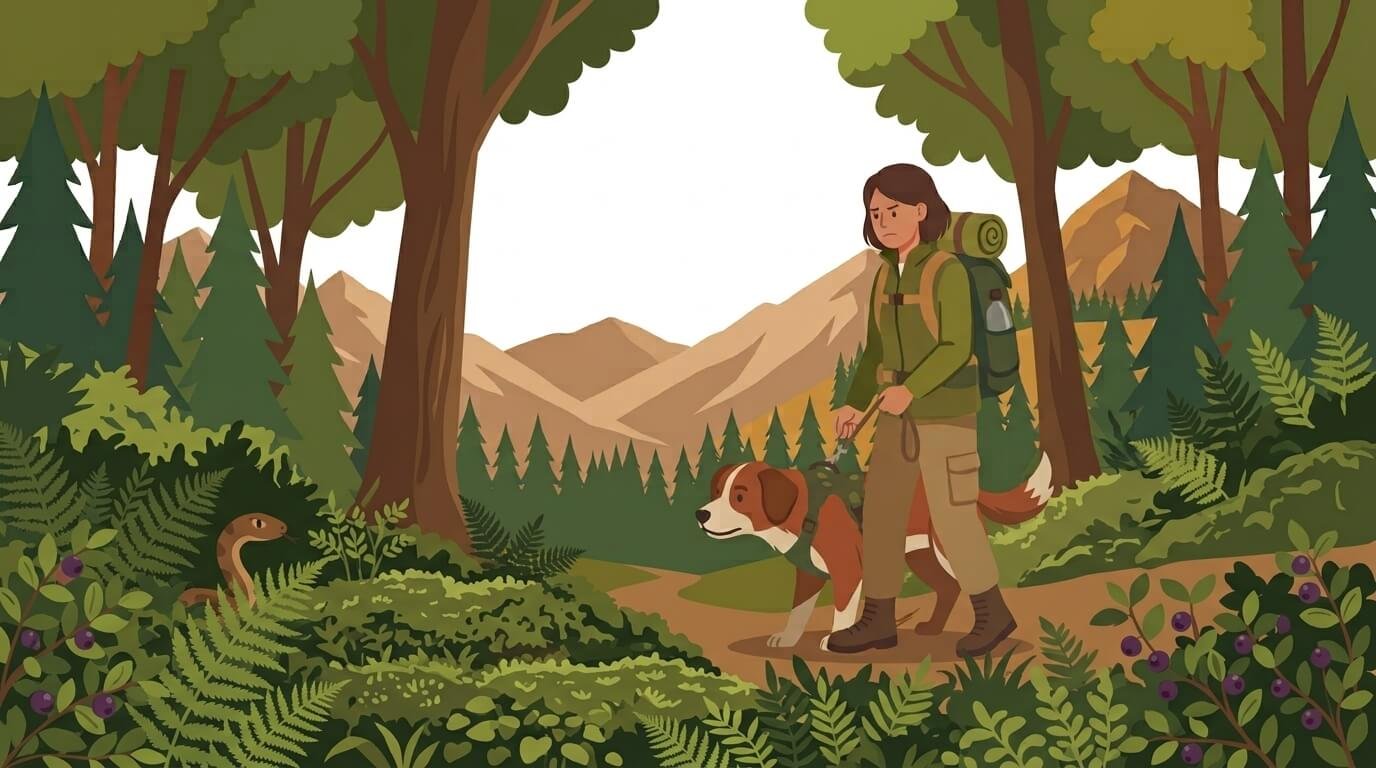
Dogs are naturally curious. They see a moving stick or a shiny object and will instinctively go to sniff it. Their noses are at the exact height where snakes usually strike. It’s one of the most overlooked risks in outdoor dog safety.
A snake bite is a medical emergency. Venom can cause severe swelling, tissue damage, and coagulopathy (blood clotting issues). Even with treatment, the recovery can be painful and expensive. If you want to read more, the ASPCA Animal Poison Control Center has a detailed guide on snake bites in dogs.
How to protect your dog:
Do This | Don't Do This |
|---|---|
Keep your dog on a short leash in snake country | Let them roam free in tall grass or rocky crevices |
Step high and loudly (snakes feel vibrations) | Reach into brush or under rocks blindly |
Keep your dog on the center of the trail | Let them sniff inside hollow logs |
Practice a strong "Leave it" and "Come" command | Try to touch, poke, or kill the snake |
Carry a cell phone with good reception | Assume the snake is dead (they can still bite) |
Quick Answer: The most common venomous snakes to watch for in North America are rattlesnakes, copperheads, cottonmouths, and coral snakes—and similar species exist worldwide. Keep your dog on a short leash, stay on the center of the trail, and never let them sniff into brush or under rocks. A snake bite is a medical emergency—go straight to a vet.
Part 2
Dangerous Mammals: Bears, Mountain Lions, and Aggressive Dogs
Large mammal encounters are rare—but when they happen, they can turn dangerous fast. The good news? Most conflicts are preventable if you know how to behave. Here's what to do when hiking with dog safety is on the line.
Bears
If you see a bear, the golden rule is do not run. Running triggers a bear’s prey drive—and a dog that runs can pull you into a chase.
-
Keep your dog on a tight leash, close to your body.
-
Back away slowly, speaking in a calm, low voice.
-
If the bear approaches, make yourself look big (raise your arms) and use bear spray if you have it.
-
If a bear charges a dog off-leash, do not intervene directly. Scream loudly and throw rocks to distract it.
The bottom line: A bear that feels unthreatened usually moves on. Your job is to stay calm, stay big, and never run.

Mountain Lions
Mountain lions are ambush predators. They rely on surprise—so the goal is to never look like easy prey.
-
Make eye contact. Don’t turn your back.
-
Look big. Raise your arms, open your jacket, stand tall.
-
Pick up small dogs. A small dog on the ground looks like prey.
-
Slowly leave the area while talking in a firm, loud voice.
-
Never run. Running triggers the chase instinct.
The bottom line: You don’t need to fight a mountain lion—you need to convince it you’re not worth the risk.

Aggressive Domestic Dogs
Feral or off-leash domestic dogs are often the biggest danger on trails—more common than bears or mountain lions, and just as unpredictable.
If a dog approaches aggressively:
-
Do not run.
-
Place your dog behind you.
-
Use a firm, deep voice to yell “NO!” or “GO HOME!”
-
Use a stick or your hiking pole as a barrier.
-
If you have a large water bottle, throw it at the dog to startle it.
The bottom line: Most aggressive dogs are bluffing. Stand your ground, stay big, and protect your dog.

Quick Answer: If you meet a bear, never run—back away slowly and keep your dog close. With mountain lions, make eye contact and look big. With aggressive dogs, stay calm, put your dog behind you, and use a firm voice. In all three cases, the goal is the same: de-escalate and leave.
Part 3
Toxic Plants: The Hidden Poisons on the Trail
Dogs don't know which plants are safe to eat. They explore the world with their mouths—and unfortunately, some of the most common plants on the trail are incredibly toxic.
This is one of the most overlooked risks in outdoor dog safety. Here's what to watch for, and what to do if something goes wrong.
Common Toxic Plants to Avoid:
Plant | Icon | Why It's Dangerous |
|---|---|---|
Poison Oak / Poison Ivy |  | Causes severe skin irritation if the oils get on their coat, which then transfers to you. |
Mushrooms |  | Many wild mushrooms cause liver failure, seizures, and hallucinations. Rule of thumb: If you don't know what it is, keep your dog far away from it. |
Oleander / Foxglove |  | Highly toxic plants that cause severe heart arrhythmias. |
Wild Black Cherry / Elderberry |  | he leaves, stems, and seeds contain cyanide. |
Milkweed |  | Toxic to the heart, often found in meadows. |
Sago Palm |  | Extremely toxic to the liver—even a few seeds can be fatal. Common in warm regions and indoor landscaping. |
Castor Bean |  | Contains ricin, one of the most toxic natural substances known. Found in warm climates worldwide. |
Note: The list above covers the most common species in North America and Europe—but toxic plants exist worldwide. Before you hike, look up the toxic plants in your region. Most countries have a veterinary poison control center or a national animal health authority with a local list.
What to do if you suspect plant poisoning:
-
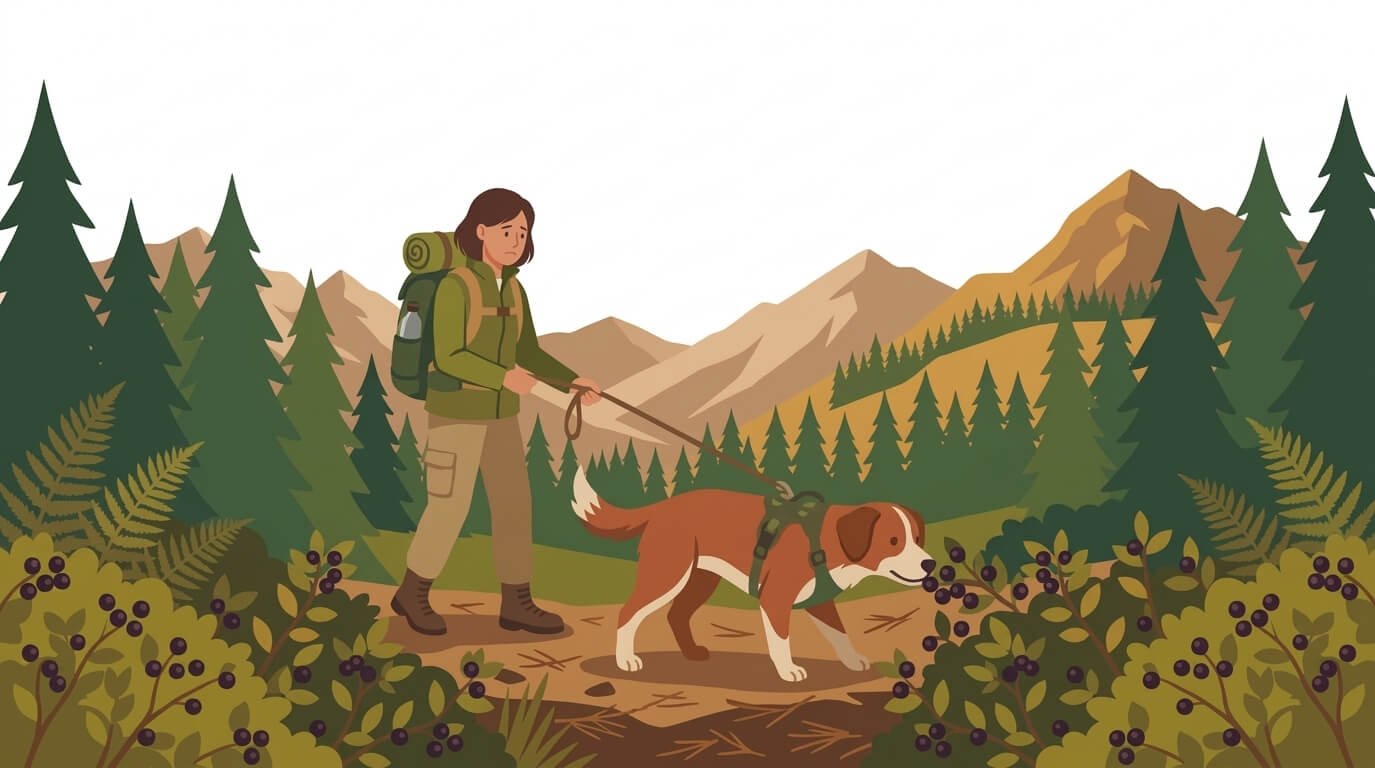
Look for signs: vomiting, drooling, diarrhea, lethargy, tremors, or seizures.
-
Do not induce vomiting unless instructed by a vet.
-
Do not wait to see if they get better.
-
Take a photo of the plant (if possible) and call your vet immediately.
Not sure who to call? Search for “[your country] pet poison hotline” or “[your country] animal poison control.” Most countries have a national hotline—and if you can’t find one, your nearest emergency vet is the fastest place to start.
Your Best Defense: The "Leave It" Command
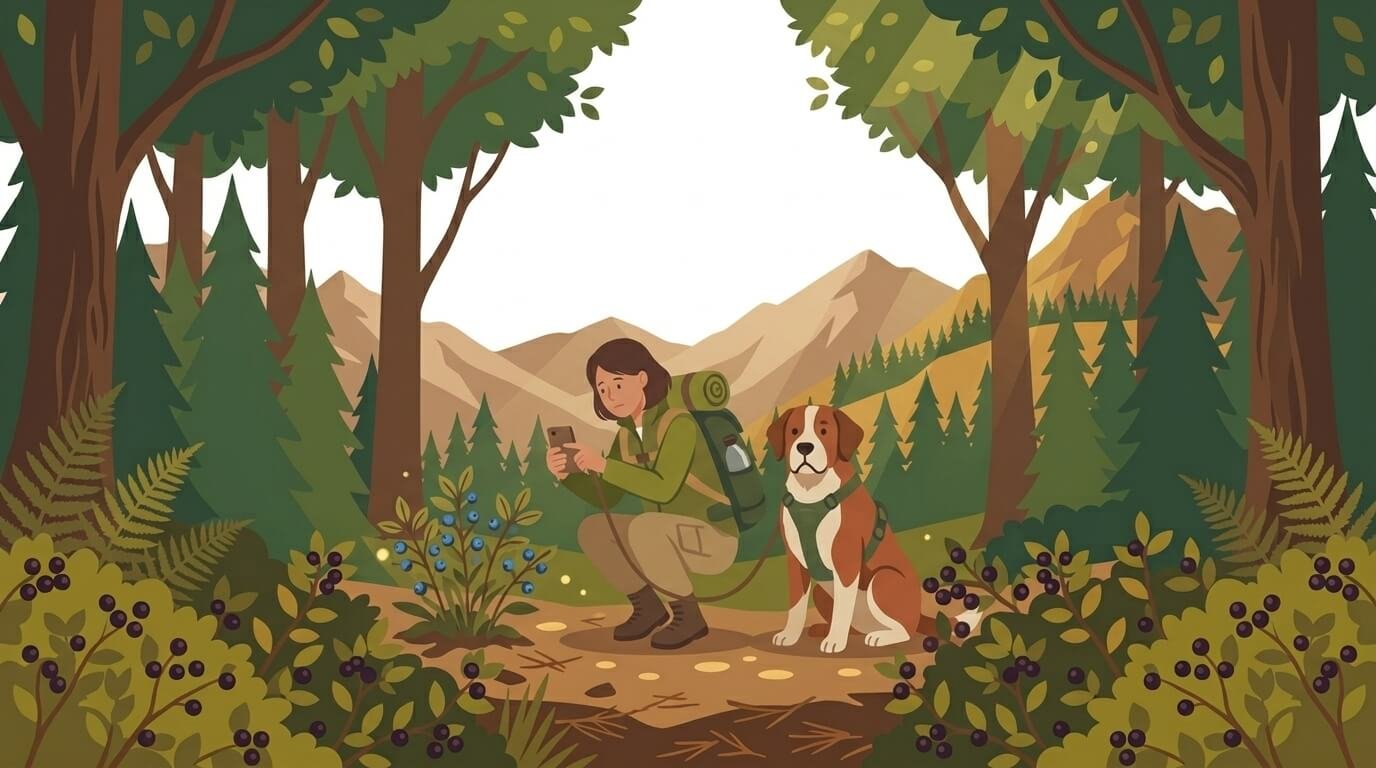
Train your dog to “Drop It” or “Leave It” 100% of the time. This one command will save their life more than any piece of gear.
Start training at home, with low-value items, and reward every success. Then practice on walks, in the park, and finally on the trail—before you ever need it in an emergency.
The bottom line: You can’t identify every toxic plant on the trail—but you can train your dog not to eat them. A strong “Leave It” is the single most valuable skill in hiking with dog safety.
Quick Answer: Common toxic plants for dogs include poison oak, mushrooms, oleander, foxglove, wild black cherry, milkweed, sago palm, and castor bean—and toxic species exist worldwide. If you suspect poisoning, don’t induce vomiting, take a photo of the plant, and call your local pet poison hotline or vet immediately.
Part 4
Dangerous Insects: Ticks, Spiders, and Stinging Bugs
Insects are often overlooked, but they can ruin a hike and cause serious health issues. This is one of the most underestimated risks in outdoor dog safety—and one of the easiest to prevent.
Ticks (The Big One)
Ticks are everywhere in the woods, especially in tall grass and brush.
-
Ticks transmit serious diseases—including Lyme disease, ehrlichiosis, and Rocky Mountain spotted fever. These vary by region, but tick-borne illness is a global problem.
-
Pro tip: Always do a full-body check on your dog (especially between the toes, in the ears, and around the neck) immediately after the hike.
-
Dogs know no shame: Check their armpits and groin area too—ticks love warm, hidden spots.
-
A tick prevention treatment (prescribed by your vet) is an absolute must for hiking dogs. Ask your vet which product works best in your region.
The bottom line: A tick check takes 2 minutes. A tick-borne disease can take months to treat. Check your dog every single time.
Spiders (Black Widows & Brown Recluses)
Venomous spiders exist worldwide—but the ones that cause the most serious reactions in dogs are usually black widows and brown recluses.
-
They’re usually found in old logs, rock piles, or abandoned structures.
-
A bite causes intense pain, muscle spasms, and severe swelling.
-
Some dogs react more severely than others—and small dogs are at higher risk.
What to do: If you suspect a spider bite, keep your dog calm, note the time, and call your vet immediately. If you can safely photograph the spider, do it.
The bottom line: Spider bites are rare—but when they happen, they’re a veterinary emergency. Don’t wait to see if it gets better.
Bees, Wasps, and Yellowjackets
If a dog gets stung in the mouth or throat, it can cause fatal swelling that blocks their airway.
-
If stung on the nose or paw, use a cool compress.
-
If the dog begins to swell, vomit, or collapse, this is anaphylactic shock. Go to the nearest emergency vet immediately.
-
If your dog has had a reaction before, ask your vet about carrying an epi-pen or antihistamine on hikes.
The bottom line: Most stings are minor. But a sting to the mouth or throat is a race against time. Know the signs of anaphylaxis before you hit the trail.
Quick Answer: The most dangerous insects for hiking dogs are ticks (which transmit Lyme disease and other illnesses), venomous spiders like black widows and brown recluses, and stinging insects like bees and wasps. Do a full-body tick check after every hike, and treat any sting to the mouth or throat as an emergency.
Part 5
First Aid & Emergency Protocol: What To Do Right Away
If the worst happens, minutes matter. Here's what to do—based on the emergency first-aid principles I've learned from vets and outdoor safety organizations.
The Three Rules That Apply to Every Emergency
Before we get into specifics, here’s what applies to almost every trail emergency:
-
Stay calm. Your dog reads your energy. Panic makes everything worse.
-
Stop the activity. Whatever you were doing, stop. Don’t push forward.
-
Call ahead. Phone your vet or the nearest emergency clinic while you’re on your way—not after you arrive.
This is the foundation of outdoor dog safety: act early, act calmly, and get professional help fast.
If Bitten by a Snake:
-
Stay calm. Panicking raises your dog’s heart rate, which spreads the venom faster.
-
Do NOT cut the wound, try to suck out the venom, or use a tourniquet. These old techniques cause more harm than good.
-
Carry your dog to the car. Walking increases heart rate and venom spread.
-
Remove any collars or harnesses that may cut off circulation as swelling begins.
-
Head to the nearest emergency animal hospital immediately. Call ahead so they can prepare antivenom if they carry it.
The bottom line: Snake bites are a race against time—but calm, fast action makes a real difference. Don’t try home remedies.
If Exposed to Toxic Plants:
-
Immediately wash the affected area (coat, paws) with lukewarm water and a mild dish soap.
-
Use a leash to prevent your dog from licking the area—licking causes stomach distress and can spread the toxin.
-
Call your local pet poison hotline or your vet to find out whether ingestion has occurred and what to do next.
The bottom line: If it’s on the skin, wash it off. If it’s been swallowed, call for help—don’t wait for symptoms.
If Attacked by Wildlife:
-
Stop the bleeding with direct pressure using a clean cloth or gauze.
-
Do not attempt to clean deep puncture wounds in the field. Get to a vet—puncture wounds need professional care.
-
Keep your dog warm and quiet to prevent shock.
-
Protect yourself too. Don’t put yourself between your dog and a wild animal—you can’t help your dog if you’re injured.
The bottom line: Control bleeding, prevent shock, and get to a vet. Deep wounds and bites are never a “wait and see” situation.
Quick Answer: For snake bites, stay calm, don’t cut or suction the wound, carry your dog to the car, and head straight to an emergency vet. For toxic plant exposure, wash the area and call your local pet poison hotline. For wildlife attacks, control bleeding, keep your dog warm, and get to a vet immediately.
Part 6
High-Risk Dogs: Who Should Be Extra Careful Around Wildlife and Plants?
Not all dogs handle wildlife encounters the same way. Just like in our summer heat guide, some dogs need extra caution—and extra planning. When it comes to dangerous wildlife and plants for dogs, these are the groups most at risk.
Which Dogs Need Extra Caution
Group | Why They Need Extra Caution | Example |
|---|---|---|
Small breeds | A snake bite or insect sting affects them faster because of their body size | Chihuahuas, Terriers |
Curious breeds | Will chase wildlife into dangerous terrain—or straight into a snake | Huskies, Terriers, Hounds |
Allergic dogs | Stings, poison ivy, and toxic plants cause stronger reactions | Any dog with a history of skin issues |
Brachycephalic breeds | Struggle to breathe in high-stress situations—like a wildlife encounter | Pugs, French Bulldogs |
Senior dogs | Slower reactions and weaker immune systems make recovery harder | Dogs 7+ years |
The bottom line: If your dog falls into any of these groups, plan your hike around their limits—not the other way around. And for a full breakdown by breed and fitness level, see our complete guide to hiking with dog safety.
Which Dogs Need Extra Caution
For high-risk dogs, a few adjustments make a big difference:
-
Shorter hikes, on easier terrain, with more breaks.
-
Earlier start times in warm weather, before the heat and the insects are out.
-
A closer leash in areas with snakes, wildlife, or dense plants.
-
A pre-hike check with your vet if your dog has a health condition.
The bottom line: Extra caution isn’t about skipping hikes—it’s about adjusting them. Your dog can still have an amazing time on the trail.
Quick Answer:Small breeds, high-prey-drive dogs, dogs with allergies or sensitive skin, brachycephalic breeds, and senior dogs need extra caution around wildlife and plants. For high-risk dogs, shorten the hike, start earlier, keep a closer leash, and check with your vet before you go.
Part 7
Prevention: Your Wildlife & Plant Safety Checklist
The best way to handle a dangerous plant or animal is to never encounter it in the first place. These habits are the core of outdoor dog safety—and they only take a few minutes to build.
Before You Leave:
☐ Check local park warnings (recent bear activity? snake sightings?)
☐ Apply tick prevention (and reapply as directed by your vet)
☐ Know the venomous snakes and toxic plants in your area
☐ Train and rehearse “Leave It” and “Come” commands at home
☐ Pack a tick remover, antihistamine (Benadryl)—get the dosage from your vet—gauze, and saline in your first-aid kit
While On the Trail:
☐ Keep your dog on a leash (especially in dense brush)
☐ Scan the trail ahead to spot snakes and plants before your dog does
☐ Walk in the center of the trail—not along the edges where snakes hide
☐ Don’t let your dog forage, chew on sticks, or drink from ponds
☐ Keep your dog close if you hear rustling in the bushes
When to Turn Back:
☐ If you see a bear, snake, or aggressive dog—and you feel unsafe
☐ If you’re in a remote area with no cell service and your dog isn’t well
☐ If you can’t carry your dog out in an emergency
☐ If a storm is rolling in, or the weather is turning fast
The bottom line: Prevention isn’t complicated. A few minutes of preparation before you leave, and a few habits on the trail, are the difference between a great hike and a trail emergency.
FAQ: Wildlife and Plant Safety for Dogs
No. Most snakes you'll see are non-venomous and will avoid you if given the chance. But you can't always tell the difference in the moment—so treat every snake as potentially dangerous, keep your dog close, and back away slowly.
Benadryl (diphenhydramine) can help with mild swelling and itching—but only at the dosage your vet has approved for your dog's weight. Never guess. If your dog is swelling, vomiting, or collapsing, that's anaphylaxis—skip the Benadryl and go straight to an emergency vet.
Do not wait for symptoms. If you suspect they ate a toxic mushroom, call your local pet poison hotline or your vet immediately. Take a photo of the mushroom if possible—it helps the vet identify the toxin.
Use fine-tipped tweezers or a tick removal tool. Grab the tick as close to the skin as possible, pull straight up with steady pressure, and clean the area with antiseptic. Never twist, crush, or burn the tick—and never apply petroleum jelly. Save the tick in a sealed bag in case your vet needs to test it.
Keep your dog on a short leash, walk in the center of the trail, and scan the path ahead. Don't let your dog sniff into brush, under rocks, or inside hollow logs. Train a strong "Leave It" and "Come" so you can redirect your dog instantly.
A few, but it's not worth the risk to guess. Even "safe" plants can cause stomach upset in some dogs. The safest rule: don't let your dog eat anything on the trail that you didn't bring yourself.
Keep your dog outside—the oils spread everywhere. Mix 1 quart of 3% hydrogen peroxide, 1/4 cup baking soda, and 1 teaspoon of dish soap. Apply it to your dog's coat, avoiding the eyes and mouth, let it sit for 5 minutes, then rinse. Repeat if needed.
Start with our main guide to hiking with dog safety, and explore the Hiking & Outdoor Hazards hub for more on gear, heat safety, trail etiquette, and emergency prep.
Sources & Further Reading
This guide combines my own trail experience with these trusted sources:
-
American Society for the Prevention of Cruelty to Animals (ASPCA) — Animal Poison Control Center and snakebite safety
-
American Veterinary Medical Association (AVMA) — Protecting pets from wildlife and tick prevention
-
Centers for Disease Control and Prevention (CDC) — Tickborne diseases
-
World Small Animal Veterinary Association (WSAVA) — Global veterinary guidelines for small animal care
Disclaimer: I’m a dog owner, not a veterinarian or a wildlife expert. This article is for informational purposes only and does not replace professional veterinary advice. For any health concerns regarding your specific dog, please consult a licensed veterinarian immediately.
Final Thoughts
If you own a dog, sharing the trail with them is an incredible gift. But nature is not a playground—it’s a shared habitat, with its own rules and its own risks.
By knowing what to look for, avoiding risky situations, and training your dog to listen—even when they’re excited—you can navigate the wilderness with confidence.
They rely on you to see the dangers they can’t. Watch the bushes, check the ground, and when in doubt, keep them close. That’s what hiking with dog safety really means.
Happy trails! 🐾
What's ahead in this series:
Hiking With Dog Safety: The Ultimate Guide to Prep, Gear & Trail Etiquette
Discover essential hiking with dog safety tips! From pre-hike prep and must-have gear to trail etiquette and wildlife hazards, this guide keeps your pup safe.
Dog Hiking First Aid: Injuries, Paw Care & Emergency Carries
Paw pad injuries, sprains, cuts, and emergency carries — here’s how to handle dog hiking first aid on the trail. Practical, vet-informed steps for hiking with dog safety.
Trail Hazards for Dogs: Risky Terrain, Steep Slopes & How to Prevent Falls
Steep slopes, loose scree, and uneven terrain are the most common trail hazards for dogs. Here’s how to prevent falls, spot risky ground, and keep your dog safe.
Dog Hiking Endurance: Preventing Trail Fatigue and Getting Lost
Learn how to prevent dog hiking endurance issues! Spot the signs of fatigue, build stamina, and use vital tips to stop your dog from getting lost.
Disclaimer: I’m a dog owner, not a veterinarian or a wildlife expert. This content is for informational purposes only and does not replace professional veterinary or safety advice. Always consult a qualified veterinarian about your dog’s specific needs before heading out.