
Hiking With Dog Safety:
The Ultimate Guide to Prep, Gear & Trail Etiquette
Planning a hike with your dog? Get essential hiking with dog safety tips—pre-hike prep, gear, trail etiquette, and wildlife hazards—to keep your pup safe.
You might think a hike is just a walk in the woods with a longer leash. But here’s the truth: hiking is a completely different animal (pun intended). The terrain is uneven, the weather is unpredictable, the wildlife is wild, and the distances can be exhausting.
That’s why hiking with dog safety isn’t optional—it’s the key to making sure your pup has a blast without ending up in the emergency vet.
As a dog parent who has spent countless weekends dragging my Golden Retriever, Max, up rocky inclines (and occasionally carrying him down), I’ve learned the hard way that hiking with your dog takes more than enthusiasm. It takes preparation, the right gear, and a healthy respect for the trail.
The good news? You don’t need to be a Navy SEAL or a professional dog trainer to be a great hiking partner. You just need to know what makes your dog vulnerable on the trail—and how to adjust your routine to keep them safe.
In this guide, you’ll learn how to prepare your dog before the hike, what gear to pack, how to handle trail etiquette, and how to spot—and avoid—the most common outdoor hazards. Quick note: I’m a passionate dog owner, not a vet—so for anything about your dog’s specific physical limits, always check with your vet first.
What's in This Guide
In this guide, I’ll walk you through:
Why hiking with dog safety matters (and what new dog owners get wrong)
Pre-hike preparation: Is your dog physically ready for the trail?
Trail hazard recognition: What the woods will throw at you
The dog hiking gear checklist: What to bring (and what to leave at home)
Trail etiquette: How to be the best guest in nature
Early warning signs: When your dog is saying “I need a break”
Daily preparation checklist: Print this one out!
Part 1
Why Hiking Safety for Dogs Matters More Than You Think
Just like the high-risk dog guide pointed out that “not all dogs handle summer heat the same way,” not all dogs handle the trail the same way.
I used to be a “weekend warrior.” I’d lazily lounge all week, then expect Max to effortlessly conquer a 10-mile mountain trail on Saturday. It was a recipe for disaster.
Here’s a number that should catch your attention: According to the American Society for the Prevention of Cruelty to Animals (ASPCA), the majority of dog injuries on trails involve paw pad lacerations and heatstroke, completely avoidable if the owner had properly prepared for the terrain and weather.
When you’re hiking with your dog, the risk isn’t just the heat. It’s the combination of elevation, sharp rocks, dehydration, and encounters with wildlife. Let’s break down exactly who is at risk and how to mitigate it.
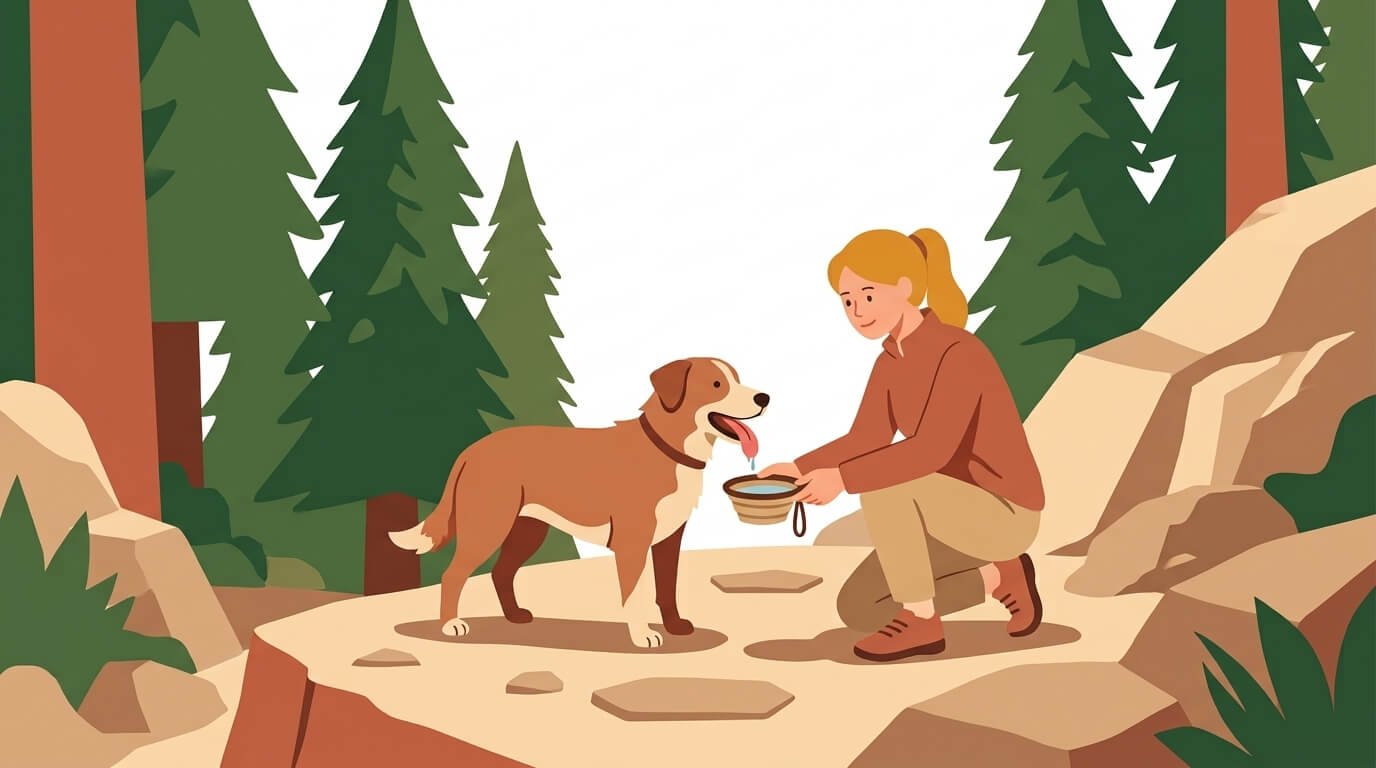
So why do dogs overheat so much faster than humans?
Simple: they barely sweat.
You and I cool off by sweating all over our bodies. Dogs? They have sweat glands only in their paw pads. Their main cooling mechanism is panting—they breathe rapidly to evaporate moisture from their tongue and airway.
As the Humane Society explains, panting works well in dry, breezy conditions. But when humidity is high, that moisture doesn’t evaporate. The cooling system breaks down. And heat builds up inside the dog’s body fast.
High humidity + high temperature is a dangerous combination for any dog—even if you’re only outside for a few minutes.
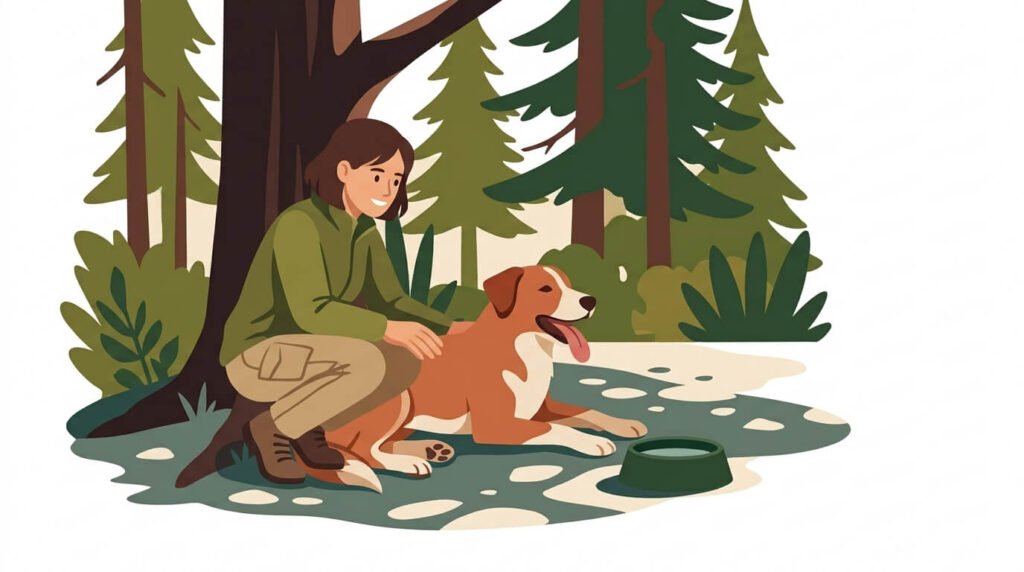
Quick Answer: Hiking is far more physically demanding than a neighborhood walk. Uneven terrain, heat, elevation, and wildlife all raise the risk—and dogs can’t tell you when they’ve hit their limit. That’s why preparation and early warning signs matter more on the trail than anywhere else.
Part 2
Pre-Hike Preparation: Is Your Dog Ready ?
My own tough lessons—and plenty of conversations with my vet—have taught me that certain dogs simply can't handle intense, rough terrain. This isn't about being "tough." It's about anatomy.
The "High-Risk" List for Hikers
Flat-faced breeds struggle with heat—but they’re not the only ones who struggle on the trail. Here’s who’s most at risk when hiking with dogs (the two often overlap):
Dog Type | Why It's Happening | Special Notes |
|---|---|---|
Brachycephalic (Frenchies, Pugs) | Extremely High | Their short airways make mountain ascents incredibly hard; they overheat fast. |
Overweight Dogs | Extremely High | Extra fat is insulation; more strain on joints, heart, and lungs on uneven terrain |
Senior Dogs (7+ years) | Very High | Arthritis and weaker cardiovascular systems make rocks and steep inclines brutal. |
Puppies (under 1 year) | Very High | Their growth plates haven't closed; too much hiking causes permanent joint damage. |
Double-Coated Dogs (Huskies, GSDs) | High | While they are tough, their thick coats trap heat rapidly under the direct sun. |
Sporting/Herding Dogs (Collies) | Medium | They have the stamina, but their high drive means they will run themselves into heatstroke rather than stop. |
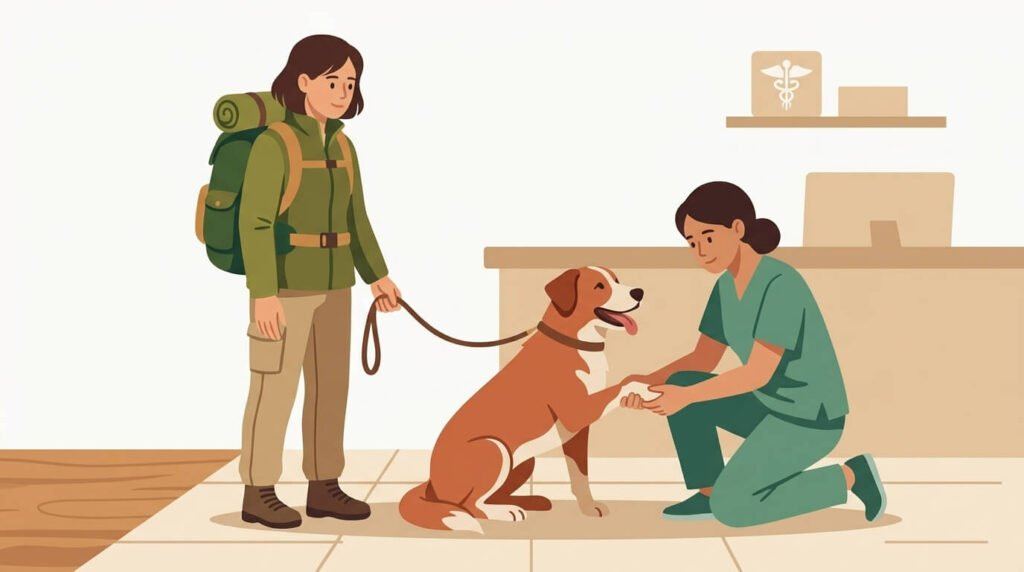
The bottom line: If your dog falls into any of the high-risk categories above, start with short, flat trails and talk to your vet before attempting anything strenuous.
Route Selection: Know Before You Go Hiking With Your Dog
Before I ever leash up Max, I do my homework.
- Check the trail’s elevation gain. A 1,000-foot climb looks very different to a dog than it does on a map.
- Crucial: Look for natural water sources—but don’t rely on them. Streams can carry Giardia, a parasite that causes severe diarrhea in dogs, so I pack ALL our water.
- Check the leash laws. Many great trails require a 6-foot leash. Following the rules keeps your dog safe and keeps trails open for everyone.
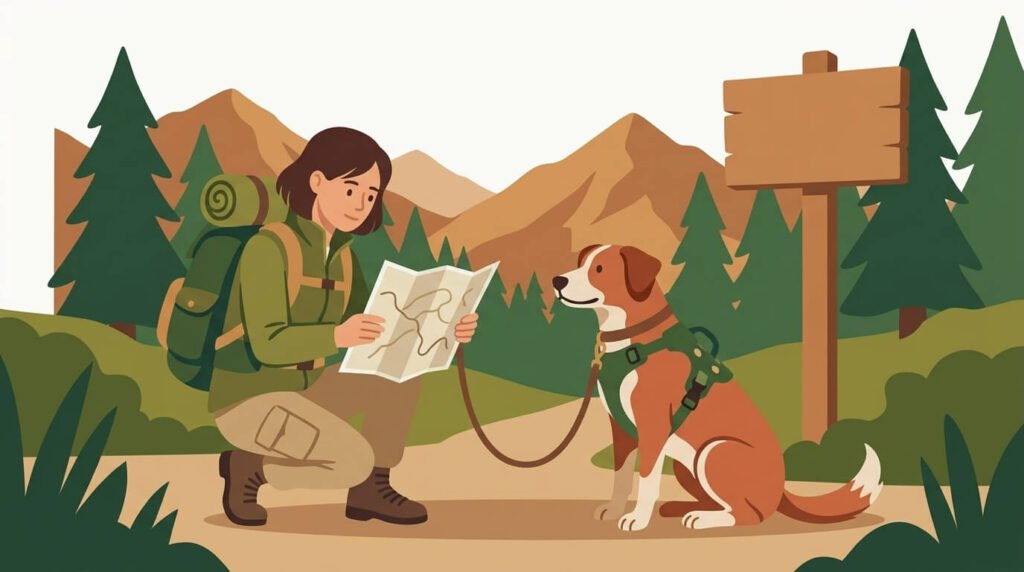
Quick Answer: Not every dog is built for the trail. Flat-faced breeds, overweight dogs, seniors, puppies, and double-coated breeds face the highest risk. Before you hike, check your dog’s fitness, your route’s elevation gain, water sources, and local leash laws.
Part 3
The Essential Dog Hiking Gear Checklist
You wouldn't hike without water or a map, right? Your dog needs the same treatment. Here’s what’s always in my hiking backpack.
Hydration Systems (Non-negotiable!)
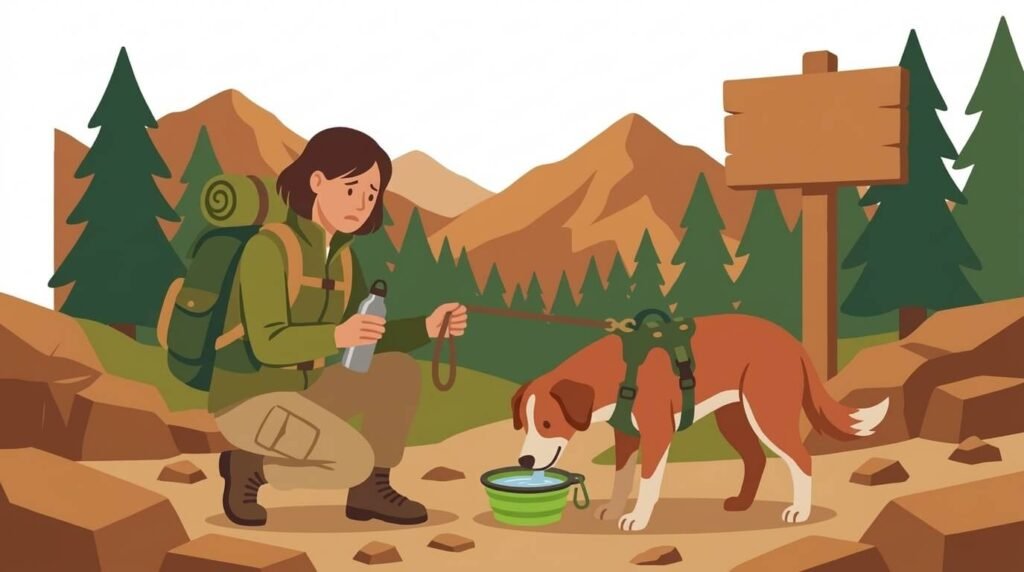
I carry more water for Max than for myself. A collapsible bowl is a must.
Pro tip: Never let them drink from streams or puddles. Just like the summer guide warned about parasites in water, backcountry water is teeming with Giardia.
The Right Harness and Leash Setup
Skip the collar. If Max gets spooked by a rattlesnake and lurches, a collar can injure his neck.
- Use a padded harness. It distributes pulling pressure across the chest.
- Use a hands-free leash. I use one that wraps around my waist. It keeps my hands free to grab tree branches for balance on steep descents—and keeps Max glued to my side.
A good harness and leash setup is one of the simplest ways to prevent injury on the trail.
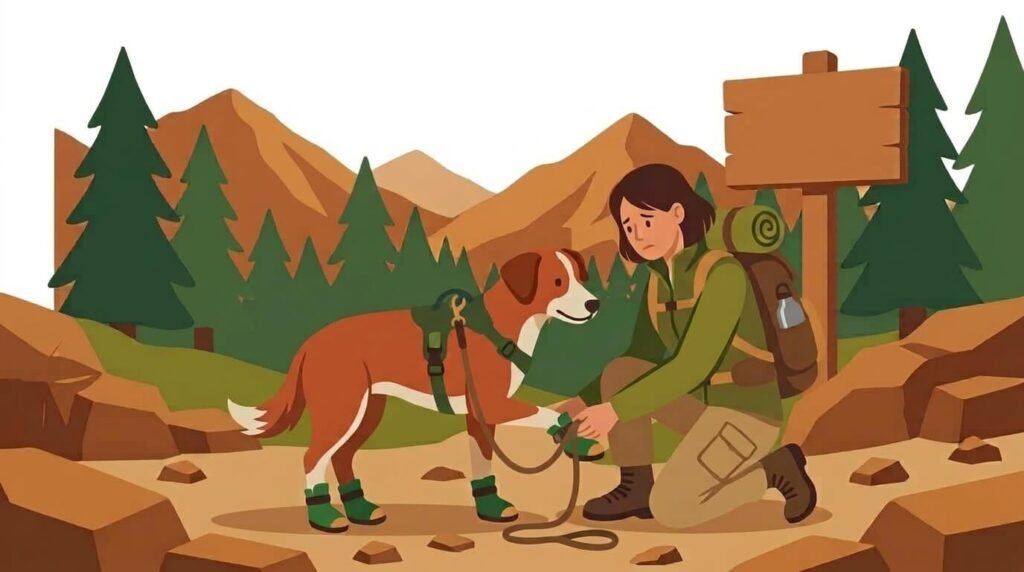
Paw Protection (Booties & Paw Balm)
I saw a dog cut his paw pad badly on a sharp rock once, and he had to be carried out 4 miles.
Booties:
Get your dog used to them before the hike. Max walks like a zombie for the first 5 minutes, then forgets about them.
Paw balm:
Great for adding a protective layer if they refuse booties.
Either option works—just don’t skip paw protection on rocky or hot terrain.
First Aid Kit: What to Pack for Your Dog
A good first-aid kit can be the difference between a minor trail injury and a vet visit. Here’s my hiking kit checklist:
-
Gauze pads and medical tape — for wrapping cuts and paw injuries
-
Tick remover tool and tweezers — for removing ticks and splinters
-
Antihistamine (Benadryl) — always ask your vet for the correct weight-based dosage first
-
Styptic powder — stops bleeding from broken nails
-
Saline wound wash — for flushing dirt and debris out of cuts
Print this list and keep it in your pack—you’ll never regret being prepared.
Visibility & Identification
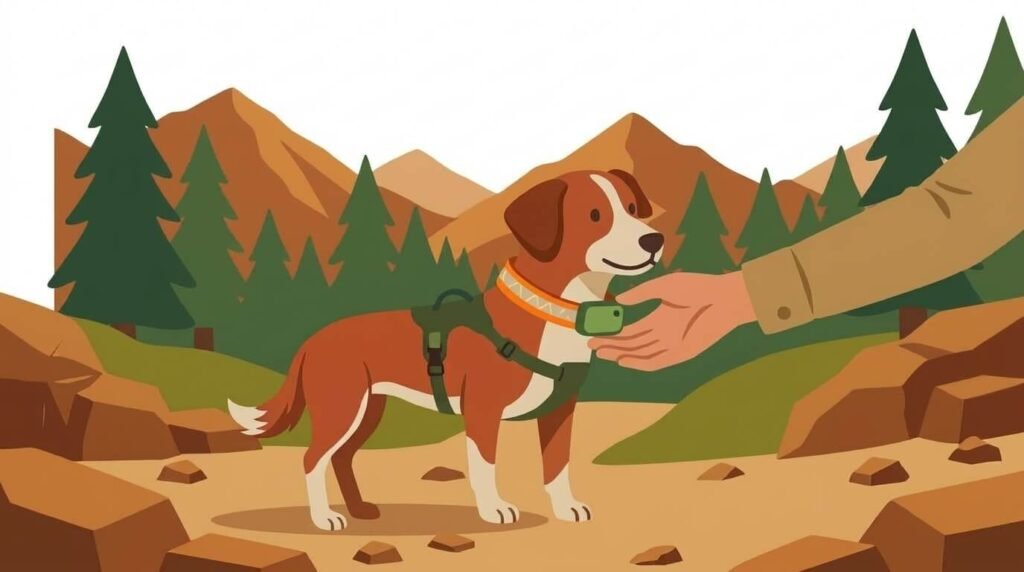
The wild is noisy and full of scents—if Max bolts, I want to find him fast. When hiking with dogs, visibility and ID are non-negotiable. I always use:
-
A bright, reflective collar.
-
A GPS tracker on his collar. This is the #1 investment for trail safety for dogs. If they get lost, you find them by phone—not by wandering blindly.
Even a 10-second head start can turn into a 10-minute search. These two items make sure it never turns into hours.
Quick Answer: At minimum, bring more water than you think you need, a collapsible bowl, a padded harness, a hands-free leash, paw protection, a pet first-aid kit, and a GPS tracker. Skip retractable leashes and anything your dog hasn’t tested before the hike.
Part 4
Trail Safety for Dogs: Navigating Environmental Hazards
This is the part where you have to stay sharp. Dogs will push past their limits simply because they're having fun—so on the trail, you're the one who has to call it. Here are the three hazards I see most often when hiking with dogs.
Heat, Humidity, and Terrain
Remember the 7-second pavement test from my summer guide? On a trail, terrain is worse.
-
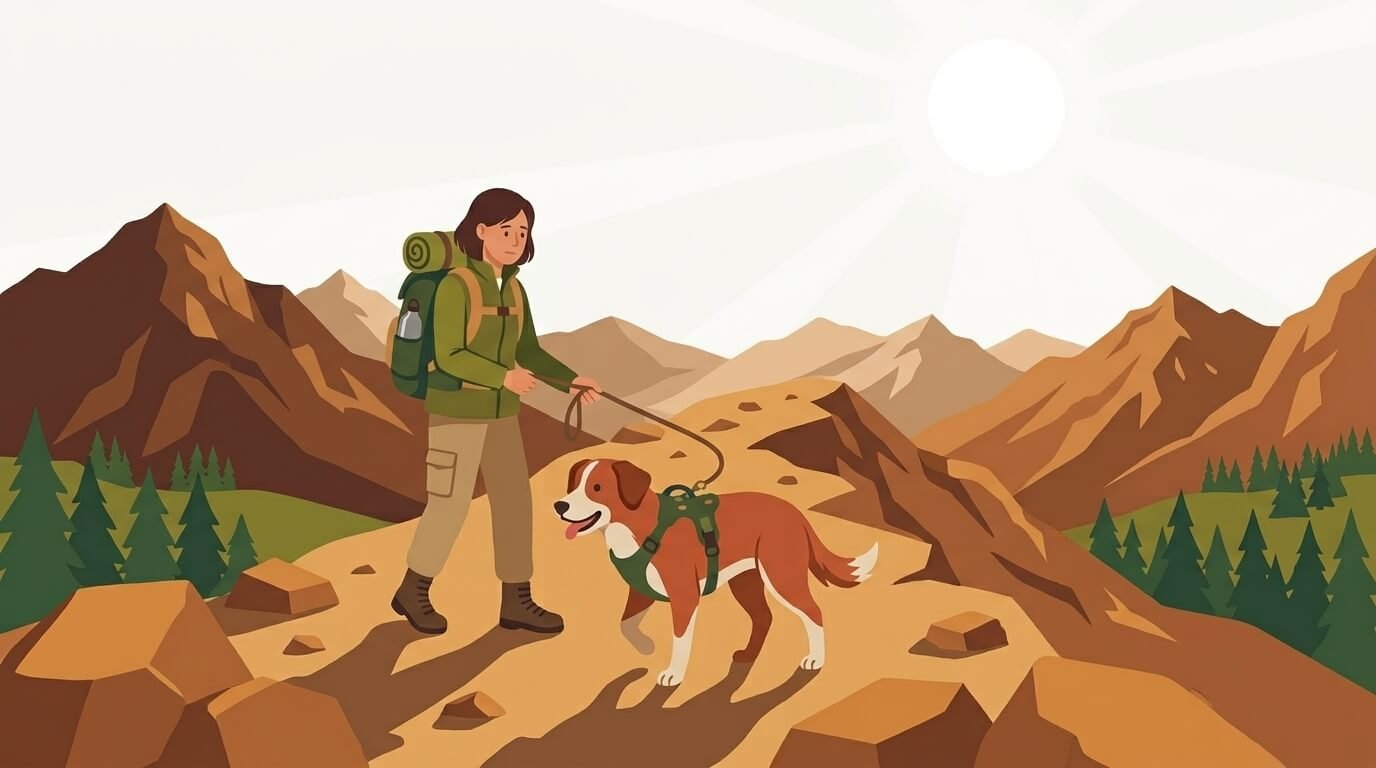
Sun exposure: A rocky ledge has zero shade. On days above 75°F with high humidity, take the trail in the early morning or late evening. If you are above the tree line, you are baking your dog under direct UV rays.
-
Uneven and sharp rocks: This can cause severe joint strain for seniors and paw pad tears for everyone.
When in doubt, turn back. No summit is worth a heatstroke.
Encountering Wildlife (Snakes, Bears, and Aggressive Animals)
Imagine this: You’re in the middle of nowhere, and you hear a rattle.
-
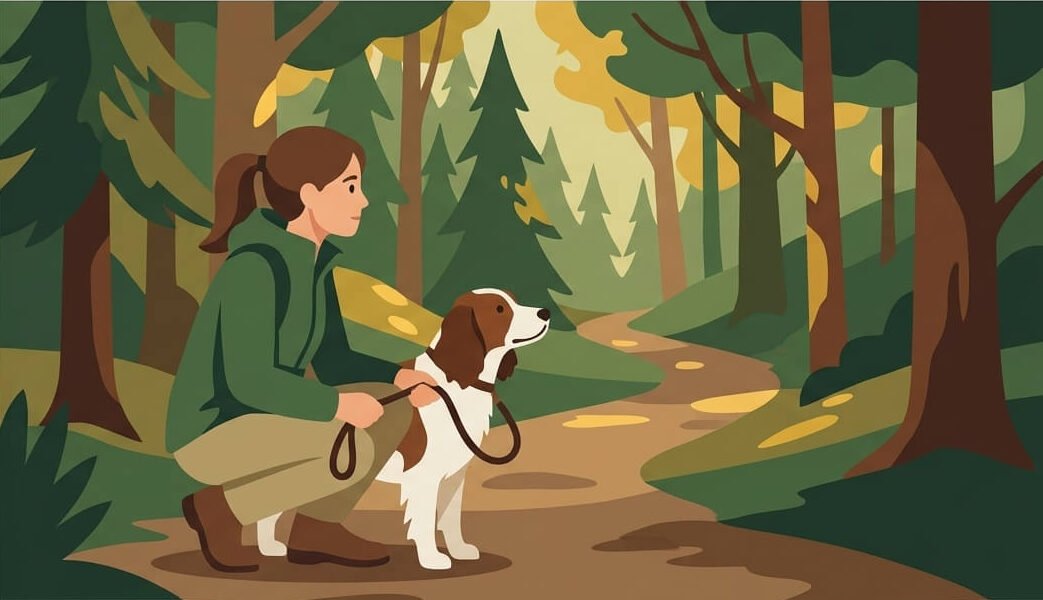
For snakes: Stop immediately. Back away slowly. Don’t let your dog lunge.
-
For bears or other large predators: Keep your dog on a tight leash. Stay calm, speak in a low, firm voice, and back away slowly. Never let your dog bark or chase—that can trigger a predator’s defensive response.
For other hikers and their dogs: Not every dog on the trail is friendly. Step off the trail, give them plenty of space, and ask before letting your dog approach.
Toxic Plants and Unfamiliar Terrain
Dogs love to chew on things—and the trail is full of things they shouldn’t.
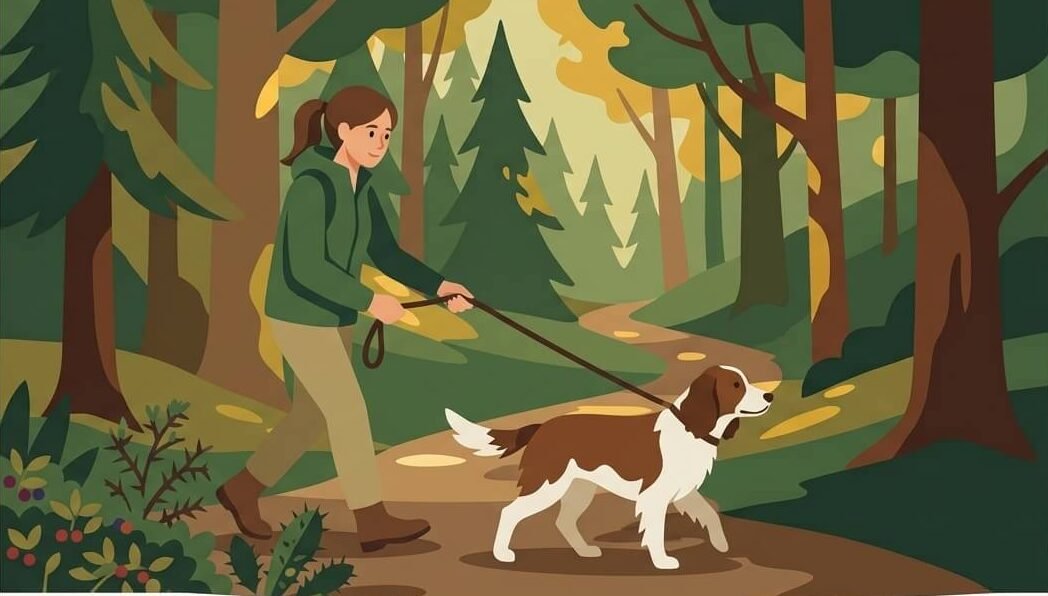
Train a strong “Leave it” command from the start. Countless mushrooms, berries, and plants (like poison oak) can make your dog seriously ill.
Watch their footing on loose scree. A twisted ankle in the backcountry is hard to manage—so if your dog starts limping, stop, check the paw, and turn back if needed.
When in doubt, keep your dog on the trail and out of the underbrush.
Quick Answer: The three biggest environmental hazards when hiking with dogs are heat and humidity, wildlife encounters, and toxic plants or unstable terrain. Most problems are preventable with early starts, a tight leash around wildlife, a strong “Leave it” command, and knowing when to turn back.
Part 5
Trail Etiquette: Being a Responsible Dog Owner
Look, I love dogs. But not everyone on the trail is a dog fan—and one rude encounter can get dogs banned from a trail for everyone. So when hiking with dogs, a little etiquette goes a long way. Here are the three rules I never break.
Leash Laws and Yield Rules
Always yield to horses, bikers, and uphill hikers. When I see a horse coming, I take Max off the trail, sit him down, and put him on a short, tight leash. Horses are prey animals—they spook easily, and a spooked horse can injure its rider. Do this, and you’ll earn the appreciation of every equestrian.
And yes—check the leash laws before you go. Many trails require a 6-foot leash, and rangers do enforce it.
Leave No Trace: Waste Management
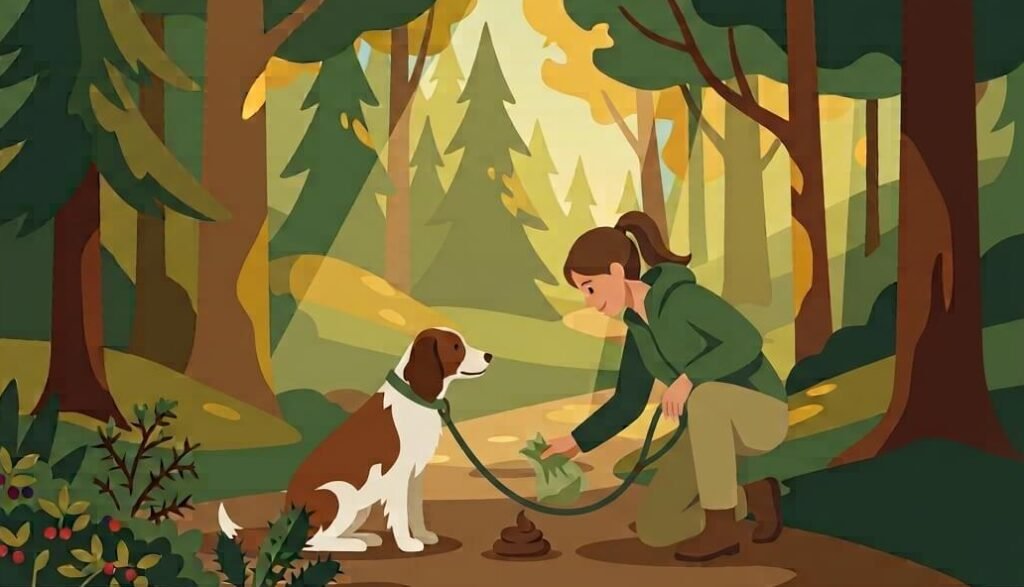
I’ll say it straight: Pick up your dog’s poop.
Dog waste contaminates water sources, spreads parasites, and adds excess nutrients that harm native plants. Even “biodegradable” bags take months or years to break down—so pack it out, every time. It’s gross, I know. But it’s the rule, and it’s what keeps trails open to dogs.
Respecting Other Trail Users and Wildlife
Keep barking to a minimum—some trail users are scared of dogs, and some are birdwatchers enjoying the quiet.
Keep your dog out of the bushes and away from nests, dens, and burrows. Wildlife sees your dog as a predator, and a single chase can separate a mother from her young.
We’re guests in their home. Act like it.
Quick Answer: Trail etiquette for hiking with dogs comes down to three rules: yield to horses, bikers, and uphill hikers; always pick up and pack out your dog’s waste; and keep your dog quiet and out of wildlife areas. Follow them, and you help keep trails open to dogs for everyone.
Part 6
High-Risk Dogs on the Trail: Early Warning Signs
Heat exhaustion can come on fast—faster than most owners expect. When hiking with dogs, these are the early and severe signs you need to know. If you see them, the hike is over.
Signs Your Dog Is Overheating or Exhausted:
Early Signs (Stop Now!) | Severe Signs (Emergency!) |
|---|---|
Heavy panting that won't stop | Loss of coordination / stumbling |
Thick, sticky saliva | Collapse |
Bright red or purple gums | Seizure |
Sitting down and refusing to move | Vomiting or diarrhea |
Glassy eyes | Unresponsiveness |
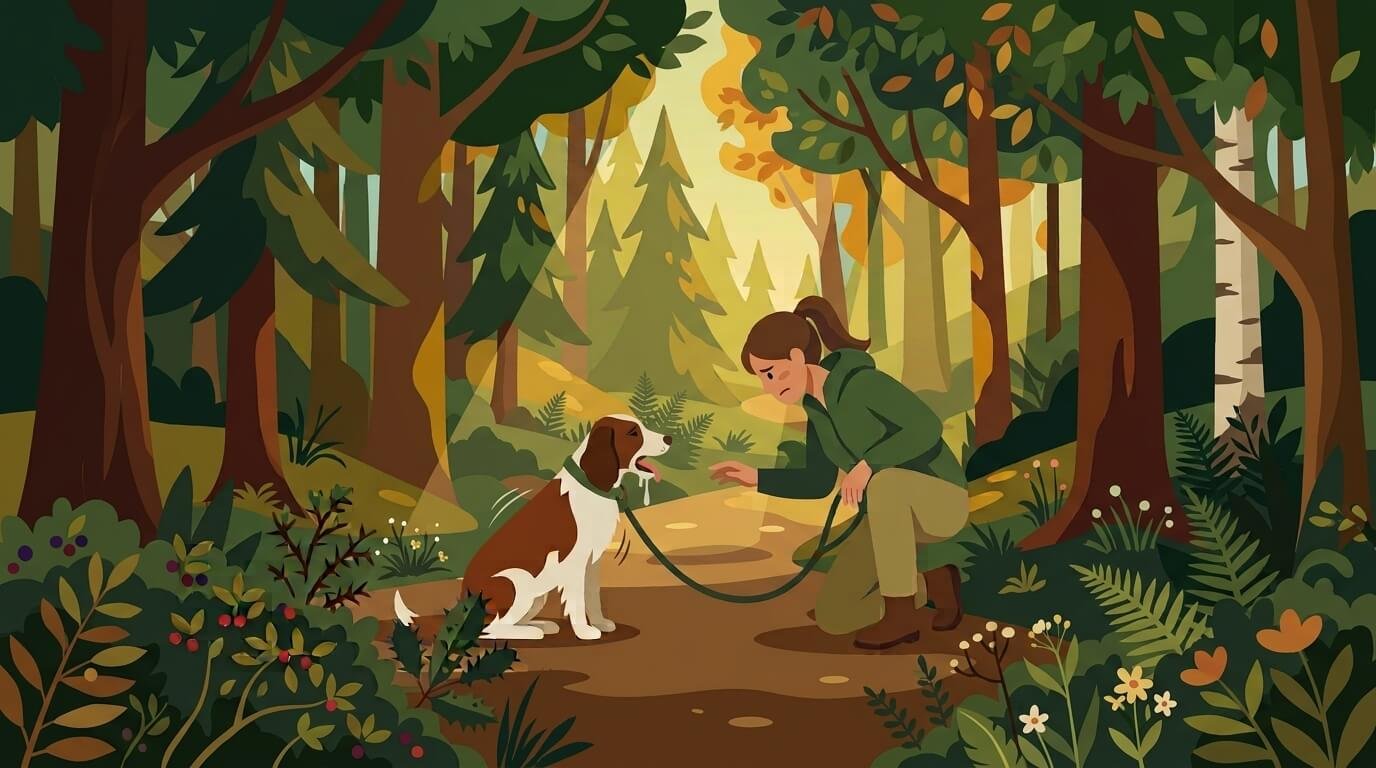
If you see any early sign, stop and cool your dog down immediately. If you see any severe sign, treat it as an emergency and get to a vet as fast as possible.
What to Do If You See These Signs:
-
Stop all activity immediately.
-
Move to shade. If they are weak, carry them.
-
Offer small amounts of cool (not cold) water if they are alert.
-
Cool the paws, belly, and armpits with cool water.
-
Call your vet immediately.
What NOT to Do:
-
No ice water or ice packs (causes shock).
-
No wet towels wrapped around the body (traps heat, acts like an oven).
-
Don’t “wait and see”—for a dog that collapsed, minutes matter.
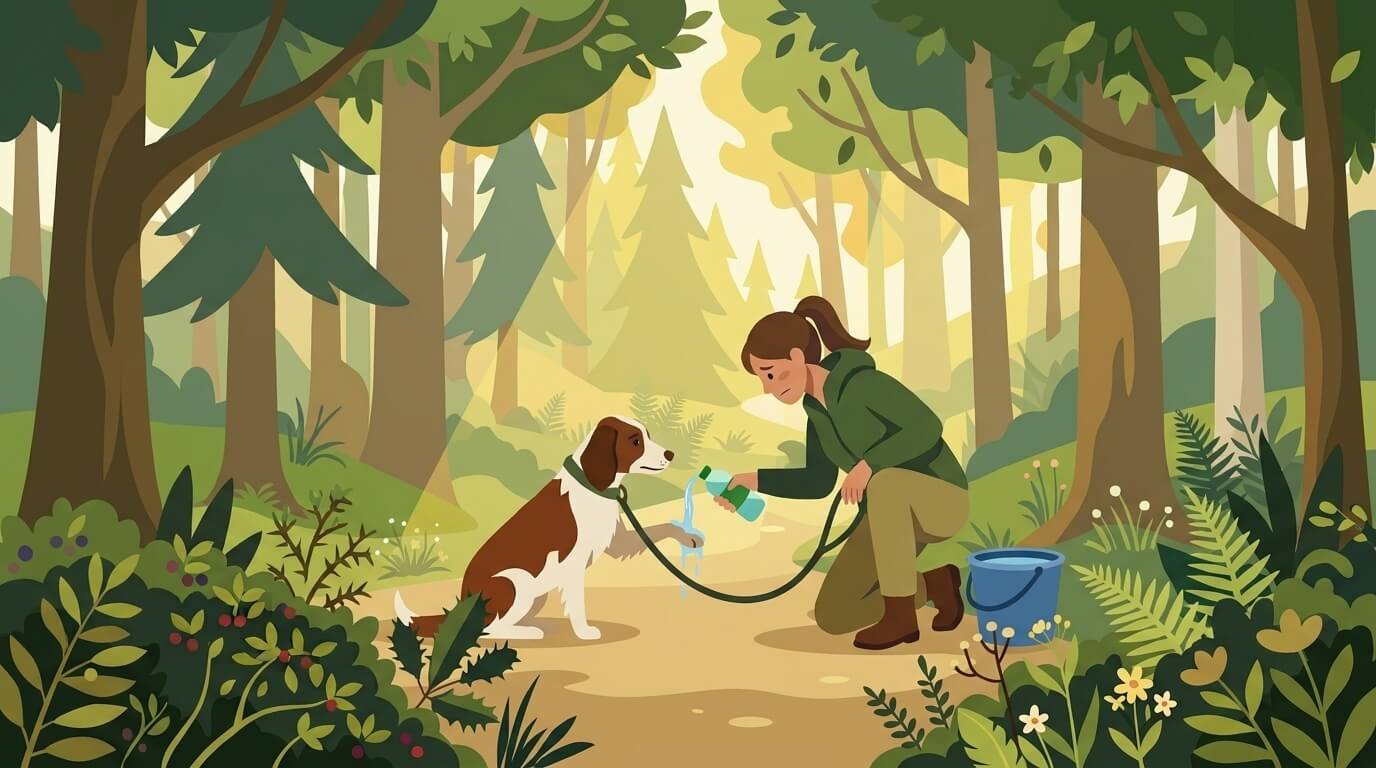
Quick Answer: The early warning signs of overheating in dogs include heavy panting, thick saliva, brick red gums, sitting down and refusing to move, and glassy eyes. If you see any of them, stop, move to shade, offer cool water, cool the paws and groin, and call your vet. Severe signs like collapse, seizure, or unresponsiveness are emergencies—go straight to a vet.
Part 7
Hiking with Your Dog: Daily Trail Readiness Checklist
Use this checklist every time you go out to hit the trail:
The Night Before
□ Check the weather forecast (especially humidity and peak sun).
□ Check the trail’s difficulty and elevation.
□ Vet your dog’s physical condition (are they limping? feeling lethargic?).
The Morning Of
□ Start early (before 8 AM is golden in summer).
□ Fill the water reservoir (plus extra for your dog).
□ Do a paw check. Are the pads rough? Apply paw balm or booties.
□ Pack the First Aid Kit (double-check the tick remover!).
□ Attach the GPS tracker and harness.
When to Skip the Hike Entirely
□ Heat advisory is in effect, or humidity is high and temps are over 80°F.
□ The trail is “high risk” (exposed rock, no shade) and your dog is a flat-faced breed.
□ Your dog seems off (lethargic, loss of appetite).
□ You are sick! If you are dehydrated or exhausted, you can’t safely help your dog.
Lorem ipsum dolor sit amet, consectetur adipiscing elit. Ut elit tellus, luctus nec ullamcorper mattis, pulvinar dapibus leo.
FAQ: Hiking with Dog Safety
Yes. Breeds with short airways (Pugs, Frenchies, Bulldogs) struggle badly with elevation and heat. Senior dogs, overweight dogs, and puppies are also high risk due to physical constraints.
No, absolutely not. Streams can contain deadly parasites like Giardia and Leptospira, or blue-green algae. Always bring sufficient fresh water for your dog.
If you are just starting out, keep it to 1 to 2 miles. A very fit, healthy adult dog can do 5 to 10 miles a day, but flat-faced or senior dogs should usually stay under 2-3 miles.
Yes! If they collapse, they cannot walk out. Carry them, or if they are too large, use a thick branch and your jacket to create a makeshift stretcher. This is why it's vital to stay within their physical limits.
You are reading the core guide! For specific articles about extreme heat prevention, check out my detailed guide on [High-Risk Dogs and Heat Summer Safety]. For emergencies, make sure you have the route to the nearest emergency animal hospital saved in your phone.
Sources & Further Reading
This guide was compiled from my personal trail experience with reference to these trusted sources:
American Veterinary Medical Association (AVMA) – Heatstroke in Dogs / Hot Weather Safety
American Kennel Club (AKC) – Dog Hiking Tips / Brachycephalic Breeds
Leave No Trace Center for Outdoor Ethics – Dog Waste & Trail Guidelines
Centers for Disease Control and Prevention (CDC) – Giardia & Water Safety for Pets
ASPCA – Poison Control (Toxic Plants & Mushrooms)
Disclaimer: I’m a dog owner, not a veterinarian or a professional search-and-rescue guide. This article is for informational purposes only and does not replace professional veterinary or safety advice. Always assess your own physical limits and your dog’s before heading out.
Final Thoughts
If you own a dog, you know they’re your best friend. When you hit the trail together, you have the chance to create incredible memories.
But the call of the wild comes with responsibility. It takes awareness, a little bit of planning, and a whole lot of common sense to say “no” to a hike when the conditions aren’t right.
Your dog might not be able to summit a 14er with you in July. But they can enjoy plenty of beautiful, unforgettable adventures—in the early morning fog, on a cool autumn day, or just tackling a simple, shaded forest loop.
They rely on you to be their voice. Listen to their panting, watch their paws, and remember: The best hike is the one where everyone makes it back safely.
Happy trails! 

What's ahead in this series:
Dangerous Wildlife & Plants on Trails: What Every Dog Owner Must Know
Snakes, bears, toxic mushrooms, and poison oak — learn how to protect your dog from dangerous wildlife and plants on the trail. Practical, vet-informed tips.
Dog Hiking First Aid: Injuries, Paw Care & Emergency Carries
Paw pad injuries, sprains, cuts, and emergency carries — here’s how to handle dog hiking first aid on the trail. Practical, vet-informed steps for hiking with dog safety.
Trail Hazards for Dogs: Risky Terrain, Steep Slopes & How to Prevent Falls
Steep slopes, loose scree, and uneven terrain are the most common trail hazards for dogs. Here’s how to prevent falls, spot risky ground, and keep your dog safe.
Dog Hiking Endurance: Preventing Trail Fatigue and Getting Lost
Learn how to prevent dog hiking endurance issues! Spot the signs of fatigue, build stamina, and use vital tips to stop your dog from getting lost.
Disclaimer: This content is for informational purposes only and does not constitute veterinary or professional safety advice. Always consult with a qualified veterinarian or professional dog trainer regarding your dog’s specific needs and safety considerations.