
Sidewalk Hazards for Dogs:
What Every Owner Should Know
Common sidewalk dangers — and how to protect your dog's paws.
Sidewalk hazards for dogs include hot pavement, broken glass, chemicals, and uneven surfaces — all of which can injure your dog’s paws if you’re not paying attention.
You’re out for a normal walk. Your dog is happily sniffing along the sidewalk when, suddenly, they start limping. You look down and realize there’s a piece of glass—or maybe the pavement is simply much hotter than it felt through your shoes.
Sidewalks may look harmless, but they can hide several sidewalk hazards for dogs. Hot pavement, broken glass, chemicals, sharp debris, uneven surfaces, and construction areas can all cause problems during an otherwise ordinary walk. Your dog’s paw pads are tough, but they aren’t indestructible. Knowing what to look for—and when to turn around—can help prevent painful injuries before they happen.
This guide covers the most common sidewalk dangers and what you can do to keep your dog’s paws safe.
Looking for broader walking advice? See our Complete Dog Walking Safety Guide for tips on leash control, road safety, and other everyday walking risks. And if you’re choosing walking equipment, check out our guide to The Best Leashes for Road Walks.
Part 1
Hot Pavement — The "Seven-Second Test"
Hot pavement is one of the easiest sidewalk hazards for dogs to overlook. The air might feel comfortable, but asphalt and concrete can become much hotter than the surrounding air. Your dog is also walking directly on that surface without the protection of shoes.
The American Kennel Club notes that when the air temperature reaches about 86°F, asphalt can reach approximately 135°F(source). AKC veterinarian Dr. Jerry Klein recommends testing the pavement with your hand for about 10 seconds — if it’s too hot for your hand, it’s too hot for your dog’s paws.
You may also hear this called the “seven-second test.” Some sources say 7 seconds, others say 10 — the exact number matters less than the habit: always check the surface before your dog does.
A Practical Pavement Temperature Guide
Surface temperatures vary significantly depending on sunlight, pavement material, shade, humidity, and how long the surface has been heating. Use the table below as a general risk guide, not an exact medical threshold.
Air Temperature | Pavement Temperature | Risk Level | What You Should Do |
|---|---|---|---|
Below 70°F (21°C) | Usually comfortable | Low | Normal walking is generally reasonable |
70–90°F (21–32°C) | Warm | Low–Moderate | Check the surface if it's sunny |
90–110°F (32–43°C) | Hot | Moderate–High | Choose shade or grass; shorten the walk |
110–130°F (43–54°C) | Very hot | High | Avoid bare pavement; use a cooler route |
130°F+ (54°C+) | Extremely hot | Severe | Don't walk your dog on the surface |
The important point is that air temperature alone doesn’t tell you whether pavement is safe. A sunny black asphalt road can become dangerously hot even when the weather doesn’t feel extreme.
How to Check the Pavement
Before heading out:
Place the back of your hand or your bare palm comfortably against the pavement.
Keep it there for around 10 seconds.
If you need to pull away because the surface is uncomfortably hot, choose another route.
Look for grass, shade, or cooler surfaces instead.
Don’t make your dog “test” the pavement for you.
Signs Your Dog's Paws May Be Getting Burned
Pay attention if your dog:
-
Suddenly slows down
-
Starts limping
-
Licks their paws repeatedly
-
Refuses to keep walking
-
Tries to walk on grass
-
Has red, swollen, or blistered pads
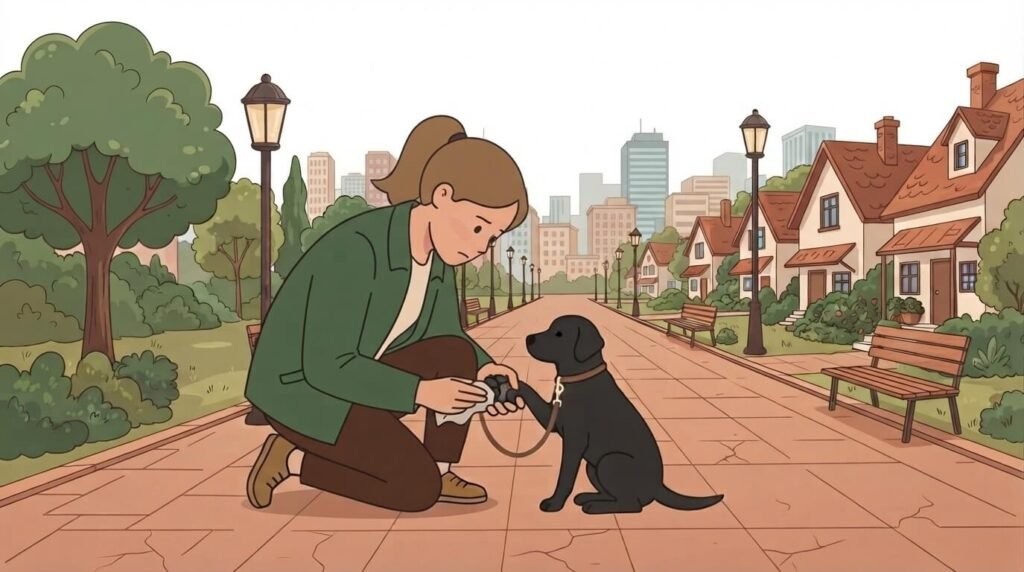
Burned paw pads can require veterinary attention, especially if the skin is blistered, torn, or severely painful.
Choose Cooler Walking Times
During hot weather, early morning and evening walks are usually better than walking during the hottest part of the day. If the pavement is still hot after sunset, don’t assume it’s automatically safe. Check the surface and choose grass or another cooler route when necessary.
Quick Answer: To check if pavement is safe for your dog, press the back of your hand against it for about 10 seconds. If it’s too hot for you, it’s too hot for your dog’s paws. Signs of burned paws include limping, licking paws, refusing to walk, and red or blistered pads.
Bottom line: Sidewalk hazards for dogs don’t always announce themselves. Hot pavement is silent — but it can cause serious burns in seconds. Check the surface before every walk.
Part 2
Broken Glass, Sharp Objects, and Debris
Glass is one of those sidewalk hazards for dogs you may not notice until your dog steps directly on it. Sidewalks can contain small pieces of broken bottles, metal fragments, nails, screws, sharp plastic, rocks, and other debris. Your dog may also be more interested in a smell or food wrapper than what's directly underneath their paws.
Keep an Eye on the Ground
You don’t have to stare at the sidewalk for the entire walk, but make a habit of scanning your route. Pay extra attention around:
Bars and restaurants
Construction sites
Trash cans
Parking lots
Alleys
Broken curbs
Areas with damaged pavement
If you see a suspicious area ahead, simply move around it.
Watch Your Dog's Behavior
Sometimes your dog will tell you there’s a problem before you see it. If they suddenly stop, lift one paw, limp, or start licking a foot, stop walking and check. Don’t assume they’ll “walk it off.” A small piece of glass or another foreign object can become a more serious problem if it stays embedded in the paw.
VCA notes that limping or persistent licking can be signs of a torn, punctured, or burned paw pad (source).
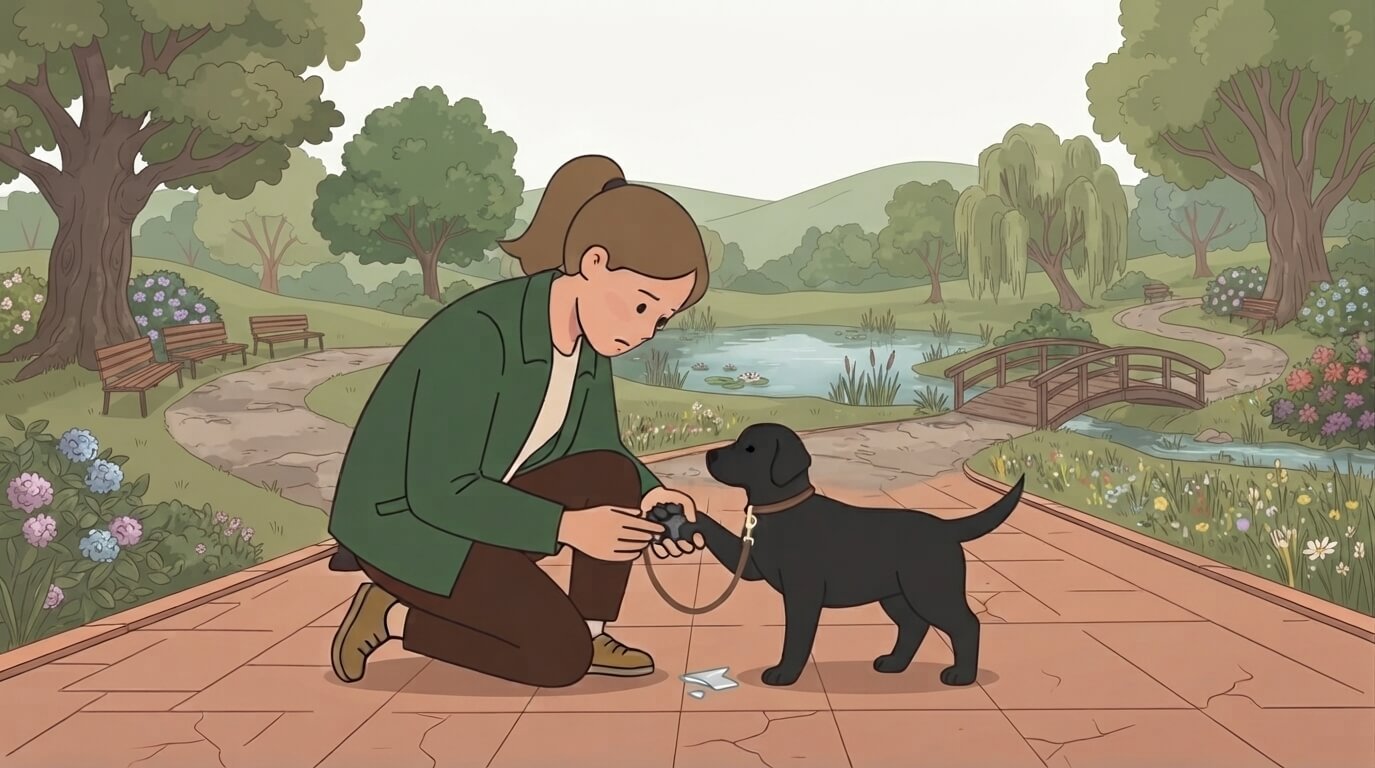
Quick Answer: Sidewalk hazards for dogs include broken glass, metal fragments, nails, sharp plastic, and other debris. Pay extra attention near bars, construction sites, trash cans, parking lots, and alleys. If your dog suddenly stops, limps, or licks a paw, stop and check — don’t assume they’ll walk it off.
Part 3
Hidden Chemical Hazards on Sidewalks
Not every sidewalk hazard is something you can see. Oil, gasoline, cleaning products, pesticides, de-icing chemicals, and other substances can end up on sidewalks and parking areas. Dogs may also lick their paws after a walk, which means something that gets onto their feet can potentially be swallowed later.
Be Careful Around Unknown Spills
If you see a liquid or powder on the sidewalk and don’t know what it is, avoid it. Don’t let your dog sniff, lick, or walk directly through it. This is especially important around:
Freshly treated lawns
Parking lots
Road construction
Snow or ice treatment
Garage entrances
Industrial areas
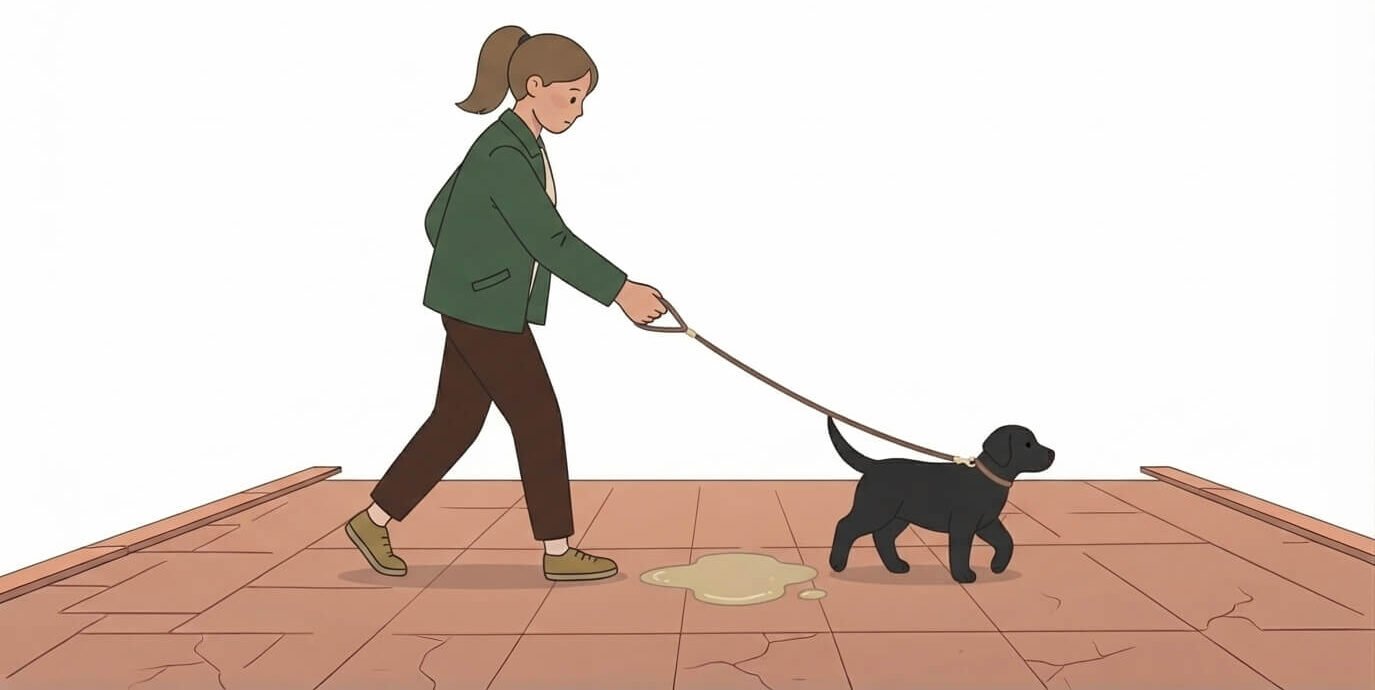
Winter Sidewalks Have Their Own Risks
In colder regions, salt and other de-icing products can irritate paw pads. They can also be a problem if your dog licks residue from their feet. After winter walks, wipe your dog’s paws with a clean, damp towel and check between the toes. VCA specifically recommends cleaning a dog’s feet after walking on snow or other treated surfaces and notes that salt can irritate sensitive paws (source).
What If Your Dog Walks Through Something Suspicious?
Move away from the area first.
Then, depending on what your dog contacted, gently clean the paws.
Contact your veterinarian or a pet poison service if you suspect exposure to a potentially toxic substance.
Don’t guess about an unknown chemical or try household cleaning products on your dog’s paws
Quick Answer: Sidewalk hazards for dogs aren’t always visible — oil, pesticides, de-icing salt, and cleaning products can all end up on sidewalks. Avoid unknown spills, don’t let your dog sniff or lick them, and wipe your dog’s paws after winter walks. If you suspect exposure to a toxic substance, move away, clean the paws gently, and contact your vet or a pet poison service.
Part 4
Uneven Surfaces, Construction, and Hidden Hazards
Sidewalk hazards for dogs don't have to be hot or covered in glass to cause trouble. Cracked concrete, broken curbs, potholes, loose gravel, tree roots, and construction zones can create trip or paw-injury hazards. They're particularly easy to miss when you're walking at night.
Watch for These Common Problems
Keep an eye out for:
Cracked or broken pavement
Raised sections of sidewalk
Loose gravel
Open utility covers
Construction barriers
Exposed nails or metal
Deep cracks
Broken curbs
Temporary ramps
Holes hidden by leaves or water
A dog that’s excited about a squirrel may not notice any of these.
Don't Let the Leash Pull Your Dog Into Trouble
Your walking equipment matters here, too. A shorter, controllable leash gives you more opportunity to redirect your dog around an obstacle. For more information about choosing the right setup, see our guide to The Best Leashes for Road Walks.
Nighttime Needs Extra Attention
Uneven pavement can be especially difficult to spot after dark. If you regularly walk at night, use a headlamp or flashlight and choose routes you’re already familiar with. Our Night Dog Walking Safety guide covers visibility, nighttime hazards, traffic, and route selection in more detail. And if you’re working on road-crossing skills with your dog, our guide on How to Train Your Dog to Wait at the Curb covers the training side of staying safe near roads.
Quick Answer: Sidewalk hazards for dogs include cracked pavement, broken curbs, loose gravel, open utility covers, exposed nails, and construction zones. Keep your dog on a short leash so you can redirect them around obstacles. At night, use a headlamp and stick to familiar routes.
Part 5
What to Do If Your Dog Gets Hurt
Even with careful planning, accidents can happen. If your dog suddenly starts limping or lifting a paw, stop the walk and take a look rather than continuing home and hoping it improves.
Emergency First Steps
If your dog steps on glass, a sharp object, hot pavement, or another dangerous surface:
Move your dog away from the hazard. Get them somewhere safe so they don’t step on it again.
Check the paw carefully. Look for cuts, burns, swelling, bleeding, or a visible foreign object.
Don’t force anything out if it’s deeply embedded. A veterinarian may need to remove it safely.
Contact your veterinarian if the injury is severe, bleeding continues, the pad is badly burned or torn, or your dog can’t walk normally.
For minor injuries, keep your dog from continuing to walk on the affected paw and follow veterinary guidance. VCA recommends prompt attention for injured paw pads because cuts, punctures, and burns can be painful and may require treatment.
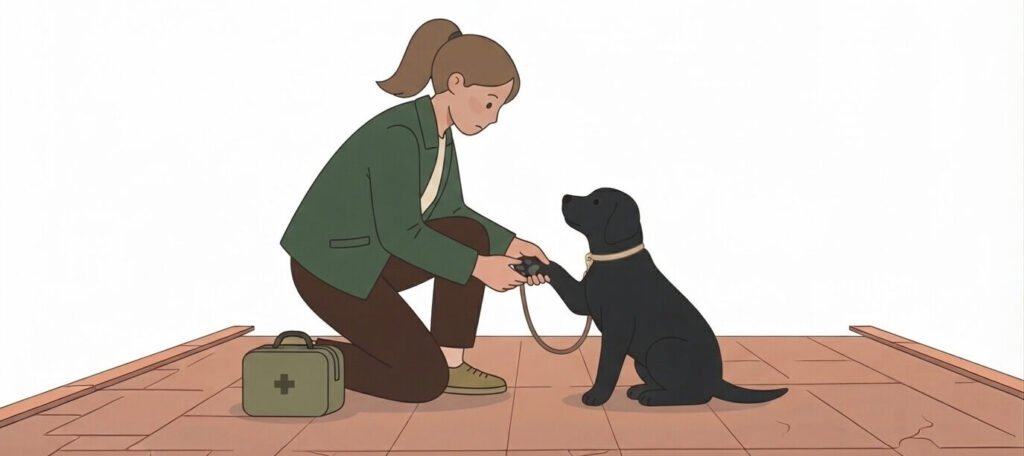
When Should You Call the Vet?
Don’t wait if you notice:
Significant bleeding
A deep cut
A large or deep foreign object
Severe swelling
Blistering or burned tissue
A wound that won’t stop bleeding
Persistent limping
Severe pain
Your dog won’t put weight on the paw
Signs of possible chemical exposure
If you’re unsure how serious an injury is, it’s better to ask your veterinarian.
Quick Answer: If your dog steps on something sharp or hot, move them away from the hazard, check the paw carefully, and don’t force out deeply embedded objects. Call your vet if you see significant bleeding, a deep cut, severe swelling, blistering, persistent limping, or signs of chemical exposure.
FAQ: Sidewalk Hazards for Dogs
Yes — very. Asphalt and concrete can reach 140°F (60°C) or higher on a hot day, which can burn your dog's paw pads in under a minute. If it's too hot for your bare hand, it's too hot for your dog's paws. Walk on grass or shaded areas instead.
Place the back of your hand on the pavement for 5 seconds. If you can't hold it there, it's too hot for your dog. You can also check the air temperature: above 85°F (29°C), be cautious. Above 90°F (32°C), avoid paved walks entirely.
Stay calm, check the paw for cuts, and flush the wound with clean water. If the cut is deep or bleeding heavily, wrap it with a clean cloth and get to a vet. For minor cuts, clean, apply pet-safe antibiotic ointment, and bandage. Check the paw daily until healed.
Yes — many de-icing salts are toxic if ingested and can burn or irritate paw pads. After winter walks, rinse your dog's paws with warm water and dry them thoroughly. Consider pet-safe de-icing products for your own home, and avoid walking on heavily salted sidewalks when possible.
Use paw balm or wax before walks to create a protective barrier. In extreme heat or cold, consider dog booties. Avoid walking during the hottest part of the day, and stick to grass, dirt, or shaded paths. After walks, check and clean your dog's paws. For more, see our Best Leash guide.
Ultimate Curb Training Checklist
□ Check the weather and temperature.
□ Consider whether the pavement has been sitting in direct sunlight.
□ Choose cooler walking hours during hot weather.
□ Bring water when conditions require it.
□ Check that your dog's leash and harness or collar are secure.
□ Choose a route with safe, well-maintained sidewalks.
□ Watch for broken glass and sharp debris.
□ Avoid unknown spills and chemicals.
□ Watch for cracks, potholes, and uneven surfaces.
□ Stay away from construction areas.
□ Check hot pavement before walking on it.
□ Use grass or shaded areas when pavement is too hot.
□ Keep your dog under control around hazards.
□ Pay attention if your dog suddenly slows down or starts limping.
□ Check your dog's paw pads.
□ Look between the toes for debris.
□ Check for cuts, redness, swelling, or burns.
□ Wipe paws after walking on treated winter sidewalks.
□ Contact your veterinarian if you notice a significant injury.
Final Word
Seeing your dog in pain is hard—especially when you know it could have been prevented.
But here’s the thing: paw pad burns happen to good dog owners. It doesn’t mean you’re careless. It means you didn’t know something. Now you do.
The next time you’re out on a summer walk, check the ground before your dog steps on it. And if you ever find yourself treating a burned paw, you’ll know exactly what to do—and when to call for help. That’s the whole point of dog paw pad burn treatment: being ready before you need it.
Your dog’s paws take them everywhere. With a little care, they’ll keep taking them there for years to come. That’s what heat safety for dogs really means.
More in This Series
This article is part of our Walking & Road Safety series. If you found this helpful, these guides go deeper into specific situations.
The Complete Dog Walking Safety Guide: Protect Your Pup on Every Walk
Everything you need to know before your next walk — gear, habits, and the most common mistakes to avoid. If you only read one thing, start here.
Night Dog Walking Safety: How to Stay Visible and Avoid Hazards After Dark
Keep your dog safe on nighttime walks. Learn about reflective gear, driver blind spots, wildlife risks, and essential safety tips for night dog walking safety.
Best Leash for Walking Dog: Fixed vs Retractable on Road Walks
Choosing the best leash for walking your dog — fixed-length vs retractable, leash length, harness vs collar, and safety tips for walking near traffic.
Dog Curb Training: How to Teach Your Dog to Wait and Cross Roads Safely
Learn dog curb training step by step. Teach your dog to wait at the curb, cross roads safely, and handle distractions with this complete training guide.
Disclaimer: This content is for informational purposes only and does not constitute veterinary or professional safety advice. Always consult with a qualified veterinarian or professional dog trainer regarding your dog’s specific needs and safety considerations.