
The Best Leash for Walking Dog:
What to Use and What to Avoid
Fixed-length vs. retractable — which is safer around traffic?
A good leash is one of the simplest ways to make road walks safer. But with so many options—flat leashes, retractable leashes, harnesses, and training tools—it’s hard to know what actually works best around traffic.
If you’re looking for the best leash for walking dog safely on roads and sidewalks, a 4- to 6-foot fixed-length option paired with a properly fitted collar or harness is your safest, most practical choice.
This guide breaks down what works, what to avoid, and how to choose the right setup for your dog.
*For more general walking advice, see our Complete Dog Walking Safety Guide
Part 1
Best Leash for Walking Dog: Fixed-Length vs. Retractable
One of the first decisions you’ll make is whether to use a traditional fixed-length leash or a retractable leash. Both have their uses, but they’re very different when it comes to walking near roads.
Fixed-Length Leashes
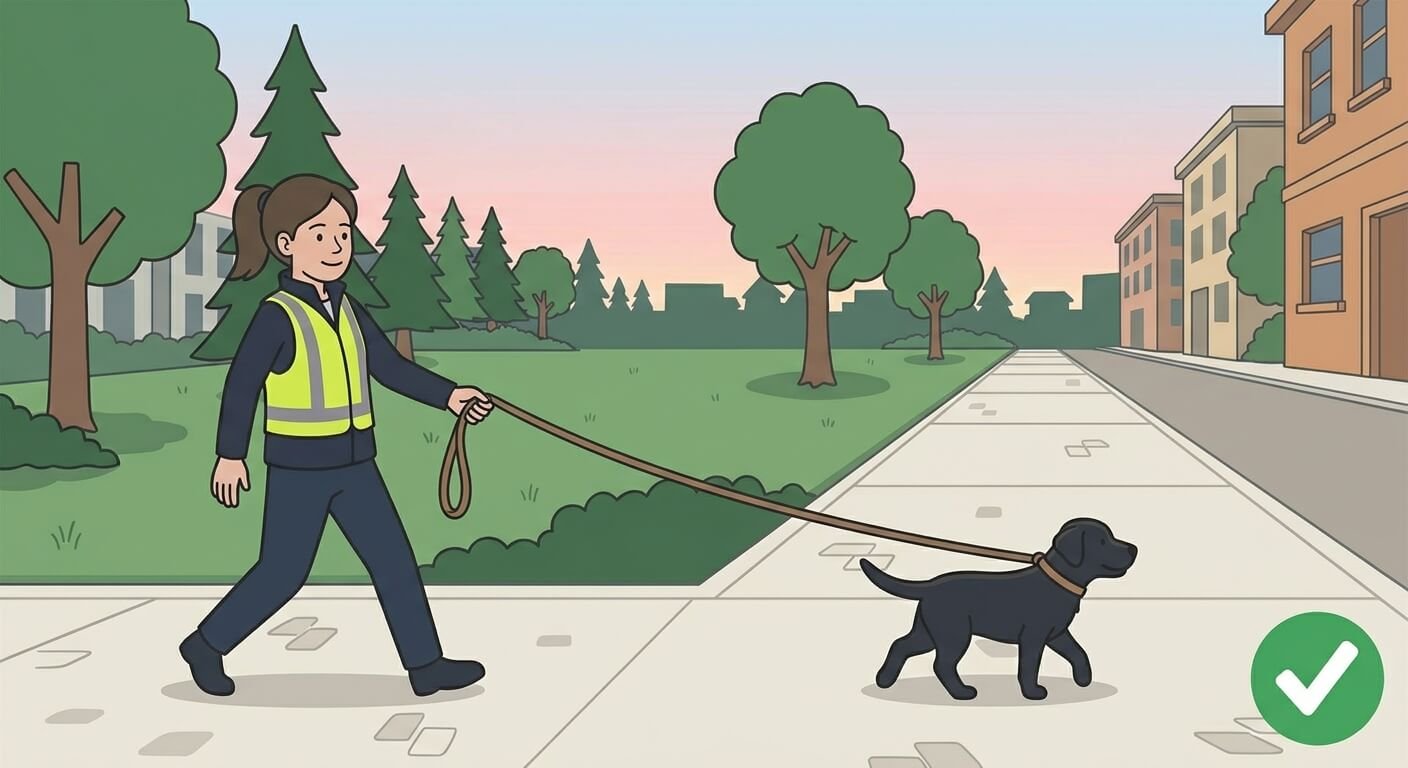
A fixed-length leash has a set length, commonly around 4 to 6 feet. This gives you predictable control over how far your dog can move away from you.
For road walks, that’s a major advantage. If your dog suddenly sees a squirrel, another dog, or something interesting across the street, you have less leash to manage and less distance to close.
Advantages of fixed-length leashes:
Better control around traffic and sudden situations
Easier to manage around other pedestrians and dogs
Predictable length — you always know how far your dog can go
Simple, durable, and no mechanism to maintain
For everyday neighborhood walks, a fixed-length leash is usually the simplest, safest choice.
Retractable Leashes
Retractable leashes use a spring-loaded mechanism that allows the leash to extend and retract as your dog moves. They can give dogs more freedom to sniff and explore, which some owners appreciate.
However, they require more attention and can be harder to manage in situations where you need immediate control.
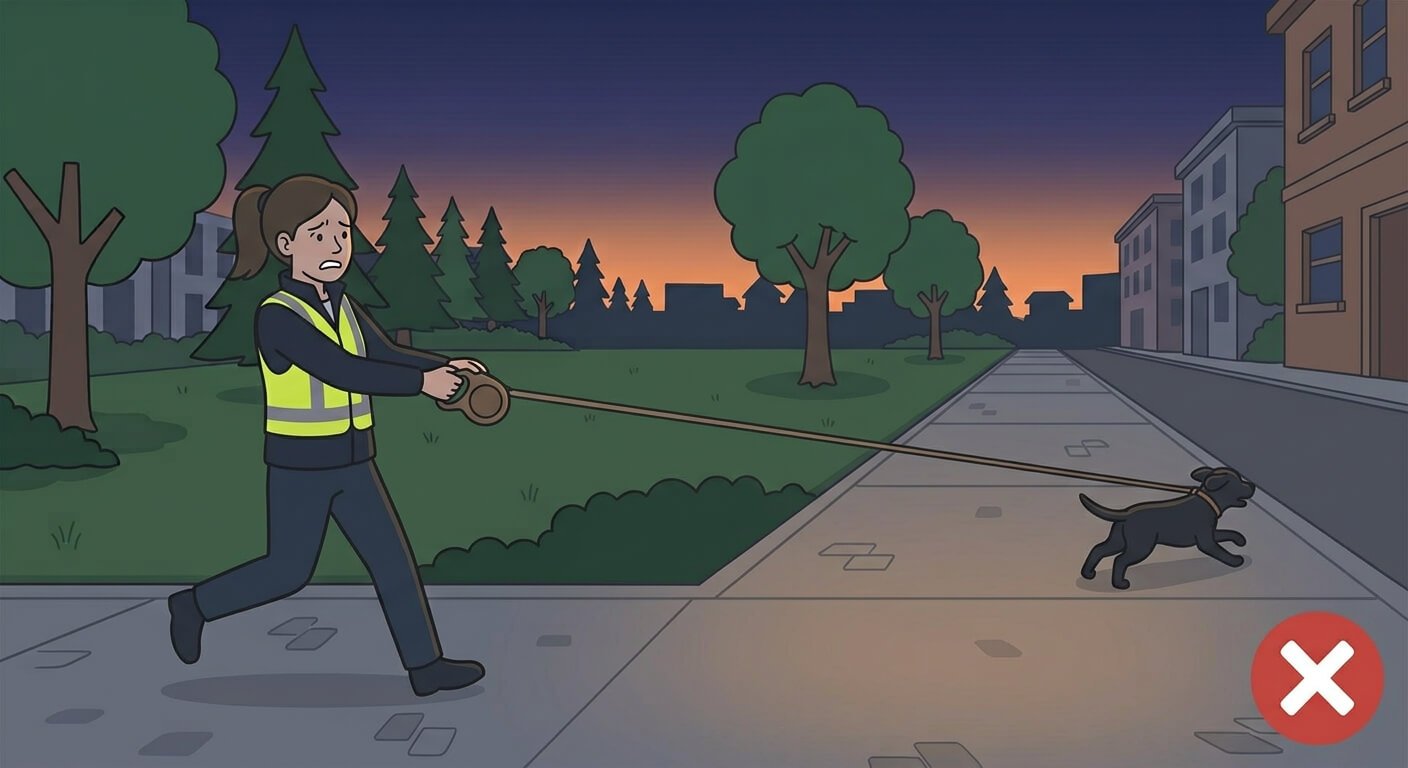
The most important thing to understand about a retractable leash is that more freedom isn’t always safer.
Why Can a Retractable Leash Be Dangerous?
Searches for “retractable leash danger” often come from owners who have experienced problems with these products.
According to the American Veterinary Medical Association (AVMA), many leash-related injuries treated in veterinary emergency rooms involve retractable leashes—particularly injuries caused by sudden lunges, leash burns, and dogs running into traffic before the owner could lock the mechanism (resource).
Potential concerns include:
Your dog can move farther away from you
The thin line can be difficult for other people to see
The leash can become tangled around people, dogs, or objects
A dog can build momentum before you can react
The locking mechanism may be difficult to operate quickly
A dropped handle can frighten a dog and cause them to run
The line can create a tripping or entanglement hazard
These risks become particularly important near roads. Imagine your dog is walking 15 or 20 feet ahead when a car turns into a driveway. You may have very little time to bring your dog back to your side.
With a 4- to 6-foot fixed leash, your dog is already within a much more manageable distance.
Feature | Fixed-Length Leash | Retractable Leash |
|---|---|---|
Road walking | Excellent | Use with caution |
Immediate control | Excellent | Moderate |
Predictable distance | Yes | No |
Freedom to sniff | Moderate | Excellent |
Crowded sidewalks | Better choice | More difficult |
Around traffic | Better choice | Risky — hard to control |
Other pedestrians around | Good | Can be useful in appropriate settings |
Tangling risk | Lower | Higher |
Training-friendly | Excellent | Can confuse loose-leash training |
Fixed vs. Retractable Leashes: Quick Comparison
Bottom line: For road walks, sidewalks, and areas with traffic, a fixed-length leash is usually the better choice.
A retractable leash may be appropriate in certain open, low-traffic environments, but it isn’t the first leash I’d reach for when walking close to roads.
Quick Answer: The best leash for walking dog near roads is a 4-6 foot fixed-length leash. It gives you predictable control, while retractable leashes can extend up to 20+ feet — making it hard to react quickly in traffic or crowded areas.
Part 2
What Is the Best Leash Length for Walking Dog?
Leash length matters more than most owners realize. Too short, and your dog can’t sniff or walk comfortably. Too long, and you lose control near traffic.
For most everyday walks, a 4 to 6 foot leash strikes the right balance between freedom and control. But the “best” length depends on where you’re walking and how your dog behaves.
Why 4 Feet Can Work Well
A 4-foot leash provides relatively close control. It’s particularly useful for:
Busy sidewalks
Crowded areas
Crossing streets
Walking near traffic
Dogs that pull
Dogs that are easily distracted
For dogs that pull or get easily distracted, a 4-foot leash is often the best leash for walking dog in busy areas.
Why Choose 6 Feet?
A 6-foot leash gives your dog a little more freedom while still providing reasonable control. It can be a good everyday option for:
Neighborhood walks
Quiet sidewalks
Parks
Longer casual walks
Dogs with good leash manners
For many owners, a 6-foot standard leash is a great all-purpose choice that balances freedom and control.
What About Longer Leashes?
Long lines (15–30 feet) can be useful for training, recall practice, and controlled exploration in appropriate open spaces. But they’re generally not ideal for regular road walks.
A long line can create problems around:
Cars
Cyclists
Other pedestrians
Other dogs
Street corners
Narrow sidewalks
The longer the leash, the more distance you have to control. For road safety, control is usually more valuable than extra range.
Quick Answer: The best leash length for most dog walks is 4 to 6 feet. A 4-foot leash gives you closer control in busy areas, while a 6-foot leash offers more freedom for calm dogs on quiet walks. Longer leashes (15-30 feet) are for training and open spaces — not regular road walks.
Bottom Line: You don’t need a fancy leash — you need one that matches your walk. A 4 to 6 foot fixed-length leash is the safest all-purpose choice for most dogs and most walks.
Part 3
When a Collar May Be a Good Choice
Choosing the right leash is only half the equation. The other question is: what should the leash attach to?
The answer depends on your dog’s size, behavior, health, and walking habits.
Let’s look at the dog harness vs collar debate.
When a Collar Works Well?
A properly fitted flat collar can work well for dogs that:
Walk calmly
Don’t pull hard
Have reliable leash manners
Don’t try to back out of their collar
Don’t have conditions that make neck pressure a concern
A collar is also useful for holding identification tags.
However, a collar should fit securely without being uncomfortably tight. You should be able to fit approximately two fingers between the collar and your dog’s neck.
When a Harness May Be Better
A harness distributes leash pressure across the dog’s body rather than concentrating it around the neck. It can be particularly useful for:
Dogs that pull
Strong dogs
Small dogs
Dogs that may slip out of collars
Dogs that are easily distracted
Owners who want additional control
A properly fitted harness can also give you more control when your dog suddenly changes direction.
But harnesses aren’t automatically better for every dog. A poorly fitted harness can rub, restrict movement, or allow a determined dog to escape. Fit matters more than the label.
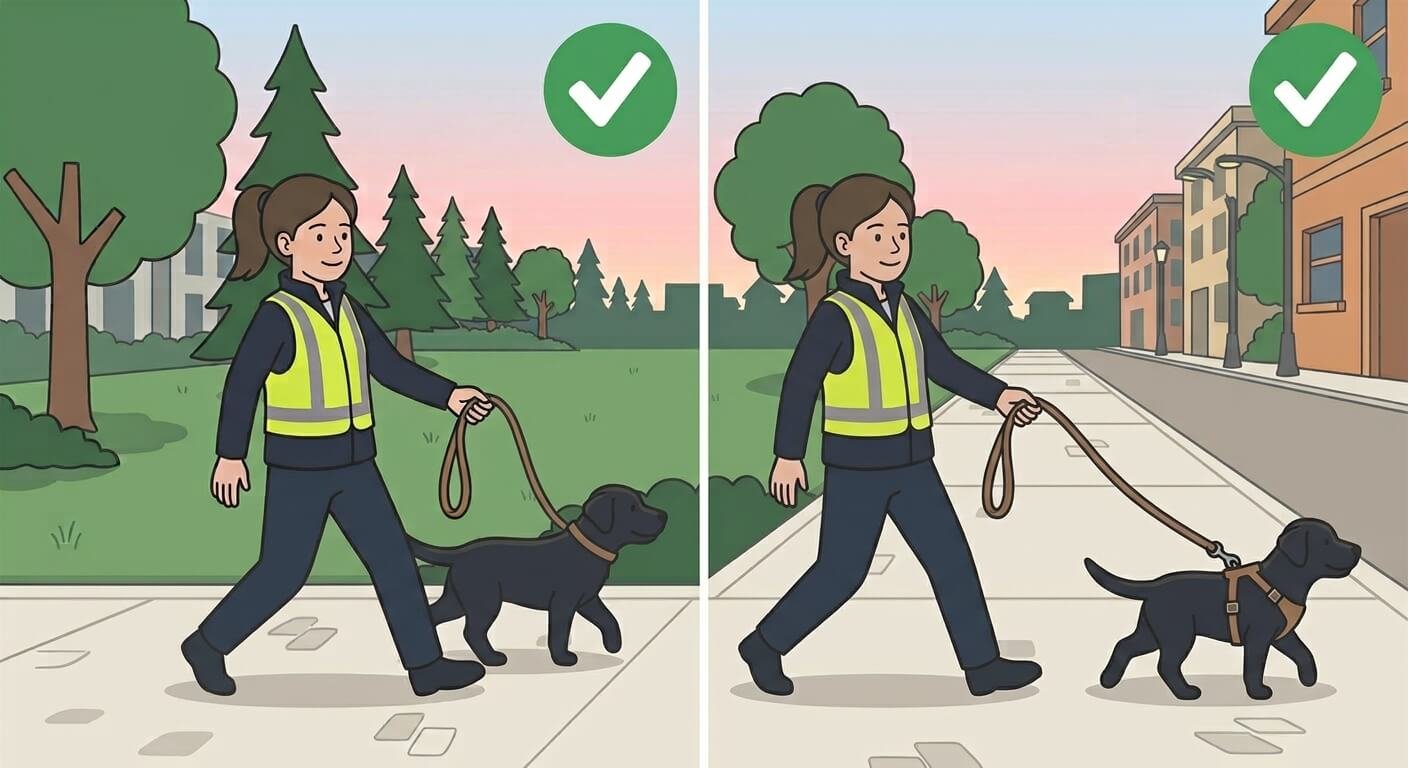
Front-Clip vs. Back-Clip Harnesses
Feature | Back-Clip Harness | Front-Clip Harness |
|---|---|---|
Leash attachment | On the dog's back | Near the dog's chest |
Pros | Simple to use; comfortable for many dogs; good for casual walking | May provide additional control; can help redirect pulling dogs |
Cons | Some dogs may continue pulling comfortably | Requires proper fitting; some designs can affect natural movement; not every dog likes the sensation |
If your dog pulls heavily, consider working with a qualified positive-reinforcement trainer to find equipment that works with your training plan.
Quick Answer: For most dogs, a front-clip harness is the safest choice — especially for dogs that pull or get easily distracted. A flat collar works well for calm dogs that don’t pull. Whatever you choose, fit matters more than the label.
Part 4
How to Hold a Dog Leash Safely
Even the best leash for walking dog won’t help much if you’re holding it in a way that makes it easy to lose control.
Don't Wrap the Leash Around Your Hand
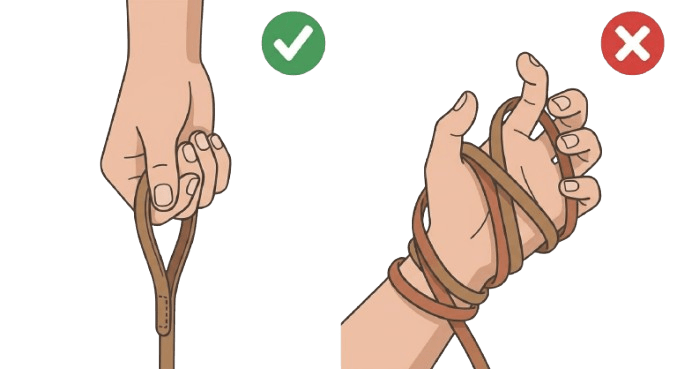
This is one of the most important habits to avoid. If your dog suddenly bolts, a leash wrapped tightly around your wrist or fingers can cause serious injuries.
Instead, hold the leash handle securely with your hand and maintain a comfortable grip.
This is one of the most important habits to avoid. If your dog suddenly bolts, a leash wrapped tightly around your wrist or fingers can cause serious injuries.
Instead, hold the leash handle securely with your hand and maintain a comfortable grip.
Keep Your Other Hand Available
For road walks, it’s useful to keep one hand available to:
-
Open a gate
-
Adjust your dog’s position
-
Signal
-
Pick up waste
-
React to unexpected situations
Avoid holding your phone in the same hand as your leash whenever possible.
Keep the Leash Short Without Keeping It Tight
There’s an important difference between short and tight.
A short leash gives you control. A constantly tight leash creates tension and can actually encourage your dog to pull.
Ideally, your dog should be walking close enough that you can quickly bring them to your side, while the leash remains reasonably relaxed.
When approaching:
-
A busy intersection
-
Another dog
-
A driveway
-
A cyclist
-
A narrow sidewalk
Shorten the leash temporarily and bring your dog closer. Once the hazard has passed, give your dog more appropriate walking room.
Quick Answer: Hold the leash handle securely with one hand — never wrap it around your wrist or fingers. Keep the other hand free for gates, signals, or unexpected situations. And remember: short is good, tight is not.
Part 5
What About Anti-Pull and Training Tools?
Some dogs are much harder to manage on leash than others. When searching for the best leash for walking dog, some owners assume a different leash will solve everything — but a dog that lunges toward cars, dogs, or squirrels may need more than equipment.
Training should be the foundation. Equipment can help you manage the situation while training is underway, but it shouldn’t replace training.
Head Halters
A head halter fits around a dog’s muzzle and provides additional control over head direction. They can be useful for some dogs, but they require proper introduction and careful use.
If you choose one:
Introduce it gradually
Follow the manufacturer’s fitting instructions
Use positive reinforcement
Never jerk or sharply pull on the leash
Consider guidance from a qualified trainer
A head halter isn’t appropriate for every dog.
What About Training Collars?
The term “training collar” can refer to several different products, including slip collars, prong collars, and electronic collars. These tools can carry risks when used incorrectly and may not be appropriate for every dog.
For general road walking, a safer starting point is usually:
Properly fitted harness or flat collar + fixed-length leash + reward-based training
If your dog has serious pulling, lunging, or reactivity issues, consider working with a qualified, reward-based professional who can evaluate your specific situation.
The goal should always be better control and safer behavior—not simply stronger equipment.
Quick Answer: Training should be the foundation. Equipment — like a properly fitted harness, flat collar, or head halter — can help while training is underway, but it shouldn’t replace training. For most dogs, a front-clip harness + fixed-length leash + reward-based training is the safest starting point.
Bottom Line: The best leash for walking dog isn’t about finding a magic piece of equipment — it’s about pairing the right gear with consistent, reward-based training.
Part 6
Leash Features Worth Looking For
You don’t need an expensive leash to have a safe walking setup. When choosing the best leash for walking dog, look for these practical features:
Strong attachment hardware
The clip should connect securely to the collar or harness.
Comfortable handle
You may be holding the leash for 30 minutes or longer.
Appropriate width
Larger, stronger dogs may need a heavier-duty leash.
High visibility
Reflective stitching or material is useful for evening walks.
Reliable construction
Inspect the stitching, clip, and handle regularly.
Quick Answer: The best leash for walking dog doesn’t have to be expensive. Look for strong hardware, a comfortable handle, appropriate width for your dog’s size, visible material for evening walks, and reliable construction. Inspect the stitching, clip, and handle regularly.
Part 7
When to Replace Your Leash
Don’t wait for a leash to completely break before replacing it. Check regularly for:
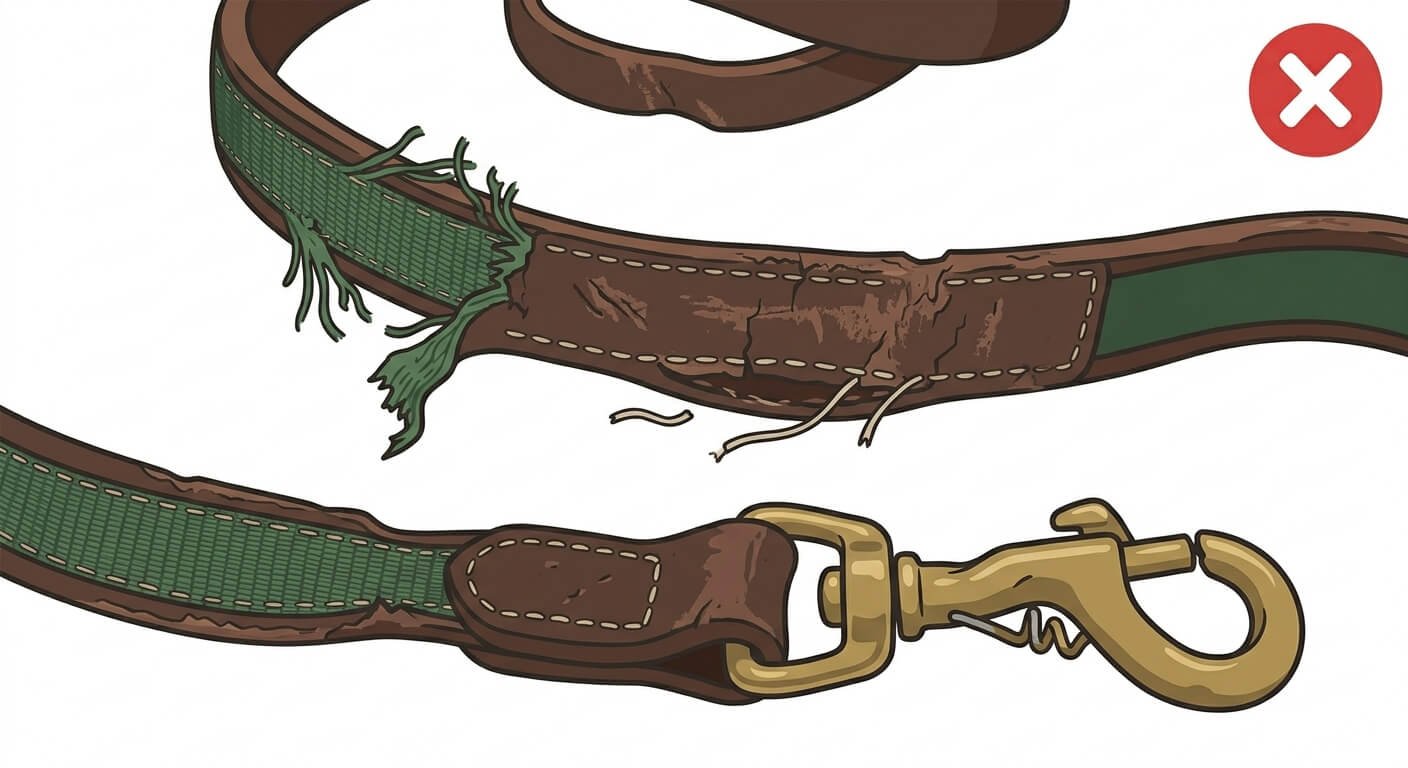
Frayed material
Damaged stitching
Bent clips
Rust
Cracks
Loose hardware
Chew damage
Worn handles
Pay particular attention to the connection between the leash and clip. If the leash shows significant wear, replace it.
Quick Answer: Check your leash regularly for frayed material, damaged stitching, bent clips, rust, cracks, loose hardware, chew damage, and worn handles. Pay special attention to the connection between the leash and clip — if it shows significant wear, replace it.
The Best Road-Walking Setup for Most Dogs
If you’re looking for a simple answer to “best leash for walking dog” on roads, you don’t need a complicated setup.
For most dogs and everyday road walks, start with:
Item | Recommendation |
|---|---|
Leash | 4- to 6-foot fixed-length leash |
Attachment | Properly fitted flat collar or harness |
Connection | Clip attached to the D-ring, not the collar's plastic buckle |
Training | Basic loose-leash training (see Part 2) |
For evening walks | Add reflective or LED gear |
This setup gives you a good balance between your dog’s freedom and your ability to respond quickly.
Quick Answer: For most dogs on road walks, the best leash for walking dog is a 4-6 foot fixed-length leash attached to a properly fitted flat collar or harness. Add reflective or LED gear for evening walks.
FAQ: Best Leash for Walking Dog
For most dogs, no — especially near roads. Retractable leashes give your dog too much freedom, can snap, and make it hard to control your dog in an emergency. They're also linked to more injuries for both dogs and owners. Stick with a fixed-length leash for daily walks.
For most dogs, a harness is safer. It distributes pressure across the chest, reduces strain on the neck, and gives you more control. Collars are fine for ID tags, but for walks — especially with dogs who pull — a well-fitted harness is the better choice. For more, see our Best Leash guide.
For city walks and traffic-heavy areas, use a 4–6 foot fixed-length leash. This gives your dog enough room to walk comfortably while keeping them close enough to control. For hiking or open areas, a long line (10–30 feet) can be used — but never near roads.
A front-clip harness or a no-pull harness works best. These gently redirect your dog's momentum without choking or straining the neck. Pair it with loose-leash training and reward your dog for staying near you. Consistency matters more than the tool.
You can, but it's not ideal. A short fixed leash (4–6 feet) is best for city walks, while a long line is better for hiking. If you want one leash for both, choose a 6-foot fixed leash and add a long line for trails. For more, see our Hiking & Outdoor Hazards series.
Road-Walking Leash Checklist
Before heading out, ask yourself:
- Is it 4–6 feet long?
- Is the material free of fraying?
- Is the clip working properly?
- Is the handle comfortable and secure?
- Does it fit correctly?
- Can your dog slip out of it?
- Is it appropriate for your dog's walking behavior?
- Is the attachment point secure?
- Can you keep your dog close near traffic?
- Are you avoiding wrapping the leash around your hand?
- Can you shorten the leash quickly when needed?
- Are you paying attention rather than looking at your phone?
Can your dog walk without constantly pulling?
Does your dog lunge at cars, dogs, or wildlife?
Does your dog reliably respond when you call them?
Do they need additional training before walking in high-traffic areas?
If the answer to several of these questions is “no,” the solution may not be a different leash. Training and proper equipment should work together.
Quick Answer: Before every walk, check your leash (length, condition, clip), your collar or harness (fit, security), your technique (grip, free hand, leash tension), and your dog’s behavior (calm, responsive). If several answers are “no,” it’s not just about the leash — training and equipment need to work together.
Final Word
The best leash for walking dog doesn’t have to be fancy—it just has to work for your everyday environment.
For road walks, a 4- to 6-foot fixed-length leash paired with a properly fitted collar or harness gives you reliable control without sacrificing comfort.
Retractable leashes have their place, but near traffic, they’re more risk than they’re worth.
Equipment supports good habits—it doesn’t replace them. Even the best leash won’t fix pulling without training. The goal isn’t a tight leash—it’s control when it matters most.
More in This Series
This article is part of our Walking & Road Safety series. If you found this helpful, these guides go deeper into specific situations.
The Complete Dog Walking Safety Guide: Protect Your Pup on Every Walk
Everything you need to know before your next walk — gear, habits, and the most common mistakes to avoid. If you only read one thing, start here.
Night Dog Walking Safety: How to Stay Visible and Avoid Hazards After Dark
Keep your dog safe on nighttime walks. Learn about reflective gear, driver blind spots, wildlife risks, and essential safety tips for night dog walking safety.
Dog Curb Training: How to Teach Your Dog to Wait and Cross Roads Safely
Learn dog curb training step by step. Teach your dog to wait at the curb, cross roads safely, and handle distractions with this complete training guide.
Sidewalk Hazards for Dogs: What Every Owner Should Know
Learn about common sidewalk hazards for dogs — hot pavement, glass, chemicals, and uneven surfaces. Keep your dog’s paws safe on every walk.
Disclaimer: This content is for informational purposes only and does not constitute veterinary or professional safety advice. Always consult with a qualified veterinarian or professional dog trainer regarding your dog’s specific needs and safety considerations.