
Night Dog Walking Safety:
How to Stay Visible and Avoid Hazards After Dark
Hidden hazards, limited driver visibility, and active wildlife—night walks come with risks daylight doesn't have. Here's how to keep you and your dog safe after dark.
Every evening, millions of us face the same deal: you’re finally done with work, you look outside, and it’s already dark. But your pup’s sitting by the door, leash in mouth, giving you that look—”Well? Let’s go.”
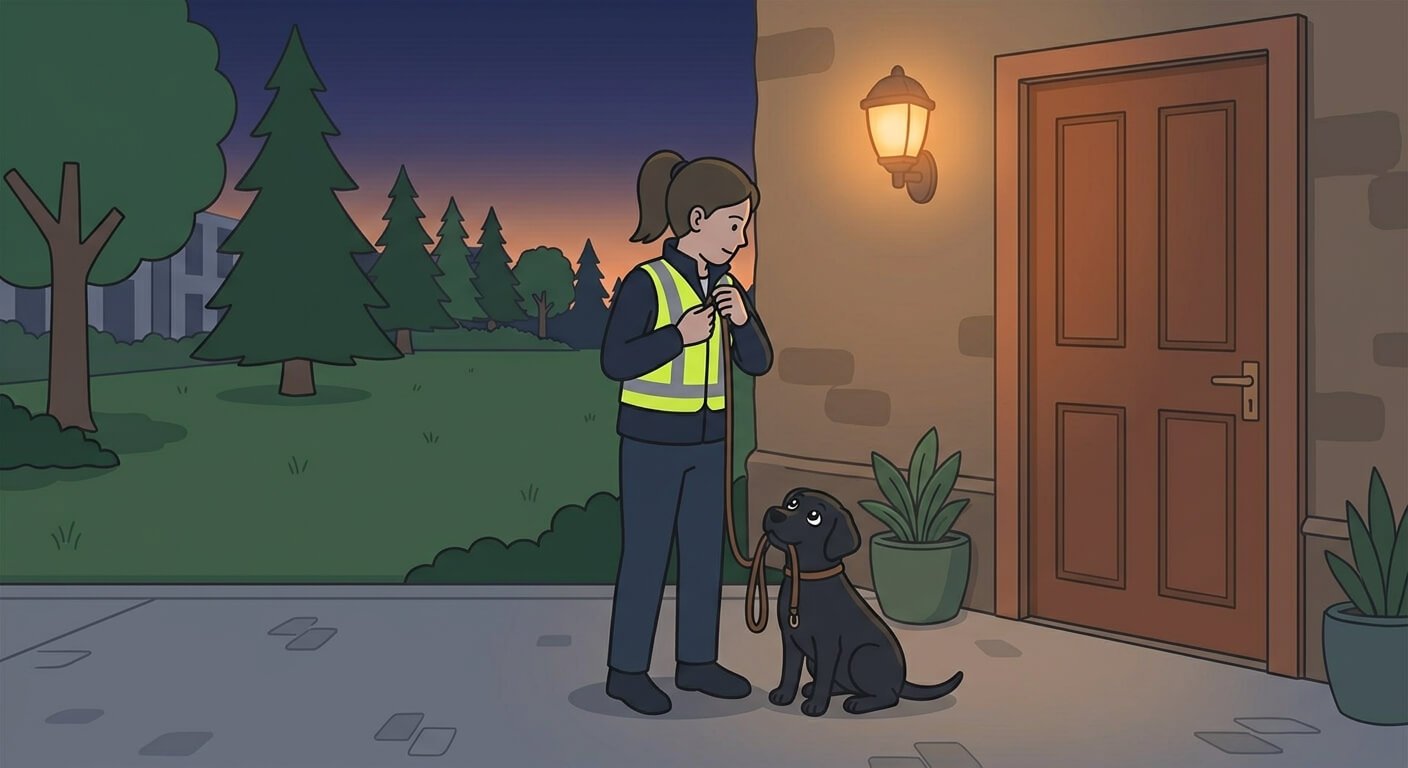
Night dog walking safety might not be the first thing on your mind in that moment. But it probably should be.
For a lot of us, night walks aren’t a choice—they’re just how the schedule works out. Scorching afternoons, short winter days, long work hours—nighttime’s the only window.
But dark changes things. Potholes? Broken glass? You’d spot ’em in daylight, but at night? Completely hidden. And drivers? They can’t see you like they do during the day. Plus, wildlife’s out and about after sunset, adding even more risk.
Good news though—night walks don’t have to be sketchy. The right gear, familiar routes, and a little extra awareness go a long way. You and your pup can still have a safe, chill evening stroll.
Looking for more? Our Complete Dog Walking Safety Guide covers leash control, curb training, first aid, and more.
Part 1
Nighttime Visibility Gear That Actually Works
Let's start with the single most important thing: being seen. Night dog walking safety at its core comes down to one question — can drivers, cyclists, and pedestrians actually see you? If they can't, they can't avoid you. Period.
But here's the catch—not all visibility gear works the same way. And what's great for a well-lit city street won't cut it on a dark country road.
Reflective vs. LED: Know the Difference
Gear Type | How It Works | Best For |
|---|---|---|
Reflective gear | Bounces light from car headlights or other sources back toward the source | Streets with streetlights and regular traffic |
LED/light-up gear | Generates its own light | Dark streets, paths, parks, and any area with poor lighting |
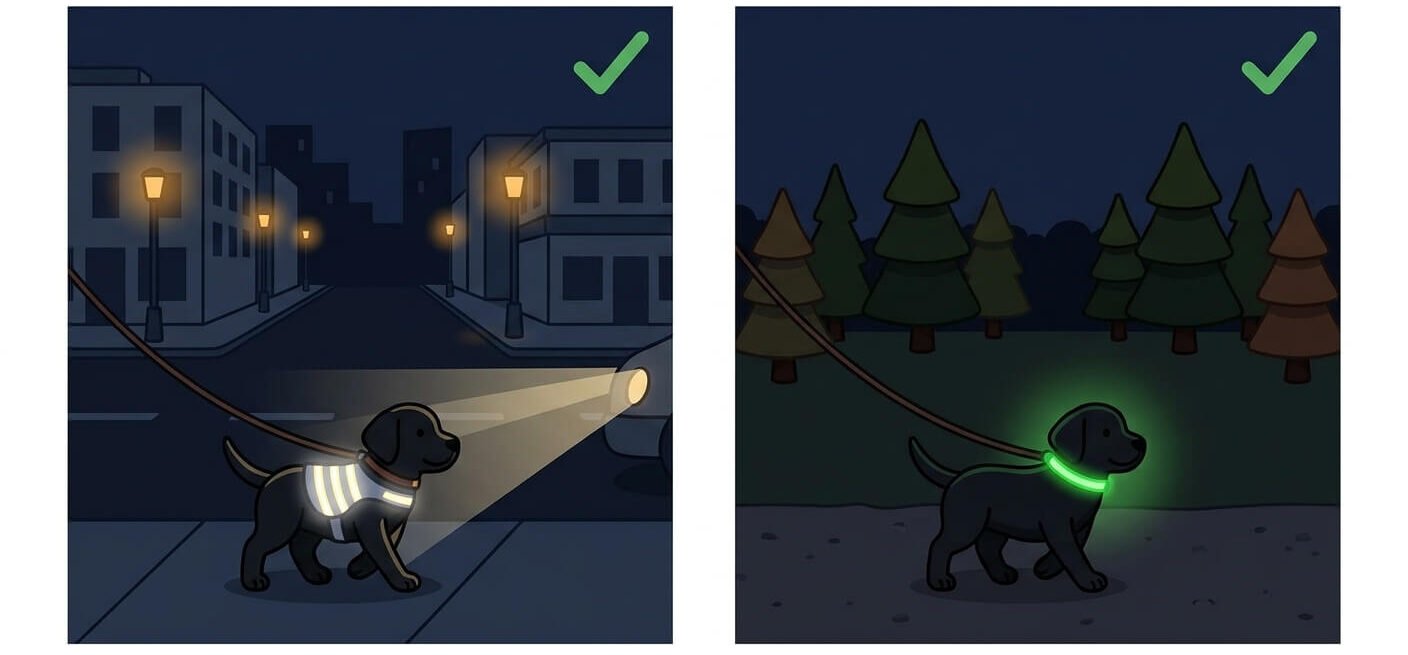
Quick tip: Reflective gear depends on an external light source. If no headlights are hitting you, those shiny strips aren’t doing much. That’s why LED gear is a game-changer for really dark routes.
What Your Dog Should Wear
Gear | Why It Helps |
|---|---|
LED collar or harness | Makes your dog visible from every angle. Look for flashing modes—they grab drivers' attention better than steady lights. |
Reflective vest or coat | Perfect for dogs who hate wearing harnesses. Clip one on each side of their existing collar for full coverage. |
Clip-on LED lights | Attach to any collar, harness, or vest. Great for dogs who already wear a harness and don't need a full LED collar. Rechargeable options are usually brighter. |
Don't Forget About Yourself
Your dog shouldn’t be the only one lit up. If you’re wearing dark colors, drivers might not see you until it’s too late.
What to wear:
Reflective vest or clothing with reflective strips
LED clip-on light on your jacket, belt, or bag
Headlamp (more on this in a minute—it’s a game-changer)
💡 Pro tip: Red LEDs are easier for the human eye to detect at night than white or blue ones. Many dog visibility products offer a red light setting—choose it when you can.
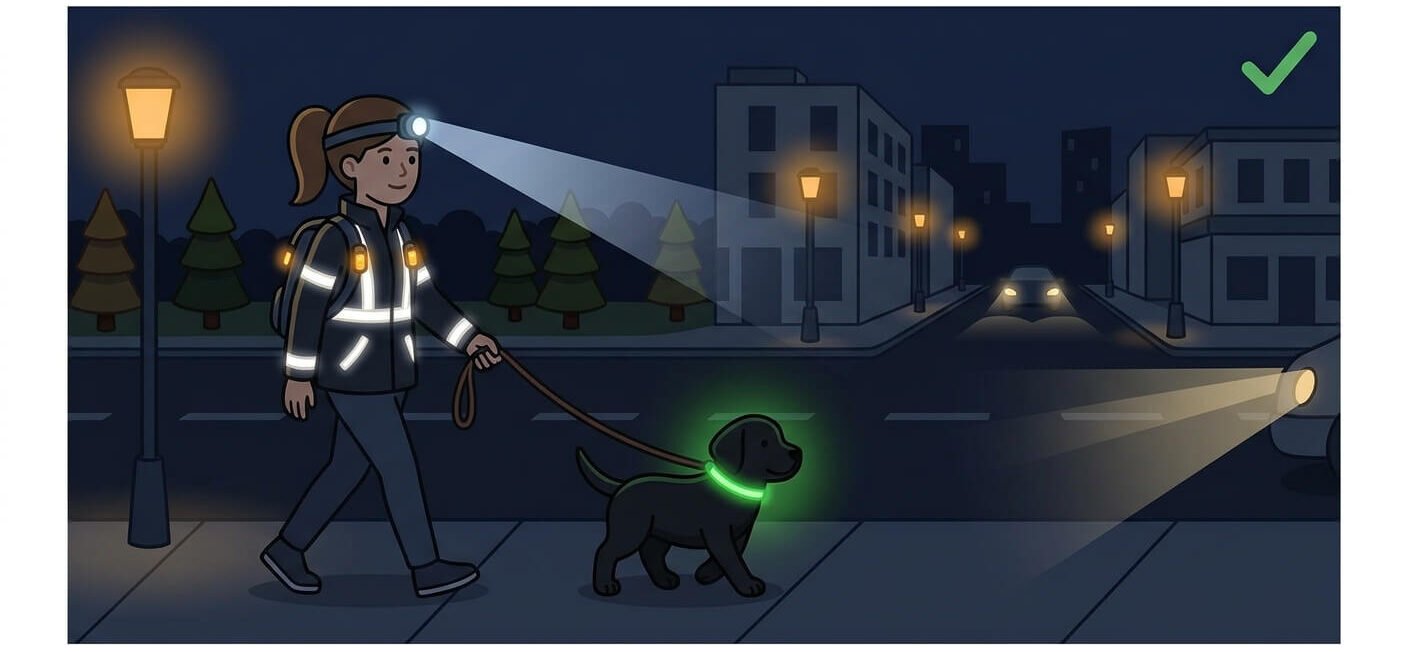
Bottom Line: You don’t need fancy gear or a perfect route. You just need to be seen, stay aware, and keep your dog close. That’s what night dog walking safety really comes down to.
Quick Answer: Night dog walking safety comes down to three things — being visible (LED gear, reflective vests), knowing your route (well-lit paths, familiar streets), and staying alert (drivers, wildlife, hidden hazards).
Part 2
Spotting Hazards Before Your Dog Steps on Them
Night dog walking safety isn't just about being seen — it's about seeing what's ahead. In daylight, you'd easily spot potholes, broken glass, ice patches, and uneven pavement. At night? They disappear.
Why a Headlamp Is a Game-Changer
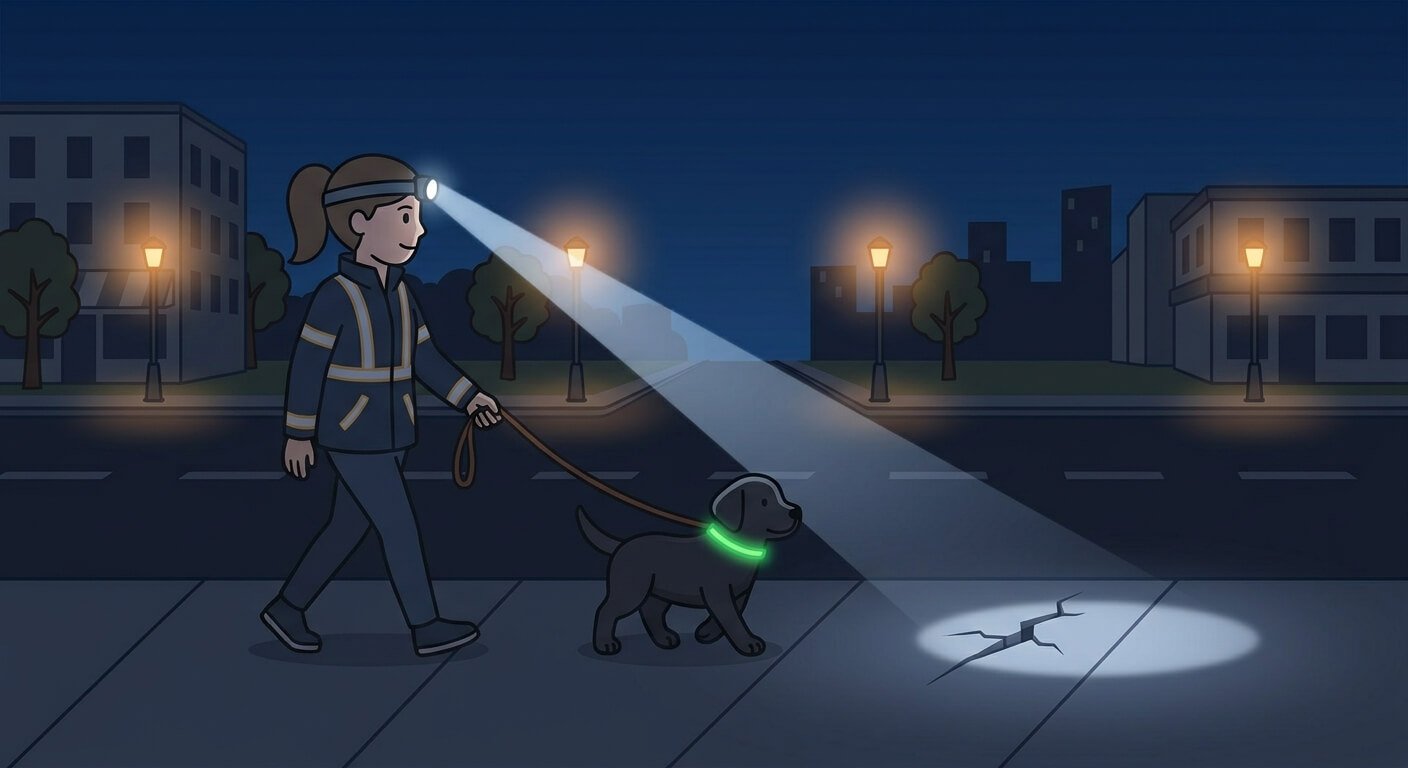
A headlamp might be the most underrated piece of night walking gear.
Why it’s brilliant:
Your hands stay free—one hand holds the leash, the other can grab your phone, pick up after your dog, or steady your pup
The light goes where you look—no awkward angling of a handheld flashlight
You scan the ground ahead and spot dangers before your dog steps into them
What to scan for:
Potholes and cracked pavement (trip hazards for both of you)
Broken glass or sharp debris (paw injuries)
Ice patches (especially in winter)
Low-hanging branches
Puddles that might hide deeper potholes
Stick to Familiar Routes After Dark
Here’s a simple rule: nighttime is not the time to explore new territory.
If you can, choose a route you’ve walked during the day. You already know where the pavement gets rough, where cars tend to speed, and where those annoying cracks are hiding.
What makes a good nighttime route:
Do Look For | Avoid |
|---|---|
Good street lighting | Dark shortcuts and alleys |
Sidewalks or wide shoulders | Wooded paths and trails |
Lower traffic speeds | Areas with no clear visibility ahead |
Clear sightlines at intersections | Industrial or abandoned areas |
Other pedestrians around | Secluded spots with no foot traffic |
What About Dawn and Dusk?
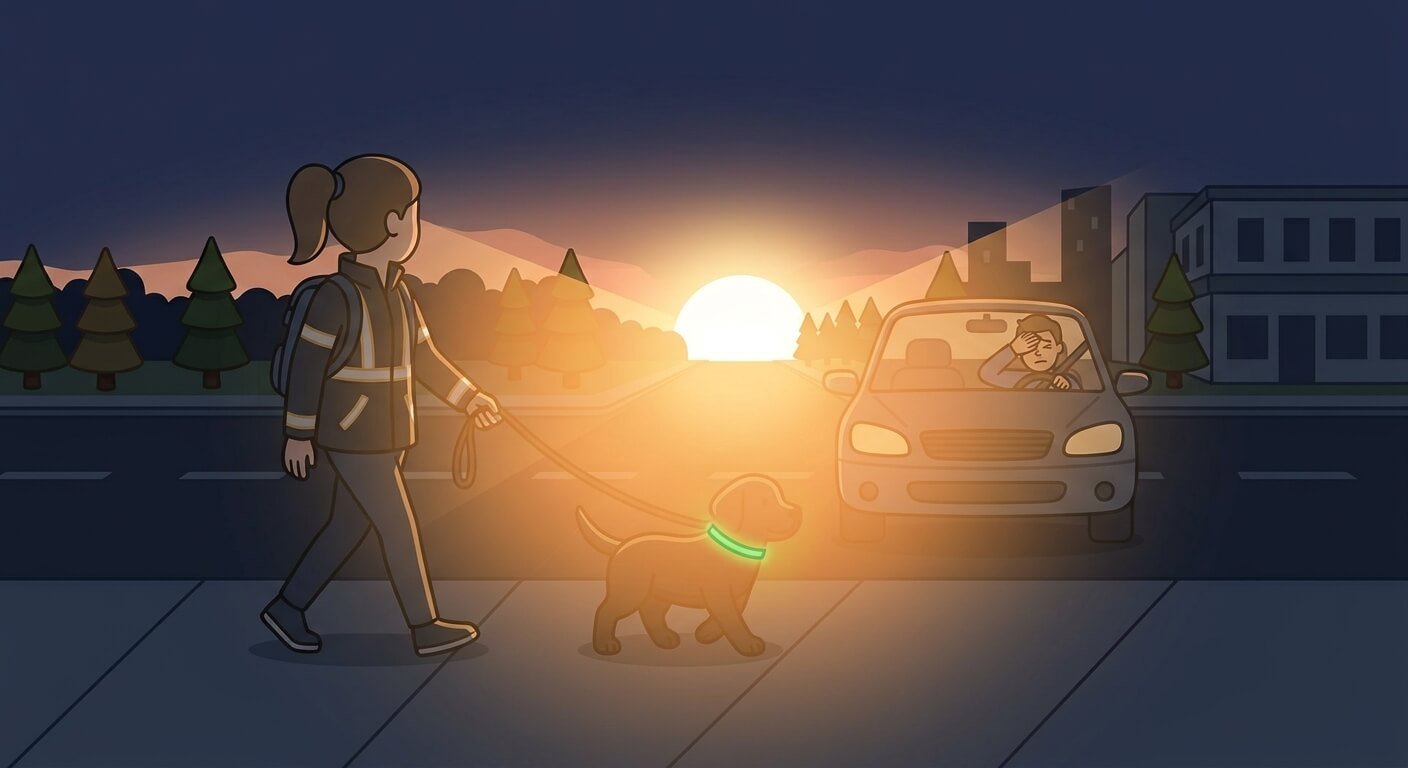
Don’t let the “almost dark” fool you. Dawn and dusk can be just as dangerous as midnight.
At these times, low-angle sunlight creates blinding glare for drivers. One driver who struck two pedestrians later explained, “The sun was in her eyes, and she never saw us.” And this was at a complete stop—she still didn’t see two people and two dogs.
Whenever light is low, treat it like night: reflective gear, LED lights, short leash, and extra caution around traffic.
Quick Answer: For night dog walking safety, use a headlamp to spot hazards, stick to familiar well-lit routes, and treat dawn and dusk like nighttime — low-angle sunlight creates glare that can blind drivers.
Part 3
Driver Blind Spots—and How to Stay Out of Them
At night, drivers have limited vision, slower reaction times, and — most critically — blind spots. Night dog walking safety means understanding these blind zones and staying out of them, no matter how careful a driver is.
How Big Are Vehicle Blind Spots?
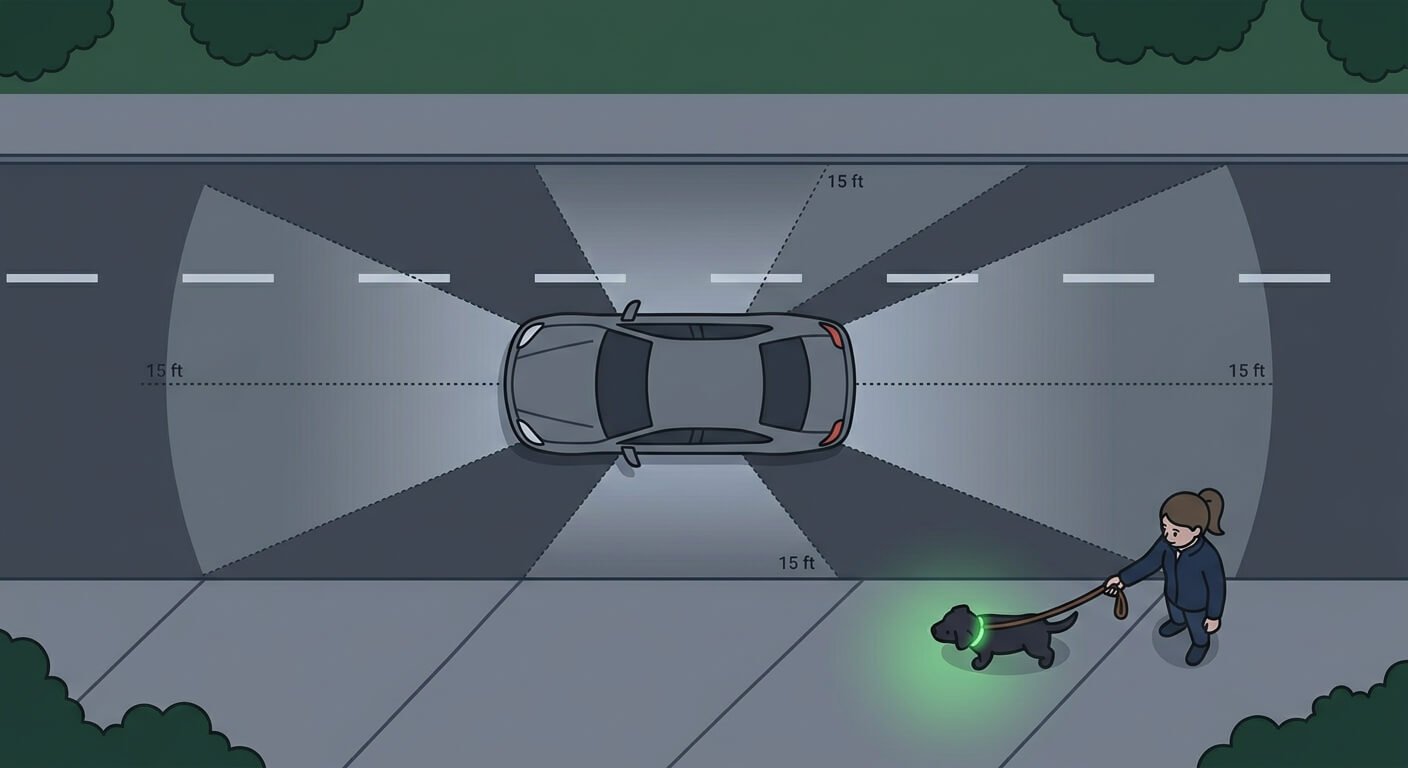
Blind spots can extend up to 15 feet (about 4.5 meters) around a vehicle. Small objects—like your dog—are especially hard to spot in these zones. Parking lots, driveways, and residential streets are high-risk areas. And at night, the risk goes up even more — NHTSA reports that 77% of pedestrian fatalities happen after dark.
Night Crossing Rules
Crossing a road in the dark requires more caution than during the day. Here’s a safe routine to follow:
Stop at the curb and have your dog sit or wait.
Make eye contact with any approaching drivers. If they don’t acknowledge you, don’t step off the curb.
Wait for cars to come to a complete stop before crossing. Many drivers won’t stop for pedestrians until you’re actually in the crosswalk—so don’t step out until it’s safe.
Cross at a steady pace, but don’t run. Running increases your chance of tripping or startling your dog into a sudden move. Keep your pace calm and predictable.
Keep your dog right next to you on a short leash—no lunging ahead, no trailing behind.
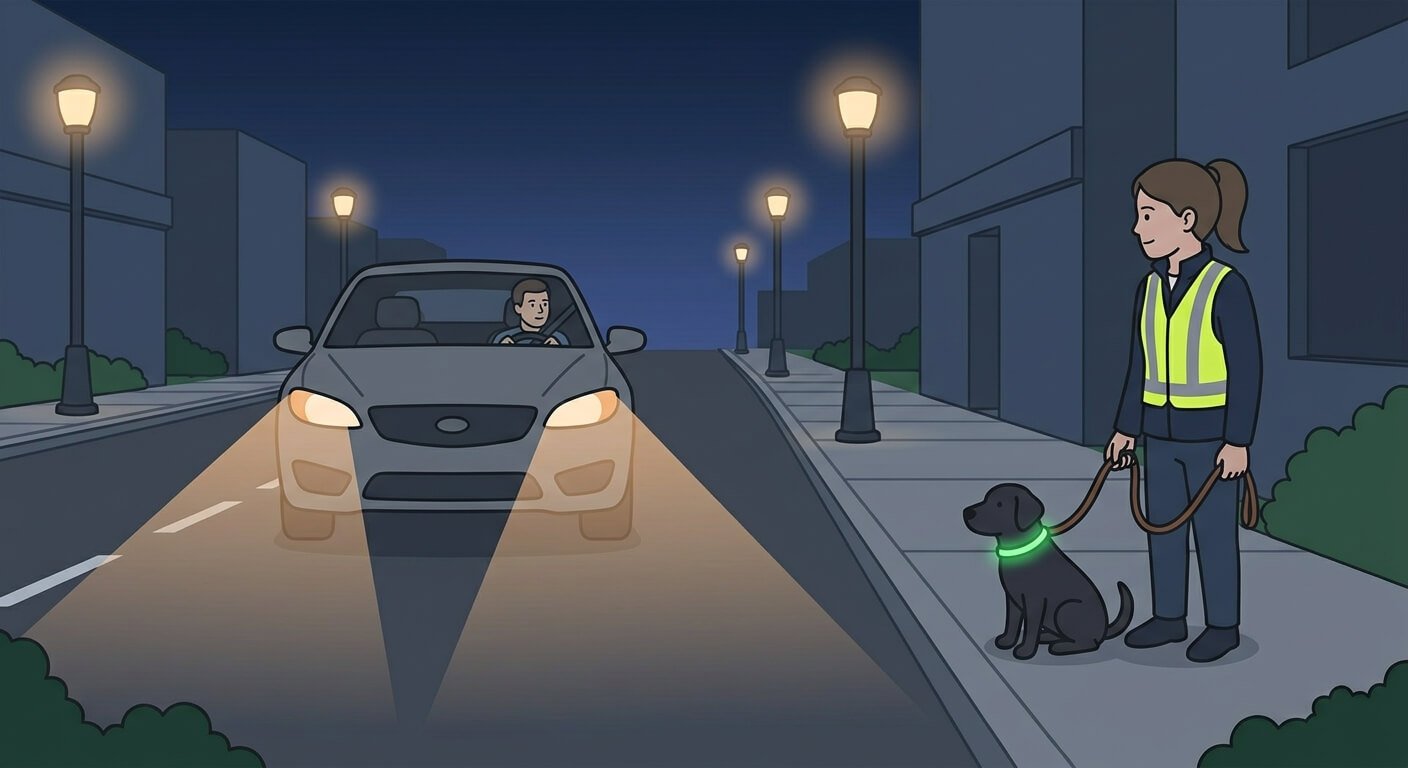
Quick Answer: Before crossing any road at night, stop at the curb, make eye contact with the driver, and wait for the car to come to a complete stop. Never assume a driver sees you — blind spots can extend up to 15 feet around a vehicle.
Part 4
Driver Blind Spots—and How to Stay Out of Them
At night, drivers have limited vision, slower reaction times, and — most critically — blind spots. Night dog walking safety means understanding these blind zones and staying out of them, no matter how careful a driver is.
Wildlife Encounters at Night
When the sun goes down, the nocturnal world wakes up. Coyotes, foxes, raccoons, skunks, and even bobcats become active. Night dog walking safety means taking this seriously — especially if you have a small dog.
Danielle Rakestraw, training and behavior specialist at Best Friends Animal Society, puts it plainly: “Predators—including coyotes, birds of prey, and foxes—often hunt at night as well, which can be particularly dangerous for small dogs.”
Wildlife Safety Rules
Keep your dog on a short leash at all times. A wandering dog can quickly stray into a predator’s territory.
Stick to well-lit, populated areas. Wildlife typically avoids busy streets with lots of people and traffic.
Carry a noisemaker. A whistle or your voice can often scare off curious animals.
Change your route immediately. If you spot wildlife ahead, turn around or take a different street.
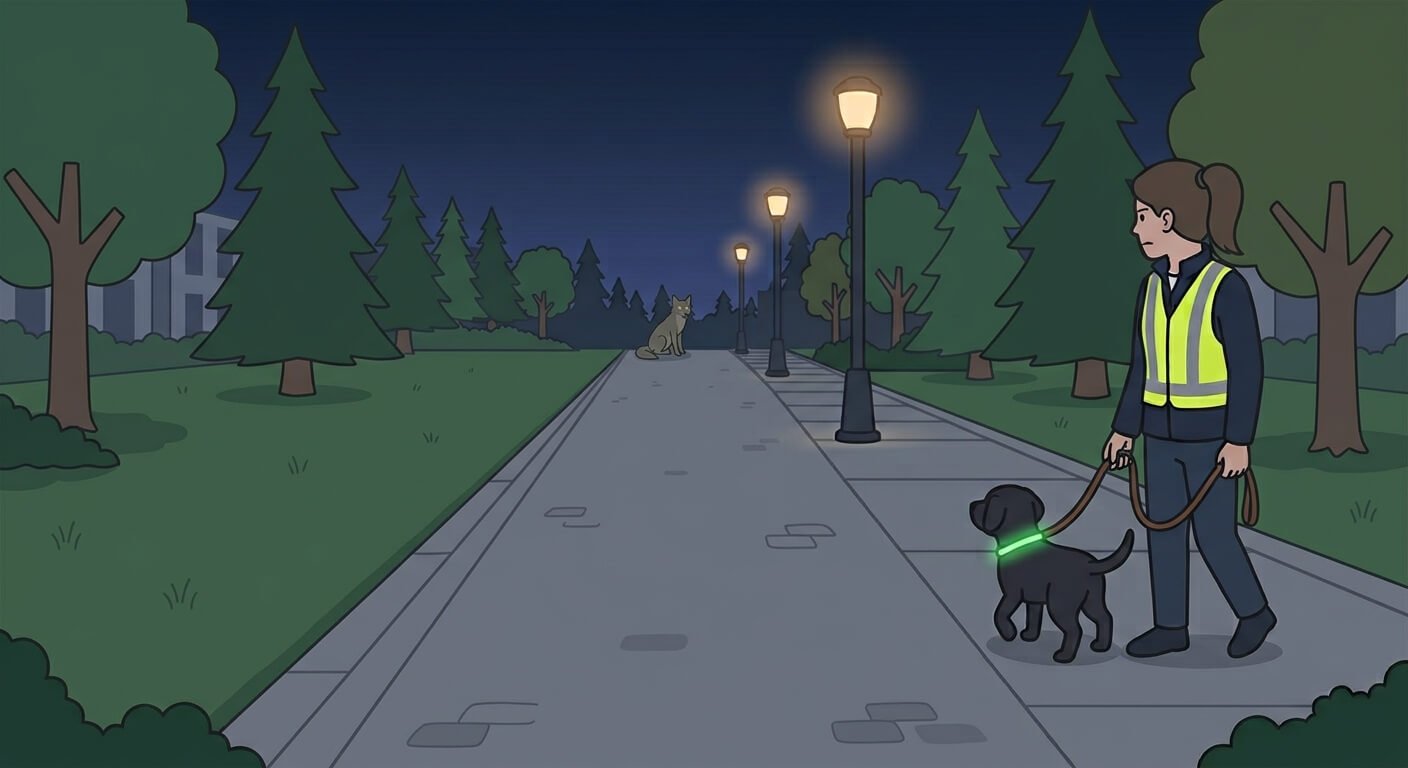
Quick Answer: To keep your dog safe from wildlife at night, keep them on a short leash, stick to well-lit populated areas, carry a noisemaker, and change your route immediately if you spot wildlife ahead.
Part 5
Your Personal Safety Matters Too
Night dog walking safety isn't just about your dog — it's about you too. Walking with a dog doesn't guarantee your own safety, and not every dog will defend their owner when it counts.
Staying Safe as a Night Walker
Avoid dark paths, empty parks, and secluded areas.
Stay where there’s light and people.
Tell someone where you’re going.
Let a friend or family member know your route and when you expect to be back.
Leave the headphones at home.
At night, your ears are just as important as your eyes. You need to hear a cyclist approaching, rustling in the bushes, or a car that’s coming too close.
Walk with a buddy.
Extra company means extra safety for both you and your dog.
Keep your phone accessible.
Not buried at the bottom of a bag — somewhere you can reach it quickly. But remember: no scrolling while you walk.
Quick Answer: To stay safe on night walks, stick to well-lit areas, tell someone your route, leave your headphones at home, bring a buddy when you can, and keep your phone easily accessible — but don’t scroll while you walk.
FAQ: Night Dog Walking Safety
It can be, but it's safer to walk with a friend, a partner, or even a neighbor. If you do walk alone, stick to well-lit, populated routes, tell someone where you're going, and keep your phone accessible. Avoid secluded parks, dark trails, and quiet side streets.
At minimum: a reflective vest or harness for your dog and reflective strips or a vest for you. Add a lighted collar or clip-on light so drivers can see your dog from the side. A small flashlight or headlamp helps you spot hazards on the ground.
Keep your dog on a short leash, stay on open paths, and avoid areas with known wildlife activity. Make noise as you walk so animals hear you coming. If you spot a coyote, do not run — back away slowly while keeping your dog close. Carry a flashlight and, if needed, a deterrent like a whistle.
You can, but take extra precautions. Winter nights are darker, colder, and often icy. Use reflective gear, watch for black ice and de-icing salt, and shorten walks in extreme cold. For more, see our Sidewalk Hazards for Dogs guide.
Start with short evening walks in familiar, well-lit areas. Bring treats and reward calm behavior. If your dog is anxious, walk with a buddy or use a lighted leash to make the environment feel safer. If fear persists, talk to your vet or a trainer.
Ultimate Night Walking Checklist
Charge LED gear or check batteries
Make sure reflective gear is clean and visible
Put on reflective clothing for both you and your dog
Pack a charged phone
Tell someone your route and estimated return time
Check your dog's ID tags are current
Keep your dog on a short leash (4–6 feet)
Keep your headlamp on and scan the ground ahead
Stick to familiar, well-lit routes
Skip the headphones—stay alert
Make eye contact with drivers before crossing
Keep your dog close, especially at intersections
Stay away from bushes, leaf piles, and wildlife hiding spots
Be extra cautious around reversing vehicles
Check your dog's paws for debris or ice
Recharge LED gear for the next walk
Wipe reflective gear clean to maintain its effectiveness
Final Word
Nighttime dog walking doesn’t have to be nerve-wracking. The trick is understanding what changes when the sun goes down—and preparing for those changes. With the right gear, familiar routes, and a little extra attention, you and your dog can enjoy a safe, relaxing walk at any hour.
Disclaimer:
This content is for informational purposes only and does not constitute veterinary or professional safety advice. Always consult with a qualified veterinarian or professional dog trainer regarding your dog’s specific needs and safety considerations.
More in This Series
This article is part of our Walking & Road Safety series. If you found this helpful, these guides go deeper into specific situations.
The Complete Dog Walking Safety Guide: Protect Your Pup on Every Walk
Everything you need to know before your next walk — gear, habits, and the most common mistakes to avoid. If you only read one thing, start here.
Best Leash for Walking Dog: Fixed vs Retractable on Road Walks
Choosing the best leash for walking your dog — fixed-length vs retractable, leash length, harness vs collar, and safety tips for walking near traffic.
Dog Curb Training: How to Teach Your Dog to Wait and Cross Roads Safely
Learn dog curb training step by step. Teach your dog to wait at the curb, cross roads safely, and handle distractions with this complete training guide.
Sidewalk Hazards for Dogs: What Every Owner Should Know
Learn about common sidewalk hazards for dogs — hot pavement, glass, chemicals, and uneven surfaces. Keep your dog’s paws safe on every walk.
Disclaimer: This content is for informational purposes only and does not constitute veterinary or professional safety advice. Always consult with a qualified veterinarian or professional dog trainer regarding your dog’s specific needs and safety considerations.