
What The Complete Dog Walking Safety Guide:
Protect Your Pup on Every Walk
Everything you need to know before your next walk.
Introduction
Why Walking Safety Matters More Than You Think
Every day, millions of dog owners grab a leash and head out the door. It should be the simplest, happiest part of the day — and usually, it is.
But here’s the thing: roads, traffic, and busy sidewalks come with risks that aren’t always obvious. Hot pavement, distracted drivers, aggressive dogs — any of these can turn a normal walk into an emergency.
The good news? Most of these accidents are preventable. With the right habits and a little preparation, you can keep your dog safe on every walk.
That’s what this guide is for.
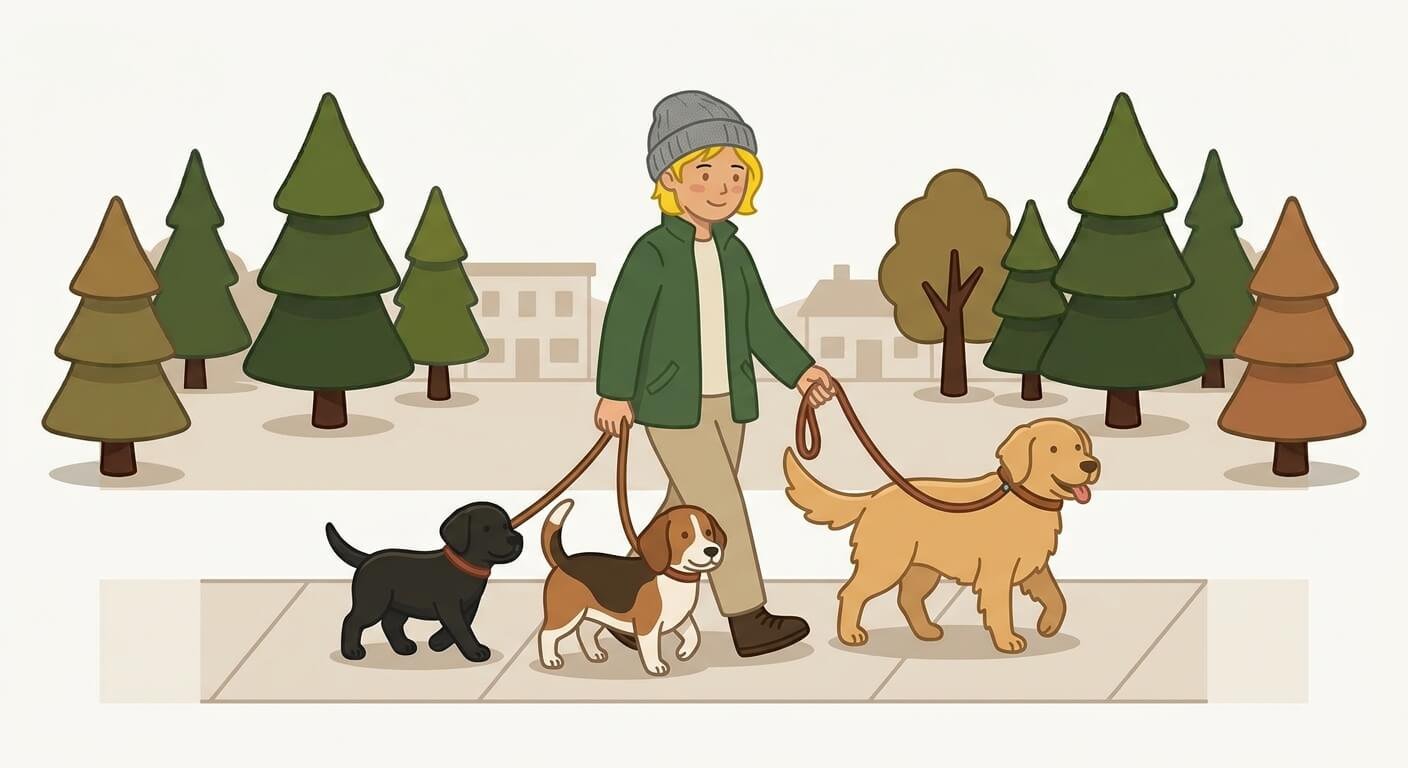
Part 1
The Foundation—Leash Control and Equipment
The right gear gives you control when it matters most. Here's how to choose it.
Choosing the Right Leash
The leash is your primary safety tool and communication link with your dog. Choosing the wrong one can undermine your control and put both of you at risk.
These are the gold standard for road walking. A 4-to-6-foot nylon or leather leash gives you enough slack for your dog to explore comfortably while maintaining immediate control near traffic.
Advantages: Total control, reliable, durable, doesn’t break unexpectedly
Best for: Road walks, crowded areas, training sessions
Recommended length: 4-6 feet (1.2-1.8 meters)
Retractable leashes give your dog too much freedom — up to 20+ feet — which means they can wander toward traffic, other dogs, or cyclists before you have time to react. The thin cord can also cause rope burns if it wraps around your legs or your dog’s paws.
– Drawbacks: Hard to control near traffic, thin cord can cause injuries, sudden locking can jerk your dog
– Best for: Open parks, beaches, and areas with no traffic
– Not recommended for: Road walks, crowded sidewalks, or anywhere near cars
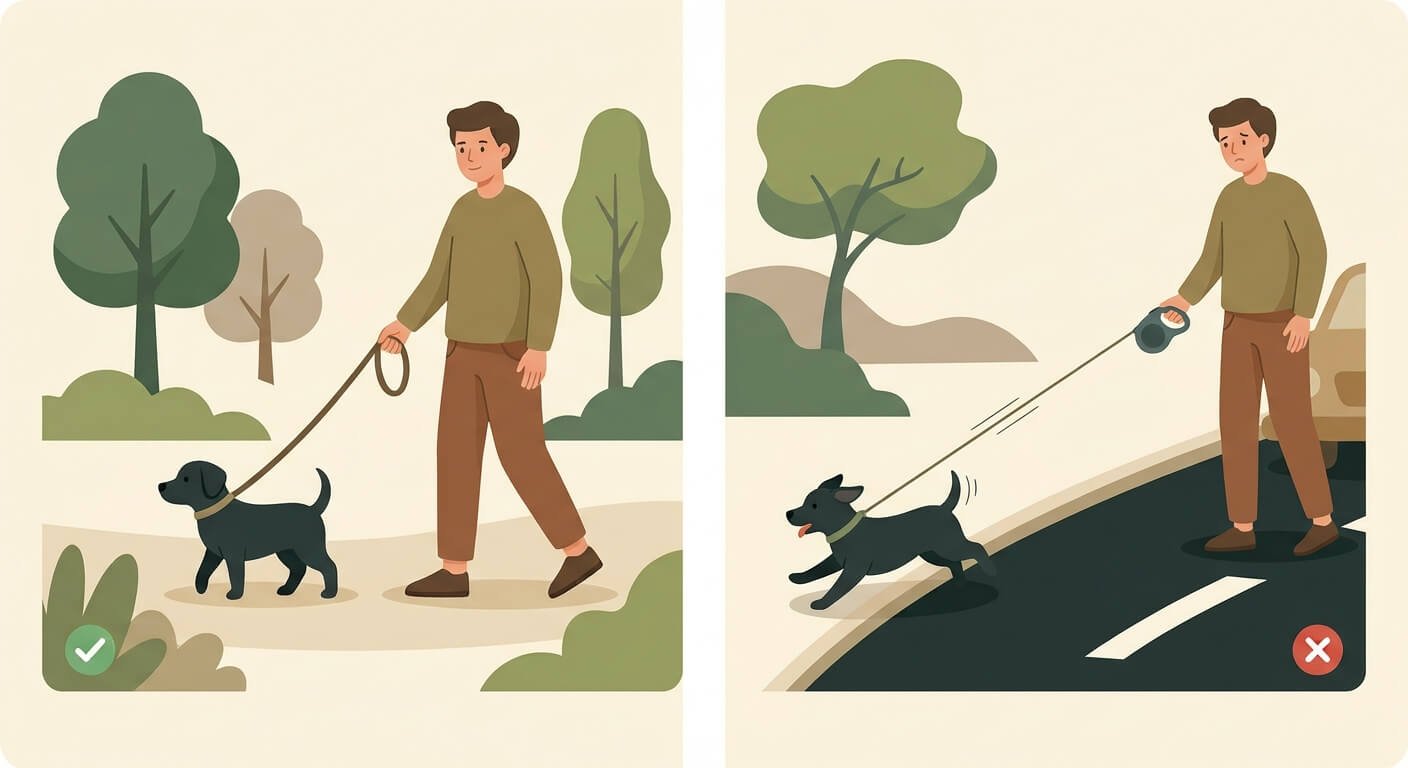
Expert Insight: Veterinary nurse Gemma Renwick (PDSA) advises using a “short, strong lead” rather than an extendable one, particularly in winter or near traffic.
Harness vs Collar: What's Safer?
This is one of the most common questions dog owners ask — and the honest answer is: it depends on your dog and the situation.
A well-fitted harness distributes pressure across the chest instead of the neck, which can be safer for dogs that pull. It also gives you more control when your dog lunges or bolts. For road walks, a front-clip harness is often the best choice — it gently redirects your dog's momentum without putting pressure on their throat.
A collar can work well for calm dogs that don't pull. But for dogs that pull hard, a collar can cause tracheal damage, neck injuries, or even eye problems over time.
Whatever you choose, the most important thing is fit. Gear that's too loose lets your dog slip out. Gear that's too tight causes discomfort and chafing.
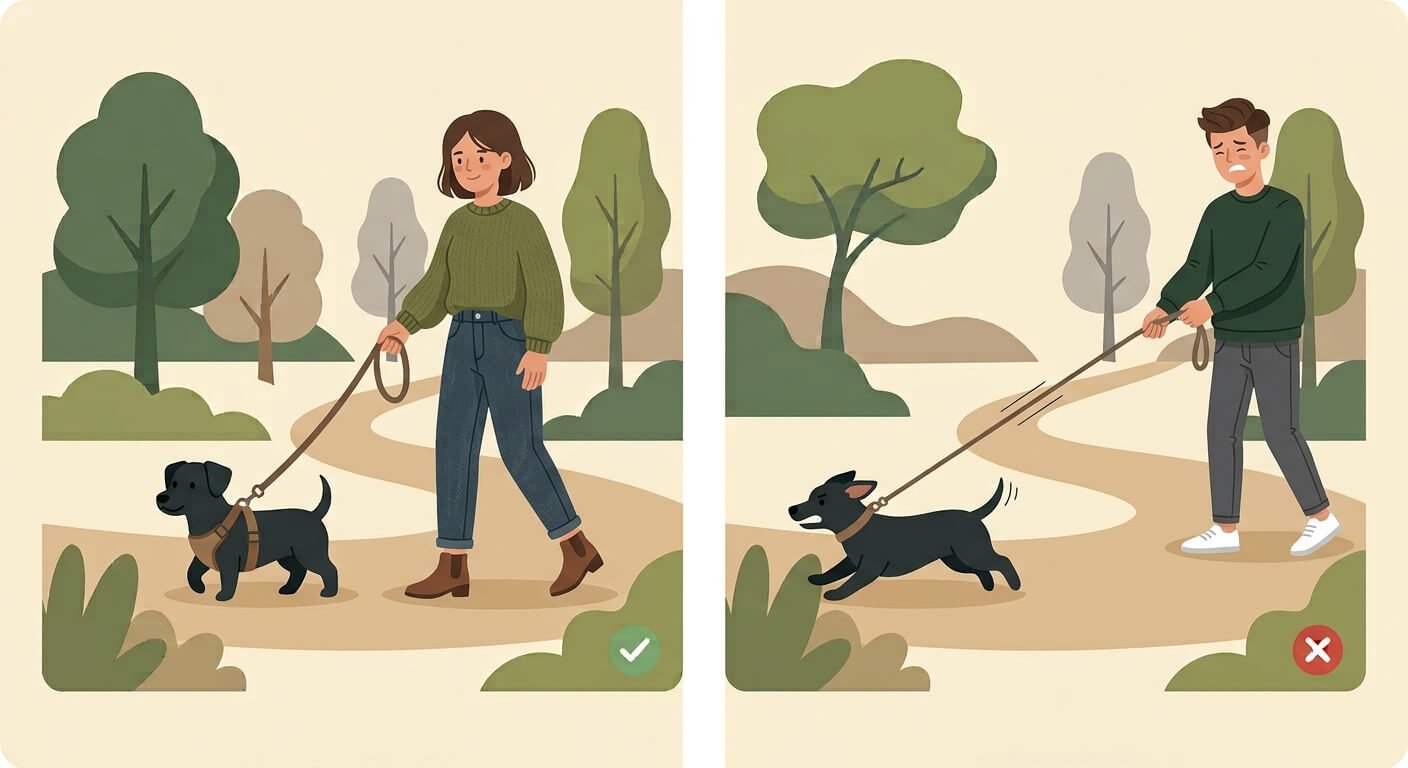
Our Recommendation for Road Walks: A front-clip harness combined with a 4-to-6-foot fixed leash offers the best balance of control and comfort for most dogs, especially in traffic-heavy areas.
Fitting Your Gear Properly
Even the best gear won't help if it doesn't fit. Here's how to check:

Collar fit

Harness fit

Leash connection
Test the fit at home before you go out. A dog that can back out of their gear is a dog at risk.
What About Retractable Leashes?
Retractable leashes aren't automatically dangerous — but they're risky in the wrong situations.
The extra length gives your dog room to wander into traffic, other dogs, or hazards before you can react. For busy sidewalks and road walks, a fixed-length leash is just easier to control.
Save the retractable for wide-open, safe spaces — like an empty field or a quiet beach. And even then, keep an eye on your dog and be ready to lock it if needed.
Gear Maintenance: What to Check and When
Your gear works hard. Check it regularly — especially before long walks or hikes.
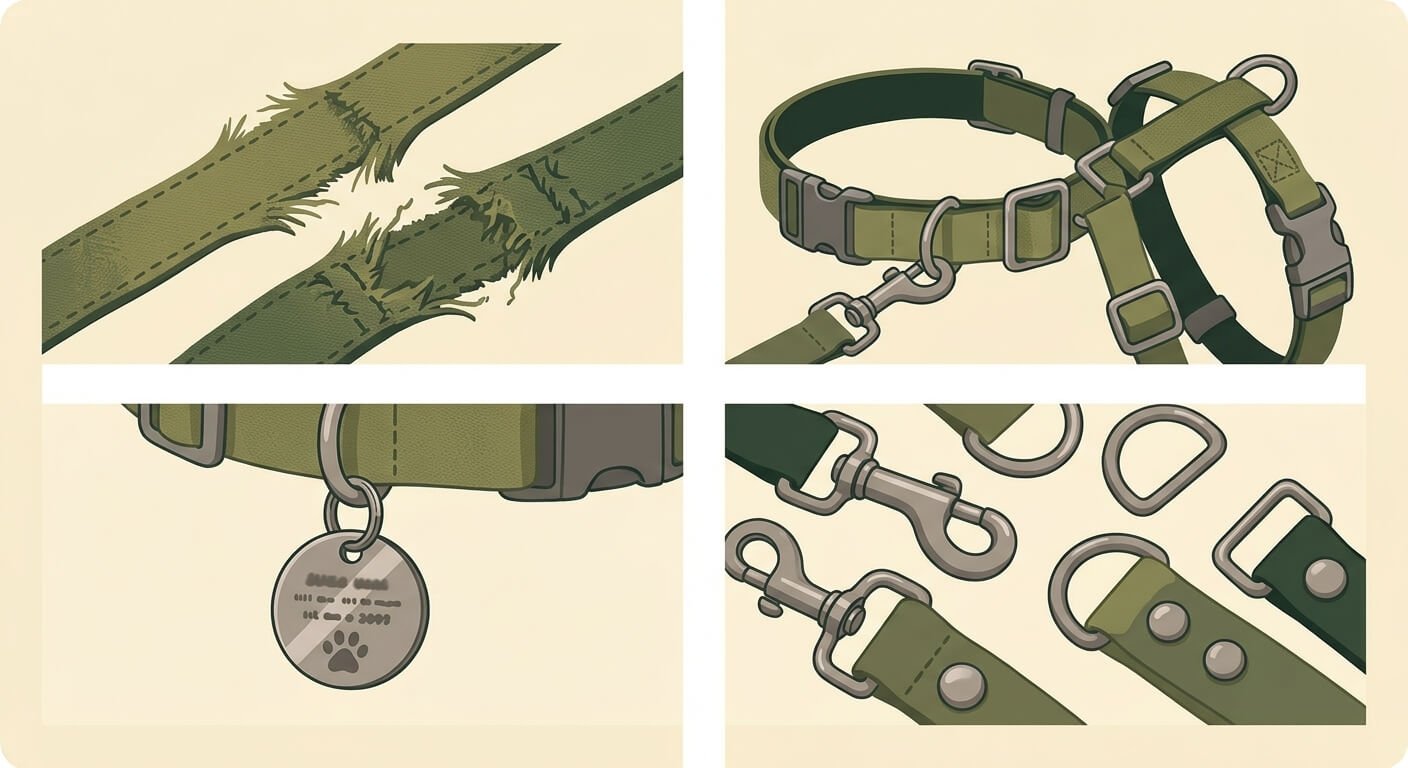
Leashes: Look for fraying, weak spots, or worn stitching. Replace if you see any.
Collars and harnesses: Check buckles, straps, and D-rings for cracks or bends.
Tags: Make sure ID tags are still readable and securely attached.
Hardware: Rust, bent clips, or loose rivets mean it’s time to replace.
A quick inspection before every walk takes 10 seconds — and it can prevent a gear failure when you need it most.
Part 2
Training Your Dog for Road Safety
Training is what turns a walk from risky to reliable. Here's how to build the habits that keep your dog safe.
The Curb-Sit Command: Your Dog's Most Important Road Skill
Teaching your dog to automatically sit at every curb is the single most valuable safety behavior you can train. Here’s how to do it, step by step:
Start in a low-distraction environment—your living room. Use a clicker or a marker word (“Yes!”) to mark the behavior. Reward every successful sit with a high-value treat.
Practice the sit at the threshold of your door. Wait until your dog sits before opening the door. This establishes the pattern: “Sitting gets me outside.”
Walk your dog on a loose leash toward the curb. Stop about 2 feet before the edge. Wait. Do not give a command—just wait.
Most dogs will eventually sit out of confusion or patience. The moment your dog’s rear touches the ground, mark and reward immediately. Give enthusiastic praise and a treat.
Once your dog consistently sits at the curb, add a verbal cue like “Wait” or “Stop.” Say the word just before your dog is about to sit, then mark and reward.
Practice at different curbs (driveways, street corners, parking lots) with varying levels of traffic, people, and other dogs. Gradually increase the difficulty.
When the road is clear, give a release command like “Cross” or “Let’s go” before stepping off the curb. This gives you clear communication: “Wait” means stop; “Cross” means it’s safe to proceed.
Pro Tip: Never let your dog step off the curb without your explicit permission. This rule must be absolute — even on quiet streets with no cars in sight. Consistency is what makes it stick.
The "Leave It" Command: A Lifesaver for Litter and Toxins
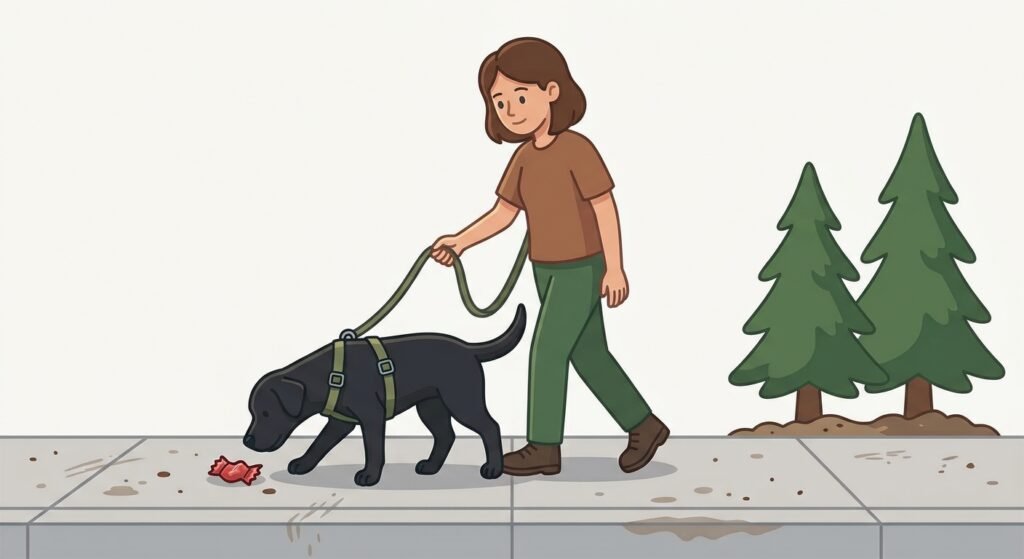
Your dog's nose is their most powerful sense—and it can lead them straight into danger. Discarded chicken bones, chocolate wrappers, spoiled food, and even deliberately poisoned bait can all appear on sidewalks and roadsides.
Hold a treat in your closed fist. Let your dog sniff, lick, and paw. The moment they stop trying and look at you, open your fist and give the treat. Repeat.
Hold a treat in your open hand on the floor. Cover it with your hand. When your dog stops trying to get it and makes eye contact, uncover and give the treat.
Place a treat on the floor. When your dog goes for it, say “Leave it” and cover it with your foot or hand. When they back off, reward with a different treat from your hand (not the one on the floor).
Scatter treats on a walk. Use “Leave it” for each. Reward with an even better treat when your dog complies.
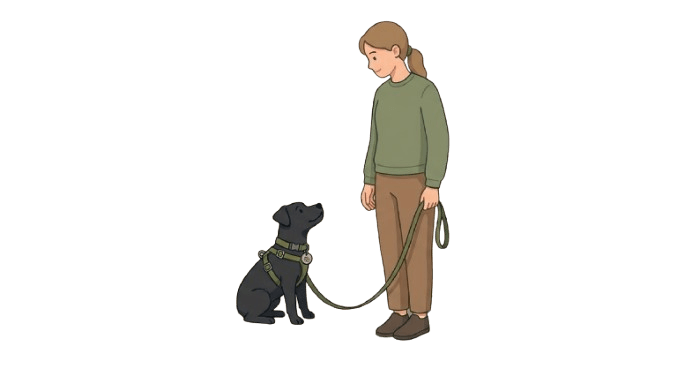
This command isn’t just for food. It works for dead animals, broken glass, discarded needles, and anything else that looks interesting but is dangerous.
Loose-Leash Walking: Preventing Bolting and Lunging
Dogs that pull, lunge, or bolt on walks are at dramatically higher risk of road accidents. Loose-leash walking — where your dog walks beside you with a slack leash — is the foundation of road safety.
The "Be a Tree" Method:
The "Turn and Go" Method:
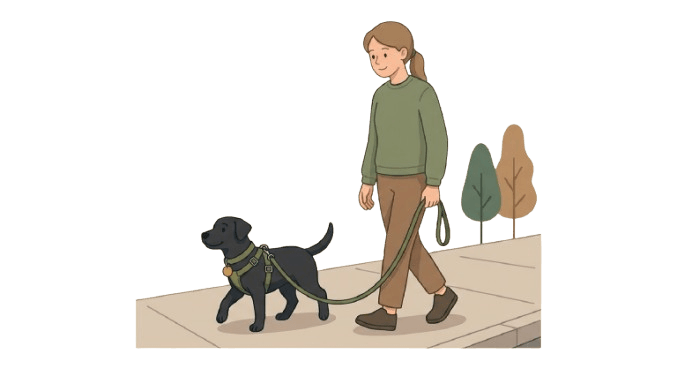
Both methods teach the same thing: pulling gets your dog nowhere, and walking beside you keeps the walk moving. Pick one and stay consistent.
Practice makes perfect. Start in a low-distraction environment and gradually move to busier streets. A well-trained dog on a loose leash is a safe dog near traffic.
Part 3
Visibility—Making Sure You and Your Dog Are Seen
Being seen is one of the most overlooked parts of walking safety. Dog walking safety isn't just about gear and training — it's also about making sure drivers can actually see you. Here's how to stay visible in low light.
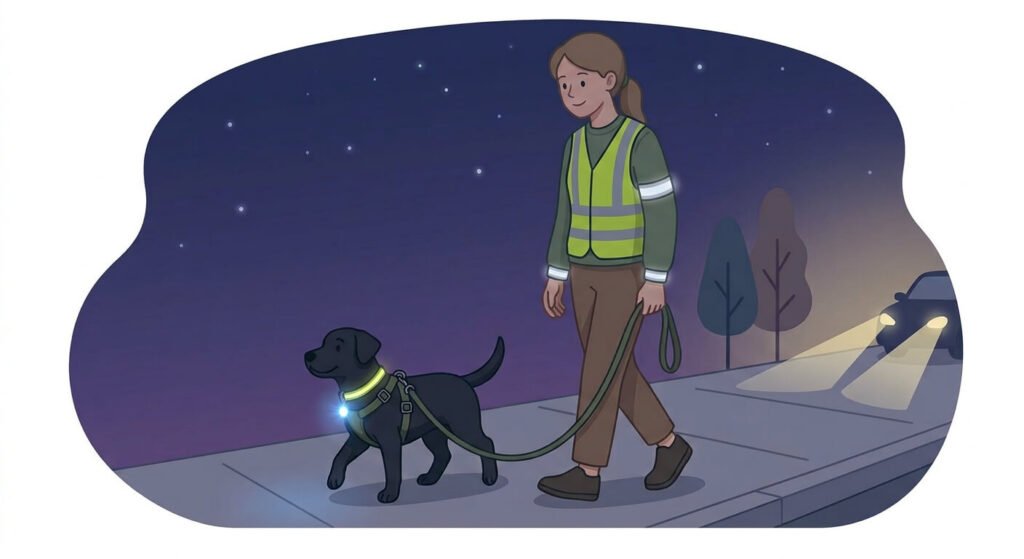
The Problem: Drivers Don't See You
Driver visibility is a major factor in dog-related road accidents. Consider these factors:
Dark-colored dogs—particularly black, dark brown, or brindle—are difficult to see at dawn, dusk, or night. A 2020 study on pedestrian visibility found that wearing black at night made a person visible at only 55 feet, while wearing high-visibility clothing extended that to 500 feet.
Height—small dogs are often below a driver’s sightline, especially near SUVs and trucks.
Reflective surfaces—drivers’ eyesight relies on contrast; a reflective collar can make your dog visible from hundreds of feet away.
Gear to Keep You Both Visible
For Your Dog:
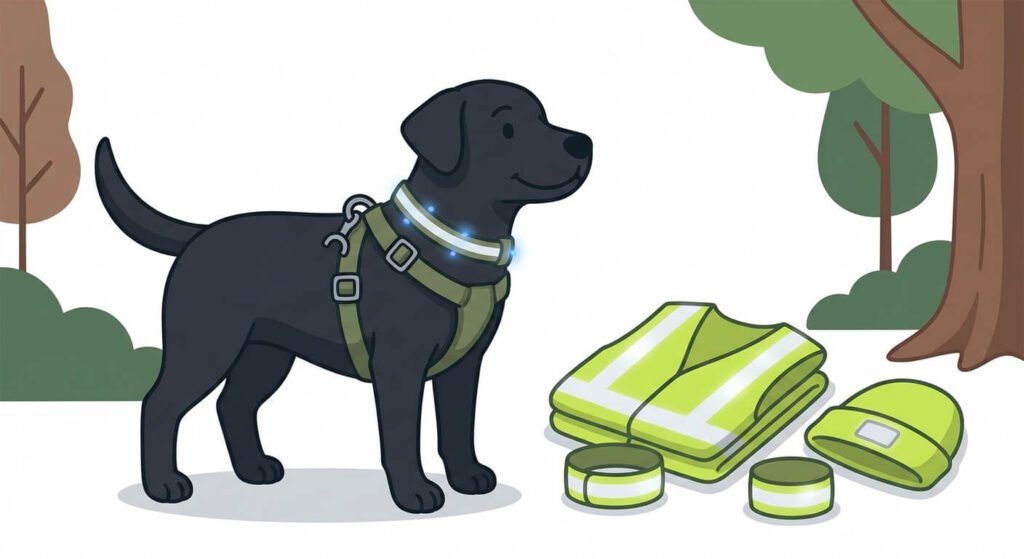
Reflective collar and harness: Basic but essential. Look for 360-degree reflectivity, not just a small patch.
LED collars: Rechargeable, bright, and visible from multiple angles. Great for evening walks.
Light-up safety vests: Some dogs wear glowing vests that illuminate their entire body.
Reflective booties: Also useful for protecting against hot pavement (more on that below).
For You:
High-visibility vest or jacket: Look for fluorescent yellow, orange, or lime green with reflective stripes.
Reflective armbands or ankle bands: These moving points catch drivers’ attention—they signal “human in motion.”
Hand-held flashlight or headlamp: Not just so you can see—so others can see you.
Low-Light Walking: Timing and Strategy
Walk against traffic
- When no sidewalk exists, walk facing oncoming traffic so you can see vehicles approaching
Avoid 5-7 PM
- This is peak commuter hour. Drivers are tired, rushed, and scanning for other vehicles—not dogs.
Stick to well-lit streets
Avoid unlit shortcuts or alleys where visibility is poor.
Don't assume headlights see you
A driver may look toward you but not see you. Make yourself and your dog unmistakable.
Quick Answer: To stay visible on walks, wear high-visibility clothing, use a reflective collar or LED light on your dog, and walk facing traffic when there’s no sidewalk.
Part 4
Environmental Hazards on Roads and Sidewalks
Roads and sidewalks aren't always as safe as they look. Here's what to watch for.
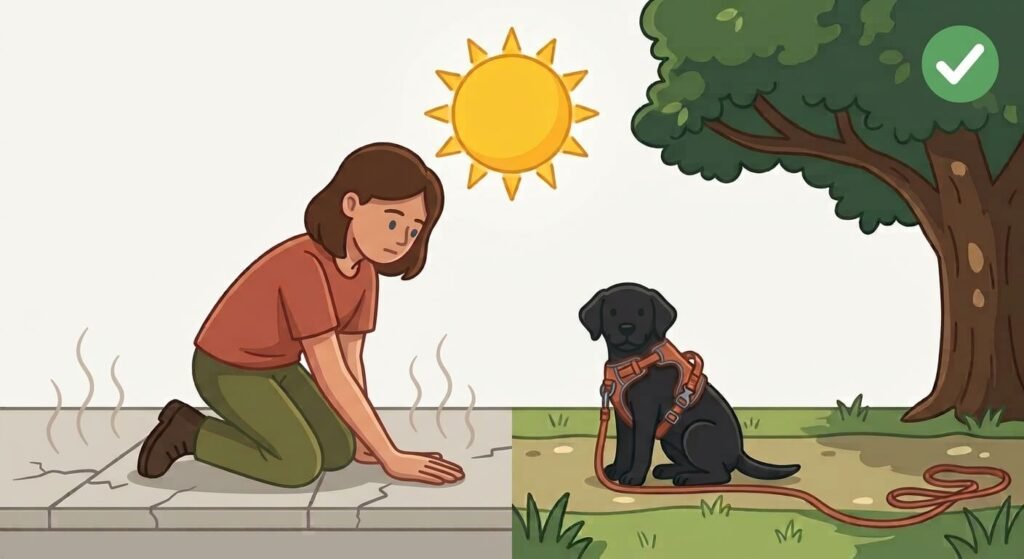
Hot Pavement: A Hidden Burn Risk
Pavement absorbs heat throughout the day and can reach dangerous temperatures long after the air has cooled. When the air temperature is 80°F (27°C), asphalt can reach 125°F (52°C) —hot enough to cause burns in seconds.
Press the back of your hand against the pavement for five seconds. If it’s too hot to hold there, it’s too hot for your dog’s paws.
Limping or refusing to walk
Licking or chewing at paws
Blisters, redness, or missing paw pads
Discolored (dark or pink) pads
Immediately move your dog to a cool, grassy surface.
Rinse paws with cool (not cold) running water.
Do NOT apply ointments, butter, or oils—they trap heat and can worsen burns.
Contact your veterinarian for guidance.
Walk early morning or late evening when pavement has cooled.
Choose grassy or dirt routes whenever possible.
Use dog booties—if your dog will tolerate them.
Apply paw balm before and after walks to protect and moisturize pads
Ice, Snow, and De-Icing Salts (Winter Hazards)
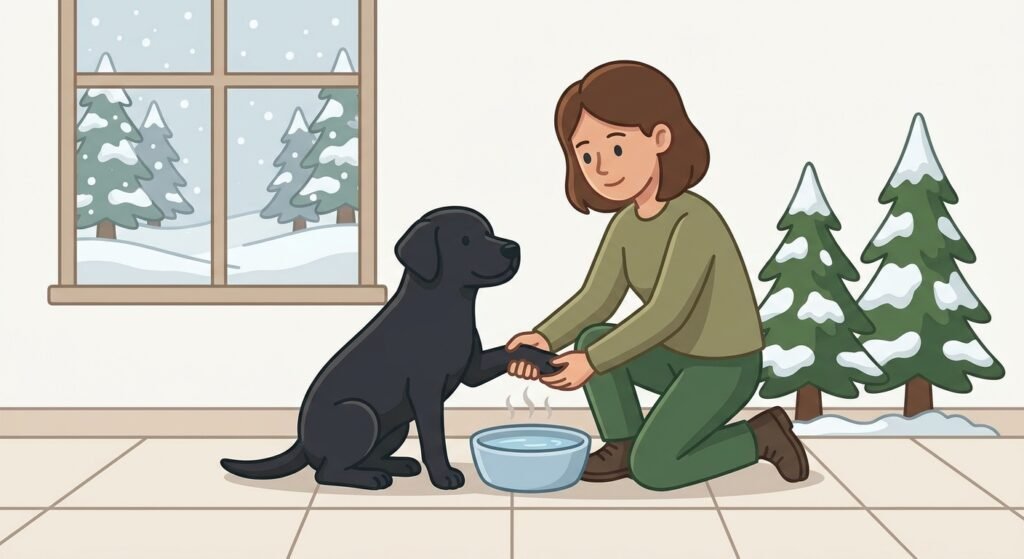
Cold weather brings its own set of walking dangers:
De-Icing Salts:
Rock salt and chemical ice melts can cause:
Chemical burns on paw pads
Ingestion poisoning if your dog licks their paws after walking
Gastrointestinal distress if consumed in any quantity
Winter Walking Safety Checklist:
Rinse or wipe paws immediately after returning indoors (use a bowl of warm water or pet-safe wipes)
Look for pet-safe ice melt products for your own driveway
Trim hair between paw pads to prevent ice ball formation
Consider waterproof booties for snowy walks
Hidden Ice:
Snow can mask dangerous ice patches that can cause slips and injuries. Walk slowly and carefully, especially on hills and shaded areas.
Discarded Food, Garbage, and Poisoned Bait
Roadsides collect all manner of dangerous items:
Chicken bones:
Break into sharp shards that can perforate the gastrointestinal tract
Aluminum foil and wrappers:
Can cause intestinal blockages
Dead animals:
May have been poisoned or carry disease
Spoiled food:
Contains bacteria that can cause severe gastroenteritis
Deliberately poisoned bait: Tragically, some people place food laced with rat poison near public areas to harm wildlife—and dogs find it
The solution is training: A rock-solid “Leave it” or “Drop it” command is your best defense. Practice this command regularly and reward heavily. It could save your dog’s life.
Standing Water and Puddles
Puddles and stagnant water may contain:
Blue-green algae (cyanobacteria):
Highly toxic; can be fatal within minutes to hours
Leptospira bacteria:
Causes leptospirosis, a potentially fatal kidney and liver infection
Chemicals:
Oil, antifreeze, and other automotive fluids from parking lots
Parasites:
Giardia and other water-borne organisms
Rule: Never let your dog drink from puddles, ponds, or standing water on walks. Always carry fresh water in a collapsible bowl.
Part 5
Navigating Traffic and Other Road Users
Traffic isn't the only thing moving out there. Here's how to navigate roads, bikes, and other dogs safely.
The Driver's Perspective: What They Can't See
Understanding how drivers see the road can make you safer:
A-pillars (windshield pillars)
These create blind spots that can hide a person and dog completely, even when the driver is looking directly at you
Reversing vehicles
Backing cars have massive blind spots—especially behind SUVs and trucks
Distracted drivers
Phone use, passenger conversations, and GPS programming all take attention away from the road
Glare
Low sun angles (sunrise/sunset) can blind drivers to everything in their path
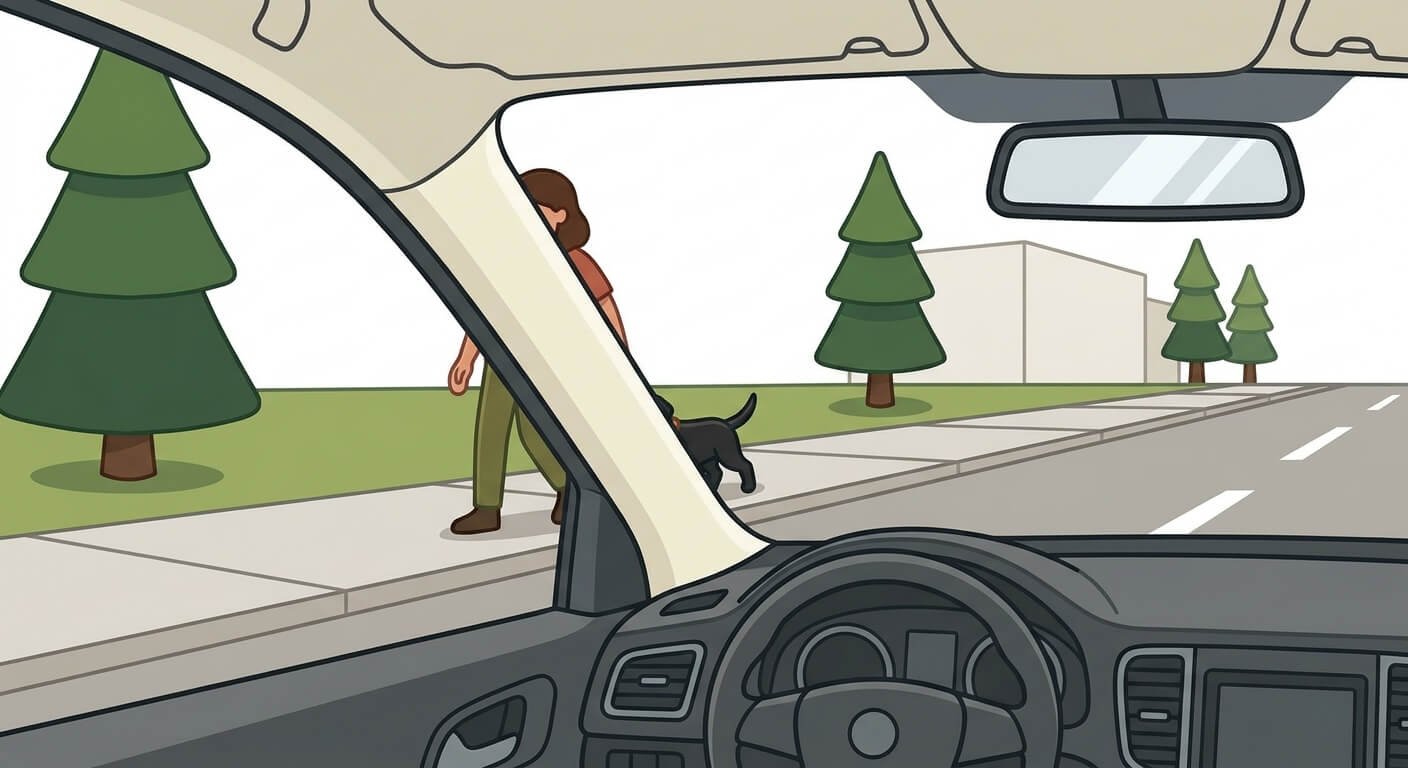
Always make eye contact with drivers before crossing in front of them. If you can’t see their face, they probably can’t see you.
Bikes, Scooters, and E-Bikes
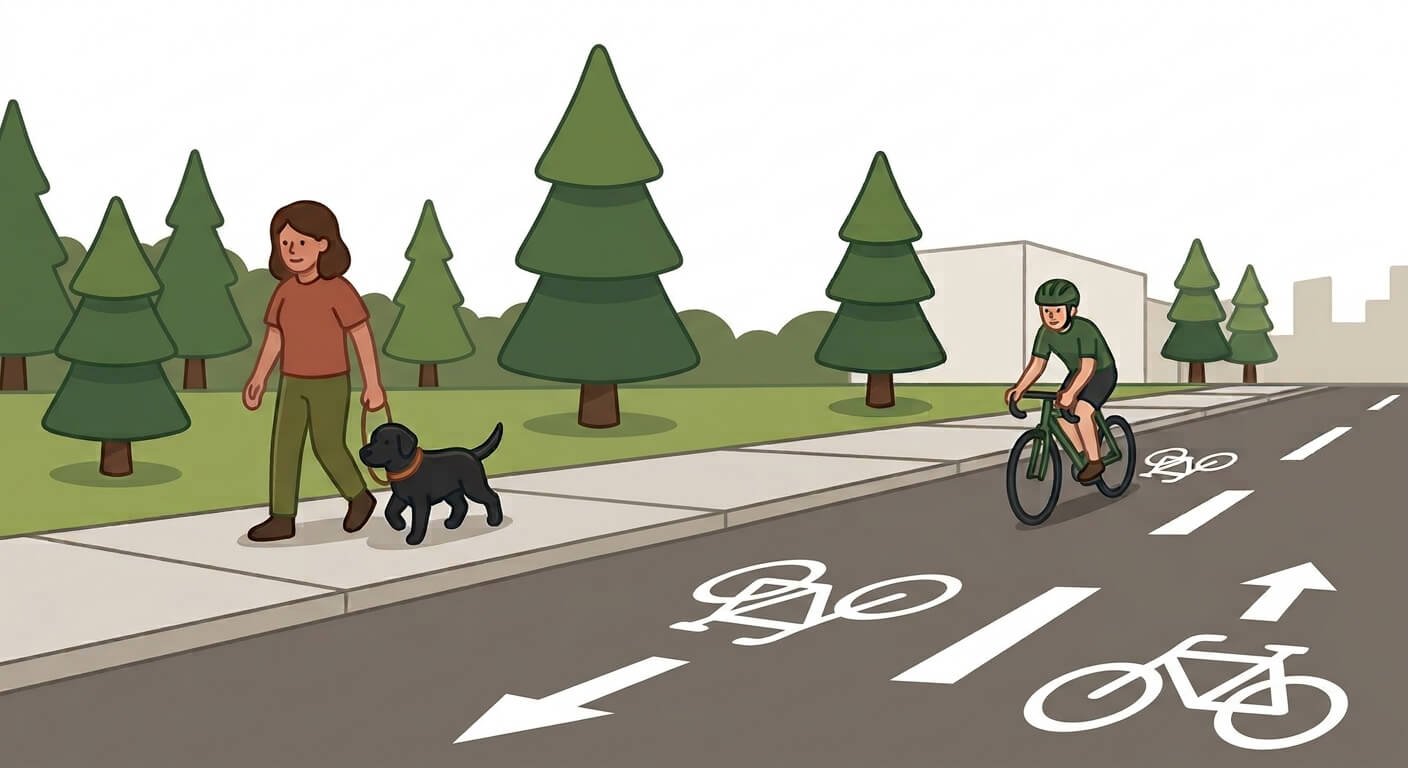
Urban and suburban environments increasingly feature bike lanes, delivery scooters, and e-bikes—all moving faster and quieter than traditional bicycles.
Safety Tips:
Keep your dog on a short leash (4 feet or less) when bikes are present
Walk on the inside of the sidewalk—away from the bike lane
Teach your dog to “side” (move to a specific side) on cue
Be aware that electric vehicles make almost no sound—don’t rely on hearing
Encountering Other Dogs on Walks
Not every dog is friendly. Even well-socialized dogs can react unpredictably when leashed and encountering another dog.
Safe Passing Protocol:
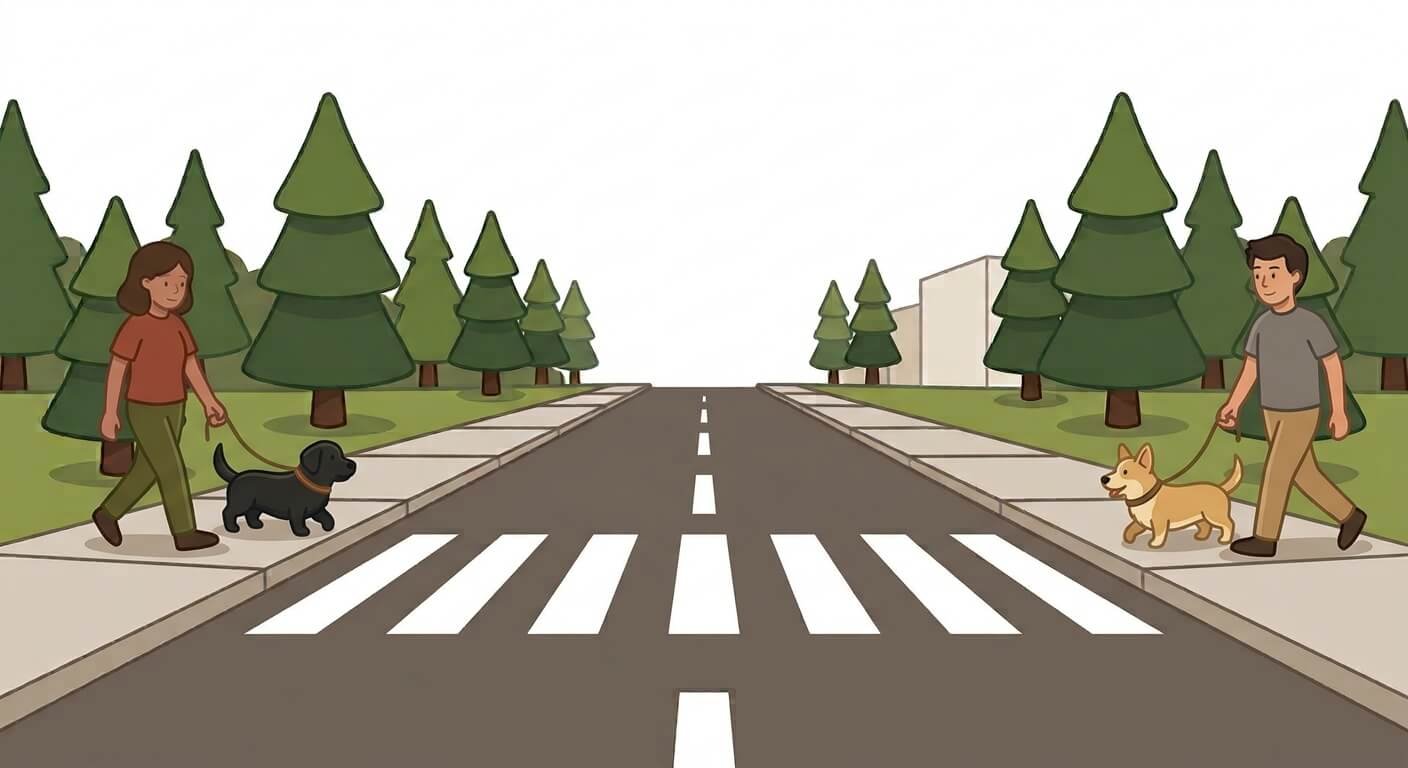
Create distance: Cross the street or move to the other side of the road.
Shorten your leash: Keep your dog close, reducing reaction room.
Stay calm: Your tension transmits through the leash to your dog.
Keep moving: Stopping can increase tension. A steady pace signals “nothing to worry about.”
Ask first: If approaching another dog, call out, “Can we say hi?” Wait for a clear yes before approaching.
If an off-leash dog approaches aggressively:
Stay calm—panic can escalate the situation.
Drop the leash—if you can’t control the situation, giving your dog room to maneuver (rather than being trapped) can be safer.
Use a deterrent—umbrellas, citronella spray, or air horns can break up a fight.
Protect your dog’s neck—if the fight starts, avoid grabbing collars, as this can redirect aggression toward you. Instead, grab the aggressor’s back legs and pull back.
Part 6
Roadside First Aid—What to Do in an Emergency
Accidents happen fast — but knowing what to do can make all the difference. Dog walking safety isn't just about prevention. It's also about being ready when something goes wrong.
If Your Dog Is Hit by a Car: Immediate Steps
Safety First – Approach carefully. An injured dog in pain may bite out of fear. If necessary, muzzle your dog with a makeshift muzzle (gauze, a leash, or fabric tied loosely around the snout). This protects you and allows you to help them.
Assess and Stabilize – Check breathing; if not breathing, begin rescue breathing (seal your mouth over the nostrils and gently exhale). Check for bleeding and apply direct pressure with a clean cloth. Do NOT move your dog if they appear to have spinal or head injuries. Keep them warm with a blanket to prevent shock.
Transport – Use a flat, rigid board (plywood or car floor mat) to slide under your dog. Move slowly and carefully. Call ahead to the emergency vet so they’re ready for your arrival.
Information – Take photos of the accident scene if safe, and note the vehicle’s license plate and driver information.
Quick Answer: If your dog is hit by a car, don’t move them if you suspect spinal or head injuries. Call the emergency vet immediately, keep them warm, and transport them on a flat, rigid surface.
Common Walking Injuries and First Aid
Injury | Signs | First Aid |
|---|---|---|
Cut pad | Limping, bleeding from paw | Clean with saline, apply pressure, bandage with non-stick pad |
Heat exhaustion | Heavy panting, bright red gums, weakness | Move to shade, offer small sips of cool water, apply cool (not cold) towels |
Sprain/strain | Non-weight-bearing lameness | Rest, apply ice pack for 15 minutes, contact vet for pain relief |
Bee sting | Sudden yelp, pawing at face, swelling | Remove stinger with credit card, apply cool compress, monitor breathing |
Choking | Gagging, pawing at mouth, panicking | Check mouth for visible objects only. Do NOT blindly sweep with your fingers. |
This guide is for educational purposes only. In an emergency, always contact your veterinarian or the nearest 24-hour animal hospital immediately. For more emergency guidance, see the AVMA’s pet first aid resources
Part 7
Advanced Safety—Tools and Tech
The right tools can make outdoor dog safety easier — and give you peace of mind when things go wrong.
GPS Trackers vs. Microchips: Know the Difference
Feature | Microchip | GPS Tracker |
|---|---|---|
How it works | Passive RFID chip, scanned by vet | Satellite/cellular real-time location |
What it does | Identifies you if found | Shows your dog's location in real time |
Active/passive | Passive (needs scanner) | Active (continuous signal) |
Battery | None (lifetime) | Days to weeks (rechargeable) |
Best for | Permanent identification | Finding a dog that's just run off |
Both are essential. A microchip gets your dog back if someone finds them. A GPS tracker helps you find them before they get lost.
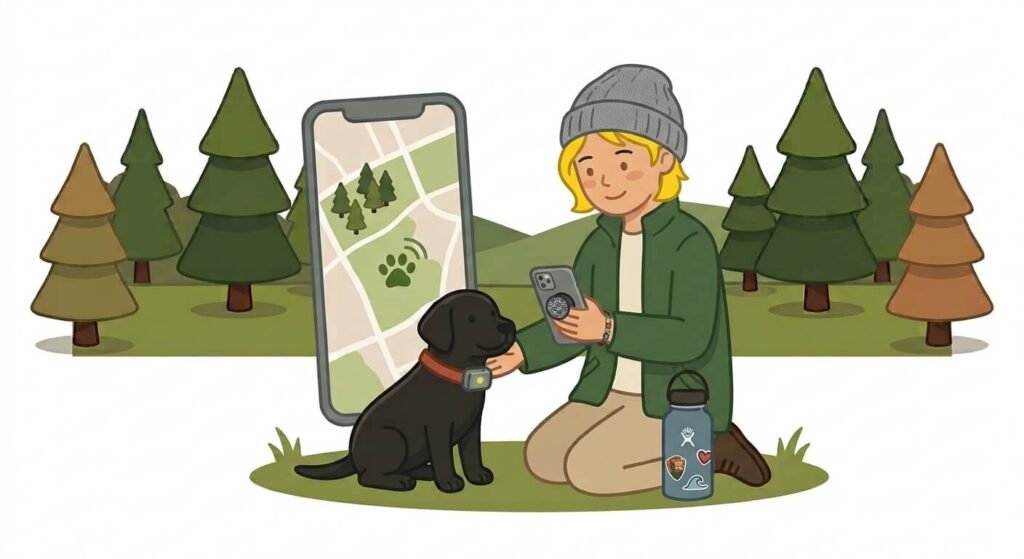
Quick Answer: A microchip is permanent ID that helps someone identify your dog if found. A GPS tracker shows your dog’s real-time location if they run off. They serve different purposes — most owners benefit from both.
Emergency Alerts and Smart Wearables
Smart collars: Track heart rate, temperature, and location — can send alerts if your dog leaves a “safe zone”
Personal safety alarms: A loud noise can startle a charging dog or attract attention from nearby people

Walk Planning Apps
Sidewalk/StreetView: Preview unfamiliar routes before walking them — spot potential hazards before you go
Pet-friendly route planners: Some apps show dog-friendly trails with road warnings and safe crossing points
The Ultimate Dog Walking Safety Checklist
Before every walk, run through this quick mental checklist:
Leash
Fixed-length 4-6 feet
Collar/harness
Properly fitted (two fingers), not too loose or tight
ID tags
Up-to-date phone number, visible, and legible
Water and bowl
Always—no drinking from puddles or standing water
Reflective gear
For both you and your dog (especially in low light)
Paw protection
Check pavement temp consider booties if hot or icy
Emergency contact
Vet + clinic numbers
Treats
High-value rewards for reinforcing commands
Training mindset
Stay aware, in control
Weather check
Too hot, cold, stormy?
Conclusion: Every Walk Is a Chance to Practice Safety
Walking your dog is one of the most fundamental ways you bond, exercise, and explore the world together. It should be a source of joy—not stress or fear.
The safety habits outlined in this guide aren’t complicated. They’re simple, consistent actions that build on each other: the right equipment, the right training, the right awareness. And like any habit, they become second nature with practice.
The single most important rule of walking safety is this: You are your dog’s eyes, ears, and judgment. You see the car before your dog does. You know the pavement is too hot. You recognize the aggressive dog approaching. Your job is to make the safe choice—every time.
Start by mastering the curb-sit. Practice the leave-it command on every walk. Check your equipment before leaving the house. And if you’re unsure about a situation, choose the cautious path.
Your dog trusts you completely. That trust is the foundation of every safe walk, every wagging tail, and every happy memory you’ll make together.
Frequently Asked Questions
Set your favorite Elementor FAQ style to help users get the exact information.
What's the most important thing to teach my dog for road safety?
Is a harness or collar safer for walking?
How hot is too hot to walk my dog?
How hot is too hot to walk my dog?
What should I do if my dog gets hit by a car?
Are retractable leashes safe?
How can I make sure drivers see me and my dog?
Should I microchip my dog or get a GPS tracker?
More in This Series
This article is part of our Walking & Road Safety series. If you found this helpful, these guides go deeper into specific situations.
Night Dog Walking Safety: How to Stay Visible and Avoid Hazards After Dark
Keep your dog safe on nighttime walks. Learn about reflective gear, driver blind spots, wildlife risks, and essential safety tips for night dog walking safety.
Best Leash for Walking Dog: Fixed vs Retractable on Road Walks
Choosing the best leash for walking your dog — fixed-length vs retractable, leash length, harness vs collar, and safety tips for walking near traffic.
Dog Curb Training: How to Teach Your Dog to Wait and Cross Roads Safely
Learn dog curb training step by step. Teach your dog to wait at the curb, cross roads safely, and handle distractions with this complete training guide.
Sidewalk Hazards for Dogs: What Every Owner Should Know
Learn about common sidewalk hazards for dogs — hot pavement, glass, chemicals, and uneven surfaces. Keep your dog’s paws safe on every walk.
Disclaimer: This content is for informational purposes only and does not constitute veterinary or professional safety advice. Always consult with a qualified veterinarian or professional dog trainer regarding your dog’s specific needs and safety considerations.